Monday, 30 January 2017

8 Myths About Solo Female Travel Debunked

Woman walking on beach
Kristin Addis from Be My Travel Muse writes our regular column on solo female travel. It’s an important topic I can’t adequately cover, so I brought in an expert to share her advice for other women travelers to help cover the topics important and specific to them! She’s amazing and knowledgable. This month, we are starting the year off with some of the common myths people have about solo female travel!

I had a lot of misconceptions about traveling alone before I went overseas. I thought it might be dangerous, lonely, too much work, or make people think that I didn’t have any friends. Moreover, I always thought that being alone as a woman would make me a target for terrible things (thanks, mainstream media!). Plus, who wants to see all these amazing places completely alone? It sounded like a non-option, at least at first.

Then I realized that nobody had the time to go with me. My friends were working on their careers while I had just decided to take a break from mine. I couldn’t wait. I just had to go, or else I might never go.

So I went alone and found out that all of my assumptions about traveling solo were dead wrong. I wasn’t lonely, I didn’t end up kidnapped, and, in a lot of ways, it was actually way better to travel by myself. The freedom it afforded me, the way it grew my confidence, and all of the new friends I made were huge benefits that wouldn’t have happened it I went with a group of friends.

So for everyone who thinks that solo travel is lonely, dangerous, or boring, I want my first column ofthe new year to be on the common solo female travel myths — and why they are all wrong – to help give you the courage to get over your fears and conquer the year:

Myth #1: Solo traveling means being lonely often.

Solo female travel
The scariest thing about traveling by yourself is the thought that you might be alone for your entire vacation, right? Who wants to travel to the other side of the world only to have to be by herself while looking at the majestic red sunrise over Angkor Wat?

I was really worried about this before I started traveling solo. Thankfully, I came to find that I made more friends in one week on the road than I had in a whole year back at home.

The best thing about traveling solo is that you’re not the only one doing it. More and more women are considering the concept of solo traveling to be realistic these days, and I couldn’t believe how many other solo female travelers there were on the road with me! Since so many other people are in the same boat, they tend to be pretty outgoing and friendly. It’s as simple as staying in a social hostel — you can easily find which those are by doing a quick search on Hostelworld — and heading to the common room. I regularly did that all over Southeast Asia and I rarely felt alone during my years of traveling there.

Myth #2: Solo traveling is only for those who are single.

Solo female hiking
Before I started traveling and meeting people with all kinds of different stories and backgrounds, I figured that if you’re traveling by yourself, it must be because you don’t have a significant other. People who have commitments like a family or partner don’t just go traveling on their own. It must mean there’s a problem in the relationship or that they’re escaping their commitments, right?

Wrong. I came to learn that plenty of people who are in relationships travel alone, and for all kinds of reasons.

It could just be that they have different interests, something many relationship experts say is totally healthy. Maybe their partner can’t get time off from work, or maybe both parties made a conscious decision to do some soul-searching on a solo adventure, even just for a portion of the trip, and meet back up again.

Many solo travelers are single, but there are many more who are in relationships too. Just because you’re not single doesn’t mean you can’t have an awesome trip by yourself.

Myth #3: You must be extraordinarily brave to travel on your own.

Solo woman in cave
A lot of my friends thought I was ultra brave and independent because I was going to travel alone. The honest truth is that I was incredibly scared and overwhelmed with the idea of traveling solo until I finally just got on the plane and went. To fear what you don’t know is just to be human. It’s in our nature.

Despite being terrified, I went anyway. Later I laughed at how scared I had been, after I realized that getting around, meeting new people, and finding things to eat was all way easier than I had ever thought it could be.

You don’t have to be sure of everything and incredibly courageous to go traveling on your own. Those things may come as a nice benefit of traveling solo, but they don’t have to be prerequisites. The hardest part is getting on the plane. After that, it’s surprisingly easy to get around language barriers, figure out timetables, and have an adventure. Plenty of locals speak at least some English, and Google Maps, translation apps, and cellphone connectivity have all made traveling so much easier than it used to be.

Myth #4: You can’t be an introvert.

Woman hiking in mountains
I used to quietly watch the TV in bars or wear my headphones in public places so that I wouldn’t have to talk to anyone. I used to feel pretty paralyzed in a room with someone with a strong personality. Basically, I was kind of awkward.

But an incredible benefit of traveling by myself is that it has made me super outgoing. Even if you have trouble starting a conversation, in a hostel common room, chances are really good that eventually someone will reach out to you and bring you into a conversation. I recall that in the Philippines, a girl tapped me and asked where I’m from, and after chatting for a while, we became friends and hung out all week.

You will probably also find that after a few times approaching new people — which will be incredibly nerve-racking at first — they will be so much more open than you feared that it will be an encouraging surprise. It’s so easy to start a conversation by simply asking somebody where they’re from or where they just came from. I know those are cliché, but they also work, and before you know it, you have something to talk about.

It’s easy to build up confidence around travelers — they’re just really friendly people!

Myth #5: It’s dangerous to travel solo, especially as a woman.

Woman walking in desert
You’ve seen the movie, Taken, right? The one where Liam Neeson’s daughter gets kidnapped in Europe and he kicks major butt and rescues her? Or what about Brokedown Palace, where Claire Danes gets thrown in Thai jail when a handsome stranger plants drugs on her? This is our image of girls traveling the world (thanks, Hollywood!). I’m guessing that, given dramatic stories like these, the biggest argument against solo travel that you might be hearing from your friends and family is that it is dangerous.

First of all, neither of the protagonists in those movies actually was traveling solo. Maybe if they had been, they would have paused and listened to their voices of reason and stayed out of trouble.

Staying safe on the road is all about trusting your intuition, behaving abroad like you would at home. Would you get super drunk alone at a bar at home? Would you walk around alone at night? Talk to the locals at your guesthouse about what you should watch out for, and practice common sense. What kept you alive at home and keeps you alive on the road, too.

For more check out this post all about solo female travel safety.

And take a look at these blogs for inspiration and proof women can travel alone:

Every day millions of women travel the world alone. It’s safe and doable, and you won’t end up in a ditch!

Myth #6: You will constantly get unwanted attention.

Woman walking on beach
It happened from car windows when I was walking home from school at age 14, it happened when I was getting into my car at a random gas station in the middle of nowhere in Nevada, and it happens when I walk down the streets of New York City. Sometimes a boyfriend was only a few steps away — it didn’t matter. Catcalls happen abroad and at home. They’re annoying, yes, but don’t let them keep you from having the awesome solo trip you deserve.

The best way to deal with that kind of attention is to make sure you understand the modesty requirements in the countries that you visit and dress accordingly. Some women suggest wearing a wedding band, but I find that being very confident, looking people in the eye, and being respectfully assertive are all good ways to stand my ground as well.

While simply being a female does open you up for catcalls and unwanted advances in some parts of the world, in many cases, though, it’s quite the opposite, and I’m treated with respect and kindness, particularly because I’m a woman traveling on her own.

Myth #7: It’s way more work because you have to do everything yourself.

Woman walking on beach
If you travel on your own, you will be making all of the decisions.

This is also the biggest benefit of traveling solo. It means that you don’t have to plan ahead if you don’t want to, worry about whether the other person is having fun or not, or stress about doing everything for two or more people. Solo travelers get to have more serendipitous fun, the novelty of which we are hardwired to crave. There’s often room for just one more on a motorbike, in the car, or at a local’s family dinner, and you’ll be able to make split-second decisions without asking anyone first.

I found that the benefit of complete freedom while traveling solo outweighed the extra legwork that I had to do. I also found it easy to just ask a friend which restaurant or activity they liked, or the person working at the hostel counter. It’s not that hard. (Besides, planning everything for multiple people and keeping them happy is a lot of work too.)

Myth #8: Traveling solo is a huge, life-changing decision.

Woman sitting on a glacier
A lot of people sell off everything they have and take off to the other side of the world with a one-way ticket in hand (I’m talking about myself here), but that doesn’t mean that everyone who travels solo has turned her life upside down in order to do it.

It can be as simple as a weekend trip alone to another city, a two-week jaunt to a warm and tropical place you’ve never been, or a monthlong solo backpacking trip in Europe between semesters. It doesn’t have to be a huge deal, and you could come right back to life as you know it before, with a few new adventures and a bit more confidence.

****

It turned out that, contrary to what everyone (including me) thought, solo traveling wasn’t dangerous, boring, or lonely at all. It actually was one of the most social activities I’ve ever tried.

I ended up finding that, instead of solo traveling being a disadvantage in any way, it was actually advantageous to be free when I traveled. It endeared me more to locals, and I got to have unique experiences because I could say yes to everything, and that’s something that only solo travelers can say. It’s a big benefit to be able to go where you want when you want, without having to answer to anyone else. There must be a reason why it keeps growing in popularity year after year, right?

If traveling is about the benefits, the time spent in a new reality, and a departure from your normal, everyday life, then to traveling solo is to put those benefits on steroids. Give it a try, and you too may find that your misconceptions about it are all wrong.

Kristin Addis is a solo female travel expert who inspires women to travel the world in an authentic and adventurous way. A former investment banker who sold all of her belongings and left California in 2012, Kristin has solo traveled the world for over four years, covering every continent (except for Antarctica, but it’s on her list). There’s almost nothing she won’t try and almost nowhere she won’t explore. You can find more of her musings at Be My Travel Muse or on Instagram and Facebook.

Conquering Mountains: The ultimate Guide to Solo Female Travel

conquering mountains: solo female travel by kristin addisFor a complete A-to-Z guide on solo female travel, check out Kristin’s new book, Conquering Mountains. Besides discussing many of the practical tips of preparing and planning your trip, the book addresses the fears, safety, and emotional concerns women have about traveling alone. It features over 20 interviews with other female travel writers and travelers. Click here to learn more about the book and start reading it today!

The post 8 Myths About Solo Female Travel Debunked appeared first on Nomadic Matt's Travel Site.


from Nomadic Matt's Travel Site http://www.nomadicmatt.com/travel-blogs/solo-female-travel-myths/

Friday, 27 January 2017

How to Focus for Star Photography

If you like taking landscape photos at night, you’ll surely be familiar with one of the main challenges: successfully focusing on the stars. Often, you can’t use autofocus, since there isn’t enough light for your camera’s focusing system to lock onto anything. Unfortunately, even manual focus doesn’t always work, which means you may need to use some out-of-the-box techniques to make it work. This article goes through some of the most useful tools that you have at your disposal.

1) Focusing on the Moon

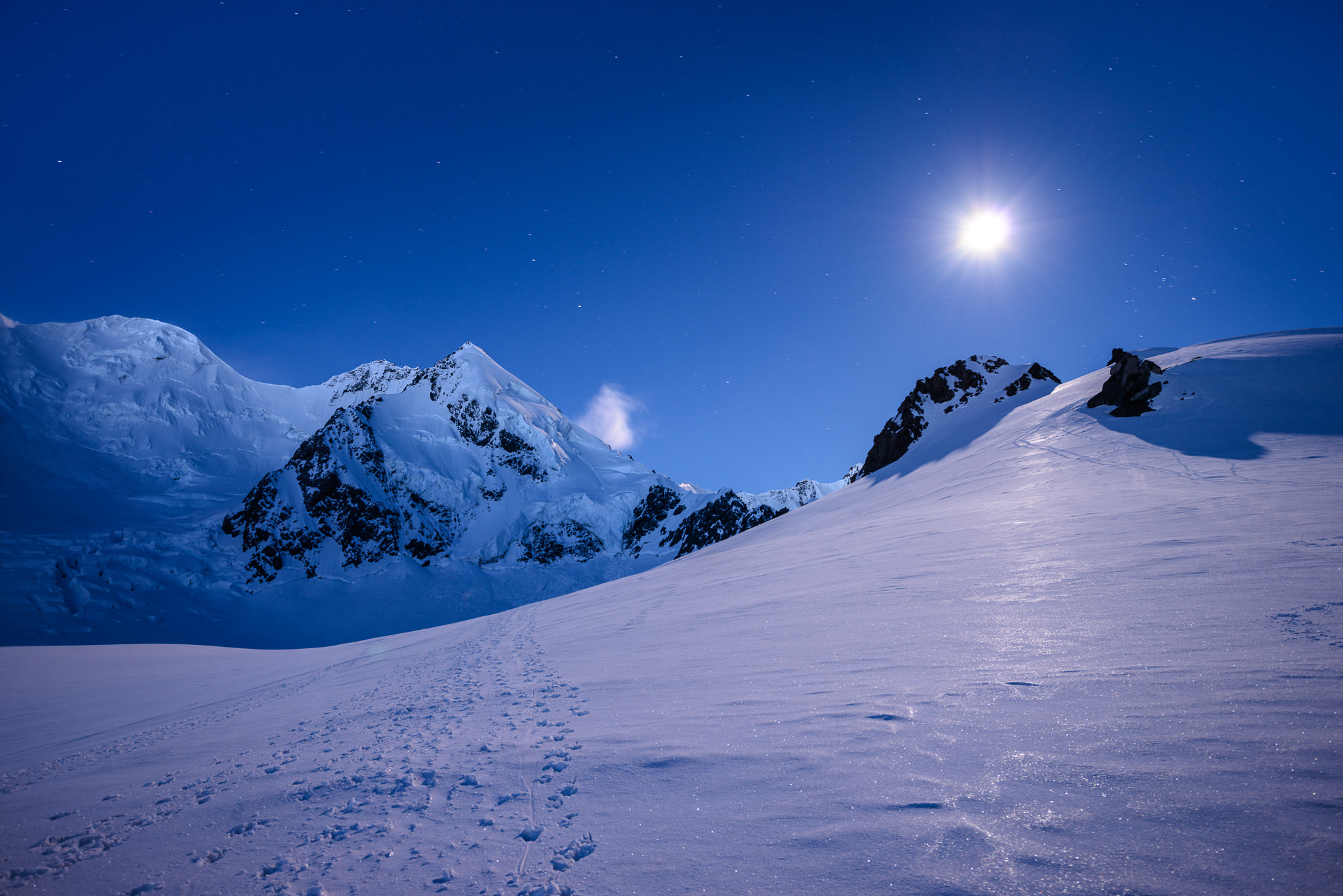
Moonlit nights have their positives and negatives for landscape photography.

On one hand, if the moon is out, you may be able to capture the landscape with enough light to see clearly. Plus, the moon is more than bright enough for your autofocus system to lock on. However, too bright of a moon (especially a full moon) will make it harder to capture detail in the Milky Way, since it often lowers the sky’s overall contrast.

You won’t always be able to plan a photoshoot around the moon. However, if you do happen to take pictures while it’s bright, this is one of the best ways to acquire proper focus on the stars. Simply put your camera on a tripod, enter live view, magnify the image as much as possible, and manually focus until everything looks sharp. (If you want to save time, you can use autofocus — in live view or through the viewfinder — although it likely won’t be as accurate as magnified manual focus.)

One other thing to mention: Use the center region of your photograph for focusing. Why is this? Due to field curvature, your “plane” of focus may not be a plane at all — it could be curved. Typically, it is more important to have the sharpest possible stars in the center of your image than all the way in the corners, which will likely be darker due to vignetting anyway (and less sharp due to coma). By focusing on the moon with your center point, you’ll ensure sharp stars in the center, even if you happen to change your composition and not include the moon.

(The only corollary to this point is if you know the exact characteristics of your lens’s field curvature and feel the need to correct it as much as possible. In that case, you may choose to focus somewhat incorrectly in the center of the image — typically by focusing a bit farther than necessary — so that the blurriness is spread more evenly throughout the sky, rather than the center being in focus and the corners being noticeably out of focus. You’ll already know if this applies to you; most people will just want to use the center point without any additional adjustments, since it’s quicker and gives fine results on most lenses.)

Focus-on-Stars-at-Night-1

NIKON D800E + 14-24mm f/2.8 @ 24mm, ISO 100, 30 seconds, f/4.0

2) Lights in the Distance

Just as the moon provides a bright point in the sky for focusing, so do buildings or other distant lights in the background.

This won’t be the case everywhere. In fact, in places with the darkest skies (and, comparatively, the brightest stars), it is unlikely that there will be a lot of buildings or distant lights on the horizon. However, if there are, make use of them!

It’s not just buildings that count. If there’s a distant road with car headlights, it can make a great subject for focusing. Often, even if there isn’t a moon, I find that I can focus on a faraway source of light for exactly the same effect.

Of course, no matter how you focus in the distance — even if the moon is bright while you’re taking pictures — be sure to review your photos at full magnification to see if the stars are sharp. Usually, a good guide is to see whether or not the stars in the center of your image have a green or magenta fringe around them. If there is a visible color fringe, even a slight one, your focus is at least somewhat incorrect. (If the fringe is green, focus slightly more in the distance. If the fringe is magenta, focus slightly closer.)

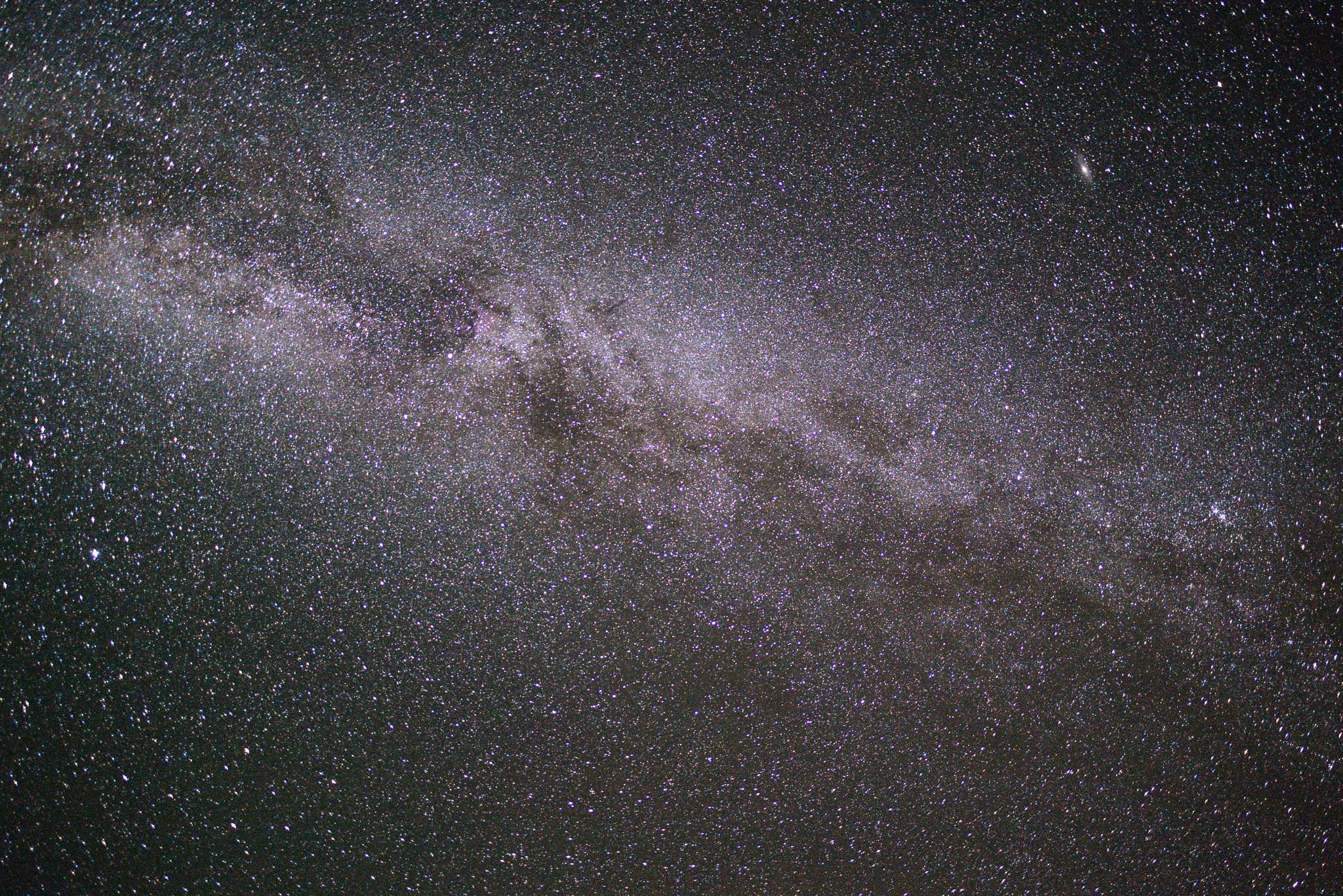
Focus-on-Stars-at-Night-2

This image is focused a bit too far. Notice how all the stars have a magenta tint around them — that indicates I missed focus.

3) Using a Flashlight

If the moon isn’t out, and if there aren’t any lights in the distance, focusing will be trickier. However, there are still some ways to get a good shot.

My personal favorite is to use a bright flashlight and shine it on any object in the distance. The farther the better — stars are so far away that you’ll want to focus on something that is, effectively, at infinity. (In practice, with a wide-angle lens, something that’s 25 feet or 7.5 meters away should be good; it depends upon your aperture and focal length, though, so you should test this yourself.)

You’ll need a bright flashlight for this. Your phone isn’t nearly good enough, unfortunately, but there are some pocket-sized flashlights that provide enough light.

If all you have is a phone, though, you aren’t necessarily out of luck. Do you have a friend with you? Get them to take your phone, run a bit into the distance (again, 25 feet or so typically works), and then shine the light on their hand or face. Now, focus on them! It’s fine if you need to change your composition in order to do so, since you can always switch back when you’re done.

Even if you’re taking pictures solo, and all you have is your phone’s flashlight, you may be able to prop it up somewhere in the distance and shine it on an object for focusing. You’ll have to see; this strongly depends upon the landscape.

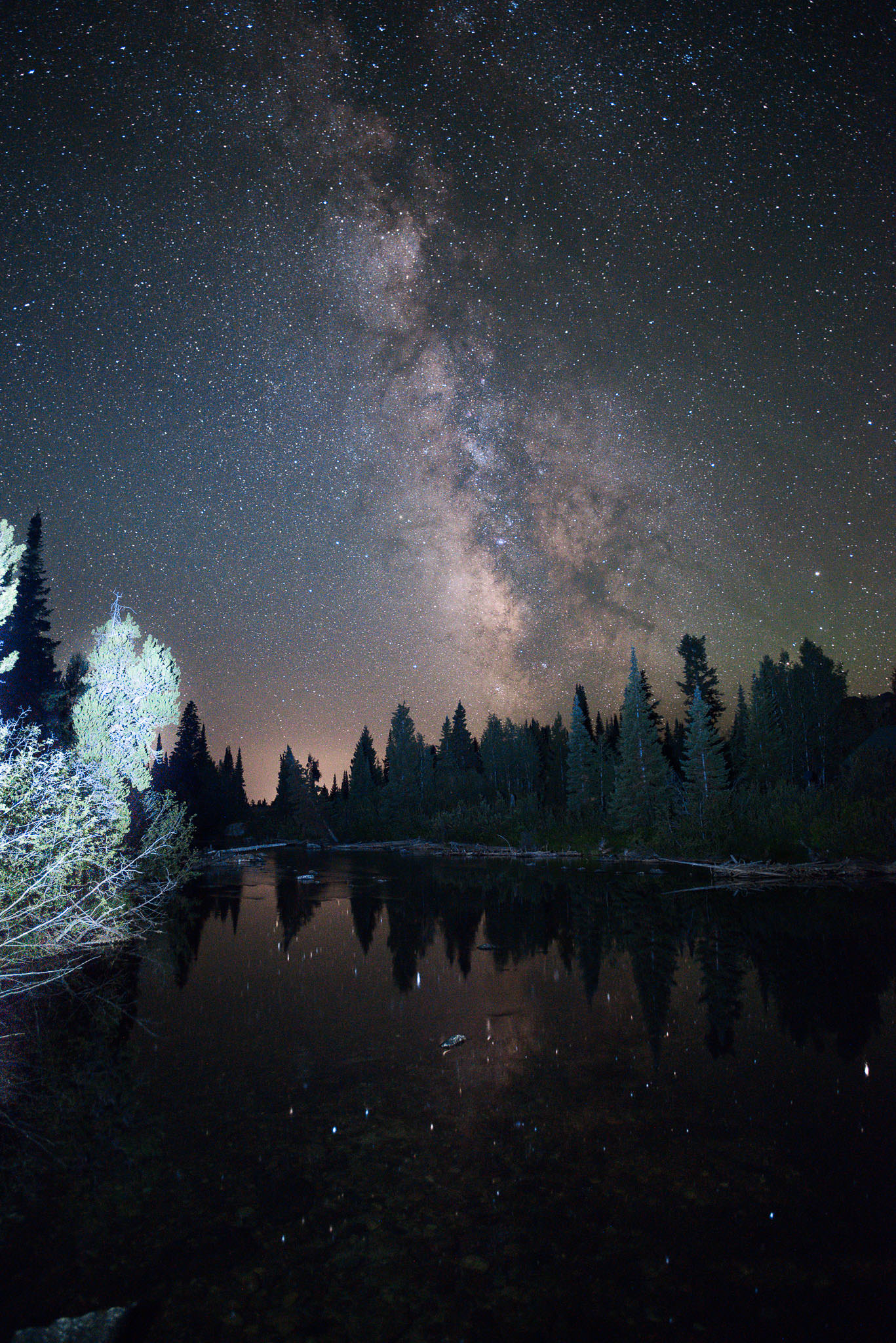
Focus-on-Stars-at-Night-3

Here, I focused on the tree, which was fairly far away, by shining a bright flashlight. At a focal length of 20mm and an aperture of f/2.2, both the tree and the stars are sharp, as you can tell by the lack of color fringing. (Obviously, this isn’t my final photo of the scene, since the brightness of the tree is incredibly distracting.)

4) Finding Bright Stars

If worse comes to worst, you’ll always be able to use the stars as a focusing aid.

Bright stars (or planets such as Venus) can be just barely bright enough to focus on successfully, and you could get some very sharp results.

Part of this depends upon your lens. Wide-aperture lenses will make everything brighter, and medium or telephoto lenses will magnify the size of any stars in your image. With lenses like that, focusing on the stars is easiest. However, it can be done with most any equipment — it just takes some work.

If you want to use this technique, there are a few steps to go through. First, take a moment to search for the brightest star or planet in the sky. Once you’ve found it, compose it in the center of your image and zoom into full magnification in live view. Then, use manual focus. To tell if the star is in focus, pay attention to its size — when the star is as small as possible, it will be in focus.

Also, you can use your lens’s longitudinal chromatic aberration to your advantage. This is the effect I described earlier — out-of-focus regions of your image take on a green or magenta tint. By zooming into live view at full magnification, you can move your lens’s focus ring slowly forwards and backwards, paying attention to the colors of the stars. When the star doesn’t have an obvious tint, it is likely to be in focus.

However, as hard as you try, it isn’t always possible to focus accurately on a bright star. There are a couple things you can do to combat this uncertainty.

First, an interesting product on the market is the “SharpStar2,” a filter that intentionally adds a diffraction pattern to stars (or other bright points of light in your photo). As the star moves in and out of focus, this pattern changes shape; you can focus on the star by aligning the diffraction pattern perfectly. We aren’t affiliated with Lonely Speck, and I’ve never tried the SharpStar myself, but I know of some photographers who use one with success. If you do a lot of nighttime photography and have a lens that accepts filters, you might want to check it out.

Second, no matter what technique you use, it’s a good idea to take some test photos to ensure that you’re doing everything right. However, at night, a test photo can be dozens of seconds long — it may be more time than it’s worth. So, what do you do?

Simply use a very high ISO and take much shorter photos. These aren’t photos you’ll actually keep later; they’re purely to test focus quickly. I often shoot at ISO 12,800 or ISO 25,600 with a five-second exposure purely to make sure that my focus is accurate. This is especially important if the brightest object in the image is just a star, and you don’t have something like the moon to focus on reliably. Or, if you have an older camera with poor live view, you’ll especially want to rely on this technique.

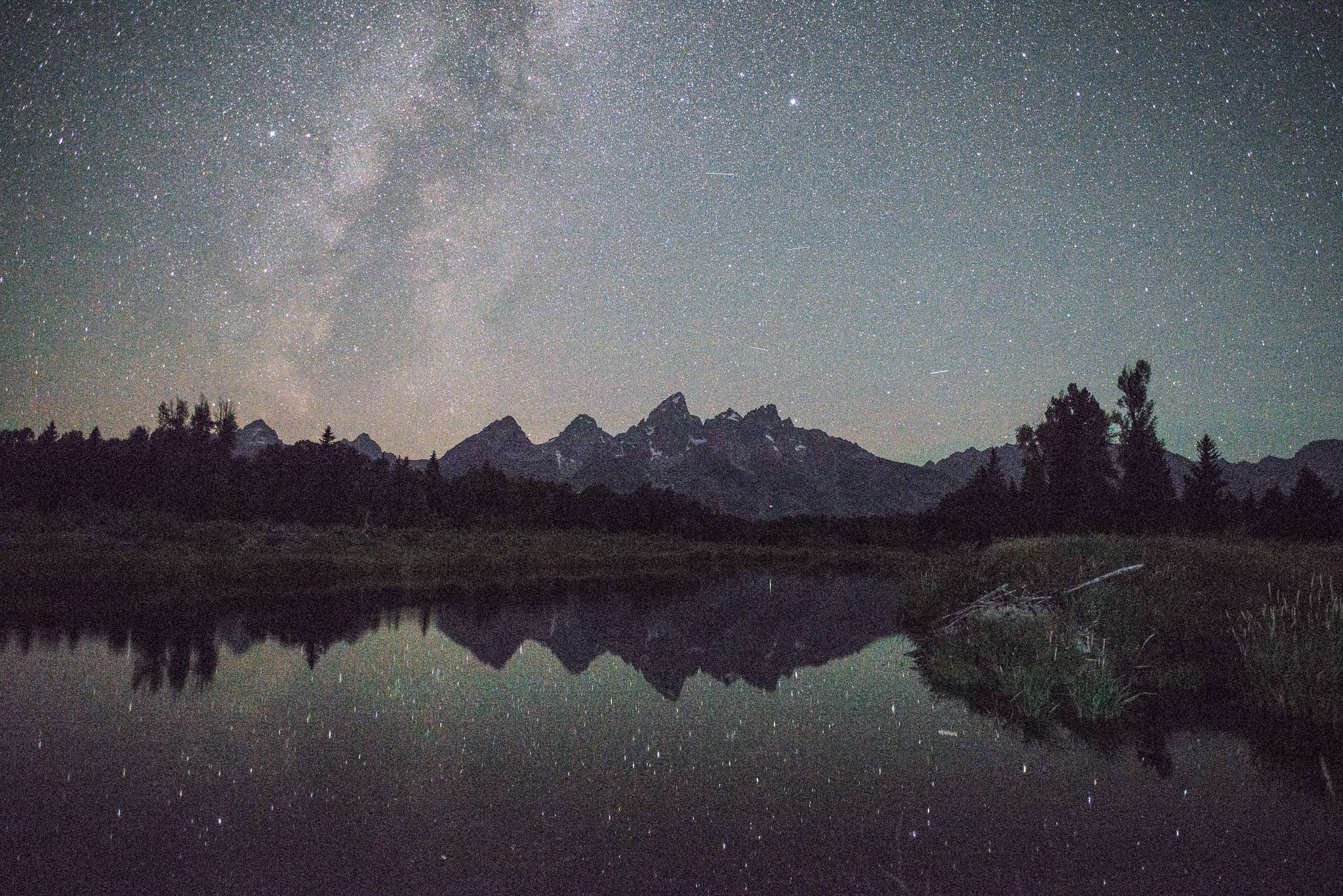
Focus-on-Stars-at-Night-4

This image was shot at ISO 12,800 and a six-second exposure. My focus is pretty good, but it’s not perfect. Again, note the (somewhat fainter) magenta tint. Since this exposure was so quick, it only took a few seconds to realize that I had to change my focus, rather than a full-length 20 or 25 second exposure.

5) Conclusion

Focusing on stars at night isn’t an easy task, but it can be done. Always carry a flashlight; if the moon (or other distant lights) aren’t out, you’ll still have a way to focus reliably in the distance. Worst case scenario, just focus on the stars themselves — make sure to find a bright one, and take some test photos to ensure that your focus is accurate.

Nighttime photography is always tricky, but it’s worth the effort. Landscapes look spectacular under the stars, and I’ve taken many of my favorite photos while most people are asleep. More than anything, experiment! Focusing at night is a skill that can take some time to learn. Go out, find a beautiful scene, and take some photos for yourself.

The post How to Focus for Star Photography appeared first on Photography Life.


from Photography Life https://photographylife.com/how-to-focus-for-star-photography

Fire and Brimstone

A little less then a year ago I posted an article at PL detailing the itinerary of a day in Yellowstone National Park. Since that article I had the pleasure of revisiting the park during my yearly foray to the land of “fire and brimstone.” The reason I visit the first National Park of the United States history every year is for a project I have undertaken to document the change of seasons that occurs there every autumn. Yellowstone National Park has many faces to go along with its four distinct seasons. The frozen wasteland of winter gives way to new life and the rains of spring, and as May turns into June, the simmering heat of summer overtakes the park. And yet, it is Yellowstone’s shortest season (Fall) which offers the most intrigue with its unpredictable weather patterns and the unique behavior of its wildlife.

In just two months, the heat of summer turns into the snows of winter. The leaves turn from green to yellow, and finally to nothing as they make their way back to the ground that had fed them during the previous months. It is during this time of year that the wildlife of Yellowstone must face great challenges. First, they must prepare for the long winter. Some use this time to fatten up their reserves so that they could outlast the winter months. The rest start to slowly migrate to lower elevations so that they can forgo the harshest conditions. The other great challenge is the need to mate. It is during the fall that most of Yellowstone’s resident’s go through the yearly ritual of passing their genes on to the next generation. The most exciting of these courtships belong to the male bison and elk, who use the early fall to fight with the other males of their species in a grueling war for supremacy. It is only in the late fall, when the females are in heat, that the strongest males that still have energy get the right to pass on their genes.

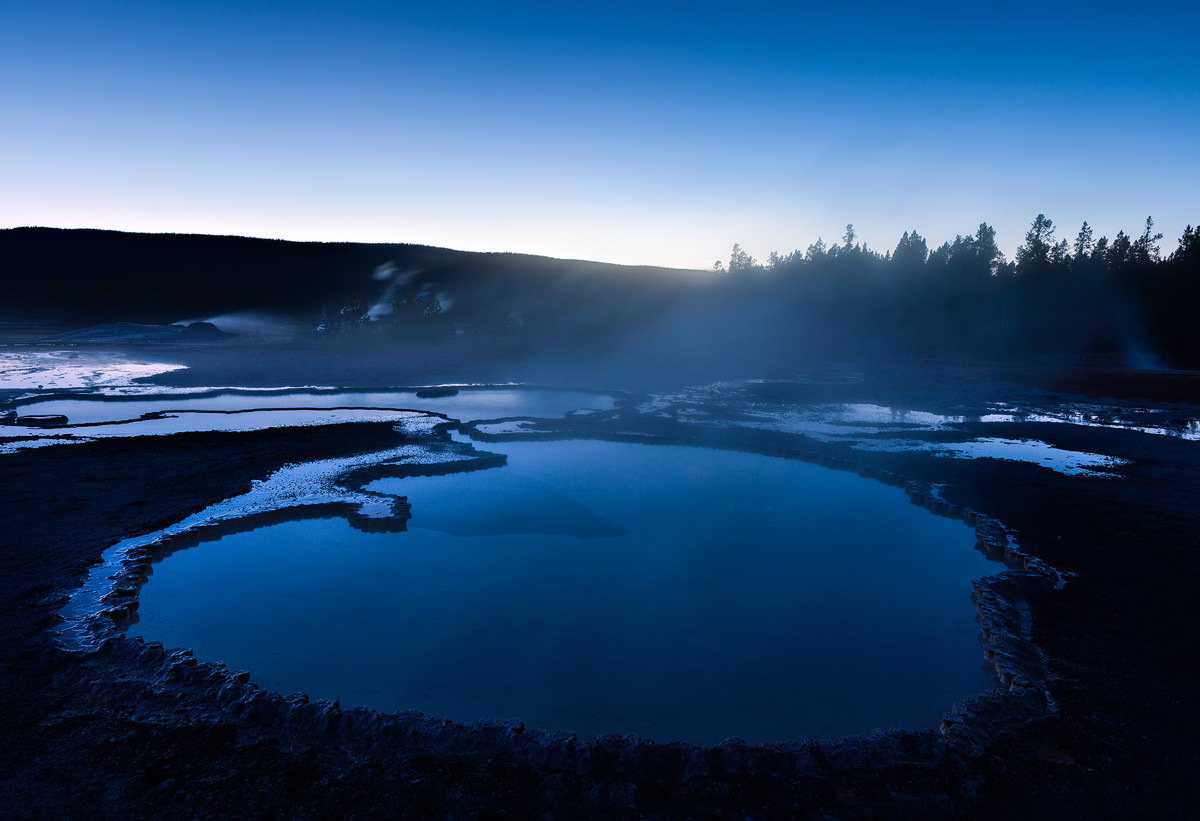
Image-#1

Sony A77, Tokina 11-16/2.8 ATX, ISO 50, F/11, 6sec, © Dvir Barkay

The story of the fall in Yellowstone is a complex and intriguing tale of mystery and of an environment undergoing drastic changes, and you can see the whole project in detail on my project page, but the goal of this article is to give you some of tips which I give the clients I guide there during the fall months, as well as introduce you to a magical time of the year in the park.

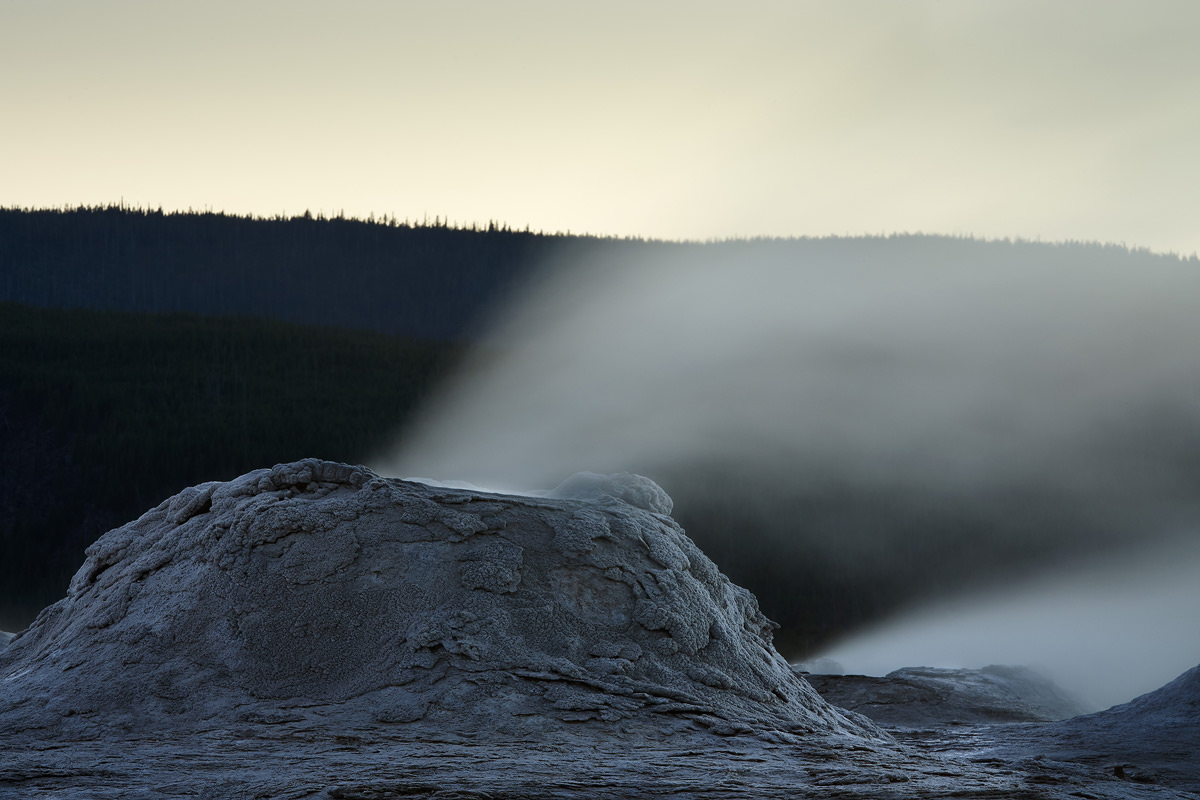
image-#2

Canon 1DIII, Canon 70-200/2.8 USM L IS II with x1.4TCII, ISO 100, F/20, 3.2 sec © Dvir Barkay

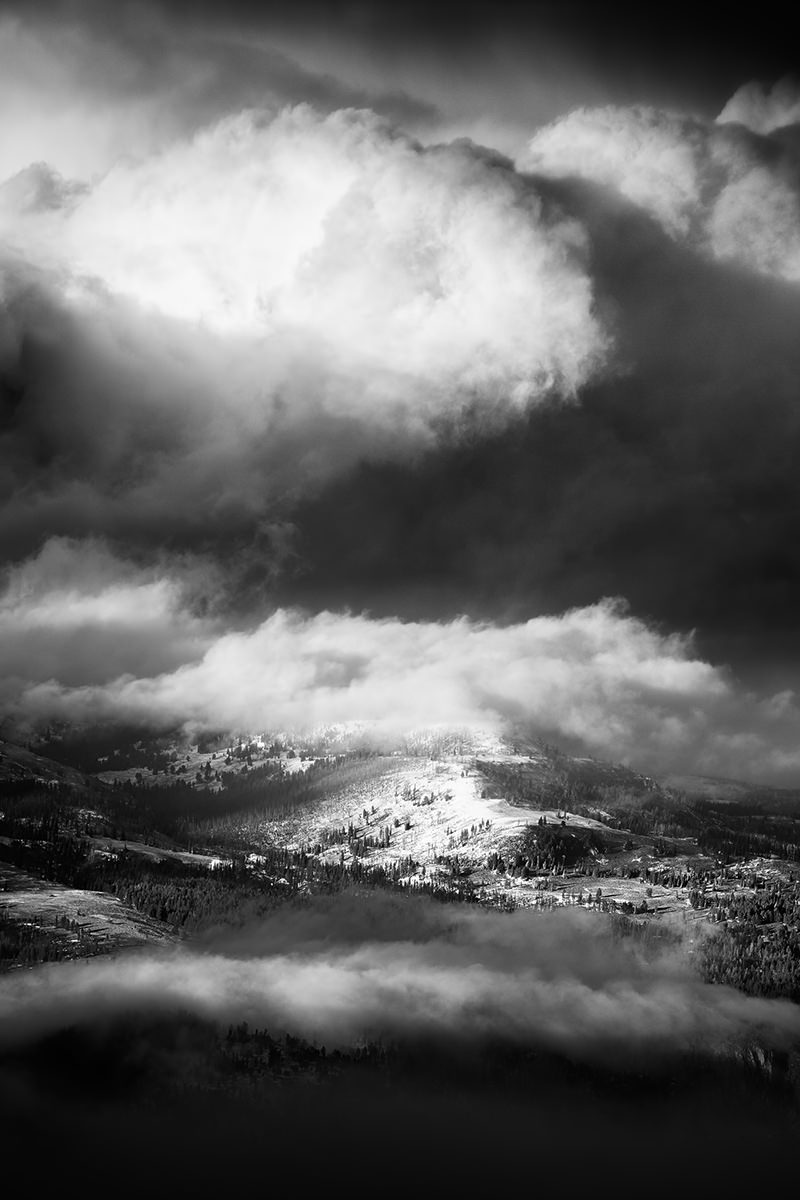
The first thing to know about the months of September and October, is that the weather is terribly volatile, with crisp warm sunny days contrasted with bitterly cold fall snowstorms that paint the landscape in white. I feel that this volatility is what makes Fall so special in Yellowstone. The skies are often dotted with menacing storm clouds that threaten to bring rains, and rain it does, with early October being especially rainy. The landscape photographer side of me feels the rains and storm clouds are a blessing because they help me craft unique photos with unique textures. But I am not talking about overcast days, I am talking about real storm clouds like these…

image-#3

Canon 1DX, Canon 200-400/4 L IS with x1.4TC, ISO 200, F/7.1,1/500 sec © Dvir Barkay

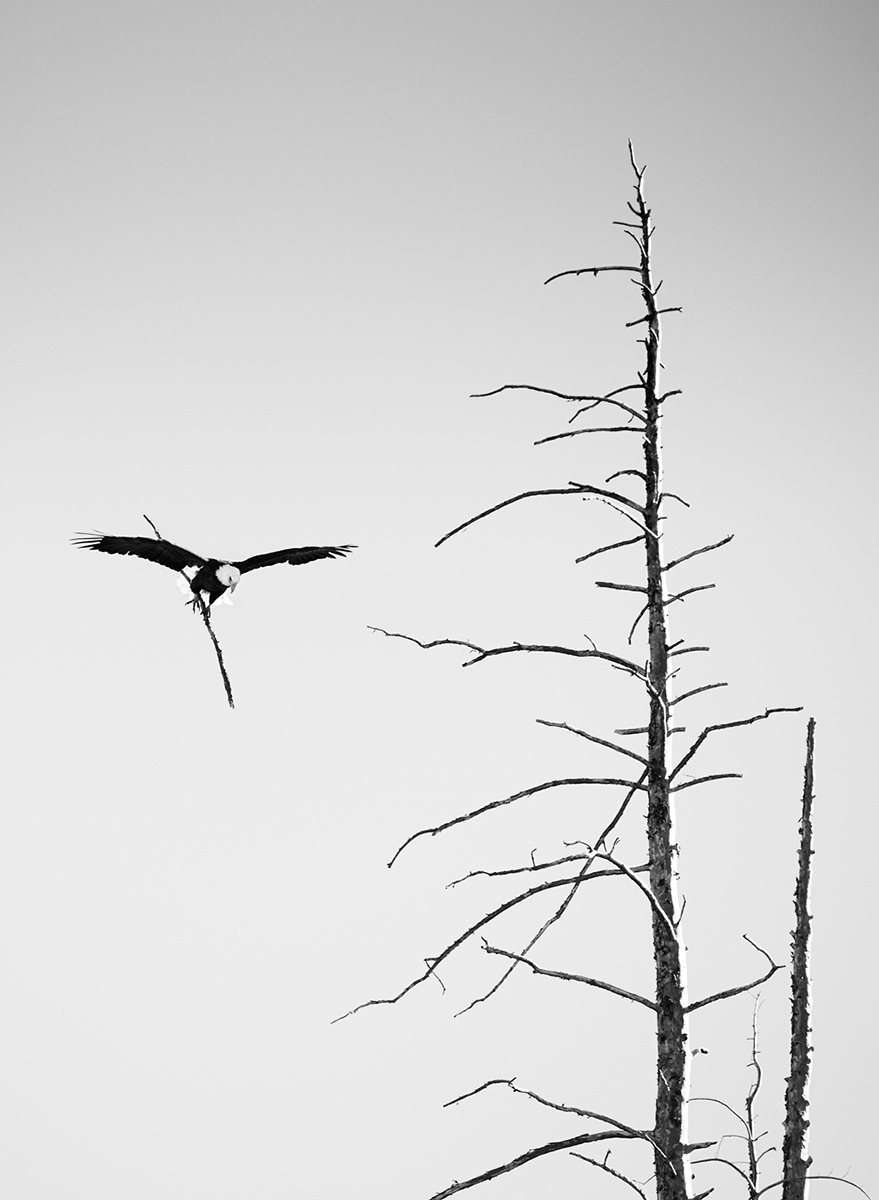
On overcast days, days that are neither terribly productive for wildlife or landscapes, I concentrate on wildlife photography because you can still capture some great behavioral photos…

image-#4

Canon 1DX, Canon 200-400/4 L IS with x1.4TC + EXT TC, ISO 12800, F/8,1/1600 sec © Dvir Barkay

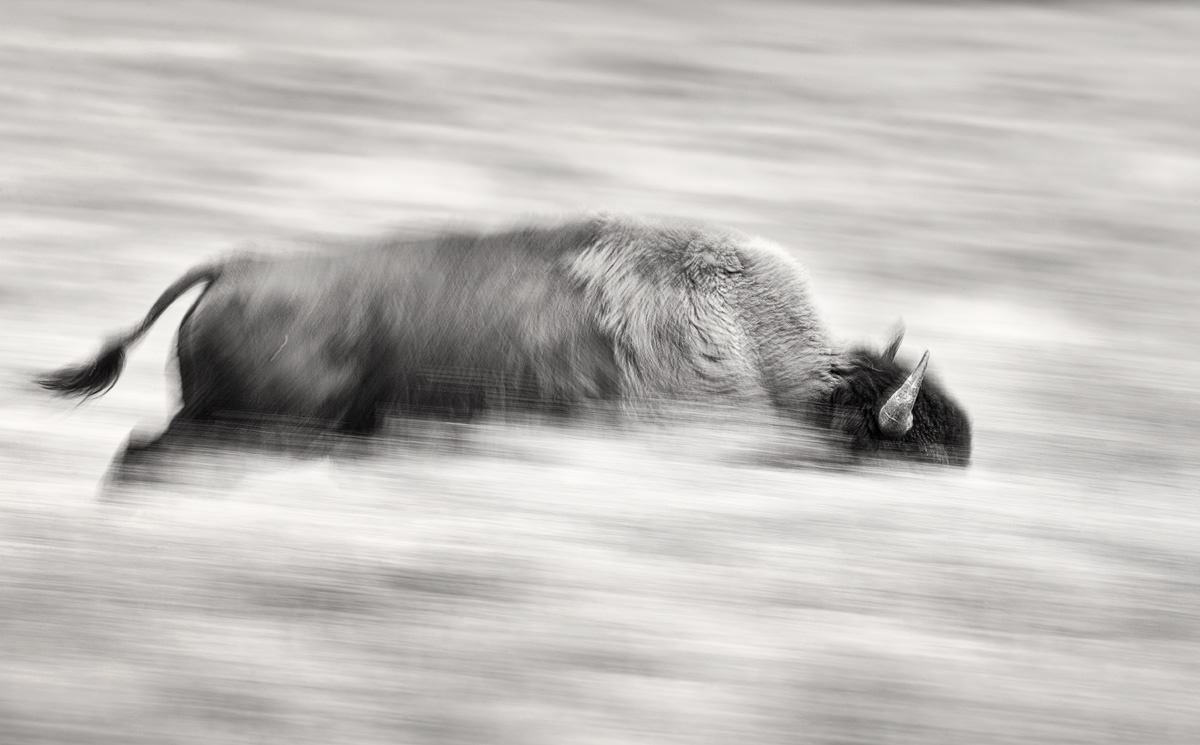
And if it is midday with harsh sunlight, I tend to try and concentrate on photos whose texture works well in the monochromatic medium.

image-#5

Canon 1DX, Canon 200-400/4 L IS with x1.4TC, ISO 800, F/6.3,1/1000 sec © Dvir Barkay

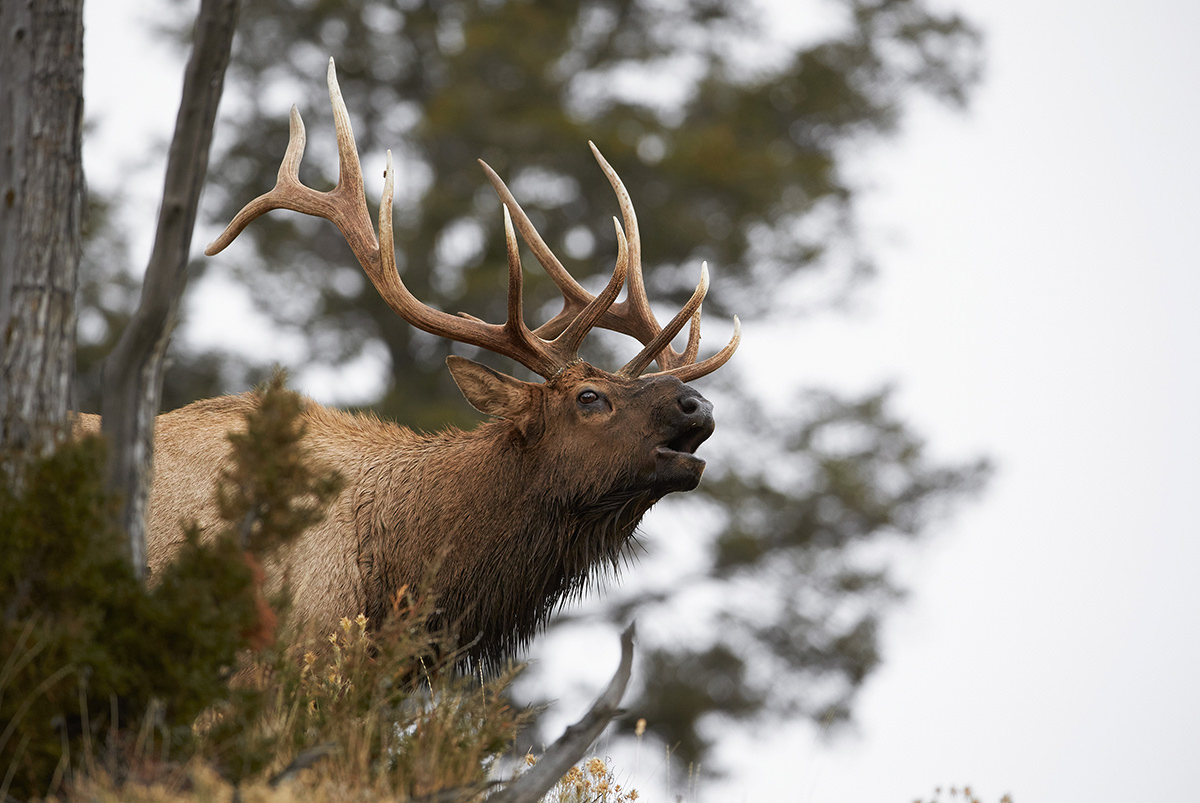
If one sound can define the Yellowstone Autumn, it would be the bugle call of the male Elk. Fueled by their desire to mate, they call out into the chilly morning and evening air as a show of strength to both attract females and warn other males. The call can be heard from miles away, with the loudest calls attracting the most females.

image-#6

Canon 1DX, Canon 200-400/4 L IS with x1.4TC, ISO 1000, F/6.3,1/1000 sec © Dvir Barkay

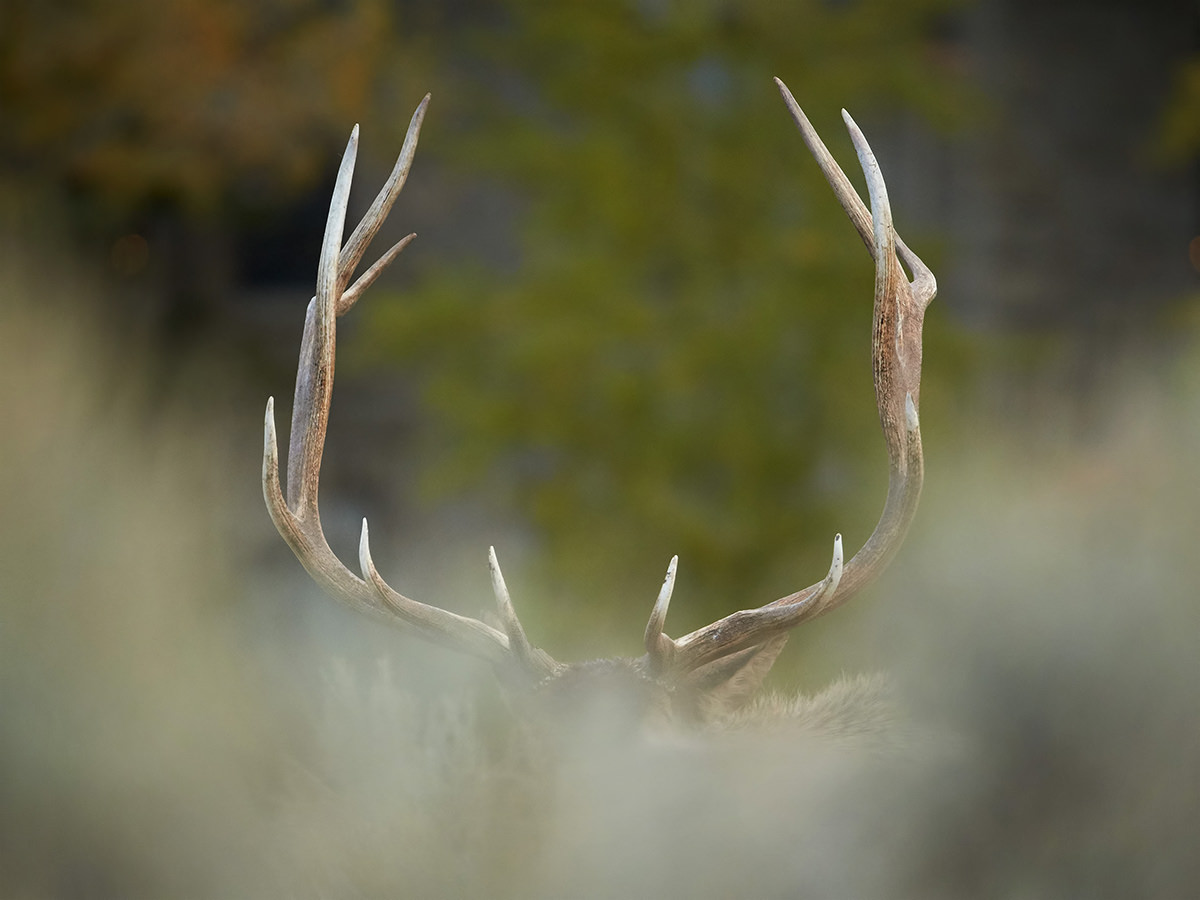
Because of the cooling temperatures the Elk slowly start to go to lower elevations making them easier to photograph in areas like Mammoth where many males congregate in the fall and with some patience can be photographed from quite a close distance.

image-#7

Canon 1DX, Canon 200-400/4 L IS with x1.4TC, ISO 3200, F/6.3,1/800 sec © Dvir Barkay

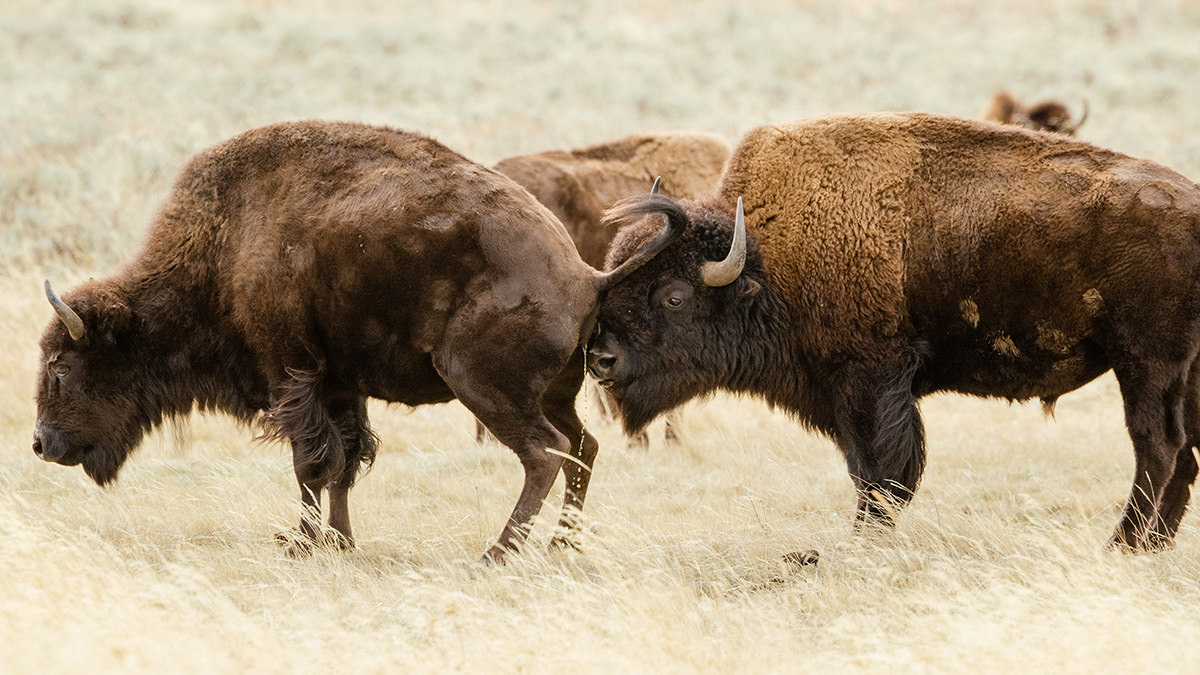
The other large herbivore that spends the months of September and October in a busy struggle for the right to mate is the American Bison. Males spend hours a day courting females, trying to get hints of when she is ready to mate. Here you can see a young male tasting a females urine. He does this because of hormones in the urine that signal to him her readiness. When she is ready and in heat, often many males will jump on the opportunity to try and mate.

image-#8

Canon 1Dx, Canon 300/2.8 USM L IS with x2TCII, ISO 2000 F/9, 1/1000sec © Dvir Barkay

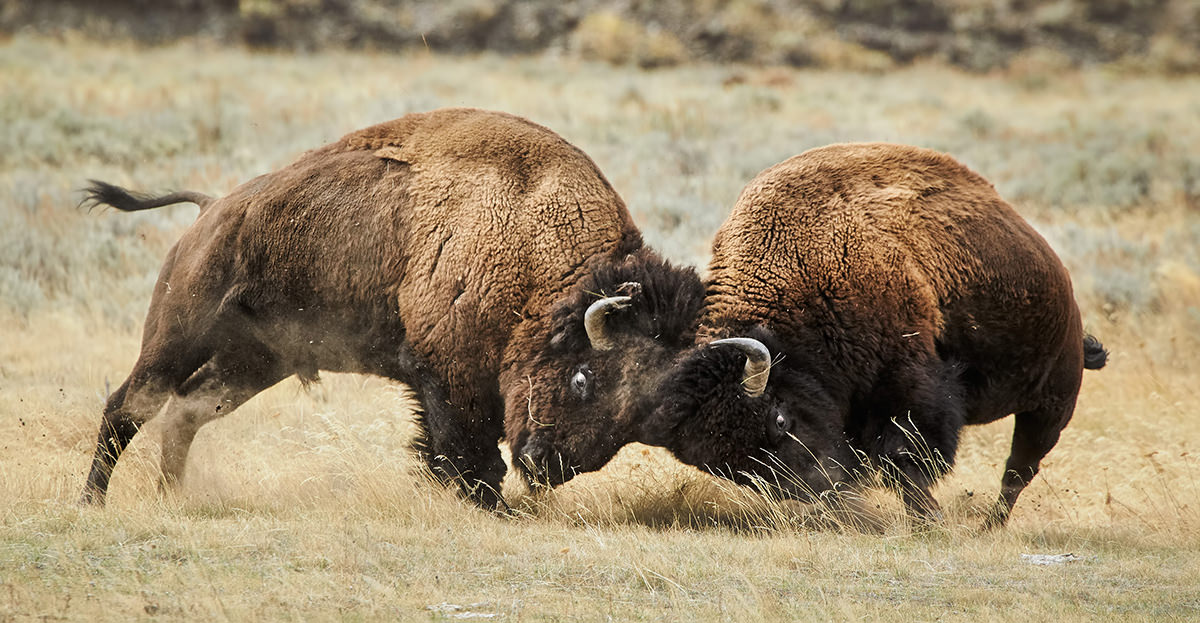
This amazing behavior which they exhibit makes for truly amazing photographic opportunities. It does take some luck because the Bison are not always close to the road for good photographic opportunities, but with some patience I feel that the latter stages of the Lamar Valley afford the best chances for capturing some great photos.

And sometimes you can see some truly once in a lifetime action.

image-#9

Canon 1Dx, Canon 300/2.8 USM L IS with x2TCII, ISO 1000 F/9, 1/1000sec © Dvir Barkay

The below photo can currently be seen at the Smithsonian’s Natural History Museum in Washington D.C. as part of the Nature’s Best Exhibition.

Image-#10

Canon 1Dx, Canon 300/2.8 USM L IS with x2TCII, ISO 100 F/16, 1/15sec © Dvir Barkay

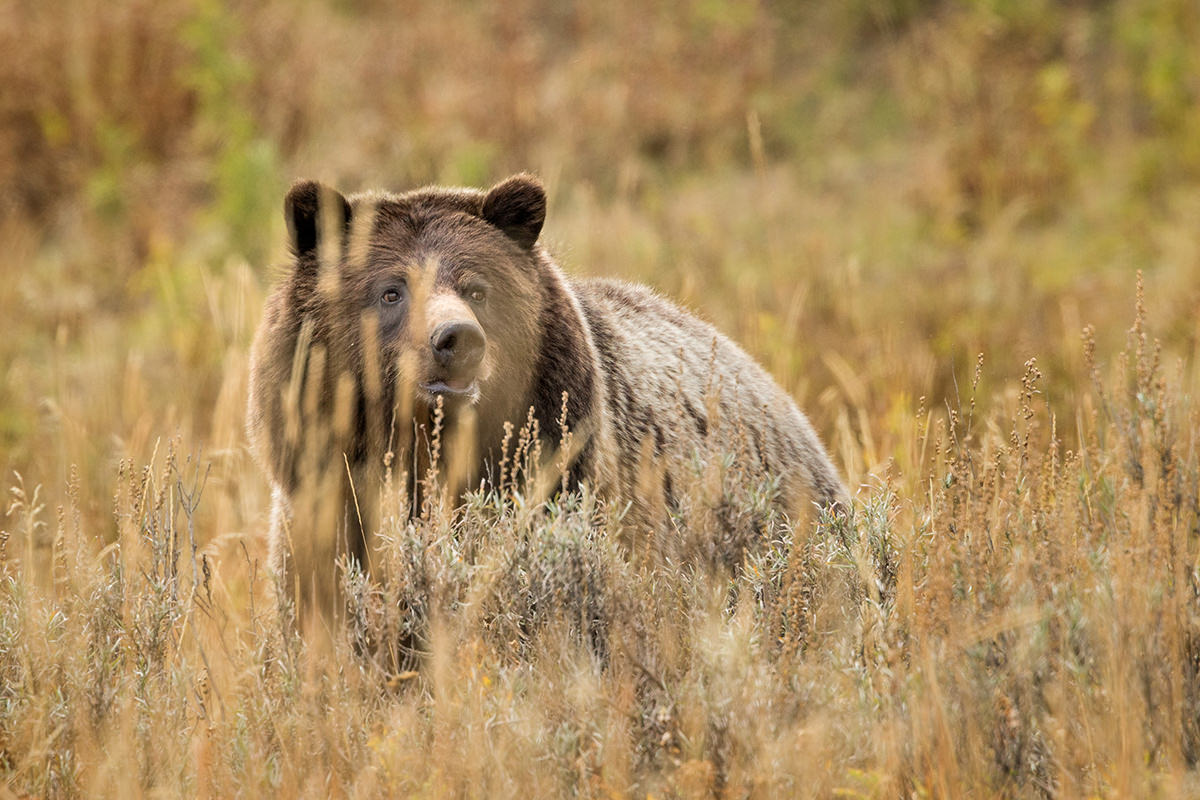
The last of the big three of Yellowstone’s Autumn is the enigmatic Grizzly Bear. Fall is one of the best times of the year to photograph the species because as the Whitebark pine seeds slowly vanish from the higher altitudes it forces the bears to go to lower elevations. A sweet spot for the them can be found on the Eastern Entrance Road going out to Cody. The last couple of years it has been a productive spot for me, and probably one of the best Grizzly hot spots in Yellowstone. The dry vegetation also makes it easier to spot bears as they maneuver through the forest and allows for a better chance of spotting them before they near the roadside.

Image-#11

Canon 1Dx, Canon 300/2.8 USM L IS with x2TCII, ISO 1000 F/8, 1/1250sec © Dvir Barkay

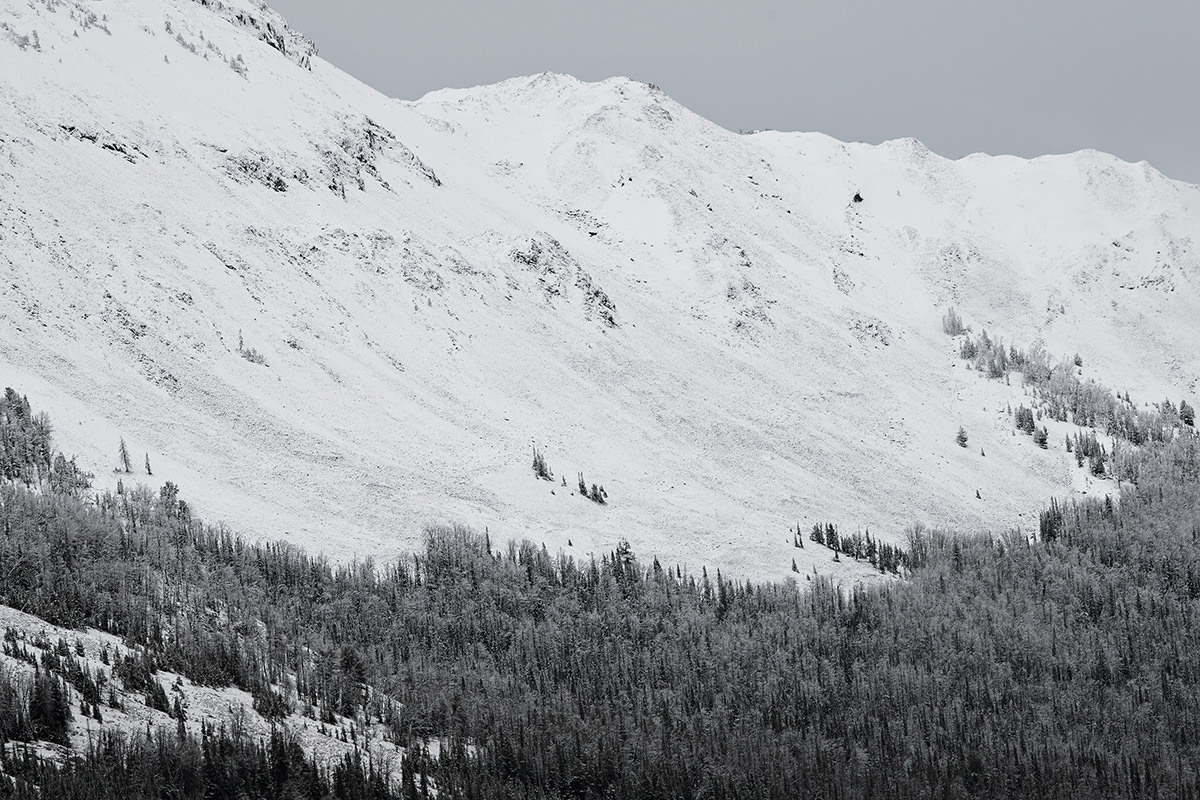
The last aspect that makes the late Fall period of Yellowstone so magical is that by late Fall the line between Fall and Winter starts to blur. With snow come wholly new opportunities to photograph the park with a very different atmosphere then the bright colors of fall, with more muted colors taking center stage.

Image-#12

Canon 1DIII, Canon 300/2.8 USM L IS, ISO 320 F/6.3, 1/500sec © Dvir Barkay

The snow also allows for the chance to photograph the parks inhabitants in new ways that are often only possible during the winter.

Most of the elk will soon migrate to lower elevations to escape the worst of the winter. Those that will remain in higher elevations will be forced to face not only the elements, but the kings of Yellowstone’s winters, the wolves.

Image-#13

Canon 1DX, Canon 200-400/4 L IS with x1.4TC + EXT TC, ISO 4000, F/11,1/1000 sec © Dvir Barkay

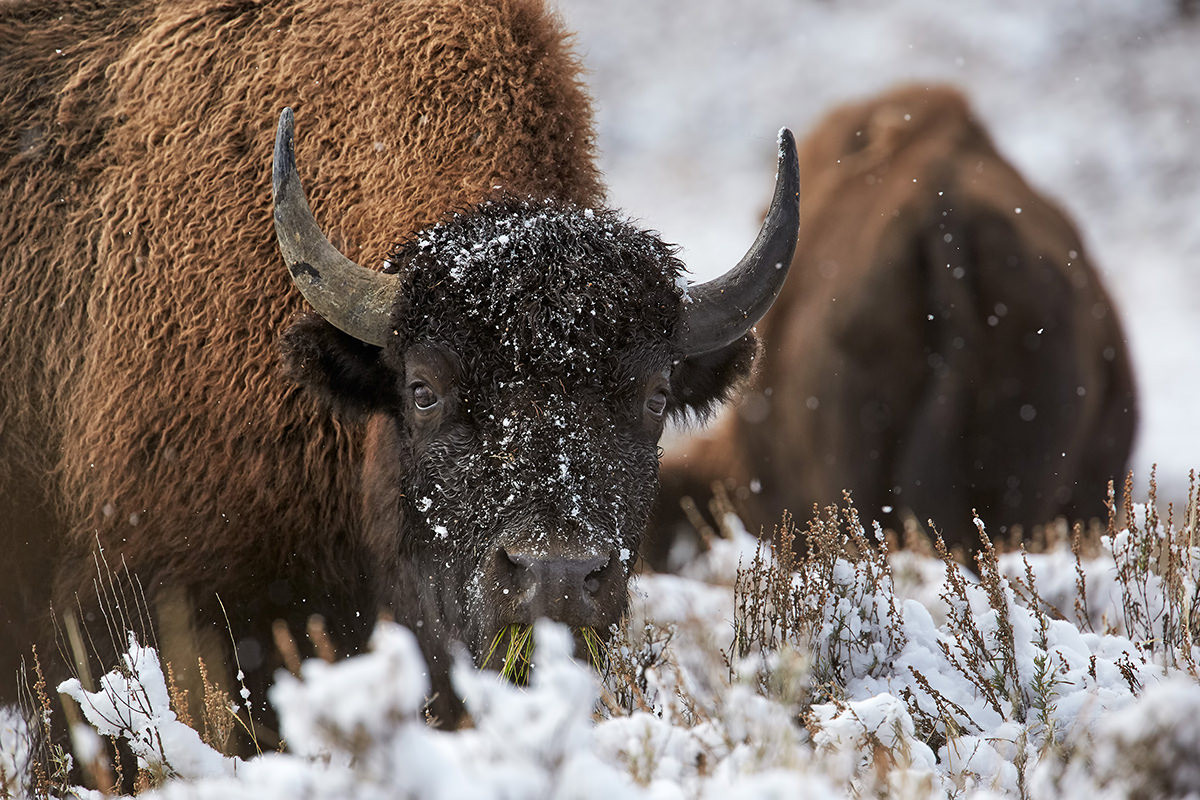
The early snows of late fall pose little challenge to the Bison, who are built to survive the harshest of winter’s. The going will not be so easy in late February.

Image-#14

Canon 1DX, Canon 200-400/4 L IS with x1.4TC, ISO 1250, F/7.1,1/2000 sec © Dvir Barkay

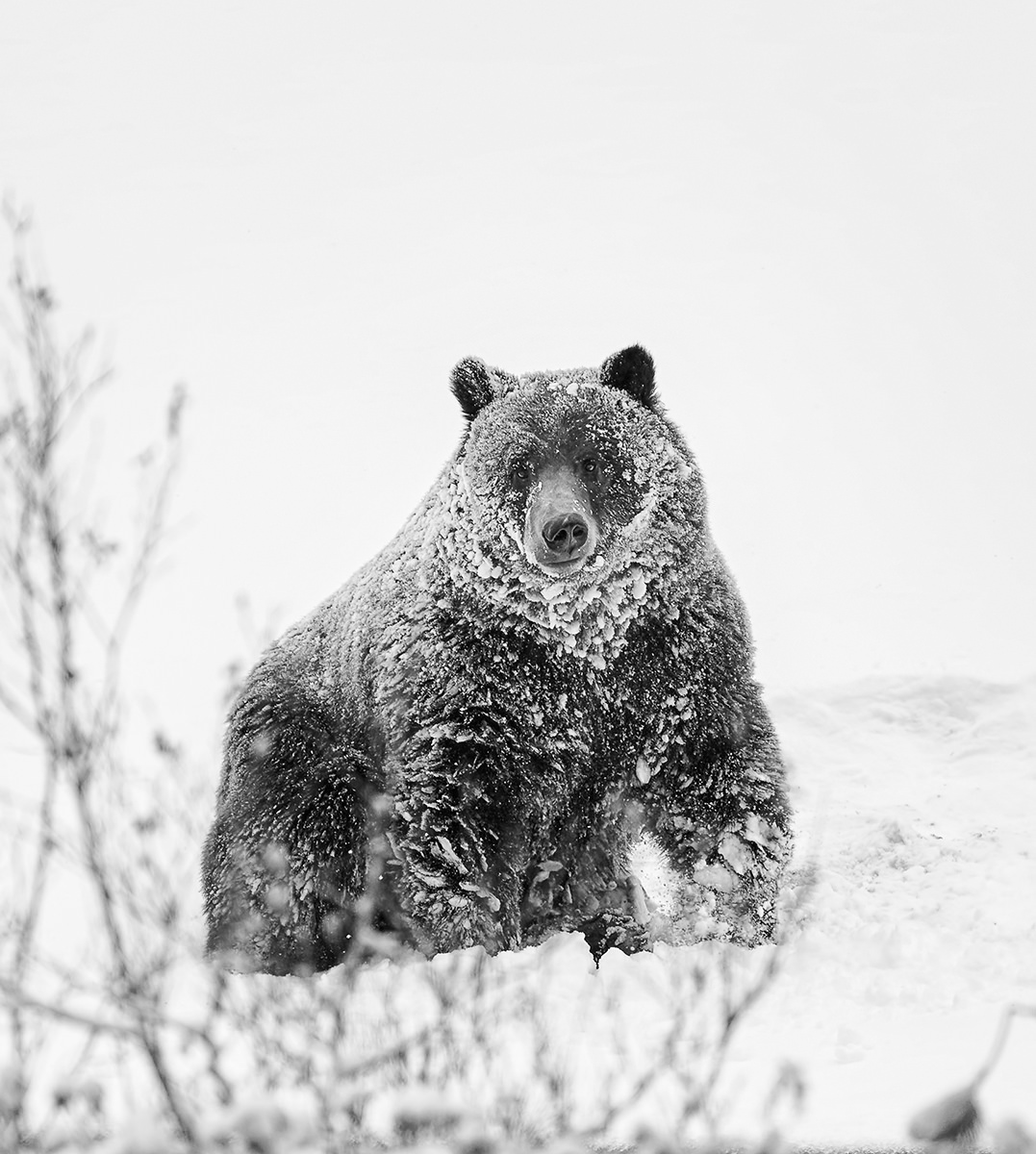
A big boar male Grizzly Bear after a snow bath. Bears like to enjoy themselves, and the fresh snow makes for a fun momentary break from the quest to find food.

Image-#15

Canon 1DX, Canon 200-400/4 L IS with x1.4TC, ISO 640, F/6.3,1/1600 sec © Dvir Barkay

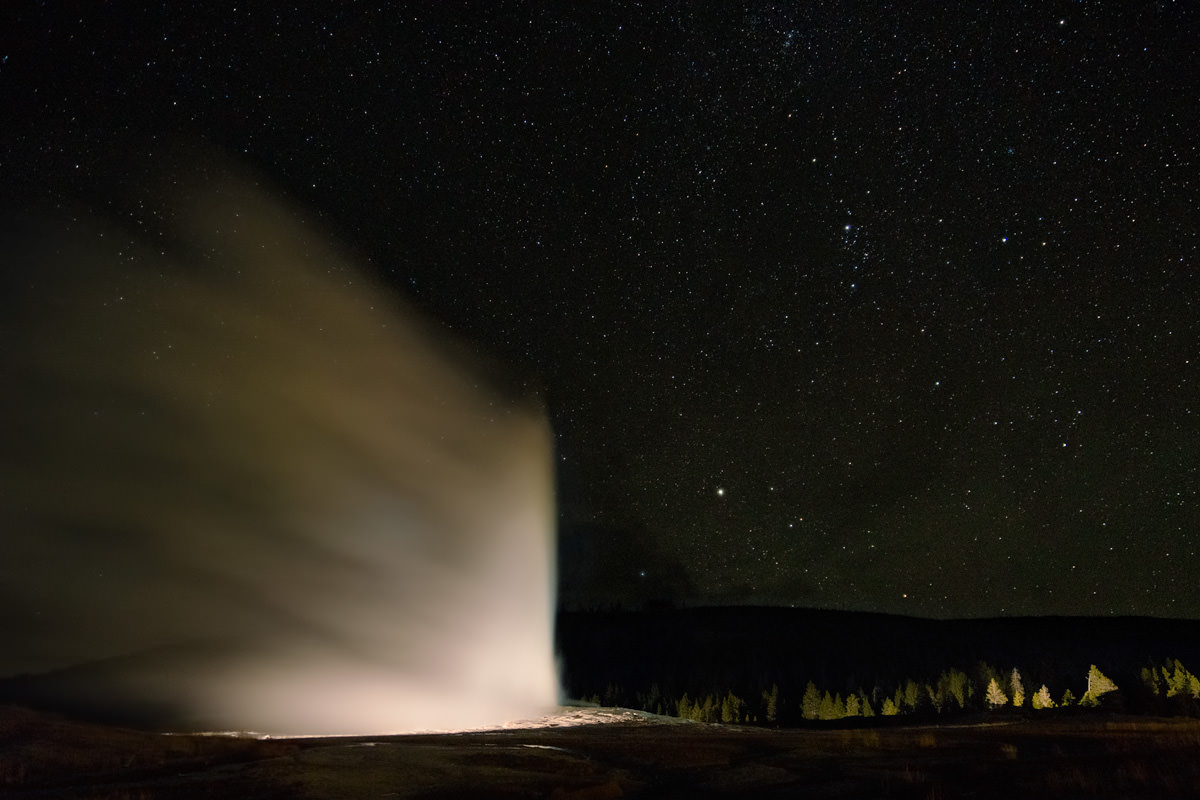
An icon, Yellowstone’s famous Old Faithful geyser erupts under the stars. Erupting every 60 minutes give or take, it is one of the most consistent geysers in Yellowstone. While the park and its inhabitants have undergone many changes during the Autumn season,Old Faithful remains one of the constants, continuing to erupt at the same times day and night. And while winter is already at the doorstep,the driving force behind Yellowstone,the immense volcano at its heart, will continue working just as it has for the last 600,000 years.

Image-#16

Sony A77, Sony 16-50/2.8 SSM, ISO 1600, F/2.8, 15 sec, tripod, © Dvir Barkay

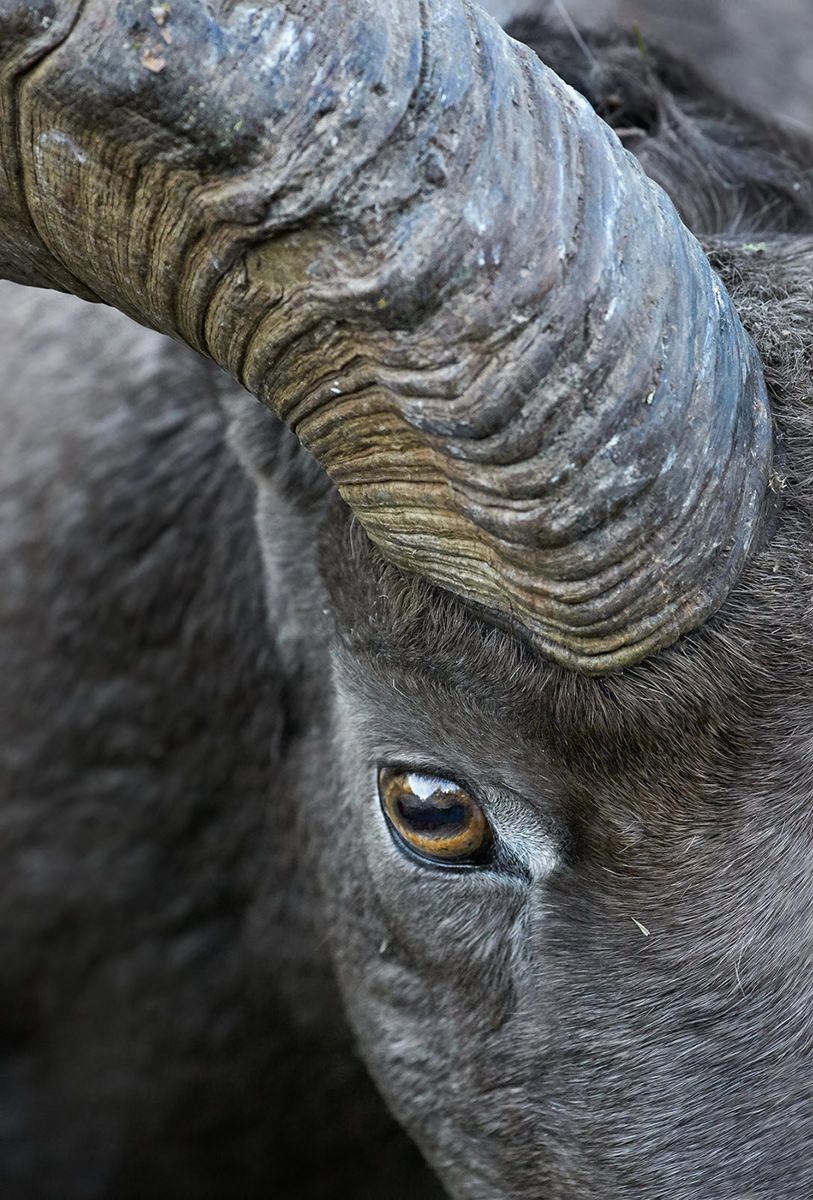
And last but not least, don’t forget to cherish and enjoy one of the world’s most beautiful places with your own two eyes. As a professional nature photographer I often find myself getting so caught up in getting the perfect shot that I miss out on seeing things with my own two eyes or in the case of this Bighorn ram, with one eye…

Image-#17

Canon 1DX, Canon 200-400/4 L IS with x1.4TC, ISO 1280, F/8, 1/1000 sec © Dvir Barkay


This guest post was submitted by Dvir Barkay. To see more of Dvir’s work, please visit his website.

The post Fire and Brimstone appeared first on Photography Life.


from Photography Life https://photographylife.com/fire-and-brimstone

Thursday, 26 January 2017

Travel Tip: Put Away Your Damn Phone!

Couple texting

Before you read this post, watch this awesome video:

OK, you watched it? Great! No? Dang. Who has 15 minutes, right?

Well, in this video, Simon Sinek, one of my favorite authors, discusses millennials in the workplace. I found it to be an insightful and incredible discussion on exactly why companies have such a hard time with millennials. To Sinek, one of the major problems is millennials’ addiction to their phones. Back in the day, before a meeting started, you would socialize with your coworkers, ask about their families, talk about work, etc. Now, no one talks because everyone is glued to their phone. It drives him up the wall, because this very important form of socialization and bonding in the workplace is now disappearing.

It’s not just a workplace issue, either. How many times are you out to dinner and everyone is checking their phones? How many times do you walk into a glass door because you are looking intently at the phone (not saying I did this recently or anything)? How often do you talk to someone while staring at the phone (“I’m paying attention, I swear!”)?

When I first started traveling in 2006, if a hostel had a computer, it was a big deal. I remember taking pictures and going to Internet cafés to upload them to my MySpace page or waiting for my turn at the hostel computer to check my email. No one I knew traveled with a phone. If you made plans to meet someone in another city, you just had to hope they would stick to them or wouldn’t get delayed. You were connected sparingly, but that never seemed to matter. You wanted to be disconnected, because that was the whole point — to break away and explore the world.

But over the last few years, I’ve seen a remarkable shift in social interactions in hostels. Now, it’s all like “This hostel’s Wi-Fi doesn’t even reach my dorm room!” While hostels are still incredible places to meet new people, they aren’t as incredible as they used to be, because everyone is on their phone, computer, or iPad, watching Netflix, working, or checking Facebook. No one is just hanging out and interacting with each other like before. I find this really sad and depressing.

I’m not against technology or all this beautiful Wi-Fi. We now have Google Maps, and we can book rooms and flights from our phone, stay in touch easier, and communicate better. Wondering why your friend isn’t at the appointed meeting spot on time? No problem! Now you can just ping them a message on WhatsApp. Problem solved!

But, as much as technology has helped us, I think we’ve really lost one of the most beautiful aspects of travel. Constant distraction keeps us from observing the place we are at and being present in the moment. Too often we’re glued to the phone, Snapchatting and Instagramming that moment but never really being in it. We’re in a hostel reading the news online or chatting with our friends back home instead of meeting people. We’re at dinner looking up Facebook “for just a second,” wondering how many people liked our last photo. Or on some adventure activity but Snapchatting the experience.

A few years ago, I read the book What Got You Here Won’t Get You There. In it, the author Marshall Goldsmith talked about how if you are doing something else while talking to someone, you are subtly signaling to them that they aren’t important, even if you can parrot back everything they said. I thought about that and realized I did that all the time. I was only ever half there. That book made me rethink how I interact with people. It taught me to put away my phone, to make better eye contact, and focus on the people around me.

It was a very hard thing to do, as I was totally addicted to my phone. (And the video above reminded me that recently I’ve backslid into my old ways: too often I use my phone as a crutch when I’m bored or have downtime.)

Last year, as part of my anxiety-reducing initiative, I cut down the amount of work I do when I travel. When I go some place new, I put the computer away. If I’m not going for a “workcation” or a conference, the computer is off.

I write this from Malta. During my four-day jaunt around the island with friends, I didn’t open my computer. I didn’t write. There were a few tweets and posted pictures, and when someone was caught on their phone, we reminded each other to put it down. We focused on enjoying the destination and being present.

I don’t want this to be a “get off my lawn” kind of post, but think about it — how often and how long do you go without your phone? When you travel, how many times are you “pulled away” from the experience while commenting on someone’s last post? Did you travel around the world so you can check on what your friends back home are doing, or did you go for the adventure?

This year, as we travel, let’s pledge to put our damn phones away. Let’s not retreat into our safe zone when we feel slightly uncomfortable around strangers or in silence. Let’s interact with the people and places we are visiting. Observe the amazing scenes around you. Say hello to someone new. Give yourself 15-30 minutes max — and then put the computer or phone away, step out the door, and take in the world!

This year I am going to refocus on getting off my phone and being more present when I travel. Join me in doing so!

If you’re traveling with someone, tell them to remind you to put the phone away. Eventually, you’ll break your habit. If you are traveling alone, leave your phone in your dorm when you go downstairs. You’ll be forced to interact with people.

Let’s make 2017 the year we stop curating our lives, cut the umbilical cord to home, put away our phones, and enjoy the moment and beauty in front of us!

P.S. – Looking for another way to kick start your new year? Over at the forums, we are doing our quarterly Travel Action Challenge, where you can win prizes (like a $100 USD Amazon.com gift card) just for traveling!

The post Travel Tip: Put Away Your Damn Phone! appeared first on Nomadic Matt's Travel Site.


from Nomadic Matt's Travel Site http://www.nomadicmatt.com/travel-blogs/travel-phone/

Tuesday, 24 January 2017

For the Love of God, Don’t Sew a Canadian Flag on Your Backpack


There are so many travel urban legends out there. The belief that dressing up and being polite at check-in will get you a free upgrade to business class. The Paris restaurant where the food is so good, you’ll cry, and prices haven’t changed since the 1980s. The mysterious Thai island that no “tourists” know about.

But the biggest myth of all? The crowds of American travelers with Canadian flag patches sewn to their backpacks.

Image: Venture Vancouver

Do these travelers actually exist?

When I brought up the subject of traveling as an American during a Trump presidency, I was shocked at how many of my readers talked about Americans masquerading as Canadians with a Canadian flag patch sewn on their backpacks.

“I’m doing that before I travel next!” several of them claimed.

I have never seen an American with a Canadian flag patch. Ever.

Hell, it’s rare to see any kind of patch sewn on a backpack nowadays.

That said, I’ve heard story after story of these travelers existing. You’ve probably heard them, too. But here’s the thing — these stories almost always seem to be secondhand. A few of them have actually seen them, sure, but most people have only heard of Americans doing this and can’t recall a specific point when they saw it with their own eyes.

Because of this, I seriously doubt that most of these people who claim to have seen Americans pretending to be Canadian have actually seen them.

It’s like saying, “Oh yeah, I heard tons of people saw Mike Pence on Grindr the night of the inauguration.” If you hear it often enough, you start to believe you saw it with your own eyes.

But what hurt me was hearing how many of my American readers were eager to start pretending to be Canadian on the road. I don’t want anyone to do that, and I don’t think it does us any favors.

Traveling Under Obama vs. Traveling Under Bush

Now, granted, most of my long-term international travels have been during the Obama Administration, and generally speaking, President Obama is highly respected around the world.

But I’ve also traveled extensively during the Bush Administration, albeit mostly in Europe. I was in Italy during his reelection in 2004. And he was far less respected around the world.

(Even when I arrived in France in 2001, pre-9/11, as soon as I met my host family, they immediately wanted to talk about Bush. One of the first things the father said to me was “Il est cowboy!“)

When Bush was president, I would constantly field questions about his policies, especially around the war in Iraq.

By contrast, during the Obama years, criticism of America was far rarer. Most of it tended to focus on healthcare and gun violence. Obama was rarely criticized, and if he was, it was usually about drone strikes.

With a new era under Donald Trump, it’s going to be similar to the Bush years.

That’s the reason that lots of Americans want to be undercover Canadians. They want to escape the constant questions. They don’t want to be shamed. I get it, but that’s not the right course of action.

Why Pretending to be a Canadian a Bad Idea

Canada is a fantastic country. Gorgeous landscapes, very friendly people, delicious food, astonishing diversity. Plus, the Canadian dollar is weak and it’s a bargain to visit right now. I haven’t visited Canada in a long time, but I hope to visit at least two different regions this year. In short, if you’re Canadian, you’re very lucky.

That said, as lovely as it is, you shouldn’t lie and say you’re Canadian. Why?

Most people are happy to meet Americans. Because most people are nice, period. If you treat people with kindness, they will very likely treat you with kindness in return. And some countries, like Kosovo, welcome Americans with joyful enthusiasm!

Most people understand that governments do not always represent people. If people were judged based on the worst decisions of their governments, everybody would hate everyone.

Most people understand that Trump is deeply unpopular in America. He entered the presidency with the lowest ratings in 40 years; national and international news coverage has reflected this unpopularity. The 2016 election was a major international story. People understand that it was a contentious and close election, and that many people are not happy with Trump being president.

Canadians are everywhere. Any actual Canadian will see through your act the moment they ask, “Where are you from?” and realize you have no knowledge of Canadian geography or expressions.

Canada is also more prominent on the international stage today. Canadian politics used to rarely make international headlines, but that all changed with the election of Justin Trudeau. Suddenly Canadian political news started going viral, like the reveal of Trudeau’s remarkably diverse Cabinet. Non-Canadians may want to talk about Trudeau and if you don’t even know what party he’s from, you’re not going to look good.

If you lie to people initially, then tell the truth once you trust them, you are going to look like an idiot. They may be hurt; they may roll their eyes. They may say, “What’s the big deal?” Save yourself the grief.

Use This As an Opportunity

But most importantly, owning your Americanness is vital to creating understanding around the world. If you’re against Donald Trump, let people know why. Show people that not everyone in America thinks that Trump is good for America. (And hell, if you’re a Trump fan, do the same thing! Share your point of view.)

It’s good to plan out what you want to say ahead of time. Here’s what I plan to say:

“I didn’t vote for Trump. I campaigned and volunteered for Hillary, for Obama before her, and I’ve been a liberal my whole life. I think Trump’s policies are bad for the country and his election is an embarrassment.

“I run my own business and was only able to do so because of Obamacare. Some of my biggest worries are that Obamacare will be repealed without a replacement, leaving me and 20 million Americans without healthcare; that new Supreme Court justices will overturn Roe v. Wade and women won’t have access to safe and legal abortions; that more black Americans will be murdered by the police; that my friends’ children with autism will lose the right to be educated in public schools; that the threat of climate change will worsen and be ignored; and that Trump’s pettiness and fixation on revenge will anger the wrong leader and get us into another war.

“But my biggest worry is how often Trump and his team lie, even about things that can be disproved instantly, and how his supporters will believe the lies because everything they disagree with is ‘fake news.’ I don’t know how to fight this.

“I’m not the only person who feels this way — 3.7 million people marched against Trump in the US alone. 1 out of every 100 Americans protested — that is insane. There were protests on seven continents. Yes, including Antarctica!

“Personally, I don’t think Trump will make it through four years. I think he going to get overwhelmed and go back to New York, letting Pence do all the work while he retains the title of President. And nobody in Congress will do a thing about it.”

That’s my story. Feel free to use any part of it you’d like — but put your own spin on it.

How to Talk to People

When Bush was president, the question I would get the most while traveling was, “Why? Why would anyone vote for him in the first place? Why would anyone reelect him?!”

Expect to get similar questions with Trump. Here are some talking points if you need them:

Why did Trump win?

Lots of Americans felt like they weren’t being heard in Washington and that their lives weren’t getting better, and the best way to enact change was to elect an outsider. Many of these people were white working class voters in regions like the Rust Belt (Wisconsin-Michigan-Ohio-Pennsylvania) where automation has killed the manufacturing industry and lots of people are unemployed or underemployed. Trump spoke directly to these voters throughout his campaign.

Trump also ran a campaign with racially charged rhetoric. Many people found it refreshing that a candidate made it okay to be “not politically correct” anymore. The KKK endorsed him and celebrated his election.

There are other reasons. Some Republicans will vote for any Republican, no matter how vile. Republicans also tend to have more single-issue voters than Democrats. These voters will always support the anti-choice or pro-gun candidate, both of which Trump was.

Then there were many people who didn’t like Hillary. Many people painted her and Trump as equally bad options. Many supporters of Bernie Sanders thought that he should have been the Democratic candidate and they chose to vote third party or not at all.

And then there was the murkiness of the election — Russia’s interference, as well as FBI Director James Comey releasing damaging but ultimately meaningless information about Clinton shortly before the election.

Believe me, that’s just the tip of the iceberg as to why Trump won. Political scientists will be engrossed in the 2016 election for generations.

But why didn’t people like Obama?

Lots of people are racist. Far more than would admit to it. This is why Obama had to be the perfect candidate with a perfect family. Ta-Nehisi Coates said it best: “To be president, [Obama] had to be scholarly, intelligent, president of the Harvard Law Review, the product of some of our greatest educational institutions, capable of talking to two different worlds…Donald Trump had to be rich and white.”

Racist people want to destroy every one of Obama’s accomplishments. They even love aspects of Obamacare, like allowing people with pre-existing conditions to get health insurance; they just don’t like that Obama created it. As Van Jones said on election night, “This was a whitelash.”

Some people’s health insurance became more expensive when Obamacare went into effect. Obamacare gave 20 million people health insurance and reduced costs for most people, but it wasn’t perfect for everyone, and people whose costs went up were angry.

While much of the country recovered significantly from the 2008 recession when Obama took office, urban areas tended to bounce back more strongly than rural areas and many people in rural areas thought their lives were the same or worse since 2008.

But why didn’t Hillary win if she got nearly 3 million more votes?

The Electoral College awards votes per state based on population, and rural states get slightly more votes. It was originally created to give slave states more votes without letting the slaves vote themselves; it was also created to prevent a demagogue from taking office just in case the people elected a madman (that worked out terrifically). The Electoral College usually lines up with the popular vote, but sometimes it doesn’t. Bush lost the popular vote but won the Electoral College in 2000.

Hillary won by a huge margin in solidly blue states like California, where a win was predetermined; Trump won by a very slim margin in swing states like Michigan, where a win was vital.

The Electoral College is outdated and needs to go. But with a Republican-controlled government, the chances of that happening anytime soon are slim.

The One Exception

The only time that I would recommend lying about being American is if doing so would keep you safe in an otherwise dangerous situation. There may be a time when it’s best to lie low and hide your nationality until you’re in a safer position.

Just remember:

Not wanting to talk about Donald Trump again is not a dangerous situation.

Thinking that someone might make fun of you is not a dangerous situation.

But if you somehow get swept into an anti-American demonstration on the street, yes, that’s when it’s time to lie and say you’re Canadian. But you’re unlikely to fall into a situation like that unless you go looking for it. And it’s best to get yourself the fuck away rather than spend time chatting.

And One Last Caveat…

If anything, Trump has shown us that he will act recklessly at best, vindictively at worst. He’s repeatedly shown a disdain for facts, an obsession with those who have wronged him, and that he cares more about Putin than the majority of Americans who did not vote for him.

So it’s very likely that something bad could happen under a president like this. War. And worse. Things so bad I don’t even want to type them.

If that happens, all bets are off. Save yourselves.

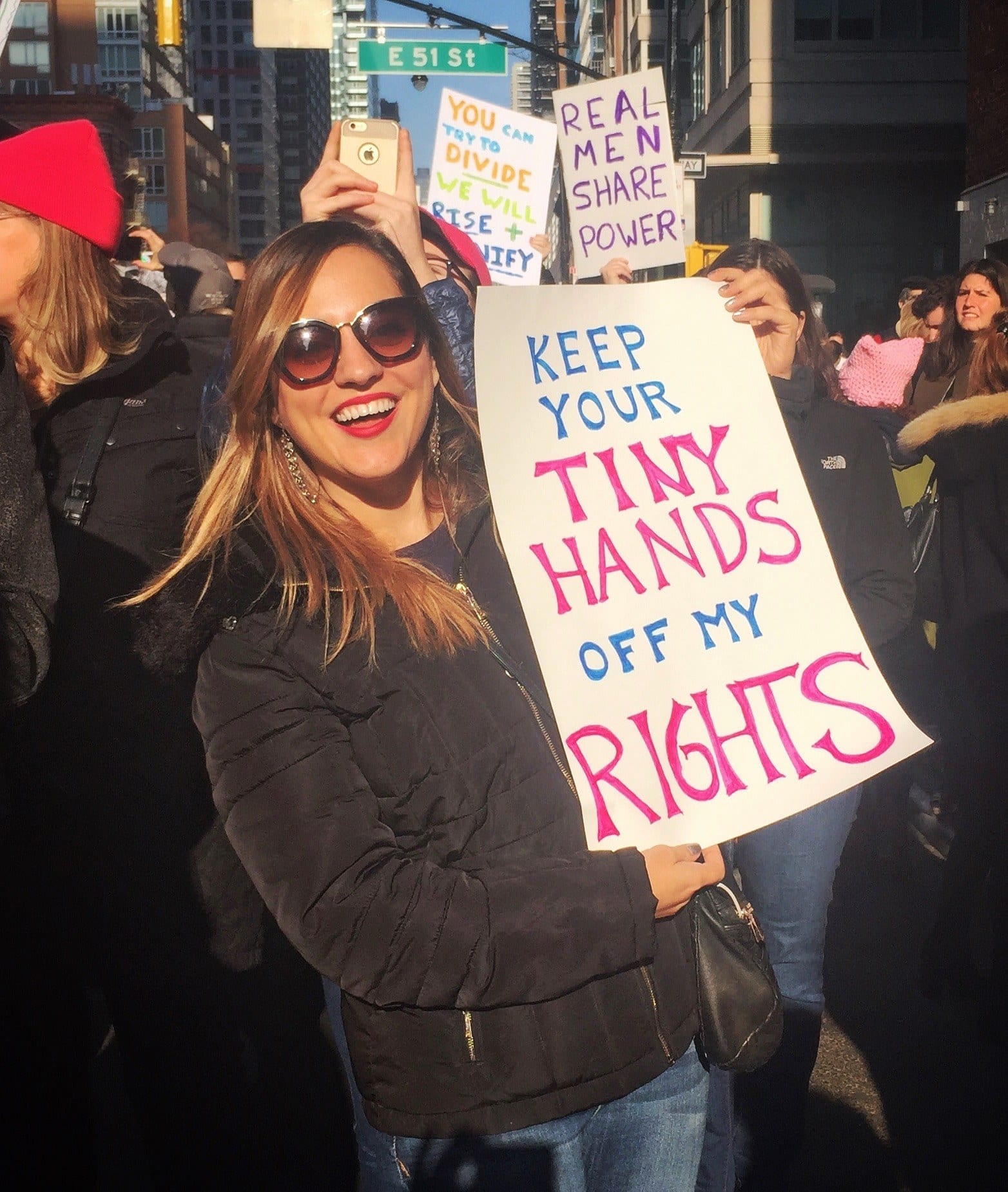
The photos in this post were taken during the Women’s March in New York City, where I was among 400,000 women and allies warning the new administration not to cut off our rights. Thank you to everyone who marched. Remember to be politically active, hold your representatives accountable, and take concentrated actions every week — we’re going to need all the momentum we can get.

Americans, would you ever pretend to be Canadian? Or do you think it’s a bad idea? What’s going to happen over the next four years? Share away!


from Adventurous Kate http://www.adventurouskate.com/for-the-love-of-god-dont-sew-a-canadian-flag-on-your-backpack/