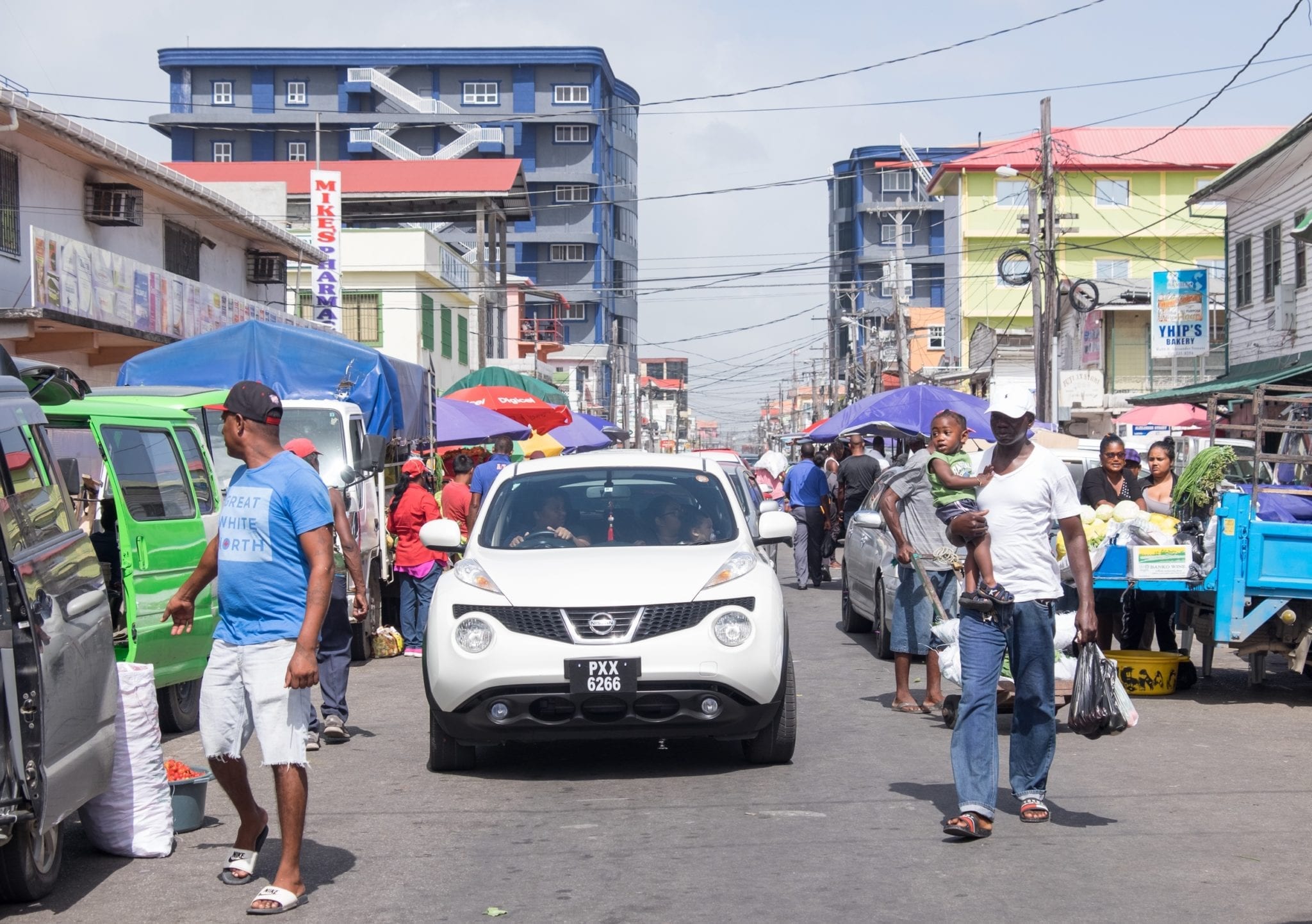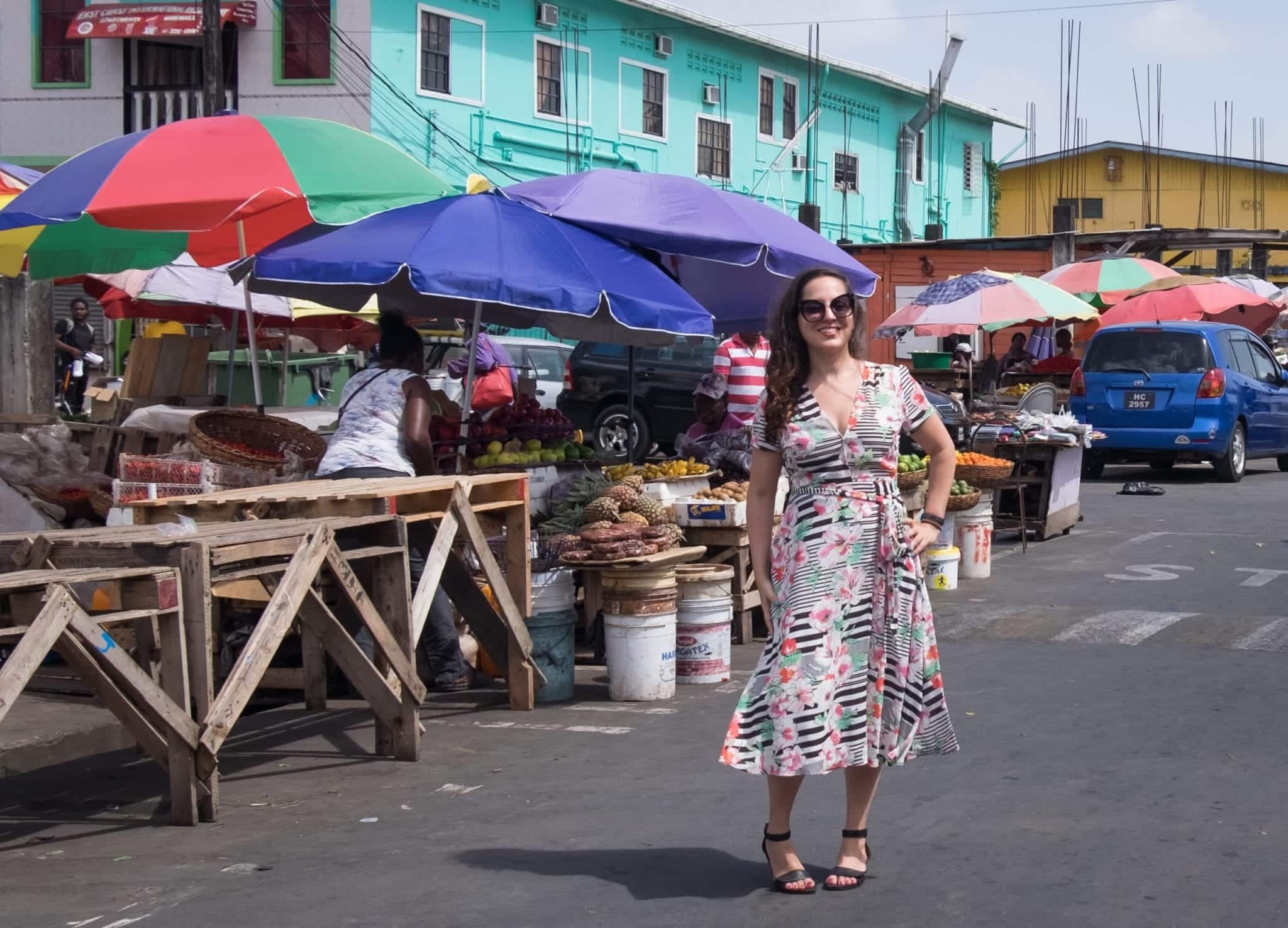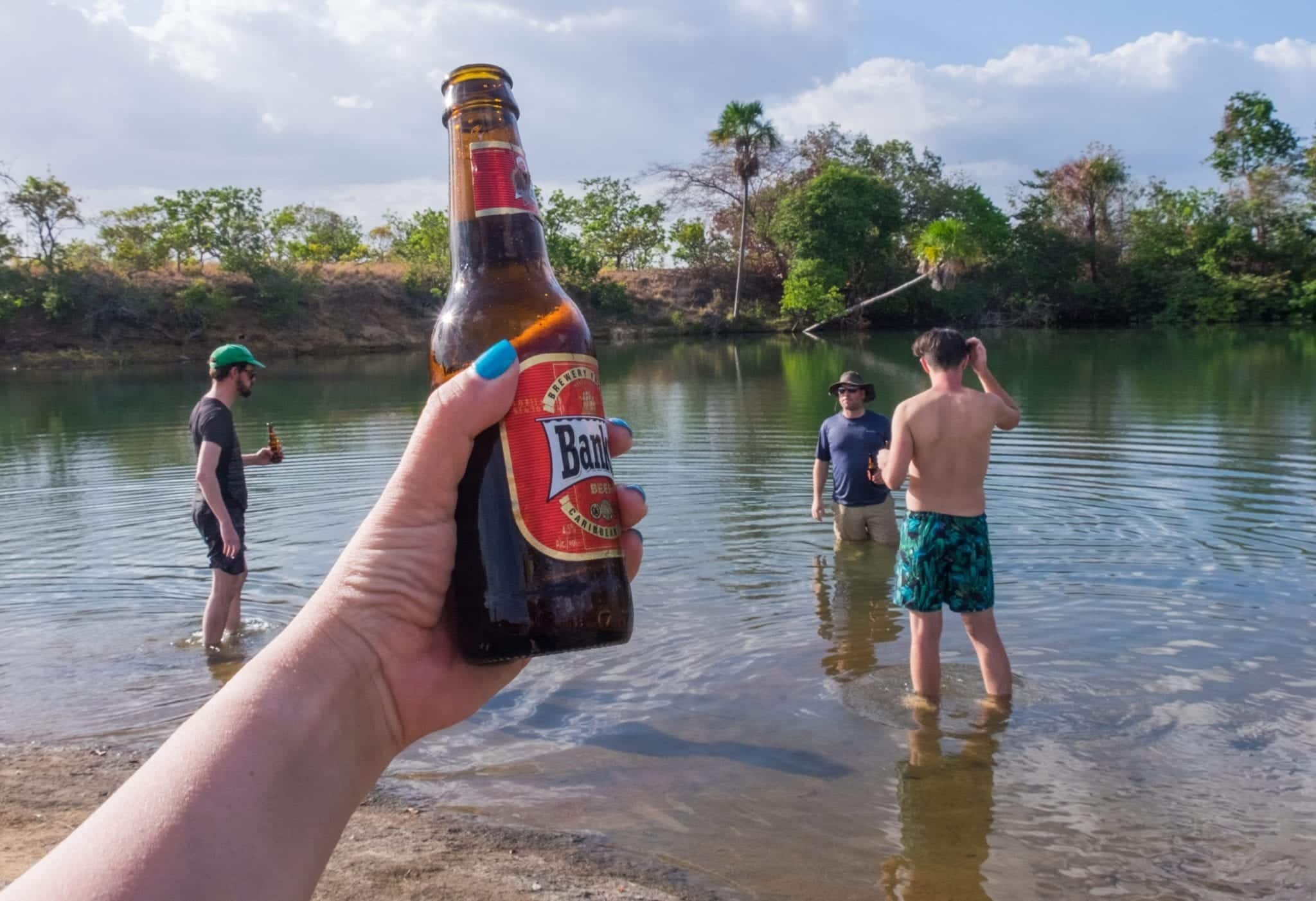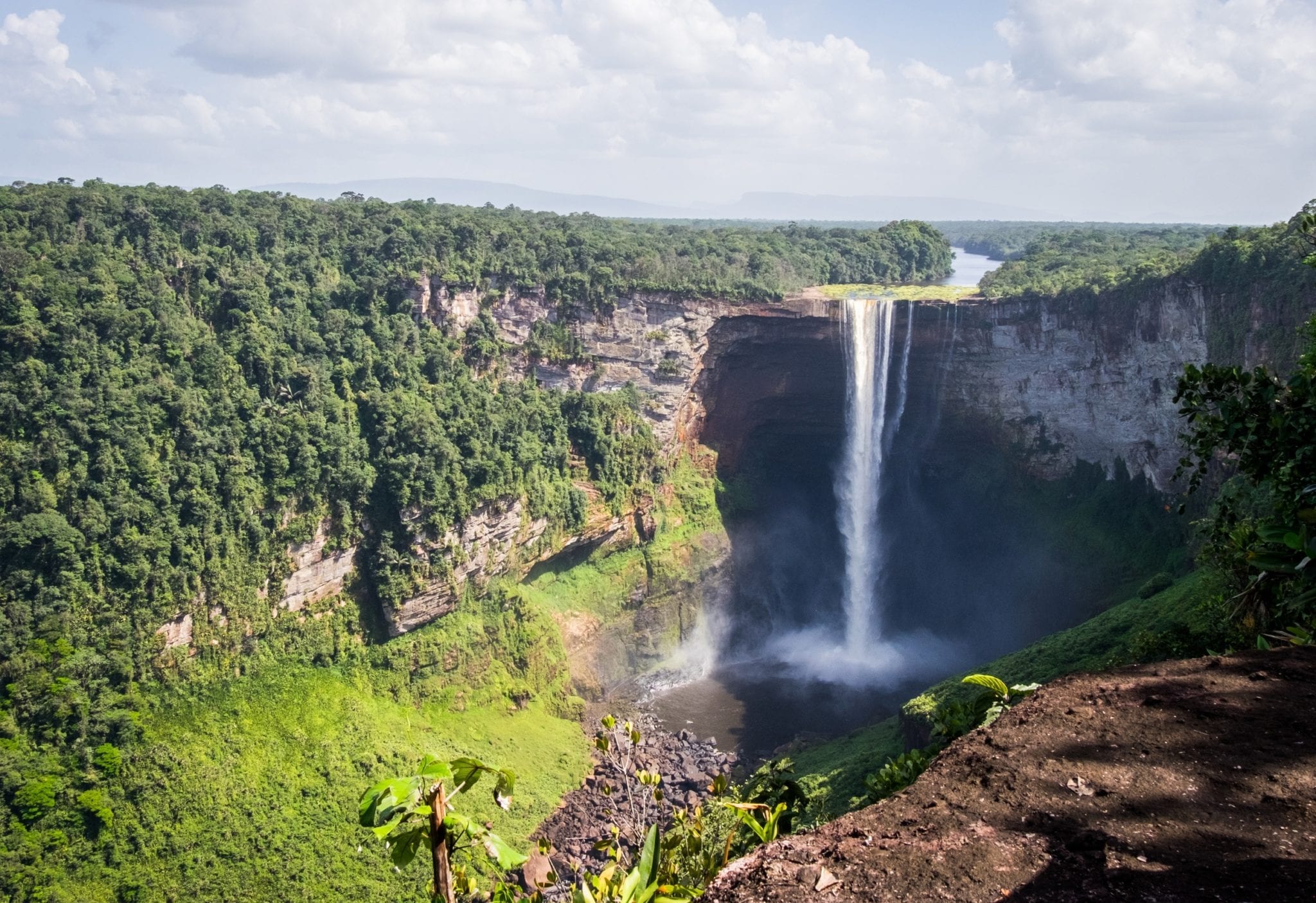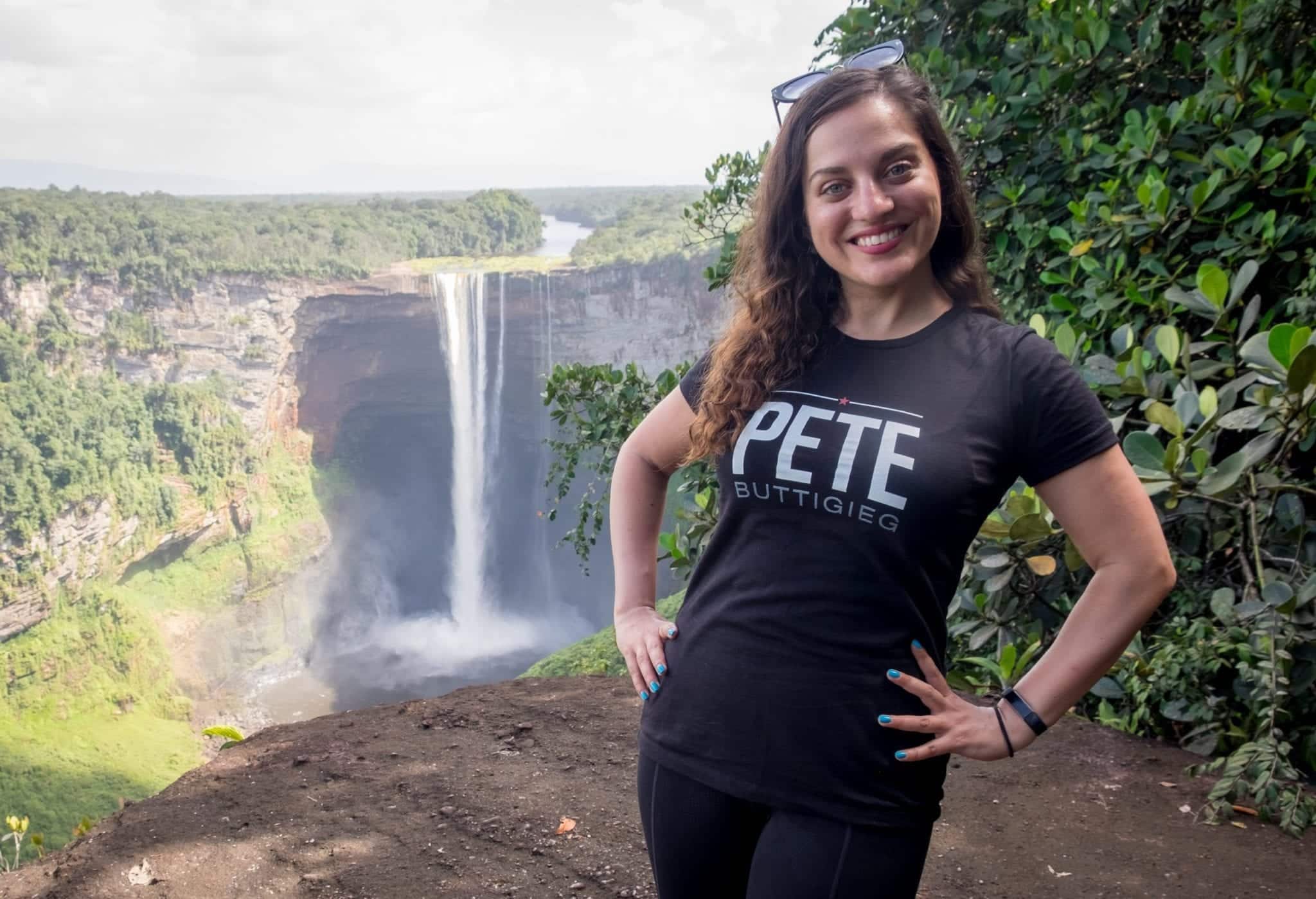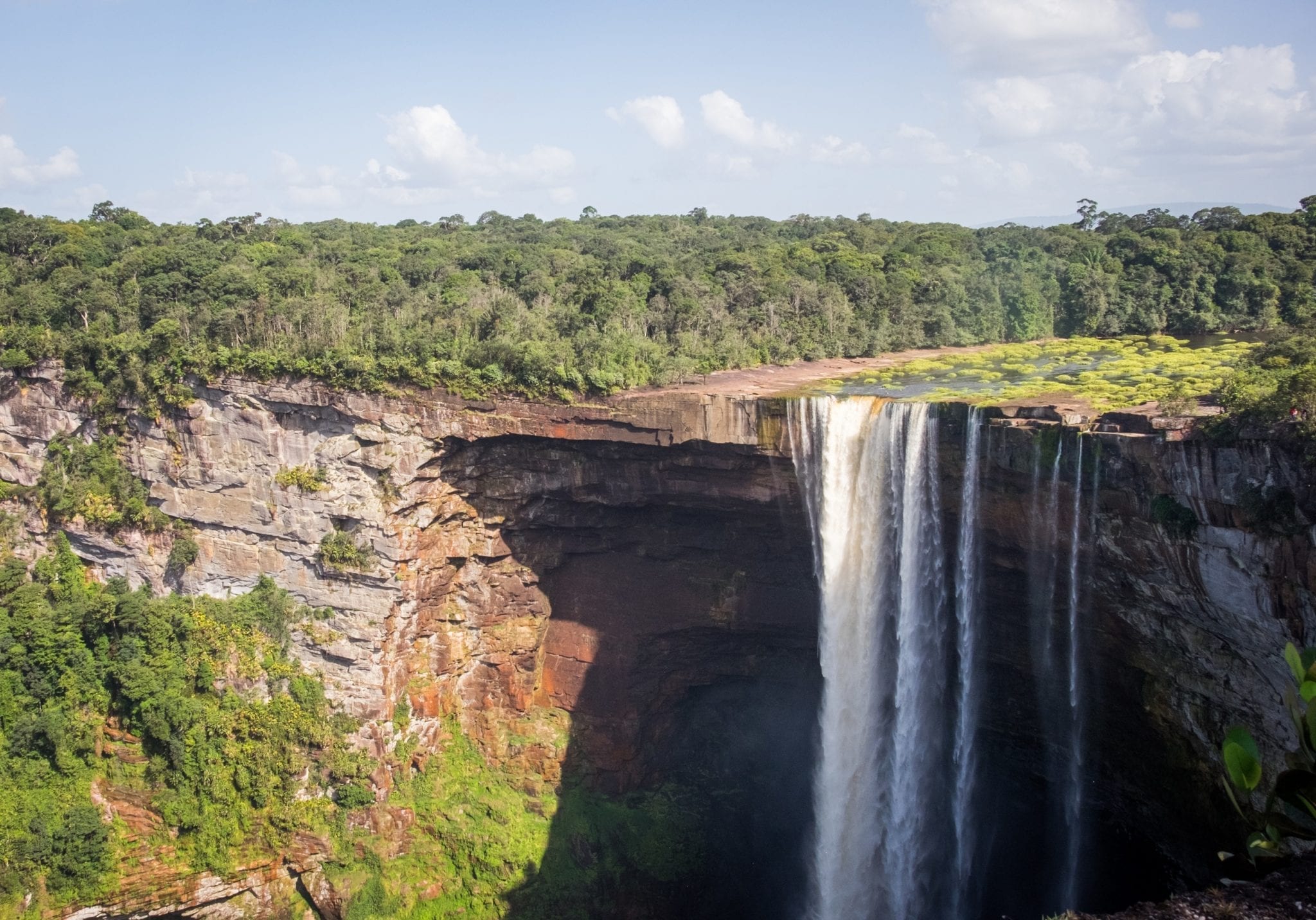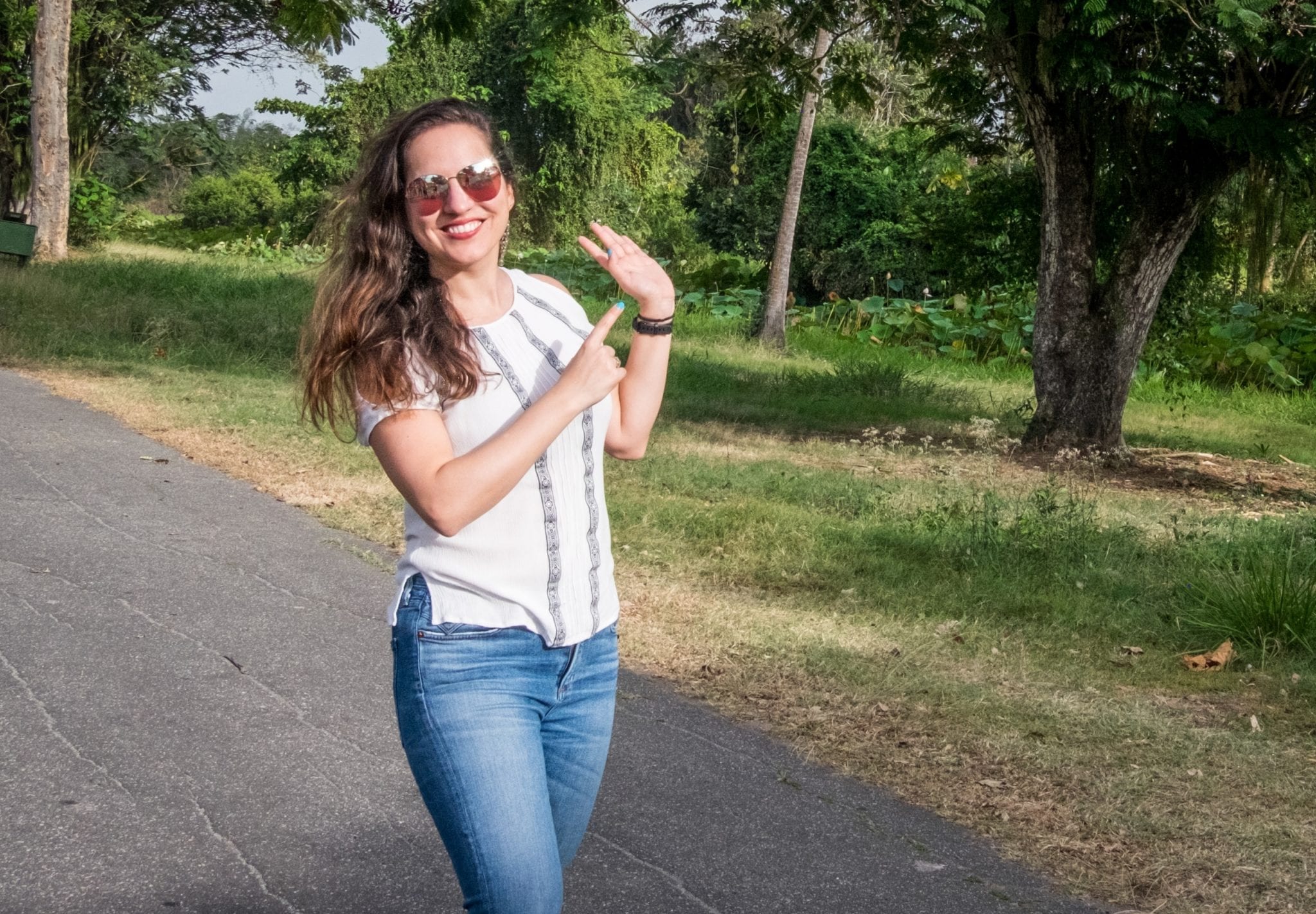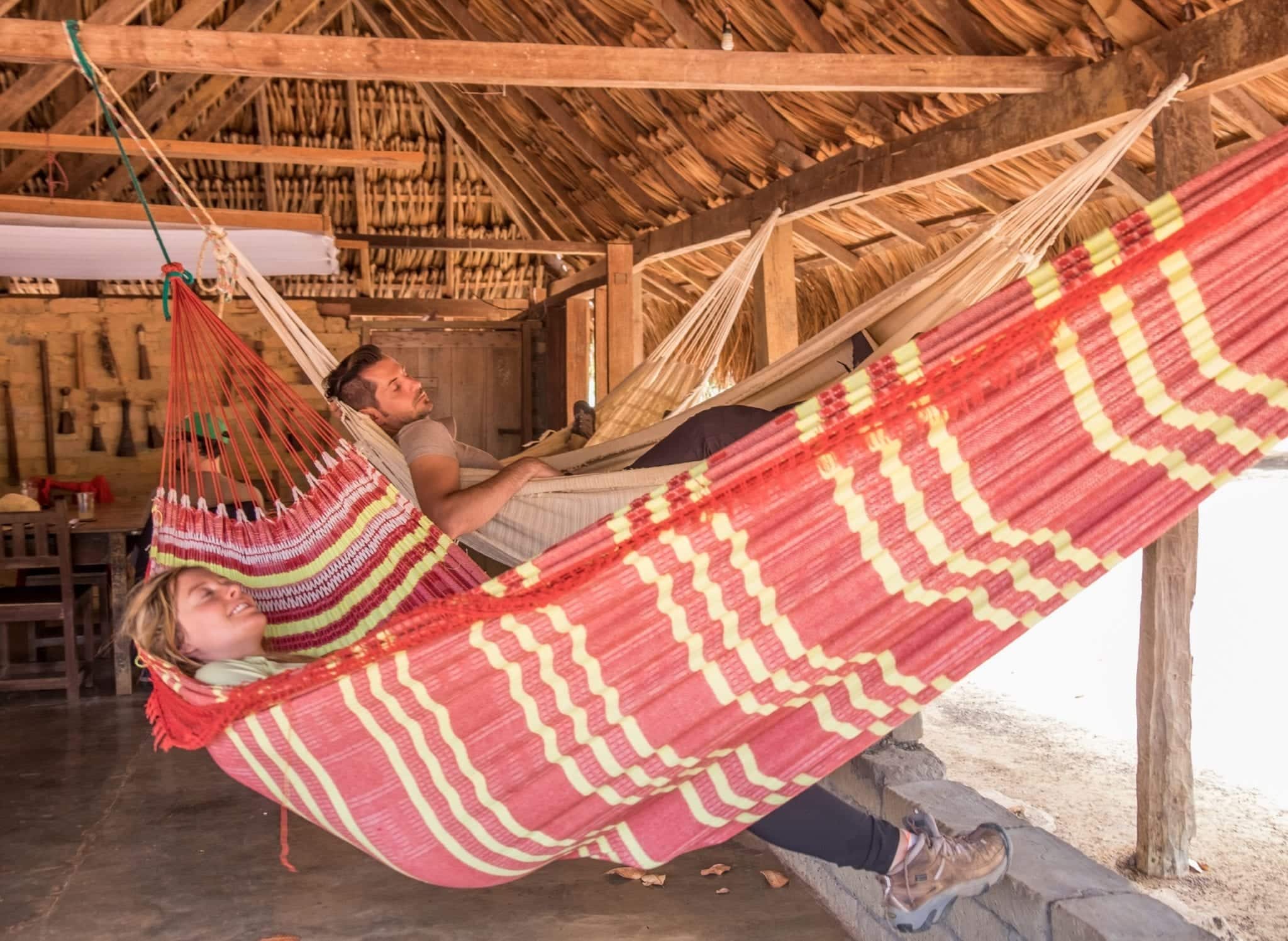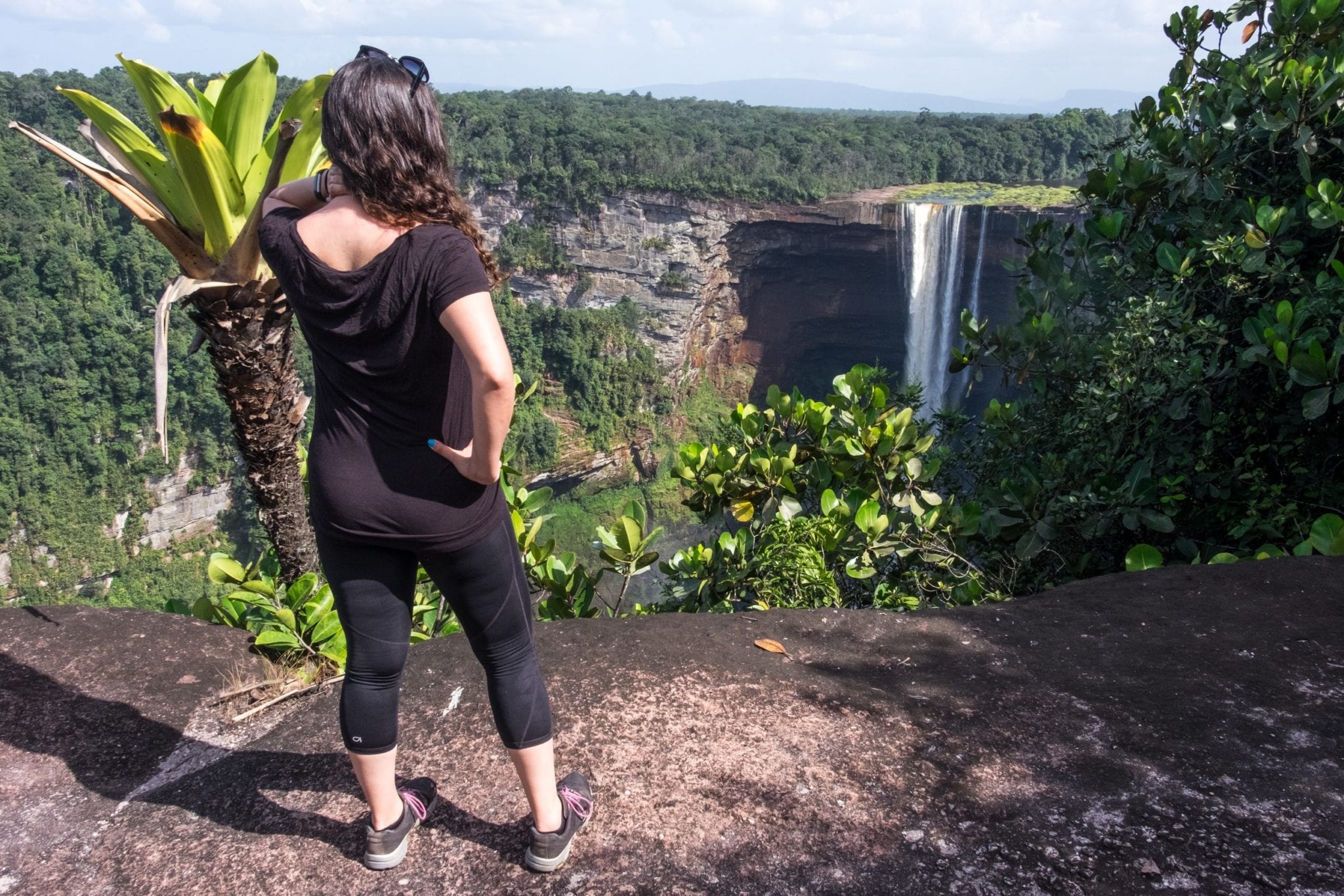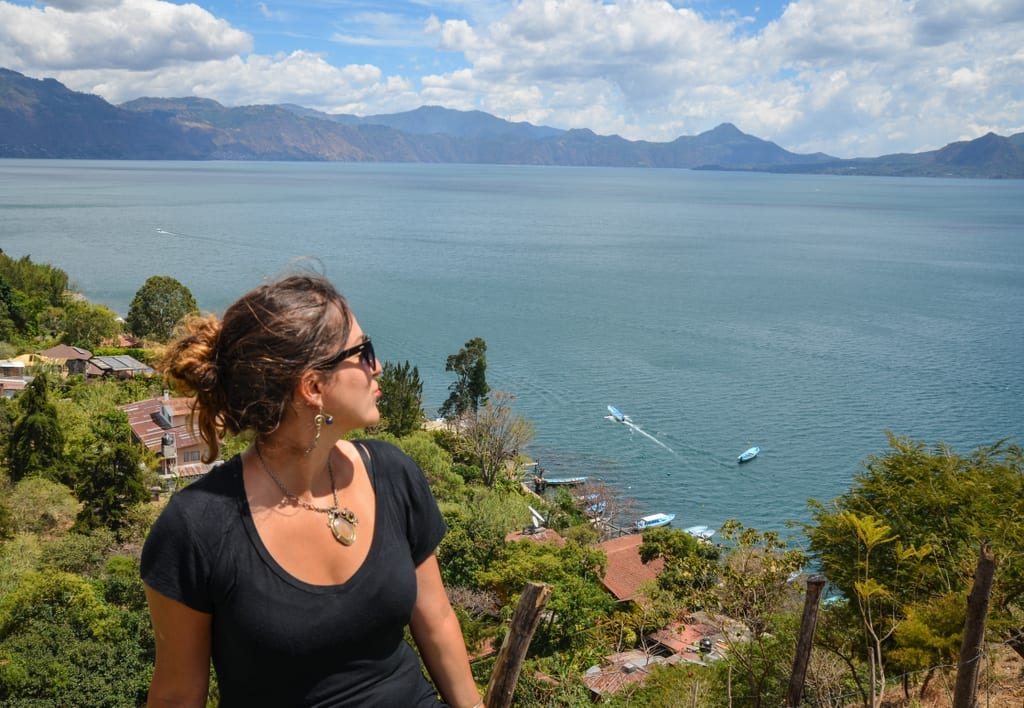
Is it safe for a woman to travel alone in Central America? Absolutely. With the right research and preparation, almost every destination in the world can be traveled safely by women on their own.
Central America has so much to offer — and it’s so much safer than many people think.
The closest I’ve ever been to having an “Eat, Pray, Love” trip was when I went to Central America for several months. I had been struggling through one of the worst times in my life and what got me through it was telling myself, “You’re going to survive, you’re going to get out, and then you’re going to spend the winter backpacking through Central America alone.”
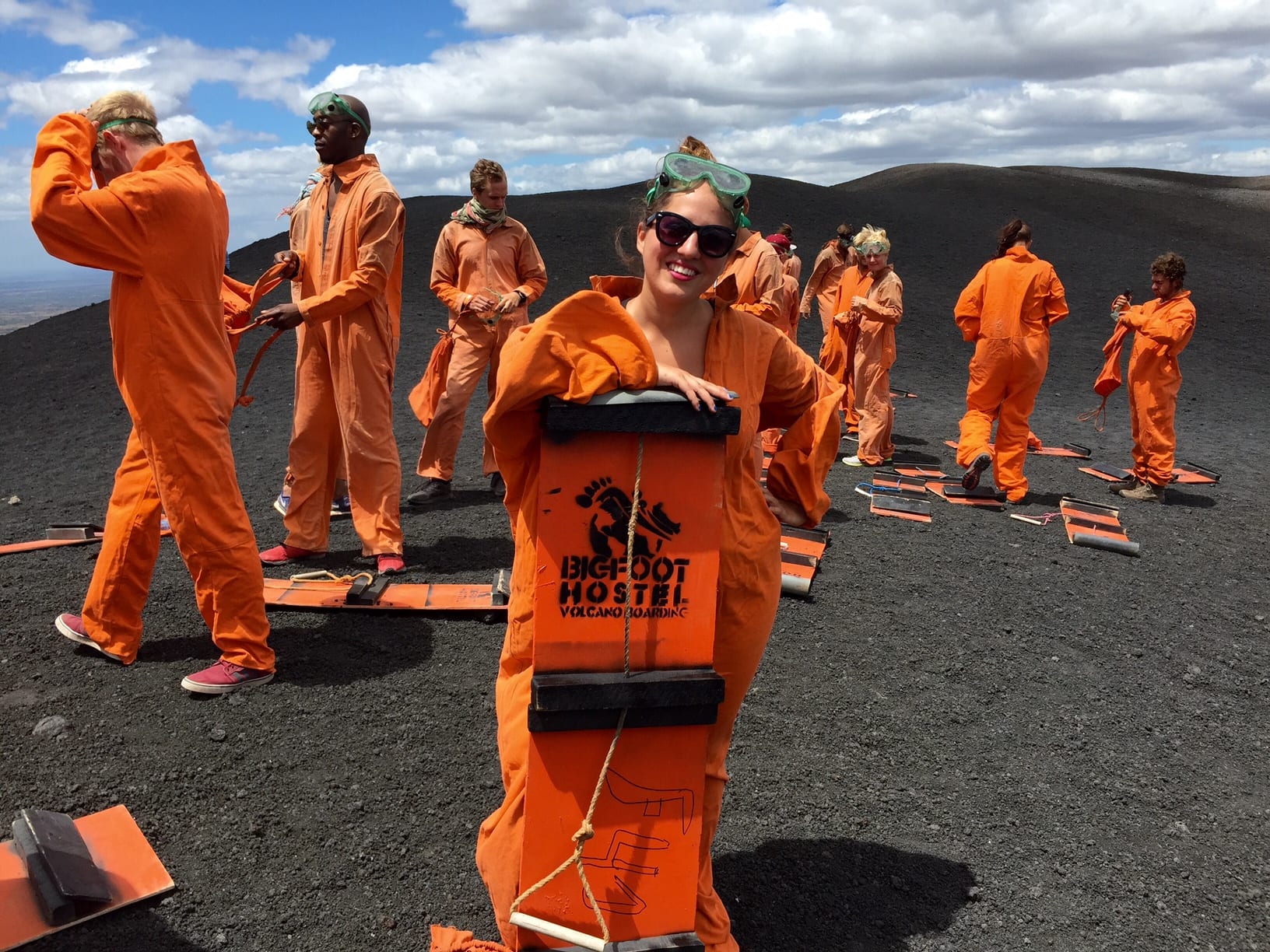
I always thought I was more of an Asia and Europe person, but Central America changed that. I loved that music blasted out from every direction. I loved how easy it was to get to know locals, and how warm and friendly they were. I swam in the turquoise Caribbean waters surrounding Caye Caulker and Little Corn Island. I hiked up a volcano in Nicaragua and slid all the way down it in an orange jumpsuit. I made so many more friends than I dared to hope for.
Central America was great for me as a solo traveler. I want it to be great for you, too.
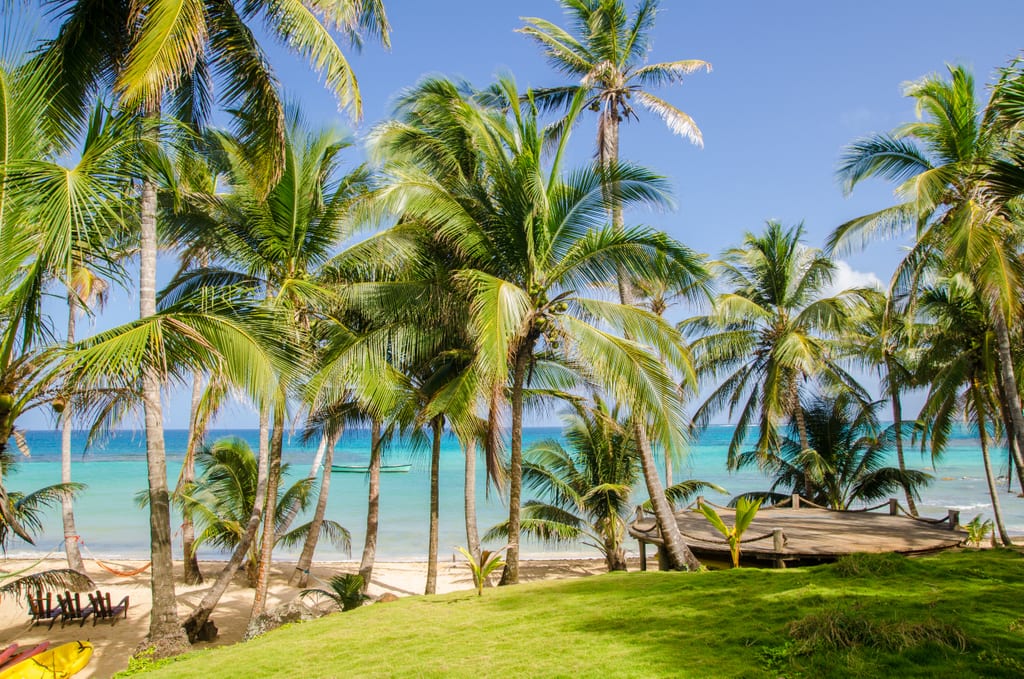
Why Travel to Central America Solo?
Central America is a fantastic destination for different kinds of travelers. But what makes it particularly good for solo travelers?
Central America has a great backpacker scene. If you want to meet people while on your travels, you will meet SO many people in Central America. To this day I’ve kept up friendships with people I met while watching the sunset on a dock in Ometepe, Nicaragua; while hanging out in the hostel pool in El Tunco, El Salvador; while sailing down the coast of Belize for three days; and while drinking at a bar in San Pedro, Guatemala!
Central America is great for being active and learning new skills. If you’re looking to become a certified scuba diver, Utila and Roatán in Honduras are home to gorgeous coral reefs and excellent diving schools. If you’re looking to learn to surf, the Pacific coast is full of surf camps, especially in Costa Rica and Nicaragua. If your tastes tend more toward dance, you can take salsa lessons in cities all over the region. And if you’re interested in trekking, Central America is filled with volcanoes to climb, rainforests to explore, and tour companies that will take you there.
Central America is ideal for learning Spanish. The best way to learn Spanish is through immersion while living with a family — and traveling solo can relieve you of the temptation to speak English with a companion. Some of the best immersion programs are in Quetzaltenango (also known as Xela) in Guatemala. If that’s too intense, you can take more relaxed classes and stay at your own accommodation, too.
Central America has gorgeous souvenirs. You could bring home a suitcase full of Mayan or Kuna textiles alone. If you’re looking for leather products, jewelry, or artwork, Central America has so much to offer.
Central America is cheap. Belize and Costa Rica tend to be the most expensive countries while Guatemala and Nicaragua tend to be the cheapest. As always, cities, beaches, islands, and tourism hotspots tend to be much more expensive than small towns and rural areas.
And if you’re flying from the US or Canada, it can be cheap to get there, too. Unlike the cheap countries of Southeast Asia, if you’re visiting from the United States, you can get a very cheap flight. Very often the cheapest (though often inconveniently timed) flights are on Spirit Airlines.
Central America is filled with constant delights. From the brightly painted chicken buses to the pulsating salsa clubs, from the deliciousness of pupasas to the thrill of sandboarding down a volcano, from the beauty of Mayan textiles to the shimmers of a sparkling Belizean cave, Central America will delight you again and again.
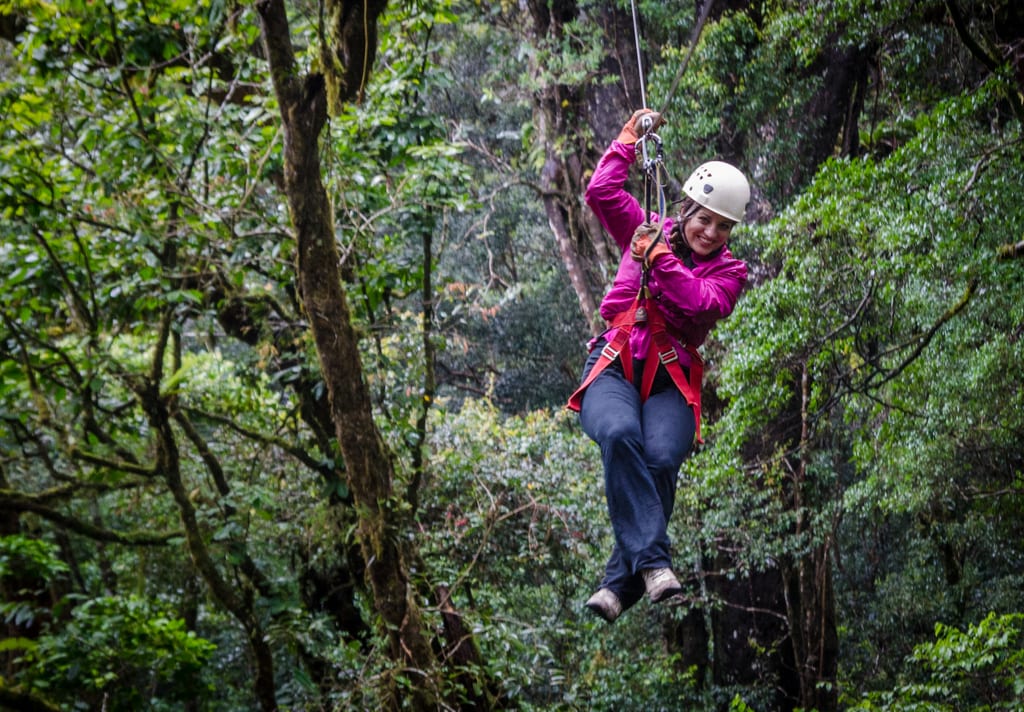
Is Central America Good for First-Time Solo Female Travelers?
I believe one Central American country is ideal for first-time solo female travelers: Costa Rica. Costa Rica has the most developed tourism scene of all the Central American countries. Costa Rica caters to first-time backpackers as well as resort travelers who just want to lie on the beach. In Costa Rica you can find five-star hotels and hostels, surf camps and eco-lodges. It has everything and they are very used to dealing with newbie tourists.
Belize is easy to navigate, has high-end resorts, and English is the language, so in some aspects it makes an easy choice. However, the street harassment in Belize is incessant, particularly on the islands. I wouldn’t send a first-time solo female traveler there unless she was already experienced in fending off street harassment (i.e. someone who lives in a big city would do much better than someone who has only lived in small towns).
As for the other countries of Central America, I don’t think they’re ideal for first-time solo female travelers. I might make an exception for someone who speaks Spanish and already has extensive experience traveling in Latin America with other people.
If you want to travel to Central America and you’ve never traveled solo before, I suggest you look into a group tour, anywhere you’d like, or a group retreat, fitness-oriented or not.
Group Tours in Central America
G Adventures, a tour company I recommend, offers several tours to Central America. Here are a few of their tours:
- Costa Rica Adventure — 16 days all over Costa Rica.
- Classic Belize and Tikal — 9 days in Belize and Guatemala.
- Backroads of Central America — 18 days in Guatemala, Honduras, El Salvador and Costa Rica.
- Panama Experience — 14 days in Panama and Costa Rica.
- See all their Central America tours here.
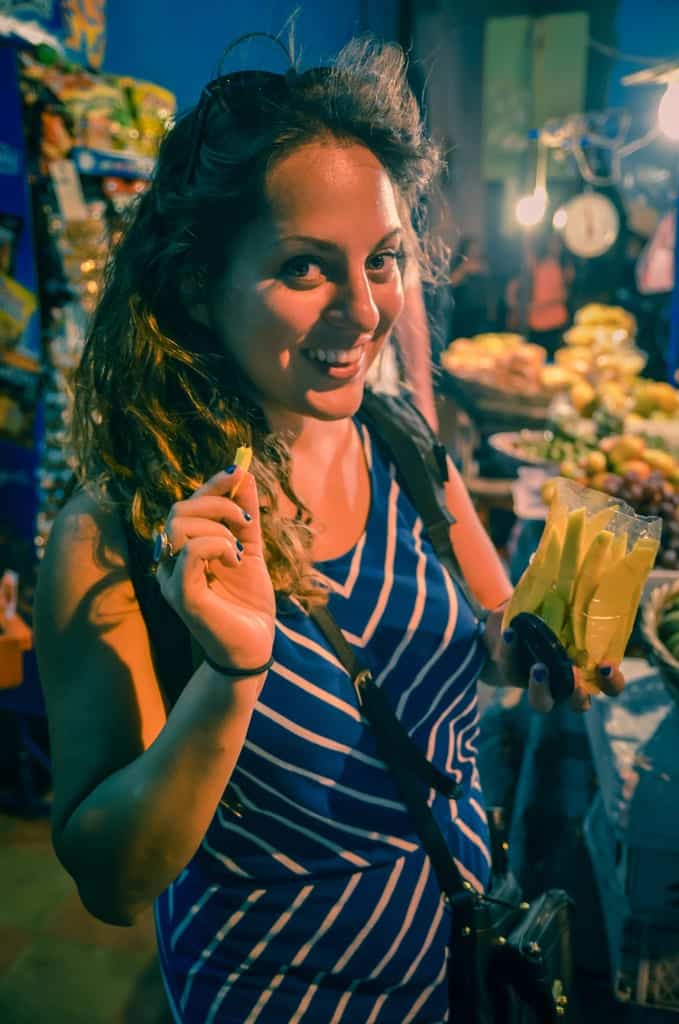
Is Central America Good for Experienced Solo Female Travelers?
Absolutely! Central America is a fantastic destination for experienced solo female travelers. I was 30 years old and had traveled to 50+ countries before arriving in Central America and I found it beautifully calibrated to my travel expertise.
When you’re an experienced solo traveler, your senses are more finely attuned to what’s going on around you. This is especially helpful in a region were petty crime isn’t uncommon. If you’re experienced, you’re (hopefully) not going to leave your passport under your pillow or walk around a city with a wide-open purse.
One thing I relished was that the backpacking scene was so different from Southeast Asia. People traveling in Central America tend to be older (late twenties and up), more experienced, and North Americans are far more prevalent. For this reason, I was grateful that I had spent my twenties backpacking Southeast Asia and Europe and had held off on Central America until I was in my thirties.
And if you’re sick of the backpacking trail, you can easily get off it. Some emerging destinations include the Rio Dulce region in Guatemala, the Miskito Keys in Nicaragua, and the Caribbean coast of Honduras.
READ MORE:
Backpacking Southeast Asia vs. Central America
Is Central America Safe?
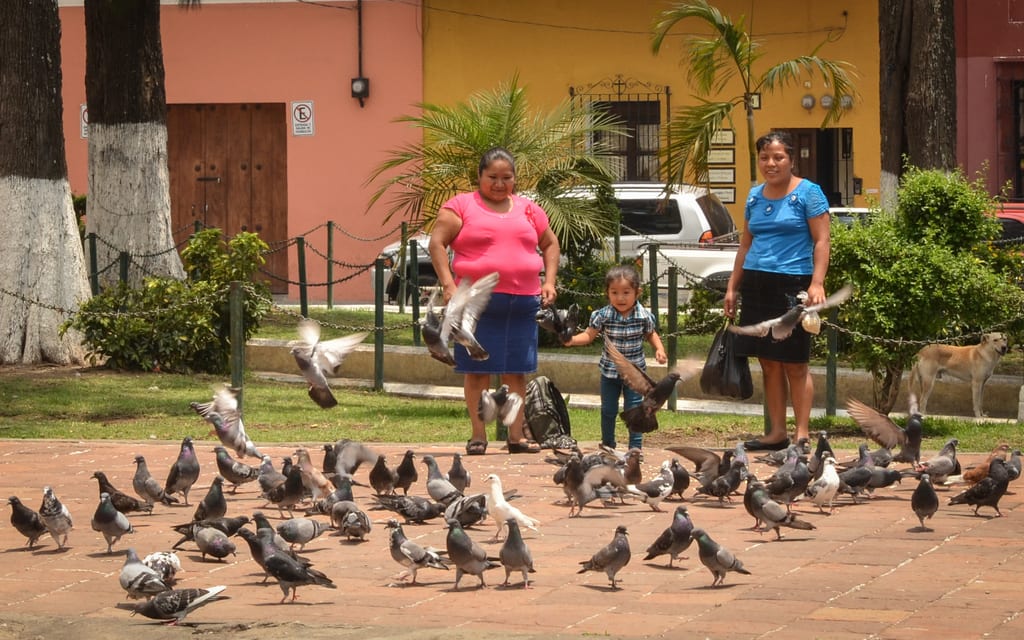
Central America doesn’t have the best reputation when it comes to crime. There is some truth to this. There are parts of Central America that are rife with violence — but the experience of a traveler is very different from a local who grew up in an impoverished neighborhood under gang control.
Many people who travel to Central America are concerned by gun violence, especially in cities like San Pedro Sula, Honduras, and San Salvador, El Salvador. The same truth holds anywhere in the world: most gun violence is gang-oriented and concentrated in areas where no sane tourist would ever go. Tourists are not the target.
To be honest, Central America’s major cities are not what make the region special. A lot of travelers dig the vibe of smaller, more tourism-driven cities like Antigua, Guatemala, and León, Nicaragua, but most steer clear of the major cities like Tegucigalpa, Belize City, and Managua. There is one exception: Panama City is major city that is safe, fun, and has a beautiful old town and lots of attractions for tourists.
While gun violence is rare, a far more realistic risk for travelers in Central America is petty crime. Robbery is common, whether on the road or in your accommodation, and you should be more conscientious than you would be in your home country.
To guard against petty crime, I recommend locking up your valuables in a portable safe in your accommodation, use a camera bag or day bag that locks, and keep your valuables on you in transit. See the Travel and Safety Tips for more details on how to stay safe.
The other major consideration for women traveling in Central America is the prevalence of street harassment. See the Street Harassment section for more information on how to deal with it.
Please keep in mind that the vast majority of travelers to Central America travel safely and without incident. Additionally, the vast majority of Central Americans are warm, welcoming, and will bend over backwards to help you. But even so, I’ve known very experienced travelers who have been robbed in Central America. The most important thing is to get travel insurance (I use and recommend World Nomads for trips to Central America), as they will help you out in your time of need.
Street Harassment in Central America
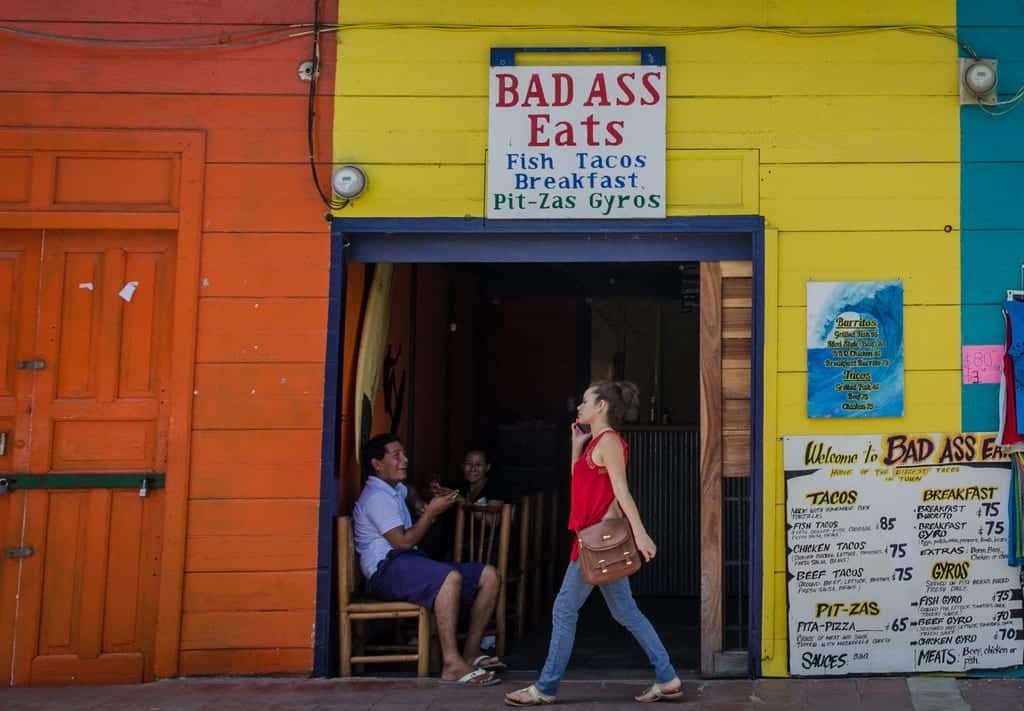
Street harassment is part of life. If you’re a woman, you know that already. Street harassment happens all over the world, but it’s particularly prevalent and incessant in Latin America, where machismo reigns.
In my travels throughout Central America, I found street harassment to be most common in cities. Personally, I found street harassment to be the absolute worst in Nicaragua, specifically in the cities of Granada and León, and not quite as bad but still a major annoyance in San Juan del Sur. It was also significant in Antigua, Guatemala, especially at night.
It’s so ingrained in the culture. Here’s an example: in Granada, a group of little boys around seven years old were playing soccer and lost their ball. I grabbed the ball and gave it back to them. Immediately, the boys started chanting, “Beautiful! Beautiful! Beautiful!” in English. That’s what they’ve learned from watching men. If you see a woman, treat her as a sex object first.
In Belize, particularly on Caye Caulker, the street harassment was a bit different, but nonetheless incessant — the men would often start a normal conversation, then get into, “Have you ever been with a black man before?” and laugh at however you reacted.
To avoid the worst of the street harassment, I wouldn’t walk alone at night — ever — in cities like León, Granada, and Antigua. Many times in Granada I would take a taxi on a four-block ride rather than walk home alone. Does that seem excessively cautious? Yes. And I did not regret it once.
Dressing like a local woman made a huge difference. In Central America and much of Latin America, women tend to wear long pants, even when it’s boiling hot outside, though they don’t cover up as much on top. Most casually dressed women tend to wear jeans, a tank top, and flip-flops. When I wore jeans or a long dress, I wouldn’t get nearly as much harassment as when I wore a knee-length dress.
In some cities, I chose guesthouses that had a restaurant so I would not have to go out at night. This was especially helpful in León because literally the moment I stepped outside my guesthouse at night, men on the street would be yelling at me. (This did not happen during the day.) This was on a relatively touristy street home to several guesthouses and hostels. Having a restaurant on-site gave me the option of avoiding that harassment.
However, there is one place in Central America where street harassment is almost nonexistent: Lake Atitlán in Guatemala. This is because Lake Atitlán is dominated by Mayans. It’s forbidden for Mayans to have relationships with non-Mayans, and they take this very seriously, so you don’t see any kind of sexual harassment on the streets.
Beyond that, I found that there was significantly less street harassment in smaller, more rural destinations. (“Significantly less” does not mean “nonexistent” — street harassment can happen anywhere.) I experienced no street harassment on the rural island of Ometepe, Nicaragua, or in the small town of Monteverde, Costa Rica, or even in the beach community of El Tunco, El Salvador.
Travel and Safety Tips for Central America
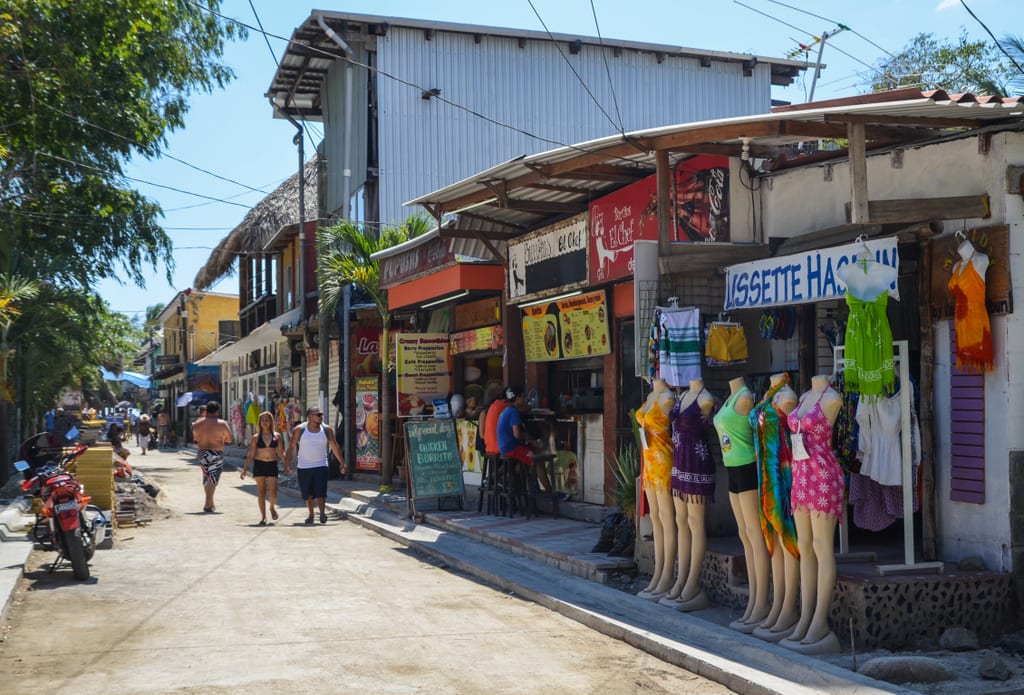
Most of staying safe in Central America comes down to using common sense. Don’t get blackout drunk, keep an eye on your belongings, be careful who you trust.
Double-check your passport stamps when you enter the country, especially if you’ve been in Central America for awhile. Sometimes immigration will give you fewer days in the country than you are allotted. This happened to me in Guatemala: I was allotted 13 days rather than the standard 90 and I didn’t realize until I was on my way out. They had written a “13” on the stamp; I still don’t know why this happened. I had to pay a fine of about $1.30 per day, which wasn’t severe, but it was a hassle to deal with.
Get a day bag that locks. Before I went to Central America, this was my biggest priority as I was concerned about petty crime. I ended up buying a Pacsafe bag and some padlocks; Pacsafe makes an excellent selection of bags that lock.
Be prepared for transportation scams. Once my friends and I booked a direct shuttle from San Pedro to Lanquín in Guatemala and the driver insisted on stopping in Antigua, which would add hours to an already long journey. The driver refused to go direct unless we paid him more, so we coughed up the cash.
Dress like the local women — and for all kinds of weather. Latin American women tend to cover their legs but be more liberal on top; I found that jeans and a tank top was a common uniform for local women. If you dress this way, you will be harassed less. If you’re in a resort town full of tourists, you can get away with more skimpy dressing.
Be sure to pack some warm clothing, too! I always bundle up before taking public transportation in Central America because buses LOVE to jack up the AC. Additionally, Central America is warm year-round, but there are some cooler regions. At 5,000 feet (1,500 meters), Lake Atitlán in Guatemala is at a high altitude, and it can get quite chilly, especially at night. You’ll spot travelers clad in colorful Mayan hoodies, pants, and hats because they didn’t think to bring anything warm.
Don’t flash your valuables or wear expensive jewelry. If you’re out taking photos with an expensive-looking camera, be extra cautious. Only take out your camera and phone when you need them — don’t walk around absentmindedly with them in your hand.
Pickpocketing happens in Central American destinations, especially on public transportation. Keep an eye on your belongings at all times.
If you carry a purse, hold it close to you. I recommend a crossbody purse, made out of a tough material like leather or fake leather, that zips shut. I recommend many purses in this post. Never let it hang behind you — always keep it in a place where you can see it, and keep your hand on it if you’re in a crowd.
If you carry a wallet without a purse, don’t keep it in your back pocket. This is obvious to thieves and they will grab it and run.
If you use a small backpack, lock it. I use a Pacsafe backpack where you can lock the compartments shut.
Keep your valuables locked up in your accommodation and only take with you what you need that day. I do this with my Pacsafe Travelsafe and I consider it the most important thing I pack. Keep an extra debit card and at least $100 hidden in obscure parts of your luggage.
Never leave your bags anywhere unattended. Even if you’re used to asking someone to watch your things while you use the bathroom in a coffeeshop at home, don’t do that in Central America. Take your belongings with you. If you’re keeping your bag under the table or otherwise out of sight, keep it between your feet or hook the strap around one of the chair legs.
Don’t carry tons of cash around with you. You can use credit cards in cities in Central America, and carrying lots of cash leaves you vulnerable to theft. Don’t be the traveler who loses her wallet and the $500 in it.
Only use ATMs at banks during the day, indoors. Don’t use standalone ATMs in convenience stores. Not only do they leave you susceptible to robbery, if your card gets eaten, it’s a lot easier to retrieve it from a real bank’s ATM. If you can’t find a bank, use an ATM in a shopping mall.
If someone robs you, GIVE THEM WHAT THEY WANT. Nothing is worth your life.
Haggling is the way to purchase at markets. Never accept the first price — people are expecting you to lowball them. Have fun with it, but don’t get so caught up in it that you’re arguing for five minutes over the value of 25 cents.
Protect yourself from the sun. Being in the sun so much leaves you vulnerable to skin damage. Be sure to cover up and use sunscreen as often as possible. If you’re snorkeling, you may want to wear a rash guard or shirt to keep your back from burning.
Use reef-safe sunscreen when snorkeling, diving, or swimming near coral reefs. In fact, there’s no reason not to use reef-safe sunscreen everywhere.
Hydrate — but be cautious about the water. The water is not safe to drink in most places in Central America. While most travelers rely on bottled water, it creates a major waste issue. For this reason, I recommend you bring a reusable bottle and invest in a SteriPen water purifier (much better and faster than tablets). Alternatively, you can bring a LifeStraw, a bottle that purifies water as you drink it through its straw.
See a travel doctor beforehand and be prepared on what to do if you get sick. On the Central America tours that I led in 2015, I was shocked that roughly half of my attendees got sick. Your doctor may advise you to take antibiotics that are easily available at pharmacies throughout Central America. That’s a conversation that you and your doctor should have.
Malaria is present in parts of Central America. This is the Costa Rica malaria map from the Center for Disease Control in the US. Some travelers choose to take malaria pills and some choose not to. I’m not going to tell you what to do because that’s a conversation you and a medical professional should have. I recommend seeing a travel doctor.
The zika virus is also present in Central America. Here is a map. Zika should be a concern of pregnant women, partners of pregnant women, and women who intend to become pregnant soon, but if you’re none of those things, you don’t need to worry. Again, this is a conversation to have with your doctor.
Bring motion sickness medication. You will probably be driving through some mountainous areas. I recommend meclizine (the generic version of non-drowsy Dramamine).
Be careful about your drinking. Drink less than you ordinarily would at home — two drinks is a good limit. Only take drinks from bartenders, never take a drink from a stranger, and always keep it with you and keep an eye on it. Be especially cautious in places like El Tunco where ladies basically drink for free during the week.
Spend extra money on staying safe. If it costs you money to take a taxi rather than walk, or to stay in a guesthouse in a nicer neighborhood, do it. It’s worth the peace of mind. Don’t pinch pennies on your safety.
Don’t flush your toilet paper. The plumbing in Central America can’t handle it. There is a wastebasket next to the toilet for this purpose. And absolutely DO NOT flush tampons or sanitary products!! (You should be using a reusable DivaCup or menstrual cup anyway.)
Get a digital guidebook and keep it on your phone. Even today, I always keep a guidebook PDF on my phone — it’s great for calculating approximate time of journeys, knowing what days places are closed, and it lists medical centers you should go to in case of emergency. I’m a big fan of Lonely Planet guidebooks — get the digital version of Lonely Planet Central America on a Shoestring. You can buy individual country chapters if you’d like, or you can buy whole guidebooks for Costa Rica, Belize, Guatemala, Nicaragua, or Panama.
Most importantly, you have no obligation to be nice to anyone. Women often feel the need to be nice and please people at all costs. You don’t have to anywhere — especially so in Central America. If anyone is making you feel uncomfortable, just leave. Trust me — you won’t be the rudest person they meet that day. And so what if you were? You’re never going to see them again.
READ MORE:
Top 10 Travel Safety Tips for Women
How to Get Around Central America
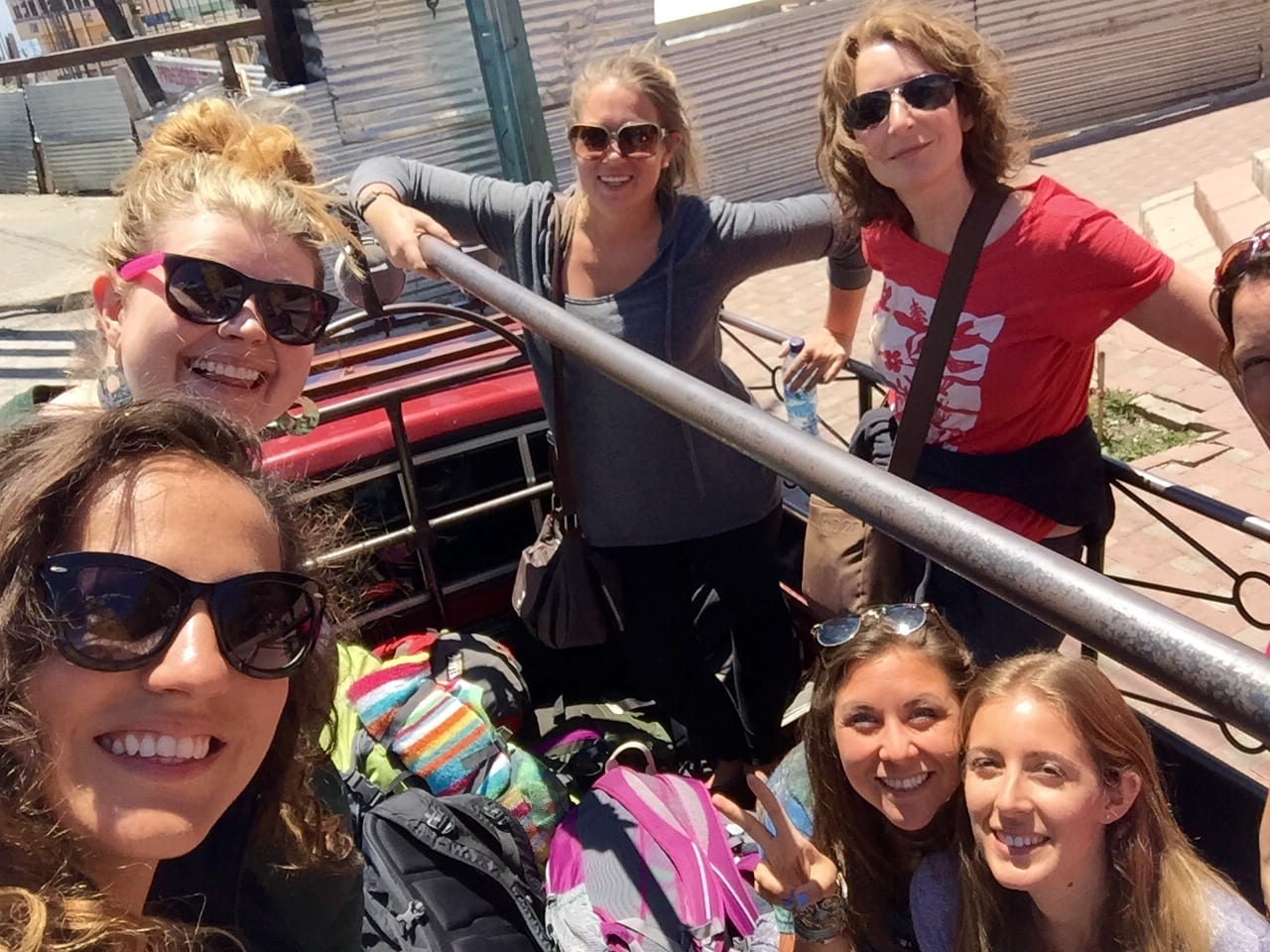
Central America is easy to travel in some ways and harder in others. Here are the top ways to travel:
Flying internationally within Central America tends to be very expensive, especially considering the short distances. If you’re looking to hop from Panama to Honduras to Belize quickly, it will cost you a lot more than it would to go from Germany to Spain to Italy.
Some domestic flight routes, however, are logical and decently priced — like from Managua to Big Corn Island in Nicaragua, or from Guatemala City to Flores.
If you’re looking to travel in the cheapest way possible, take the bus. “Chicken buses” are popular throughout the region — they’re named because these buses could be transporting anything from sacks of grain to cages filled with live chickens. People are squished into any space possible. While it’s the cheapest option and a hell of an experience, it can be uncomfortable on long journeys.
Tourist shuttles are a pricier, more comfortable option than the bus. You buy these tickets from travel agencies in town; they will openly advertise them. These shuttles, often minivans, give you far more space than the chicken buses and usually have air conditioning. An added bonus is they take you direct from tourist spot to tourist spot.
Tourist shuttles are especially helpful when going to more random spots that are not transportation hubs. When I traveled from Lanquín to Flores in Guatemala, it was a direct eight-hour ride in a modern, air-conditioned minivan. I met some Swedes traveling on a budget who took four different cramped chicken buses for the same journey.
Taxis are a good option for both short and long distances. Sometimes it’s a short distance within a city; sometimes you can hire a taxi driver to take you on long distance rides for a set fee (I did this from Managua Airport to León). Before getting in a long-distance taxi, I recommend faking a call to a friend where you clearly read out the license plate number, letting the driver see you.
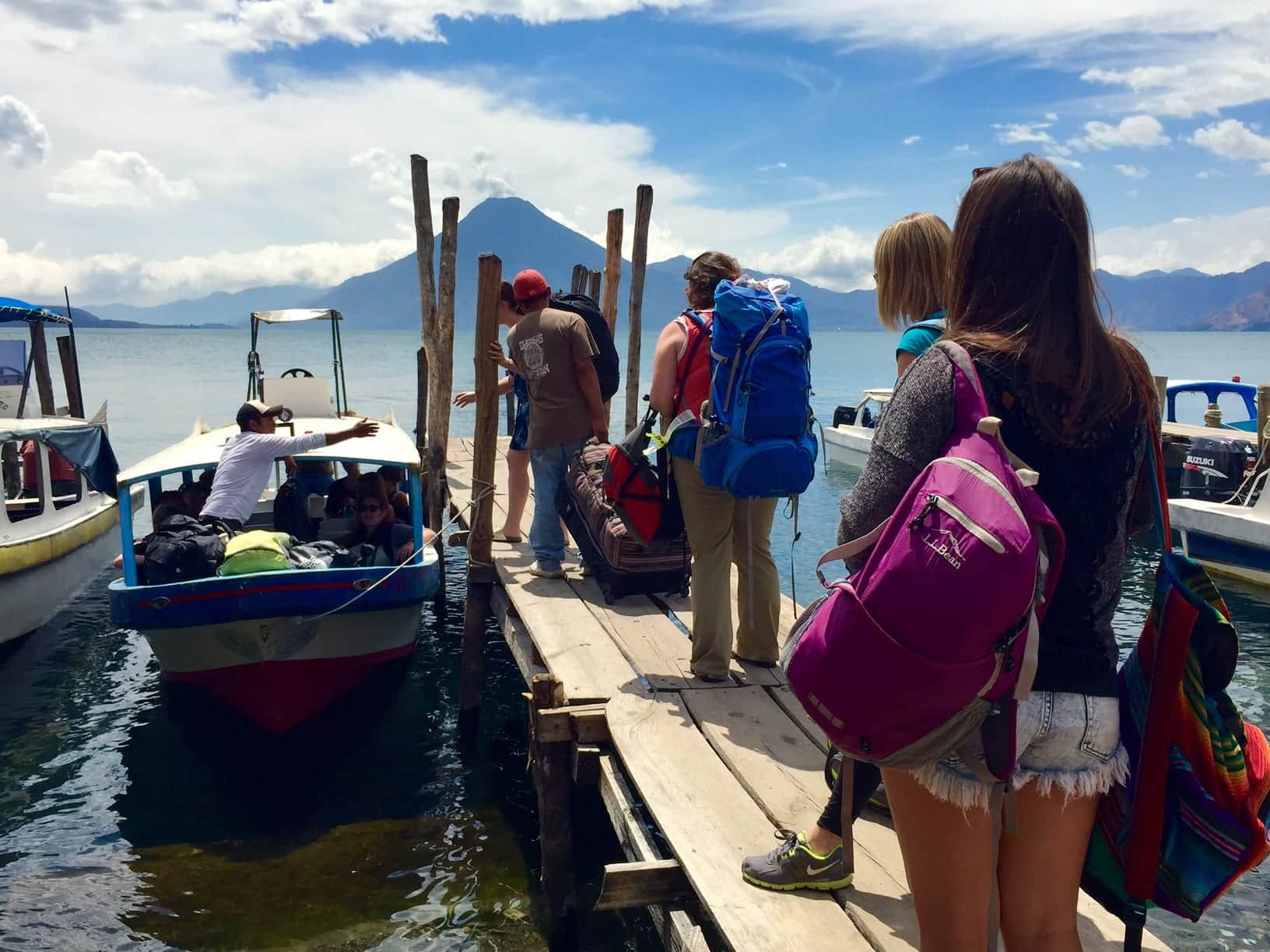
Traveling by boat is an option. The quality of boats varies enormously — you could be taking sleek passenger boats from Belize City to Caye Caulker, or a rickety wooden boat across Lake Nicaragua, or a simple “lancha” between the towns on Lake Atitlán in Guatemala. There’s also a famous sailing trip from Panama to Cartagena, Colombia, via the San Blas Islands. I personally enjoyed the hell out of a catamaran sailing trip in Belize.
But Central America is the developing world, and I urge you to take extra precautions when traveling by boat. First off, learn to swim. Yes, it might be awkward to take lessons as an adult, but it could save your life. Second, if the choice is between a larger ferry and a smaller boat, choose the larger ferry (this was a good decision when crossing from Rivas to Ometepe in Nicaragua). Third, grab a life jacket and hold onto it or sit on it, even if you don’t need it. Finally, don’t travel by boat at night, ever. You’re safest when you travel by day.
The vast majority of boat journeys in Central America are safe, but occasionally there will be an accident that makes international headlines. You should be prepared.
RELATED:
Adventurous Kate Gets Shipwrecked in Indonesia
Renting a car is an option. Depending on where you want to go, it might make more sense for you to rent a car — like visiting the villages of the Ruta de las Flores in El Salvador, or beach hopping in Costa Rica with your surfboard in tow.
Trains barely exist in Central America. There is a passenger train line from Panama City to Colón, and that’s it. Other trains exist only for cargo, not passengers.
How did I travel? I did a little bit of everything. For longer distances, I mostly did tourist shuttles, including some very long distances like from León, Nicaragua, to El Tunco, El Salvador. I took local buses and chicken buses sometimes, like in Costa Rica and Nicaragua. I took some boats, like from Belize City to Caye Caulker and from Rivas to Ometepe in Nicaragua. I flew from Managua to Big Corn Island and back. I took taxis in cities at night and once from Managua Airport to León.
Kate’s Picks: 10 Things You MUST Do in Central America
Go out dancing with locals. One of the best things about Latin America is that it’s easy to get to know locals. Head out to a club, enjoy the music, and soon everyone will be asking you to dance! If you really want to up your game, you can take some salsa classes while you’re at it.
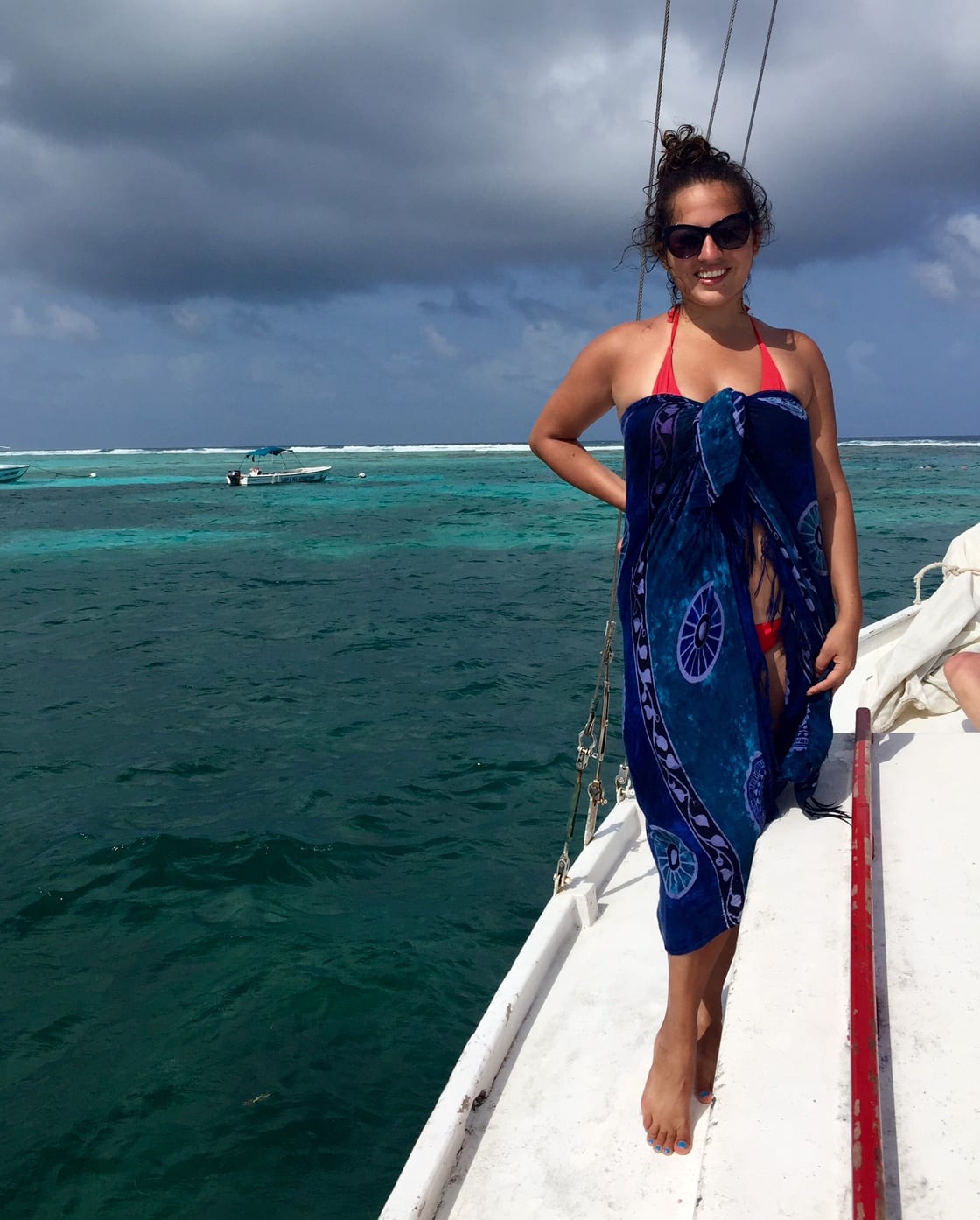
Go sailing on the endless blue sea. Whether you choose a day trip or multi-day trip, a journey along the Pacific Ocean or Caribbean Sea, there’s no feeling like being out on the ocean. I loved sailing Belize for three days; another epic trip takes you from Panama through the San Blas Islands all the way to Colombia.
Do Central American activities you can’t find anywhere else in the world. Two major ones stand out: volcano boarding, where you slide down a volcano outside León, Nicaragua; and the ATM caves outside San Ignacio, Belize, which are filled with the remains of human sacrifices and everything has calcified into sparkles.
Learn Spanish. You can survive in Central America with very little Spanish — it’s far easier than, say, Colombia — but learning Spanish will add a deeper richness to your trip. Spanish schools are everywhere (except English-speaking Belize), but many people choose Guatemala for cheap immersion programs.
Hike a volcano…or just enjoy the view. Central America is covered with volcanoes, and some of them are within short distances of cities. Masaya is a short drive from Granada; Pacaya is a stone’s throw from Antigua; the two volcanoes of Ometepe formed the whole island! You can do a day trek, overnight trek, or just drive up and take a look.
Have an epic party night out. The biggest backpacker party in Central America is Sunday Funday, a pool party crawl in San Juan del Sur, Nicaragua. You’ll see Sunday Funday shirts on backpackers throughout Central America. If not there, two other party places are San Pedro on Lake Atitlán in Guatemala and Bocas del Toro in Panama.
RELATED:
How to Travel Solo to a Party Destination
Learn to surf. If you’ve never surfed before, Central America is a great place to learn. Most of the great surf destinations are dotted along the west coast — Santa Catalina in Panama, Tamarindo and Jaco in Costa Rica, Las Peñitas and the beaches surrounding San Juan del Sur in Nicaragua, El Tunco in El Salvador.
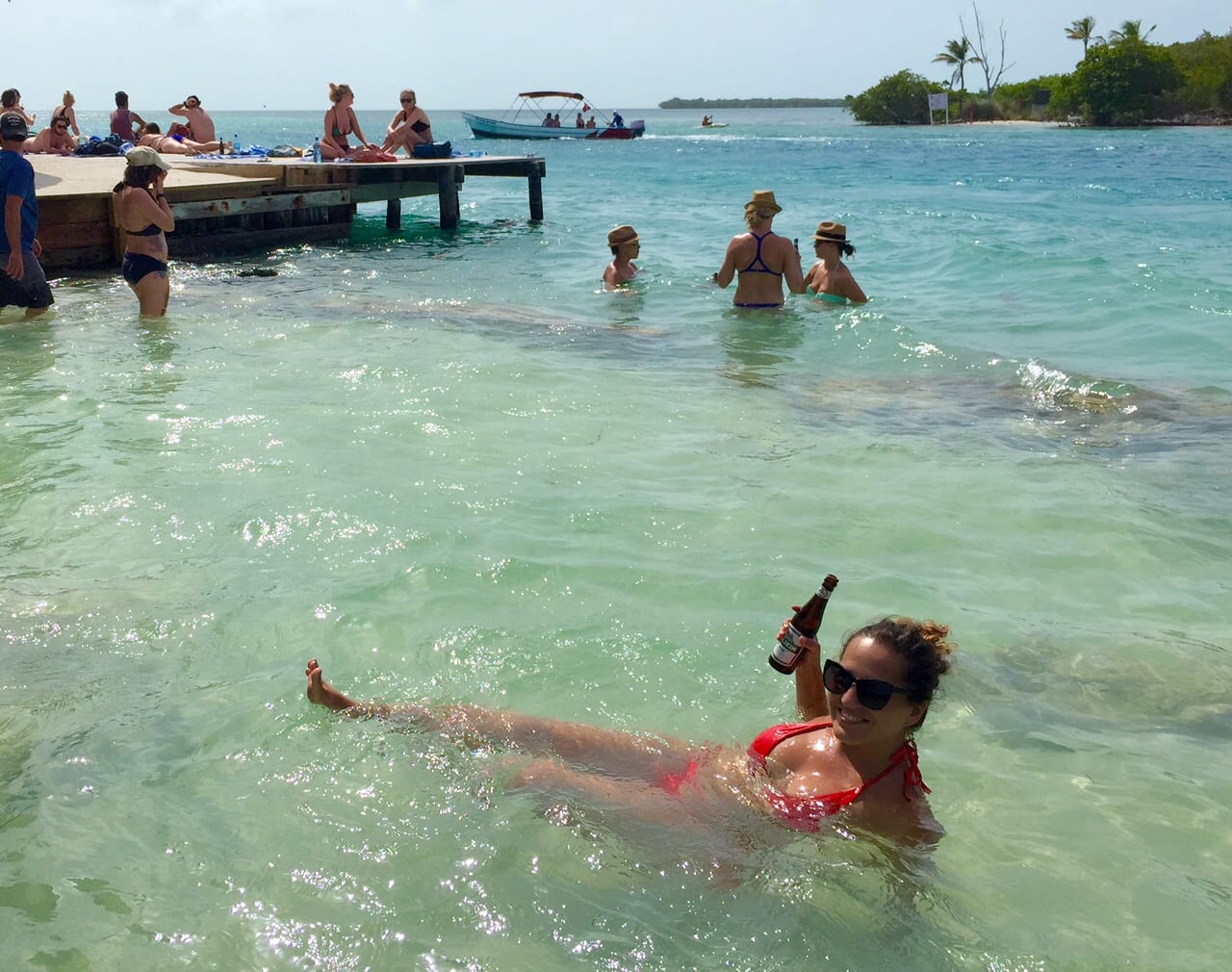
Find a relaxed place and chill all day long with no agenda. Drink if you want — or don’t. Make new friends — or stay solo. Some of my favorite spots for chilling out? The Split in Caye Caulker, Belize; Laguna de Apoyo near Granada in Nicaragua; and the pool at Club Ven Aca in Jaibalito, Guatemala.
Zip-line through the canopy. If you’ve ever dreamed of flying through the trees like a bird — or maybe a monkey — Central America is the place to do it! Every country has at least one zip line, and in Costa Rica, there are several dozen if not hundreds.
Eat pupusas. These Salvadoran stuffed tortillas are perhaps my favorite food I’ve discovered on my travels. They are everywhere in El Salvador and cost about $1 each — I love them with cheese, beans, and pork. If you’re not going to El Salvador, you may be able to find them in Guatemala.
Solo Female Travel in Belize
Belize was never a place I had dreamed of visiting, but it ended up being one of the highlights of Central America for me. Belize is so different from the rest of the region — English is the primary language, it’s much more developed, it has a ton of high-end resorts, and it’s far more expensive than you’d expect a Central American country to be.
It’s the price factor that keeps many budget travelers away from Belize — but that’s a shame. Belize has so much to offer.
Most travelers to Belize come for the beaches and islands. Caye Caulker is the small, calm, backpacker-oriented island, while Ambergris Caye is more upmarket and caters to a more luxurious clientele. Other beach towns like Hopkins and Placencia fall somewhere in the middle.
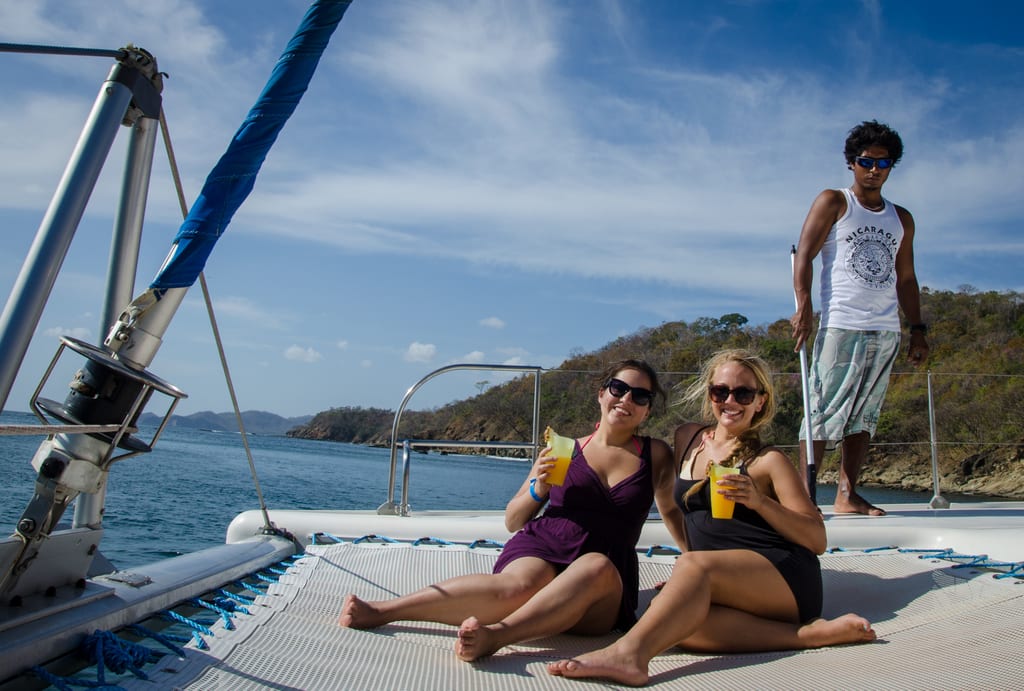
One of the best things I’ve done in my travels was the sailing trip from Caye Caulker to Placencia. That three-day trip on a catamaran was a total blast from start to finish, and I’ve sent more than 20 readers on that trip.
Another popular town is San Ignacio, which gives you easy access to Mayan ruins, jungle trekking, and one of the most spellbinding sights in Central America: the ATM caves, filled with human skeletons, all covered with sparkles. It’s a place unlike anywhere else in the world. You can also day trip to Tikal and Flores in Guatemala from San Ignacio.
READ MORE ABOUT BELIZE:
Caye Caulker: A Good Place to Go Slow
Sailing Down the Coast of Belize
Snorkeling with Sharks in Belize
Solo Female Travel in Guatemala
I love Guatemala — it packs so much beauty and diversity into a relatively small country. Guatemala may not always be in the news for positive reasons (violence and volcano eruptions tend to take precedence), but the real country is so different from what you see in headlines.
In terms of ease of travel, Guatemala is a bit of a mix — there is a well-established tourist trail throughout the country that goes from Antigua to Lake Atitlán and Quetzaltenango (Xela) in one direction and Semuc Champey, Flores, and Tikal in the other. If you are traveling this route, you’ll have an easy time getting from place to place, especially if you rely on tourist shuttles rather than public transportation.
Step off that tourist trail, though, and you’ll find Guatemala more challenging. A bonus: Guatemala is one of the cheapest countries to travel. You can spend twice as long here as you could in Belize or Costa Rica, which is why many travelers take a Spanish immersion course here before traveling elsewhere.
Most travelers skip Guatemala City and head straight to Antigua, filled with colonial architecture and terrific restaurants. In my opinion, Guatemala’s greatest gem is Lake Atitlán, which is filled with so many interesting Mayan towns that you’re best off spending several days on the lake and exploring as much of it as you can. Semuc Champey is filled with bright green waterfalls, rivers, and caves, while Flores is a lakeside town and gateway to Tikal, perhaps the best ruins in all of Central America.
Some other emerging destinations in Guatemala are the Rio Dulce region, home to beautiful nature and waterfalls, and Monterrico, a Pacific coast beach where you can see sea turtles hatch.
One major tip for solo women travelers — I found Antigua to be lovely during the day but horrific at night because the street harassment was so vile. Even the guesthouse security wouldn’t let me walk outside, saying it was poquito peligroso. I urge you not to walk alone at night, or even walk with a group of women. Take a taxi instead.
READ MORE ABOUT GUATEMALA:
The Towns of Lake Atitlan, Guatemala
I Still Don’t Know How I Feel About Antigua
Semuc Champey: My Favorite Day in Central America
Visiting Tikal at Sunset
Solo Female Travel in El Salvador
El Salvador conjures up images of war and poverty — but there is so much more to this country than that. Look beyond that and you’ll find a country filled with warmth, color, and killer volcanoes.
El Salvador is also home to perhaps my favorite food I have ever discovered on my travels: pupasas. They’re tortillas stuffed with cheese, beans, pork, vegetables, or any combination thereof — and they are so delicious. Best of all, they cost about $1 each.
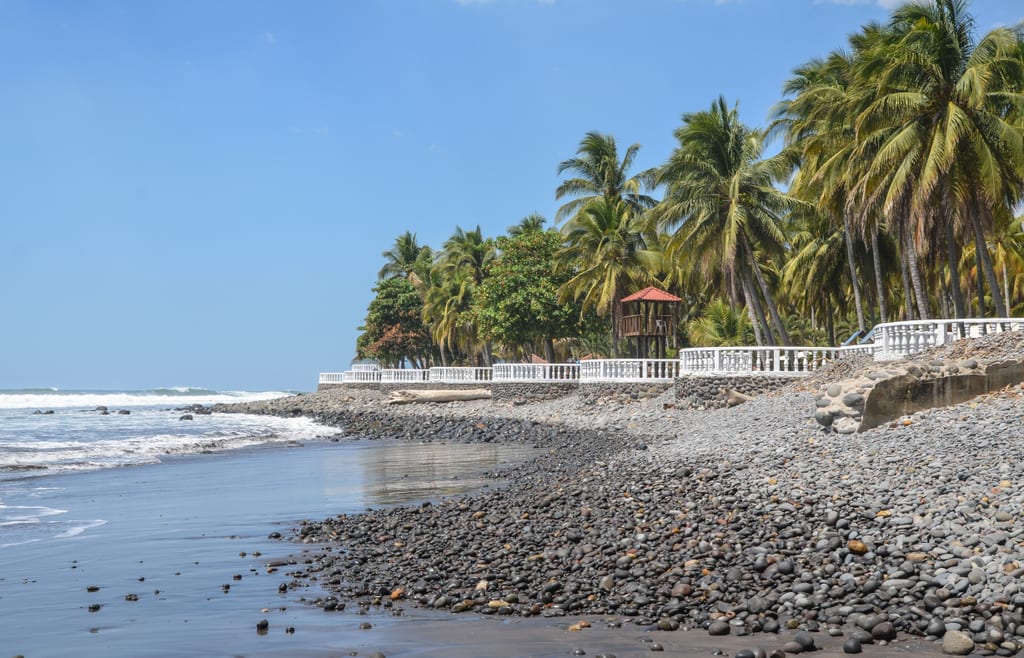
Some travelers choose to check out the capital of San Salvador, but most give it a pass and head down to the beach. La Libertad is the main beach town along the coast, but backpackers mostly congregate in Playa El Tunco and the calmer, sleepier Playa El Cuco. A popular road trip is the Ruta de las Flores, taking in several colorful small towns with blooming flowers. Suchitoto is another popular city. And if you love scenery, check out El Salvador’s volcanoes and turquoise lakes at Cerro Verde National Park.
El Salvador is one of the lesser developed countries in Central America, which makes it tougher to travel. Unless you’re popping into El Tunco and leaving, you’ll have to navigate public transportation and towns that don’t cater to tourists directly. If you’re up for an adventure, it’s a great option. Be prepared to constantly email your parents that you’re safe.
READ MORE ABOUT EL SALVADOR:
A Perfect Day in Playa El Tunco, El Salvador
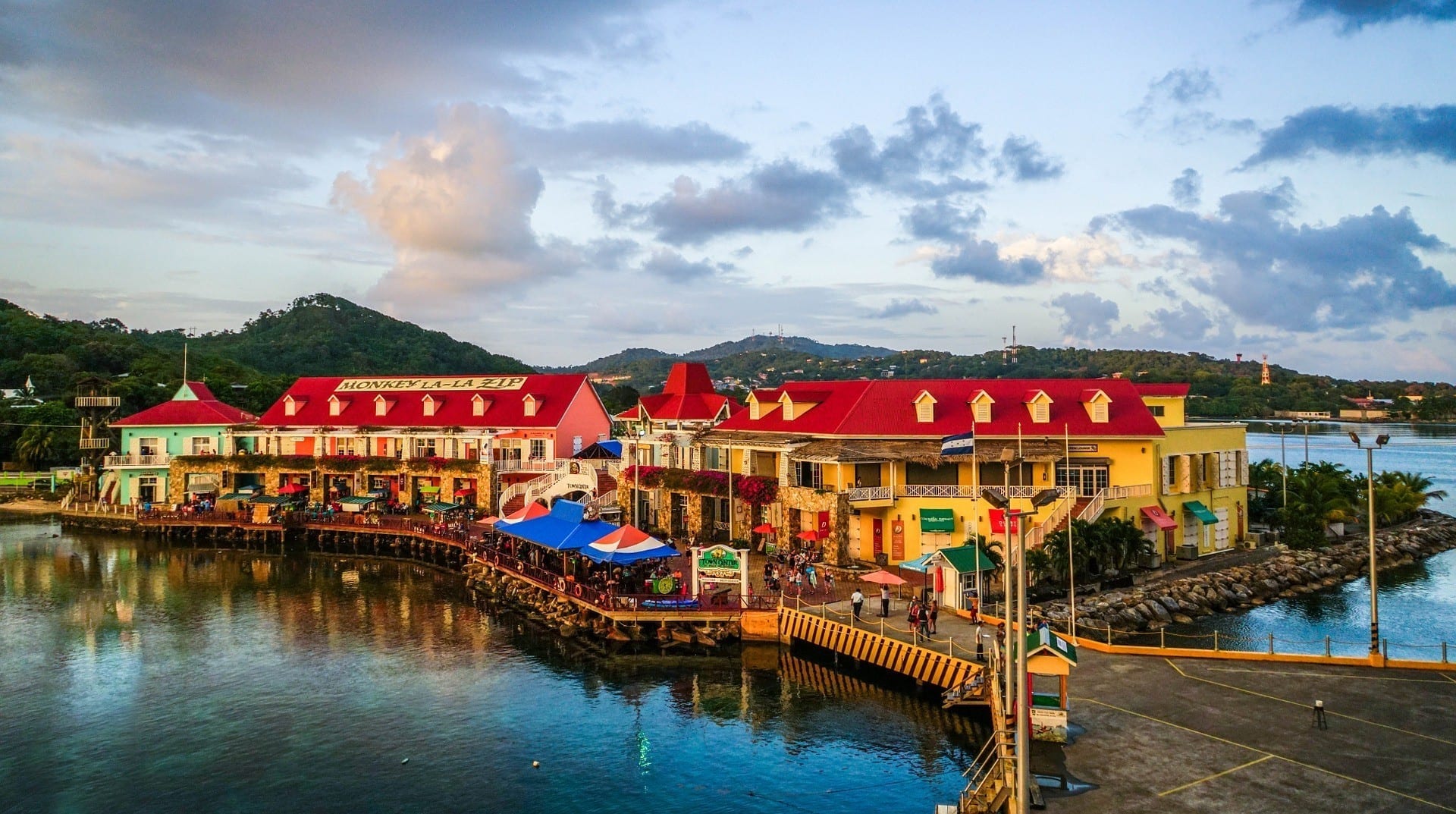
Roatan, Honduras (Image via Pixabay)
Solo Female Travel in Honduras
Most solo female travelers who travel to Honduras have one thing in mind: diving. The islands of Roatán and Utila are home to gorgeous coral reefs along with dozens of excellent dive schools. Roatán is larger, more upscale, has better beaches, and hosts cruise ships, while Utila is a smaller, sleepier, cheaper island perfect for divers and backpackers.
Other spots to visit in Honduras include Copán Ruinas, the best archaeological site in the country; Lake Yojoa, a volcanic lake home to lots of adventurous activities; and the Rio Platano Biosphere Reserve, home to some to the best wildlife in the country. Most travelers skip the two major cities, Tegucigalpa and San Pedro Sula.
Outside the two main islands, Honduras isn’t nearly as developed. That said, there are backpacker routes, an increasing number of interesting places to stay, and lots of new spots that will be “discovered” by the masses. If Nicaragua is being heralded as the next Costa Rica, Honduras is the next Nicaragua. I fully anticipate that Honduras will be upping its ecotourism game, especially on the mainland, in the next decade or so.
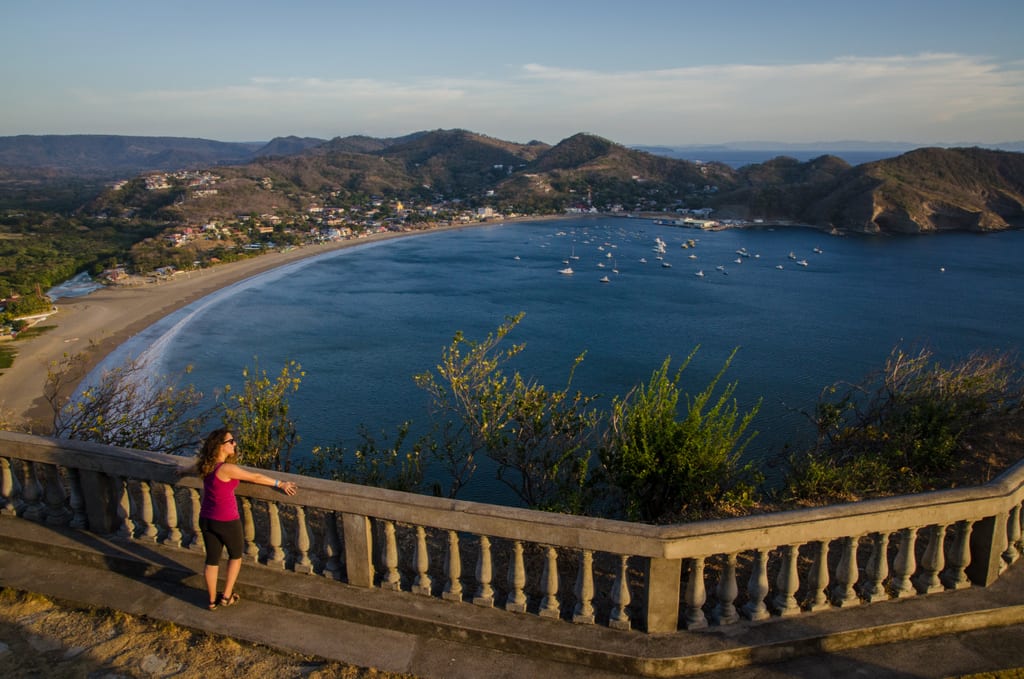
Solo Female Travel in Nicaragua
Nicaragua is my favorite country in Central America. I spent a full month of the country and explored a variety of destinations, from cities to islands to small towns.
Nicaragua is colorful and welcoming but rough around the edges, making it more of a challenge to travel than Costa Rica, Panama, or Belize. An added bonus is that Nicaragua is one of the cheapest countries in Central America, especially in the rural areas.
Most travelers start in the colonial town of Granada, close to Managua then proceed to either the island of Ometepe or the youthful, rebellious city of León (and volcano boarding nearby). If you’re coming from Costa Rica, your first stop will likely be San Juan del Sur or one of the surrounding surf towns. There are lots of other surfing beaches along the Pacific coast. But my favorite spot of all is Little Corn Island, located far off the mainland in the Caribbean Sea. This island is gorgeous, magical, and perfectly low-key.
My only problem with Nicaragua is that the street harassment is so incessant, especially in Granada, León, and San Juan del Sur. Even so, Nicaragua is still at the top of my list, which tells you how great it is.
However — and this is a BIG however — Nicaragua has been facing civil unrest since April 2018. I have not traveled to Nicaragua since the unrest erupted. Many tour companies, including G Adventures and Intrepid Travel, have suspended trips to Nicaragua at this time.
Since the conflict began, six friends of mine have chosen to travel to Nicaragua. Their experiences were mixed. Two who traveled during the earlier days of the conflict didn’t feel safe, were the only tourists in León, were trapped by roadblocks, and chose to leave the country early. More recently, another traveler went to a surf lodge and was the only guest, but felt safe the whole time. Also recently, another traveler visited much-quieter-than-usual Little Corn Island and enjoyed it.
The choice to travel to Nicaragua is yours — I can’t make it for you. The situation can change instantly, so I urge you to constantly check the current situation. If you choose to travel to Nicaragua, double-check that your travel insurance will cover you.
READ MORE ABOUT NICARAGUA:
Escaping to Laguna de Apoyo
Ometepe, Nicaragua’s Volcanic Island
The Colorful City of San Juan del Sur
The Best Things to Do in San Juan Del Sur
Rocking Out on Little Corn Island
León, Nicaragua, the City of Revolution
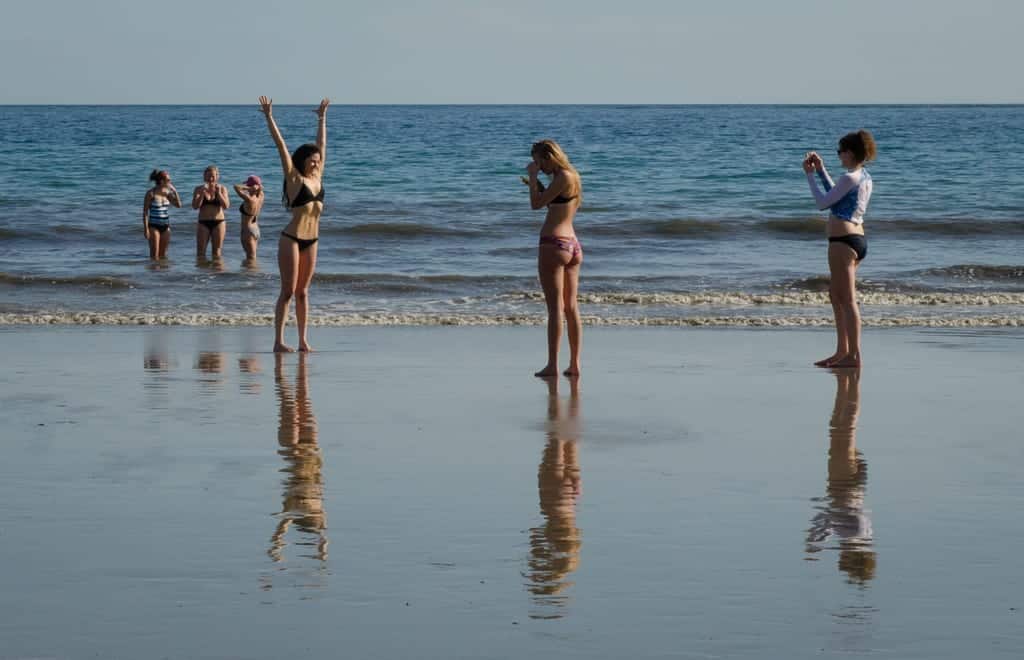
Solo Female Travel in Costa Rica
Costa Rica is the ideal choice for first-timers in Central America, including first-time solo female travelers. Costa Rica is the easiest landing pad. You’ll find accommodation at every tier here, from backpacker hostels to five-star resorts, and you’ll find an incredible variety of things to do.
Many travelers choose to focus on the Arenal-Monteverde-Manuel Antonio route. Arenal is great for Lake Fortuna, a volcano, hot springs resorts, and jungle; Monteverde is great for exploring the cloud forest, ziplining, and trekking; and Manual Antonio has gorgeous beaches pushed up against the jungle. This volcano/cloud forest/beach combination packs a lot in!
The Nicoya peninsula is home to tons of beach towns, many of them prime surfing destinations. Puerto Viejo on the Caribbean side is a major backpacker party town; Tamarindo on the Pacific coast is a much more developed touristy town. Corcovado National Park is home to some of the best wildlife in the country. And while the capital San Jose isn’t often on Costa Rica itineraries, it has some nice museums.
Fun fact — I suggested Costa Rica to my best friend and her husband for their honeymoon since they wanted a relaxing vacation but didn’t want to be out in the sun all day, every day. They went and loved it!
READ MORE ABOUT COSTA RICA:
The Perfect Beach Town of Sámara, Costa Rica
Into the Cloud Forest of Monteverde
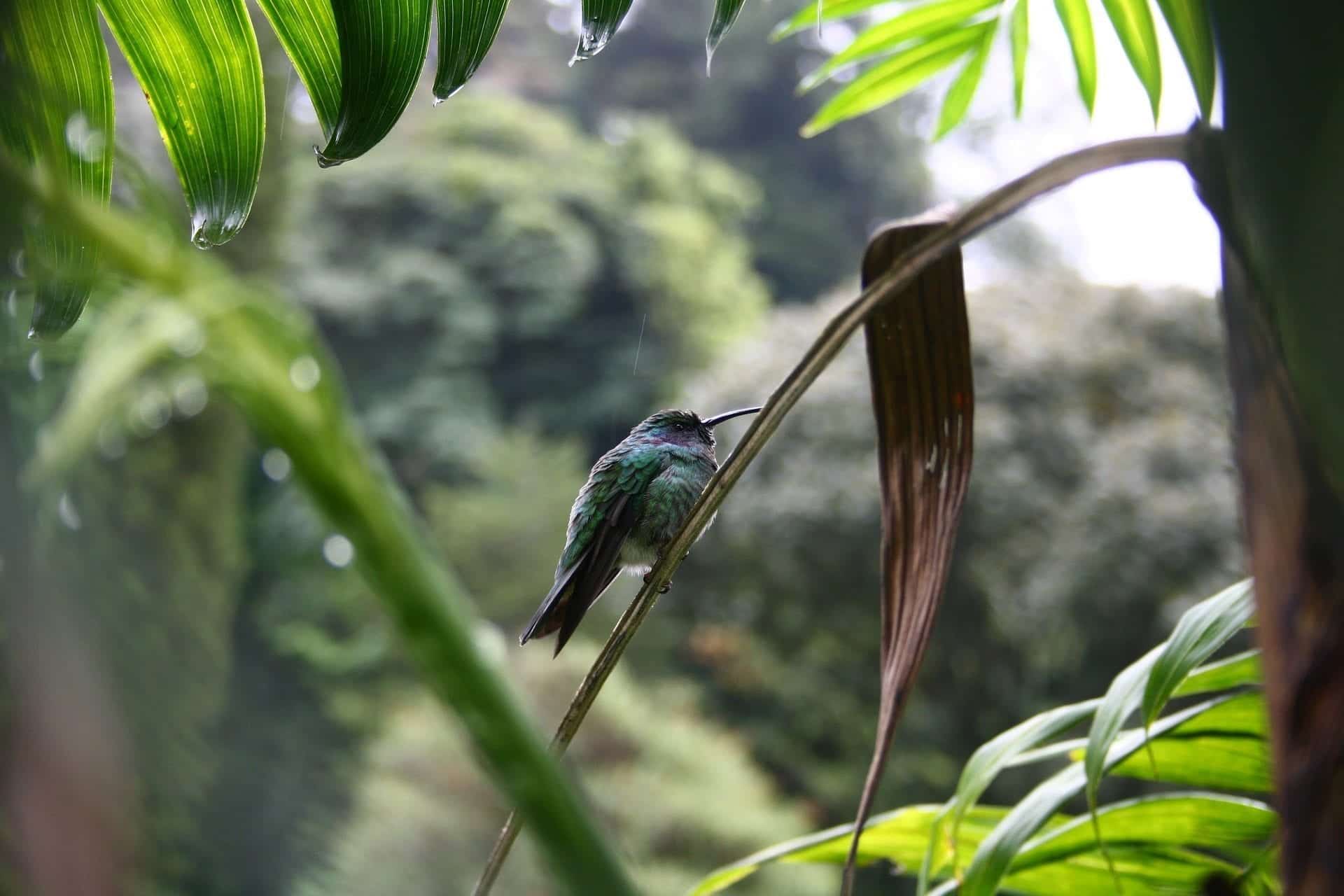
Hummingbird in Panama (via Pixabay)
Solo Female Travel in Panama
Like Costa Rica, Panama is another easier choice for Central America. While not quite as developed and tourism-driven as neighboring Costa Rica, Panama is fairly easy to navigate and has accommodation at a variety of price points.
Panama City is the only major city in Central America that comes highly recommended for travelers. The San Blas islands are worth visiting for their beauty and experiencing indigenous Kuna culture. The archipelago of Bocas del Toro, just over the border from Costa Rica, is one of the biggest backpacker party towns in Central America. The colonial town of Boquete is a beautiful launching pad for trekking and enjoying the mountains.
Panama’s Pacific coast is full of prime surfing destinations, like Santa Catalina. And Coiba Island off the Pacific coast is home to some of the best diving and underwater life in Central America. And if you’re very adventurous — and have a trusted guide — you can venture a bit into the Darién Gap, though please go back before you arrive in Colombia.
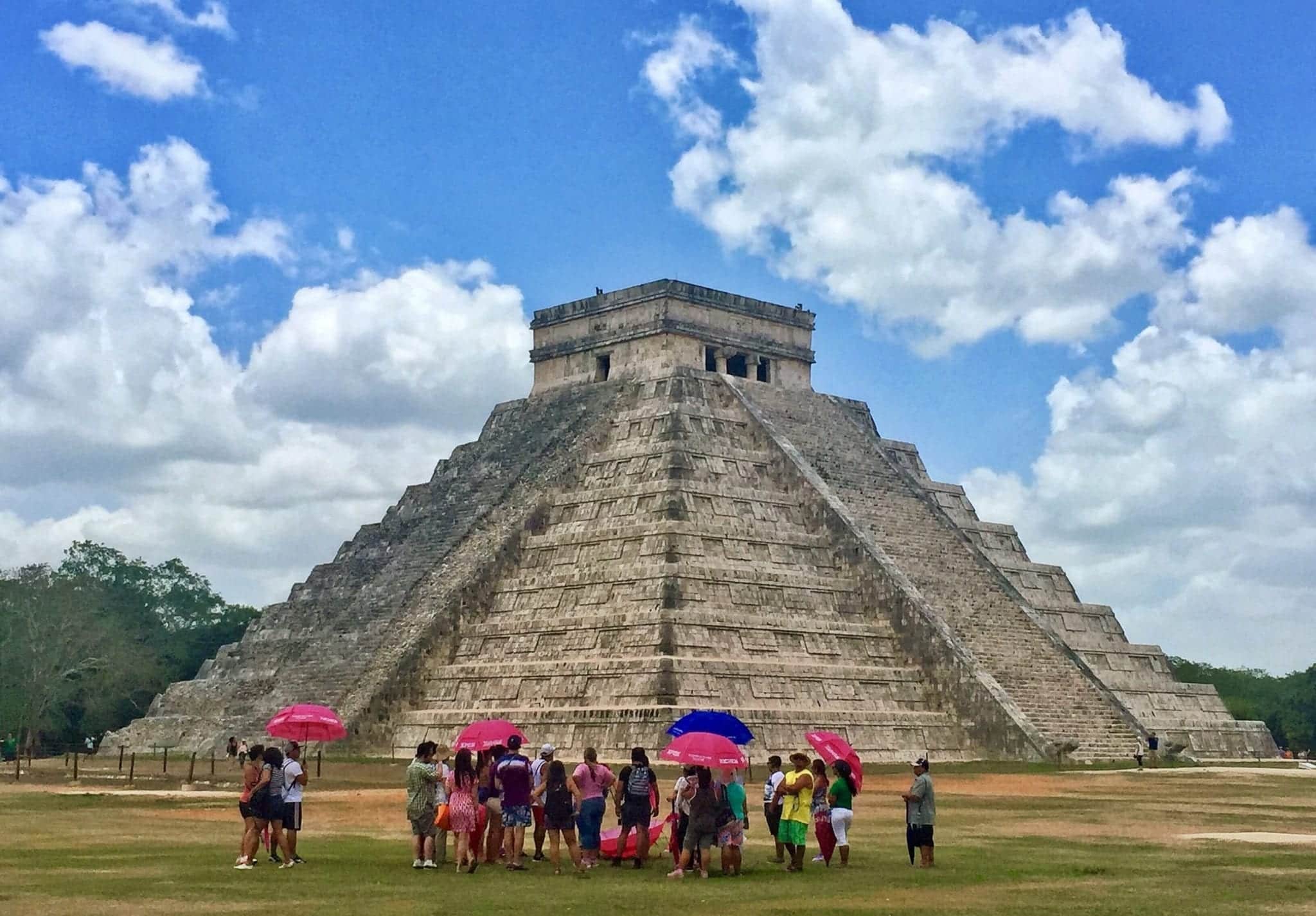
What about Mexico?
I didn’t include Mexico in this guide because it’s technically not part of Central America and I already wrote an extensive guide to solo female travel in Mexico. However, lots of travelers to Central America include Mexico in part of their plans, as it’s often easier or cheaper to fly to Mexican hubs and travel overland to Central America from there.
One popular route is to fly into Cancún and explore the Yucatán region before heading south to Belize and traveling onward to the islands or San Ignacio. (If you plan on visiting this part of Mexico, I happen to love the island of Holbox.) I took the boat from Caye Caulker to Belize City, then the bus to the border at Chetumal and another bus onward to Tulum in Mexico.
Another popular route is to travel between Guatemala and San Cristóbal de las Casas in the Chiapas region of Mexico. There are lots of tourist shuttles that connect San Cristóbal to Guatemalan destinations like Quetzaltenango (Xela) and the towns of Lake Atitlán.
Culturally, Mexico is very similar to Central America, and it has enormous variety. Some places are incredibly easy for newbie travelers and first-time solo female travelers, and other places are better for more skilled solo female travelers. Some places are incredibly cheap and others are quite expensive. You’ve got cities and beaches, jungles and ruins. The food scene is one of the best on the planet. Simply put, Mexico rocks.
READ MORE:
Solo Female Travel in Mexico: Is it Safe?
Travel Insurance for Central America
One last note — it’s absolutely vital to have travel insurance before traveling to Central America. If you get sick or injured on your trip, if you get robbed, or even if you have to be flown home, travel insurance will protect you from financial ruin. I use and recommend World Nomads for trips to Central America.
I had one instance where I almost had to use my travel insurance in Central America — my flight to Costa Rica was scheduled on a day when a major snowstorm was about to hit New York City. JetBlue offered me the chance to move my flight a day early before the storm hit, but most airlines won’t do that. If I hadn’t, I would have been stuck paying for a new, more expensive flight booked at the last minute — and travel insurance would have covered the difference.
Note: Nicaragua is currently experiencing civil unrest and some travel insurance policies will not cover you in countries with civil unrest. If you plan to visit Nicaragua, I recommend calling your potential travel insurance policy and see if they are currently covering Nicaragua. This can change on a dime so I recommend calling before you book and before your trip begins.
Central America is waiting for you!
When I look back at my happiest moments of travel, so many of them took place when I was traveling solo in Central America. It was a trip that I dreamed about in my darkest hours, and perhaps that’s why my long-term Central America trip became one of the best trips of my life.
I want the same for you. Start planning your trip to Central America. Hell, start planning your first two trips to Central America! Then come back and tell me all about it.
READ NEXT:
Solo Female Travel in Mexico: Is it Safe?
Have you been to Central America? What advice would you give to solo female travelers?
The post Solo Female Travel in Central America — Is it Safe? appeared first on Adventurous Kate.


from Adventurous Kate https://www.adventurouskate.com/solo-female-travel-central-america-safe/