Monday, 11 February 2019

How to Get Around Japan on a Budget

a temple near Mount Fuji in Japan
Posted: 2/11/2019 | February 11th, 2019

I have a confession to make: I put off traveling to Japan until 2011 because I always thought it was too expensive.

Everyone always told me Japan was one of the most expensive countries in the world. That was the collective wisdom.

But, when I got there, I realized two things: First, I love Japan! It’s one of the most amazing, beautiful, and friendliest countries in the world. It lives up to all the hype.

Second, while Japan is expensive, it’s not out of reach for budget travelers.

There are many cheap ways to enjoy Japan on a budget.

From finding delicious food to affordable hotels to fun activities, you don’t have to pinch every penny have fun.

However, the one thing that is truly expensive in Japan? Quick transportation.

While it’s not a huge country, the island nation’s transportation infrastructure is geared to expensive, high-speed travel or inexpensive, (really) low-speed travel. There’s not much in between. It’s a three-hour train ride or a 12-hour bus ride!

So what are the best ways to travel around Japan without spending all your money on transportation?

In this post, I’ll break that down (because it does require some work).

Getting Around Japan By Train

https://de.wikipedia.org/wiki/Datei:Shinkansen_N700_with_Mount_Fuji.jpg
Japan’s infamous bullet trains (called shinkansen) are beautiful, comfortable, convenient, and fast. They are a wonder of transportation, racing around at speeds up to 320 km (200 miles) per hour. These trains run on special tracks, separate from the other trains.

They are a beautiful feat of engineering and a smooth ride. It’s the best in train travel.

However, they are also very, very expensive.

Individual tickets can cost hundreds of dollars — even more than airfare. To travel on a bullet train, you pay a basic train fare, then there’s an additional “super express fee” of 800 to 8,000 JPY ($7.50 to $75). For example, a one-way ticket from Kyoto to Hiroshima can cost 11,300 JPY ($105 USD), from Tokyo to Kyoto is 13,710 JPY ($126 USD), from Osaka to Tokyo is around 15,000 JPY ($140 USD), and from Tokyo to Nagasaki is 25,850 ($240 USD).

To make matters worse, there are very rarely promotions or discounts. And, unless you know Japanese, they are nearly impossible to find.

Fortunately, there are other options. Japan also has regular limited express and regional trains. Naturally, they are much slower than the shinkansen, but they are also cheaper.

For example, a trip on a local train from Kyoto to Tokyo will cost around 8,000 JPY ($73 USD) instead of 13,710 JPY ($126 USD) for the bullet train. However, the journey will take 9 hours instead of 3 hours and will also require several transfers, making it a less than an ideal choice for most travelers.

Whether you opt for the bullet train or regional trains, I think train travel is the best way to see the country. It’s just not a good idea to buy individual tickets. In order to reduce your train costs, you need to get a Japan Rail (JR) pass.

The passes are good for JR trains — both regular trains as well as the shinkansen bullet trains! — which go to nearly every destination and region in the country. What I really like is that these JR trains also serve metropolitan areas, so they can be used within cities. On my last visit, I used my pass to get around Kyoto and Tokyo instead of buying metro tickets.

The JR pass is indispensable for travel in Japan, as you get unlimited rides with it. The pass has several options (each valid for consecutive days, not just travel days):

  • 29,110 JPY ($267 USD) for 7 days
  • 46,390 JPY ($426 USD) for 14 days
  • 59,350 JPY ($545 USD) for 21 days

Even if you get just the seven-day JR pass, it will still cost less than a round-trip train ticket from Osaka to Tokyo. And you can still do a lot in seven days (it’s a small country, after all!)

The JR Pass is good on several types of JR trains. After the shinkansen, the next fastest is the tokkyu (limited express). The kyuko express train comes next, followed by the kaisoku and futs? (local trains that make every stop).

Each of these passes also has a first-class option. First-class cars in Japan are called “green cars.” The Green Car JR Pass will be around 10,000 JPY ($92 USD) more for each pass. Since the trains in Japan are already amazing, you likely don’t need to buy the Green Car pass unless you really want some luxury.

There are regional options as well if you are not traveling the entire country. These options will save you even more money since they are cheaper than the regular JR passes. You can buy JR passes for six different regions of the country:

  • JR East
  • JR West
  • JR Central
  • JR Hokkaido (the northern island)
  • JR Kyushu (the southwestern island)
  • JR Shikoku (the southeastern island)

Each region will have several pass options, usually ranging between 1-7 days. If you’re just going to be focusing on one region of the country, consider buying a JR regional pass. If you want to explore everywhere, get the regular JR Pass. (If you’re a first-time visitor to Japan, you’ll likely want the regular JR Pass, as it covers all the major destinations.)

One thing to keep in mind is that you have to buy your JR Pass before you come to Japan. So make sure you have your “exchange order” (the receipt for your pass) before you leave home! Once you get to Japan, you will exchange your “exchange order” for a JR Pass at a JR office. Make sure you have your passport when you go to collect it!

However, they are currently allowing travelers to buy their passes on arrival in some locations, but this is just a test that is set to end in March 2019. Until then, here is where you can buy your pass in Japan: Sapporo, Sendai, Niigata, Tokyo, Shinjuku, Yokohama, Nagoya, Osaka, Hiroshima, Takamatsu, Hakata, New Chitose Airport, Narita Airport, Haneda Airport, and Kansai Airport. The pass is available mainly to non-Japanese travelers who are visiting for a limited time. When you apply for the pass, you will provide your nationality and travel details. You will need your passport to collect your pass.

If you don’t buy a JR Pass and just want to buy single tickets between destinations, here are the approximate prices you’ll pay for one-way train tickets with non-reserved seats in the “ordinary” (non-green car) class:

  • Hiroshima-Tokyo: 18,040 JPY ($167 USD)
  • Tokyo-Kyoto: 13,080 JPY ($120 USD)
  • Kyoto-Hiroshima: 10,570 JPY ($98 USD)
  • Tokyo-Nagoya: 10,360 JPY ($96 USD)
  • Nagoya-Kyoto: 5,070 JPY ($47 USD)
  • Kyoto-Osaka: 560 JPY ($5.25 USD)

If you don’t have a JR Pass, you’ll pay more for a reserved seat, about 300 to 700 JPY ($2.75 to $6.50 USD). You do not typically need to get a reserved seat unless you are traveling in peak season when all seats may be taken.

Getting Around Japan By Public Bus

https://commons.wikimedia.org/wiki/File:Daewoo_BX_212_011.JPG
Buses are a less expensive alternative but they take more time. For example, the two-hour bullet train ride from Tokyo to Osaka is 10 hours on the bus.

The price for that seat is 4,500 JPY ($42 USD), but at some point, you need to think about how much your time is worth. On my last trip, saving 10,500 JPY ($97) was not worth the extra eight hours of travel, since I had limited time.

If I’d had more time, the bus would have been worth it, especially because there are so many cool stops along the way to break up the journey.

Willer Express and Japan Bus Lines have bus passes that offer unlimited travel and begin at 10,000 JPY ($93 USD) for three non-consecutive days of travel. You can see the options at willerexpress.com.

Here are some sample bus fares between popular destinations:

  • Tokyo-Kyoto: 1,599 JYP ($15 USD) – 7.5 hrs.
  • Tokyo-Nagoya: 2,998 JYP ($28 USD) – 6.5 hrs.
  • Nagoya-Kyoto: 2,550 JYP ($24 USD) – 2 hrs. 50 mins.
  • Kyoto-Hiroshima: 4,590 JYP ($42 USD) – 7 hrs. 20 mins.
  • Hiroshima-Tokyo: 6,000 JYP ($55 USD) – 12 hrs.
  • Kyoto-Osaka: 900 JYP ($8 USD) – 1.5 hrs.

As you can see, it’s a lot cheaper to go by bus — but it takes a lot longer!

Bottom line: If you have the time, take the bus. The coaches are comfortable, and there are overnight buses, which is a decent alternative if you’re taking a long trip. Don’t be afraid to chat people up when traveling, either: those I met in Japan were really friendly. If they’re Japanese, they’ll be more than happy to tell you all about their country (and ask about yours).

Getting Around Japan By Plane

https://www.flickr.com/photos/m_power/115168392
Flying has become a better option as more budget carriers now serve Japan. In general, airfares are on par with bullet train tickets. JAL and ANA are the big players. The main “budget” carriers are Peach and Jetstar Japan.

Japan is not a huge country, and I much prefer the train or bus, but if you are short on time and don’t feel like hopping from island to island on a ferry or taking the bullet train, you can fly (though it’s a lot more of a hassle!).

Here are some typical prices between a few popular destinations in Japan:

Tokyo-Kyoto:
JAL: 8,767 JPY ($81 USD) (one-way), 17,759 JPY ($164 USD) (return)
ANA: 11,239 JPY ($104 USD) (one-way), 20,323 JPY ($189 USD) (return)

Tokyo-Nagoya:
JAL: 7,081 JPY ($65 USD) (one-way), 14,611 JPY ($135 USD) (return)
ANA: 9,329 JPY ($86 USD) (one-way), 16,972 JPY ($157 USD) (return)

Osaka-Hiroshima*:
JAL: 11,352 JPY ($105 USD) (one-way), 42,036 JPY ($388 USD) (return)
ANA: 18,881 JPY ($175 USD) (one-way), 37,649 JPY ($348 USD) (return)

Hiroshima-Tokyo:
JAL: 11,576 JPY ($107 USD) (one-way), 21,018 JPY ($194 USD) (return)
ANA: 16,409 JPY ($152 USD) (one-way), 25,738 JPY ($238 USD) (return)

*No direct flights

Moreover, ANA offers special last-minute fares for 10,800 JPY ($99 USD) or less at ana.co.jp/en/us/promotions/share/experience_jp/. These fares are available only to foreigners and can sometimes be cheaper than the flights you find on other sites, especially for longer routes.

When deciding whether to fly or travel via train, keep in mind that you’ll need to get to the airport somehow. Not all airports are close: for instance, Kyoto’s nearest airport is in Osaka. If you find flights to be really expensive (as in those to and from Hiroshima), check nearby airports and, most of all, be flexible with your itinerary.

Getting Around Japan By Ferry

https://www.flickr.com/photos/tsuda/992140071
Another option in Japan is an interisland ferry, and there is an extensive selection of routes. Ferries typically carry passengers, vehicles, and cargo. Passengers have a choice of three classes: second (with or without a bed), first, and special. You will not have your own private room on a ferry, though the first-class option has just two beds in each room.

Japan’s four main islands are connected by bridges and tunnels, but a lot of the smaller islands can be reached only by water. If you plan on exploring these, the Japan Ferry Pass 21 is a good option. It gives you six trips on certain longer-distance ferry routes for 21 days. The pass is 21,000 JPY ($189 USD) and is available only to foreign travelers. The pass is good for second-class travel and can’t be used during peak season; ferries must be reserved in advance. For more information, visit jlc-ferry.jp.

If you decide to go this route, keep in mind that the trips can be very long! Here are some example routes, durations, and costs:

Route
Duration (hrs)
Second Class (no bed)
First Class (with bed)
Tokyo – Kitakyushu
34
17,000 JPY ($157 USD)
20,000 JPY ($183 USD)
Osaka – Shibushi
15
$14,660 JPY ($134 USD)
22,000 JPY ($203 USD)
Kobe – Takamatsu
4
2,290 JPY ($21 USD)
4,300 JPY ($39 USD)
Niigata – Otaru
17
6,680 JPY($61 USD; shared room with bed)
14,160 JPY ($130 USD)

Getting Around Japan By Car

https://pxhere.com/en/photo/266700
I don’t recommend renting a car and driving around Japan on your own. For one, rental cars are much more expensive than public transit options. In most places, traffic is frustrating, parking is a big hassle, and unless you speak Japanese, getting around is going to be very difficult.

Getting Around Japan By Hitchhiking

If you are feeling adventurous, you can hitchhike. Japan’s a really safe country, and it’s a chance for a free ride! While almost no Japanese hitchhike, many are more than happy to pick up foreigners. It’s an opportunity for them to practice their English and engage a new culture, so don’t be afraid to stick out a thumb!

Even out in the countryside, you won’t have a hard time finding a ride. Even people who don’t speak English will pick you up, as the people really are incredibly kind and giving. Don’t be surprised if you get asked to meet their family or friends or share a meal with them!

Our Community Manager, Chris, spent a month backpacking and hitchhiking in Japan. He never waited too long for a ride, and people were incredibly friendly. They bought him snacks and meals, drove way out of their way to help him, and even took them to their homes to meet their family. If you’re comfortable doing this, it can be a very culturally rewarding experience!

If you decide to go this route, make a sign letting people know which direction you’re headed. Add a smiley face and other cute drawings to up your chances of finding a ride. A good resource for finding the best places to find a ride is Hitchwiki.

How Long Does it Take to Get Around Japan?

Here are some distances and travel times. I think this will convince you that the train really is the way to go.

Route
Road (km/miles)
Air (hrs.)
Train (hrs.)
Bus (hrs.)
Tokyo-Kyoto**
453/281
1
2:40
7:30
Tokyo-Nagoya
347/216
1:10
2:10
6:30
Nagoya-Kyoto**
135/84
4*
0:50
2:50
Kyoto**-Hiroshima
361/224
3:50*
1:40
7:20
Hiroshima-Tokyo
8017/501
1:50
5
12
Kyoto-Osaka
58/36
N/A
0:25
1:30
***

The Best Way to Get Around Japan

Bottom line: The best transportation option really depends on the length of your trip. If you only have a week or so in Japan and want to get around really quick, get a rail pass and take the train everywhere you need to go. It’s not going to be cheap, but it will be the most efficient. If you have more time and have a lot of places to visit in a similar geographic region, take the bus. If you’re not comfortable hitchhiking, try an app like CarpoolWorld, which helps you find all sorts of carpool, vanpool, and rideshare listings by destination.

Whichever method you choose, you’ll be in good hands. Japan has some of the safest, cleanest, most efficient travel options in the world, so enjoy!

Book Your Trip to Japan: Logistical Tips and Tricks

Book Your Flight
Find a cheap flight by using Skyscanner or Momondo. They are my two favorite search engines because they search websites and airlines around the globe so you always know no stone is left unturned.

Book Your Accommodation
You can book your hostel with Hostelworld as they have the most comprehensive inventory so they are best for booking a hostel. If you want to stay in a hotel or guesthouse in Japan, use Booking.com as they consistently return the cheapest rates for guesthouses and cheap hotels. They’re the best booking site out there. My favorite places to stay in Japan are:

  • Khaosan Tokyo Kabuki (Tokyo) – This is one of the best hostels in the country. The staff go above and beyond, each room has its own bathroom, and it’s in a great location to help you explore the city.
  • Jiyujin (Kyoto) – This is a smaller hostel that’s great for anyone looking to have a more quiet and relaxed stay in the city.
  • K’s House (Hiroshima) – This is a great chain of hostels around the country. The staff are helpful, the common areas are always full of people, and they also have free tea and coffee.

Don’t Forget Travel Insurance
Travel insurance will protect you against illness, injury, theft, and cancellations. It’s comprehensive protection in case anything goes wrong. I never go on a trip without it as I’ve had to use it many times in the past. I’ve been using World Nomads for ten years. My favorite companies that offer the best service and value are:

Looking for the best companies to save money with?
Check out my resource page for the best companies to use when you travel! I list all the ones I use to save money when I travel – and I think will help you too!

Looking for more travel tips for Japan
Check out my in-depth Japan travel guide for more ways to save money, costs, tips on what to see and do, suggested itineraries, reading, packing lists, and much, much more!

The post How to Get Around Japan on a Budget appeared first on Nomadic Matt's Travel Site.


from Nomadic Matt's Travel Site https://www.nomadicmatt.com/travel-blogs/get-around-japan/

An Evening in Dallas with a British Superstar

This is sponsored advertising content by Chase. All opinions, as always, are my own.

It’s evening in Dallas and the moment has arrived. Our performer, a legendary British rocker and singer-songwriter whose music has permeated our lives for decades, is stepping out onto the stage. No opening act, because who on Earth could open for him?!

And there he is, as I’ve always imagined him. A sparkly lavender suit. Outlandish sunglasses.

He sits down at the grand piano dwarfing the stage and plays a single chord. A G and a G with his left hand. A B and a D and an F# and a B with his right.

One chord. That’s all it takes. It’s immediately obvious what song he’s about to play, the song about the electric boots and the mohair suit. It’s one of his most beloved hits and the crowd absolutely LOSES IT.

There are few performers who can make a stadium scream with a single chord.

Rocking in the Lone Star State

I’ve never been to Dallas in my life, but I’m here for my third event for select Chase Cardmembers. If you have the British Airways Visa Signature Card from Chase, you have access to signature events throughout the year. These events are just for cardmembers and not open to the public.

Earlier this year I went to a formal dinner in San Francisco with Princess Diana’s former personal chef and got to chat with him about William and Harry. Where else can you do that? Later, I went to a Spanish and Irish cultural fusion night in the single most spectacular venue I’ve ever visited in New York. Follow the link here to see a gallery of the amazing experiences cardmembers can access.

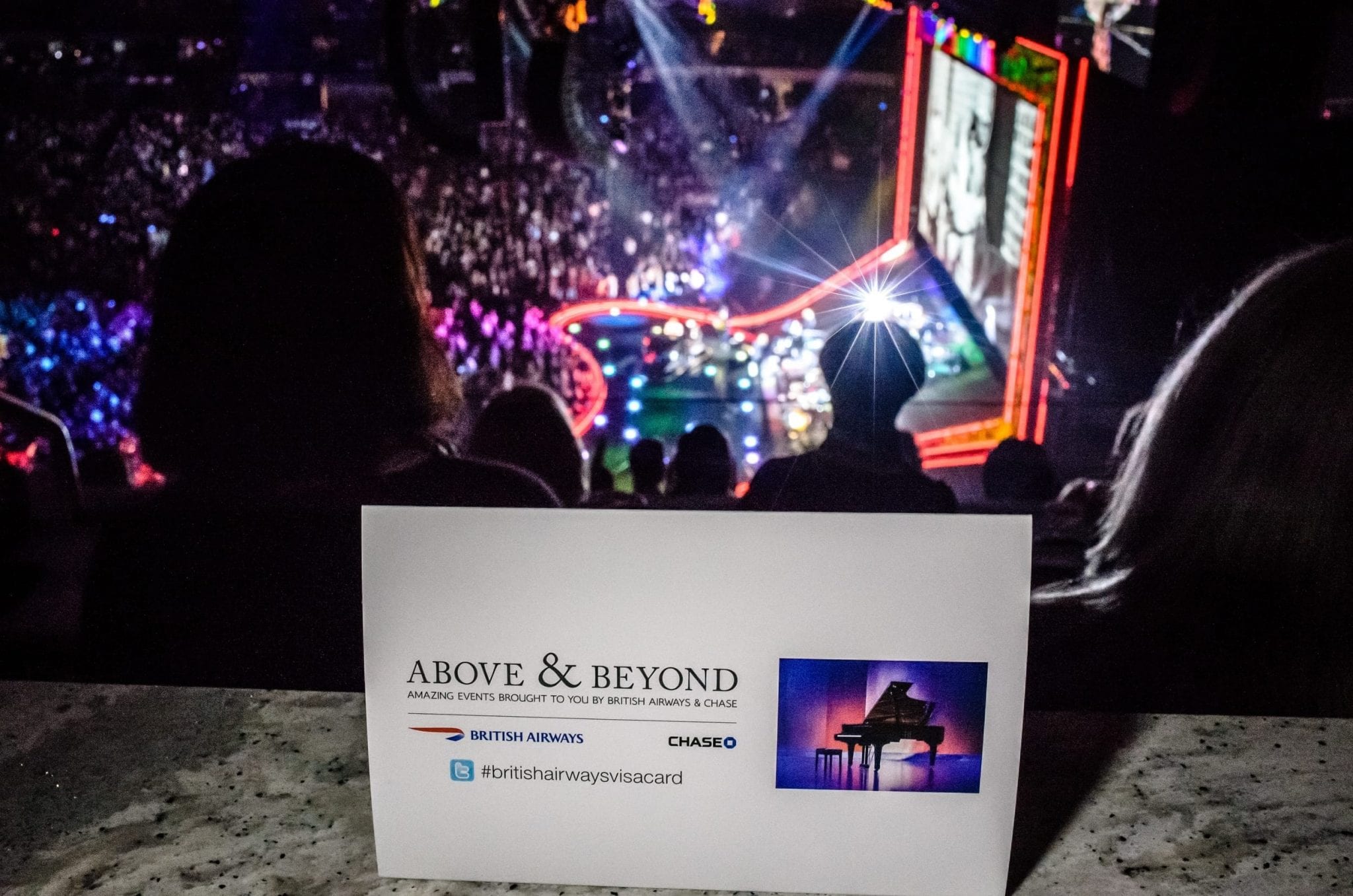
And this Dallas experience was a concert — bit so much more. This performer is popular enough to sell out like crazy, but instead of just regular seats, we’re watching from a private box. It comes with all the trimmings, including tons of food and an open bar. Beforehand, there’s a reception at one of Dallas’s most recognizable buildings, and the next morning there’s breakfast reception for everyone.

Before the Event

I arrive and check into the Hyatt Regency Dallas, located in the heart of downtown. Everything really is bigger in Texas, I think to myself as I check into the behemoth of a hotel, sprawling what seems miles in every direction. A night at the hotel is included.

My friend Alexa has flown down from New Hampshire to join me at the event. We primp — I opt for a hot pink jumpsuit, while Alexa goes for a black cocktail dress — and head downstairs.

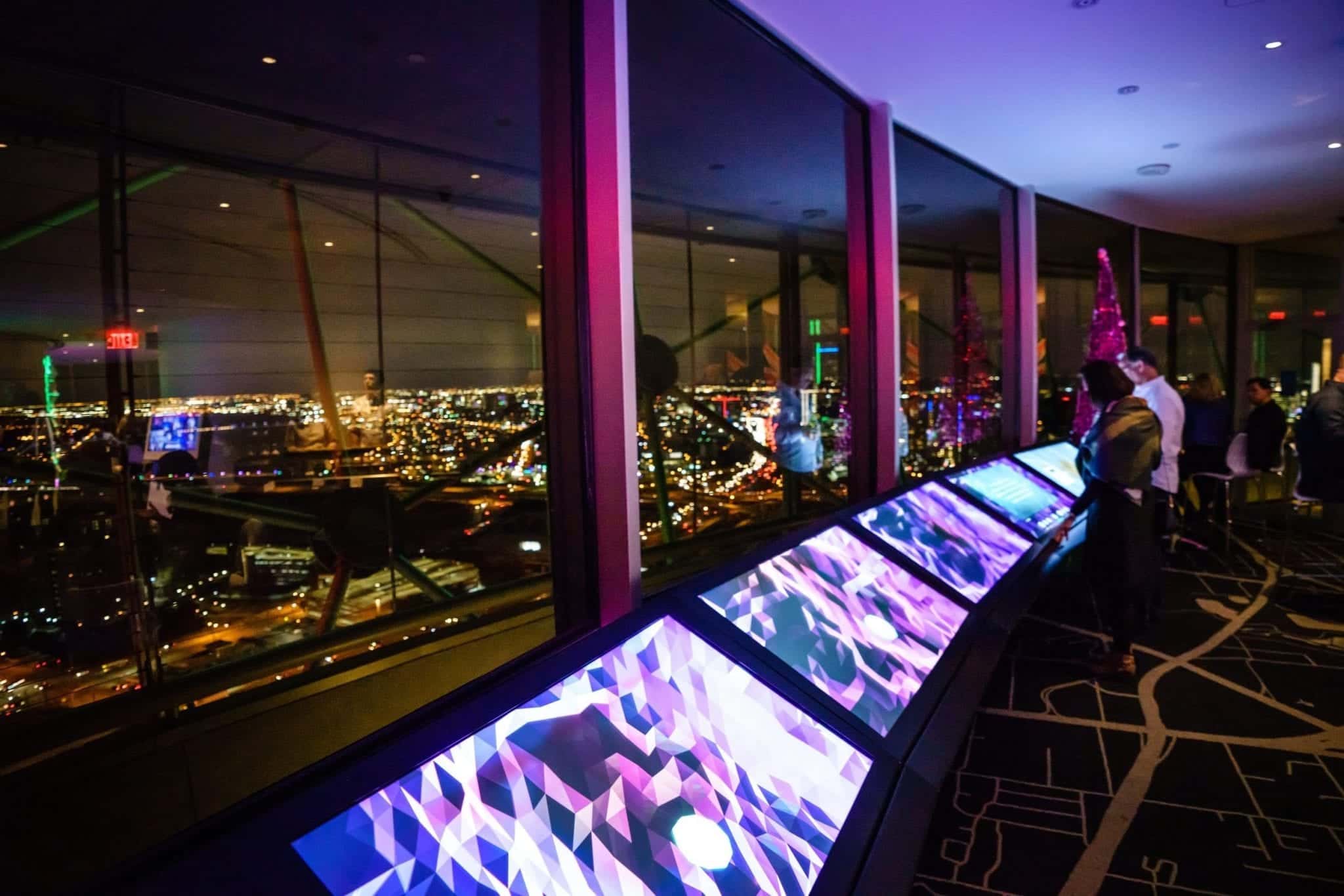
Our pre-concert reception is at the top of the Reunion Tower, which has the tallest observation deck in Texas. A giant ball studded with lights atop a skyscraper, it cuts an instantly recognizable silhouette through the Dallas skyline. It also happens to be connected to the Hyatt Regency, so we don’t need to even go outside!

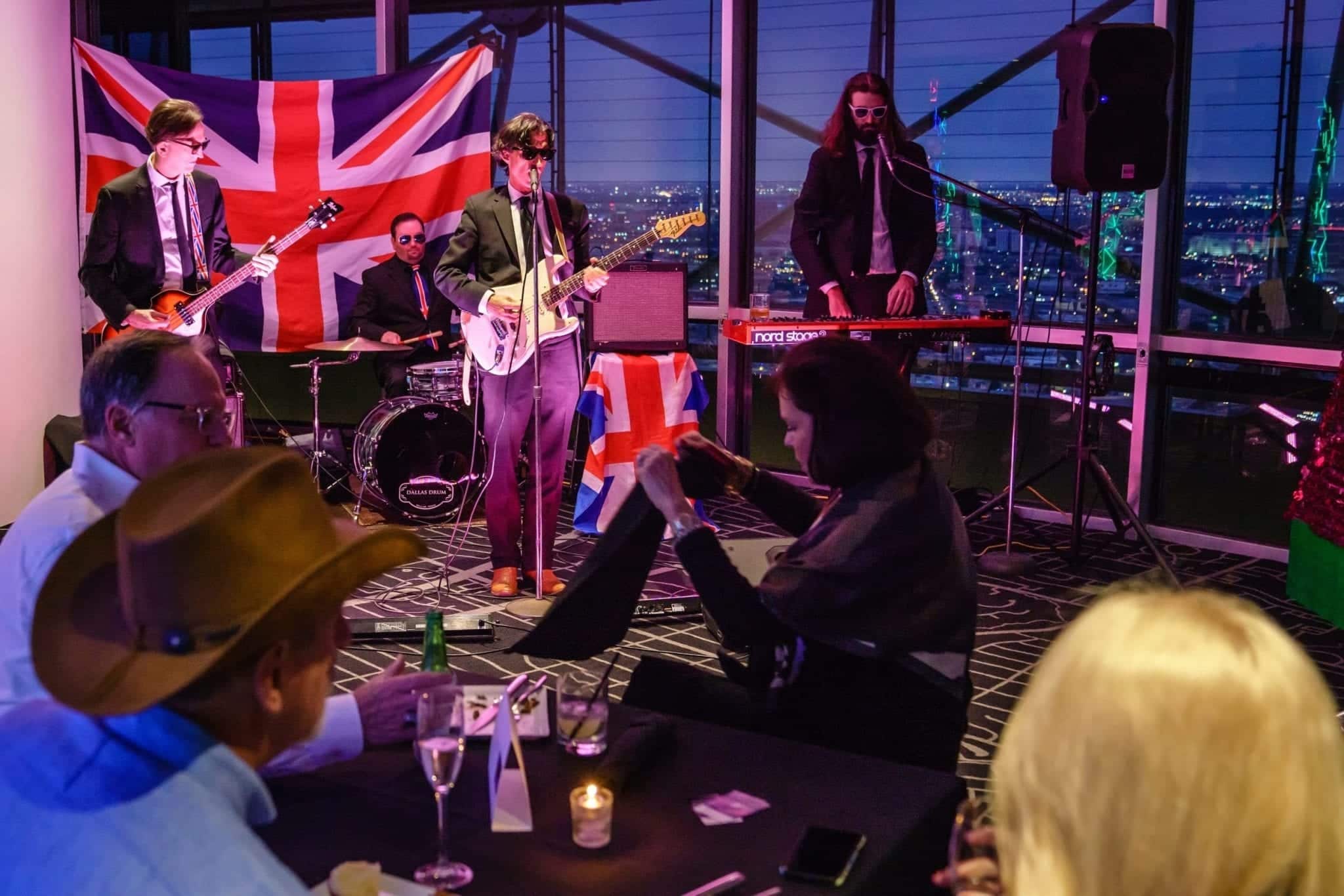
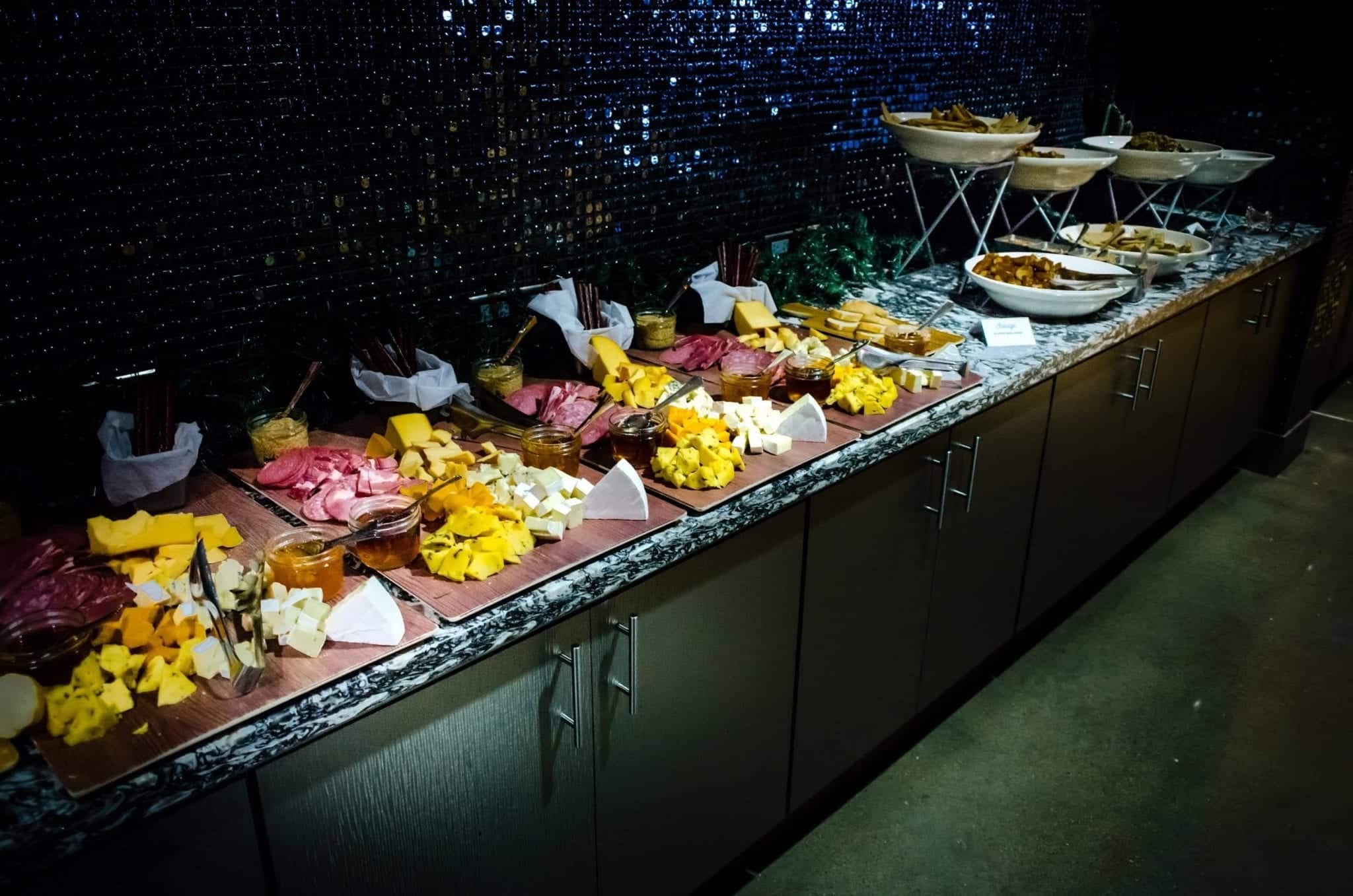
Everyone up here is here for the concert. We have a live British tribute band performing everything from the Rolling Stones to the late great David Bowie (side note: anyone else still devastated that he’s gone?). Waiters with canapés are circling the room and Alexa and I toast two glasses of champagne.

Listening to “Space Oddity,” enjoying appetizers, and feeling the lightness of champagne bubbles, it’s the perfect start to the evening. And even though it’s chilly and rainy, I step out onto the outside deck to take in the view.

Concert Time

You probably noticed that I haven’t named the British singer-songwriter in question. There’s a reason for that. But I’m sure you can figure it out — after all, who else wears sparkly lavender suits with outlandish sunglasses and plays the piano?

He’s a legend. His songs were the soundtrack to my life growing up — as they were for the other guests in their forties, fifties, sixties, and seventies.

We’re experiencing the concert in the best way possible — in a private box. I’ve experienced a few private boxes over the years, and if you ever get the chance to experience one, you must. The advantages? Getting to move around as you please, an open bar (with delicious Moscow mule specialty cocktails), bathroom access away from the masses, and tons of food. You don’t have to worry about tall people blocking your view, or being squished together with the drunken masses. This is how celebrities get to experience concerts and it’s amazing.

This is perhaps the best way possible to experience a legendary performer. And did he ever come to play.

There was the opening song that I thought was named after the gangs from West Side Story, the one that I swear Frank Ocean used as inspiration for his song “Super Rich Kids” 40 years later.

There was the song that Ewan McGregor sang to Nicole Kidman in Moulin Rouge!, a song that I became smitten with as a 17-year-old and went on to perform at a coffeehouse in high school.

And of course, the song that always reminds me of the episode of Friends when Phoebe gets the lyrics wrong and thinks he’s singing to Tony Danza.

(Okay…if you can’t figure out who the singer-songwriter is by now, I don’t know what to tell you!)

This is the last round of touring for him. (Well, so he says right now. You never know.) In between the songs, he talks about the most meaningful moments in his life. How he would write songs together with his songwriting partner of decades, his partner first writing the lyrics, then how he wrote the perfect music for them.

How he found sobriety, and how it saved him from dying at an early age like many of his musical peers.

How he found meaning in building a foundation to fight HIV/AIDS, and how much of his activism stemmed from guilt for not doing more during the apex of the crisis.

And the joy he found in finding his family — falling in love with his husband, then becoming a father to two little boys.

And yes, the talk is nice, but really, we’re here for the music above all else. Soon, nearly everyone is on their feet, dancing to his biggest hits from the seventies. He is playing nearly every hit he’s ever had. The memorial song in tribute to his friend Princess Diana. The expletive-laden 1974 comeback song that many radio stations refused to play due to its vulgarity. And the one about the sharp-toothed animal from the swamp rocking out, where the entire stadium sings along with, “YAAAAA! YA-YA-YA-YA-YAAAAA!”

The Morning After

The next morning I wake up for one final experience. Alexa, who keeps the hours of a vampire, elects to sleep until fifteen minutes before checkout, while I head downstairs for one final breakfast with the crew.

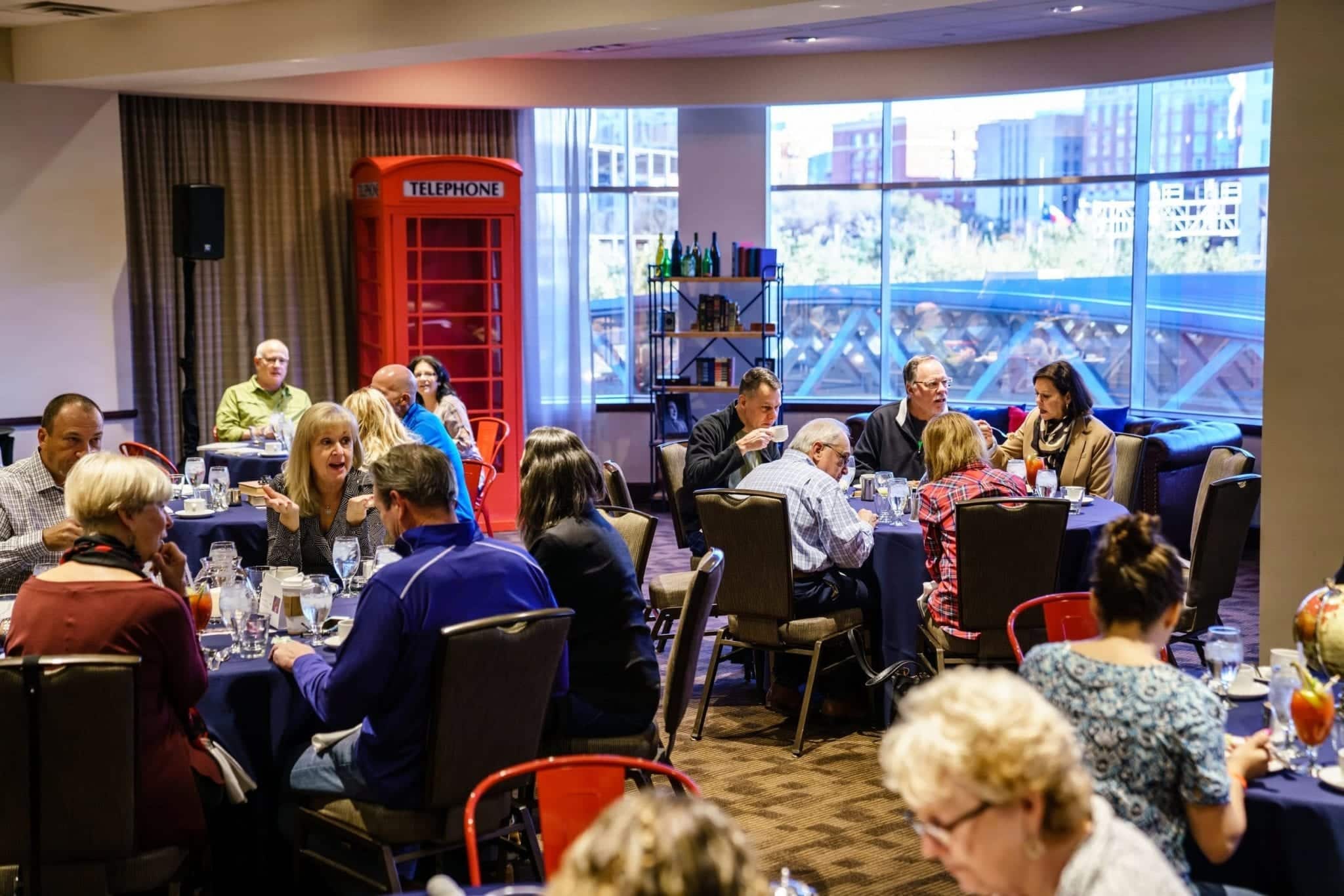
I grab a table with an affable couple, her from England and him from Texas, and we talk about our shared love for Boston. Once again, I marvel at how so many interesting people come to these events. We enjoy our omelets as a musician plays the guitar, singing more British hits of the sixties and seventies.

I loved this event. I love that I got to see this performer once in my life, on his final tour, and that I did so in the best way possible, with the private box, the pre-concert reception, and so much fun from beginning to end. I may not go to a ton of concerts, but this was easily the best concert experience of my life.

How to Get These Experiences For Yourself

This is just one of many exclusive experiences available to you with the British Airways Visa Signature Card from Chase. These are unusual and special events that money can’t buy — but they’re available for surprisingly good prices, just for being a cardmember.

I have loved the events I experience this year. Most memorable was meeting Chef Darren McGrady, former personal chef to Queen Elizabeth II and Princess Diana, and actually getting to spend time with him, have conversations with him, and ask him things I’ve always wanted to

know about William and Harry! You can’t put a price tag on that.

There are lots more Chase British Airways Visa events on the docket for 2019. In March, there will be a Chicago event for St. Patrick’s Day where you can celebrate the dyeing of the Chicago River green — something I’ve always wanted to experience myself! The event includes dinners and a cooking demonstration by Irish celebrity chef Stuart O’Keeffe. Next up will be an ultimate Florida golf experience in Sawgrass, Florida, including two full rounds at iconic courses.

I’m a longtime user of the British Airways Visa Signature Card from Chase. I first started using it in my early days of travel, just after getting home from my first six-month trip to Southeast Asia, and I loved accumulating Avios, British Airways’s points system. I quickly accumulated a big Avios bonus but instead of blowing them all on a first class flight to Asia, I used them little by little for dozens of economy flights all over Europe. When I was based in the UK, I could get flights within Europe for as little as 4,500 Avios each way — so I used a TON of them, just from my regular purchases!

You can sign up here for the British Airways Visa Signature Card from Chase.

What was the best concert of your life? Share away!

The post An Evening in Dallas with a British Superstar appeared first on Adventurous Kate.


from Adventurous Kate https://www.adventurouskate.com/an-evening-in-dallas-with-a-british-superstar/

Friday, 8 February 2019

BenQ SW271 Monitor Review

BenQ SW271

Earlier last year I had a chance to test the BenQ SW320 monitor, which turned out to be a solid choice for my photography needs. I was able to calibrate the display using both BenQ’s native Palette Master Element software and DisplayCAL, which provided me with great results at the end (you can see my calibration results in my detailed BenQ SW320 Review). I wanted to explore BenQ’s product line even further and this time I will be taking a closer look at the smaller 27″ version of the monitor, the SW271. Quite a few things have changed since last time I looked at BenQ monitors and with the most recent updates to calibration software, it seemed like I could get even more out of these wide gamut displays. Let’s take a look at what I was able to achieve with the BenQ SW271 in my environment.


from Photography Life https://photographylife.com/reviews/benq-sw271

Thursday, 7 February 2019

Solo Female Travel in Mexico — Is it Safe?

Is it safe for a woman to travel alone in Mexico? ABSOLUTELY.

Mexico gets a undeserved bad reputation for travel, particularly in the United States. Much of this is due to the cable news environment with its exaggerated narratives that Mexico is full of drug cartels and murderous immigrants.

This is not what Mexico is actually like. In fact, the real Mexico is so different that you’ll be stunned.

My name is Kate and I write about solo female travel for a living. And I’ve spent a lot of time traveling in Mexico. Even though I’ve been to 77 countries and all seven continents, there’s something about Mexico that pulls me back again and again. I literally got back from my last trip two weeks ago and I’m already trying to figure out when I can go back next!

Mexico is one of my favorite countries — both in general and for solo female travel.

Mexico is Great for Both New and Experienced Solo Female Travelers

If this is your first time traveling solo, Mexico is a great choice. Mexico has good travel infrastructure, excellent hotels at a variety of price points, and several well-worn tourist trails, especially in the Yucatán. The food is familiar and delicious. English is spoken in touristy areas, but even when it’s not, Spanish is an easy enough language to pick up on your own. And the people are kind and helpful.

My advice for first-time solo female travelers is to plan your itinerary carefully — especially transportation. Figure out where you’ll be staying ahead of time, plan your forms of transportation (whether you take buses, rent a car, book a shuttle transfer, or fly between destinations), and the tours and activities you’d like to do. And don’t skip on getting a SIM card (I get one from Telcel). It can help you with everything from GPS to translation.

I usually advise travelers to be flexible with their itineraries, but I think first-time solo female travelers benefit from having more structure.

If you’ve previously traveled solo, you’ll find Mexico to be an easy destination, especially if you speak some Spanish. But Mexico doesn’t have to be a lie-on-the-beach-and-don’t-leave-the-resort kind of destination. Whatever you’re into — cool cities, crazy scenery, diving or surfing or hiking — Mexico has everything in spades. See below for suggestions on where to go.

Is Mexico Safe?

As soon as you announce that you’re planning a trip to Mexico, one of your parents or relatives or coworkers will say, “Don’t go to Mexico — it’s not safe.” And that may give you pause, especially if the person is someone you love or respect. But you need to consider the source first.

Considering the source is one of my top travel safety tips for women, and this is especially true for women traveling to Mexico. Most people have an opinion about Mexico, and if they’re not experienced in traveling the country, it’s likely a bad opinion informed by cable news.

Every time someone gives you advice about traveling to a destination, you should ask yourself the following questions:

  • Does this person travel?
  • Does this person travel in my style of traveling (i.e. backpacking as opposed to resort travel)?
  • Has this person been to this destination?
  • Has this person been to this destination recently (in the past 3-5 years)?

If the questions to all four questions is yes, then you’ve likely got a reliable source and should listen to him or her. If not, you should find someone who knows better.

And I’m someone who knows better. I’ve been teaching women how to travel the world safely for nine years now, and I’ve spent a lot of time in Mexico. I designed this guide to dispel myths and help women enjoy their trips to Mexico.

Here’s the most important part: CABLE NEWS DOES NOT GIVE YOU AN ACCURATE PICTURE OF WHAT IT’S LIKE TO TRAVEL IN MEXICO. Ever since 24-hour cable news debuted in the US, there has been a disproportional focus on horrors around the world, particularly in Mexico and the Middle East. And that goes triple for Fox News, a channel that frequently and blatantly lies to the public for the purpose of consolidating money and power, then avoids lawsuits because they’re branded as “entertainment,” not news.

Reporting exclusively on horrors outside the US borders and never showing any of the good stuff does not show you anything about what it’s like to travel in Mexico. The good stuff dominates — but it doesn’t make for compelling news.

But aren’t there drug cartels in Mexico?

Yes, but as long as you’re not going to Mexico for the purpose of trafficking drugs, you are not going to be involved in that. How often do you waltz into drug deals in your home country? How often do you accidentally end up in a meth lab? How often do you get in the way of drugs being transported? Most drug cartels operate in areas nowhere near where tourists go.

You’re not Walter White. They don’t care about you.

But aren’t there caravans of immigrants?

That’s not an issue for you and not a safety issue for anyone. The goal of migrants is to get to the United States safely. You likely won’t see any migrants if you stick to the tourist trail, and your chance of seeing a caravan is nearly zero. If you do, they won’t be interested in you.

But most importantly, the reason why so many Central Americans are fleeing their countries in the first place is because America’s interventionist policies in Central America ended up leaving the region destabilized and dangerous.

Aren’t they rapists?

That’s a pretty racist thing to say. Rapists are everywhere, and nine times out of ten women are raped by men they already know.

But I heard about something bad that happened in Mexico. Is it safe?

I’m not saying that tragedies never happen to travelers in Mexico. They do happen — but they’re rare. Far rarer than the public would have you believe.

A woman will occasionally die while traveling in Mexico — from a car accident, from a drink spiking or poisoning, or from drowning — but these are extremely rare incidents. Just as they are rare in your home country. And being kidnapped by cartels is something that happens far more in movies than real life. (Also, if you google “woman dies in Mexico,” most of the results pertain to botched cosmetic surgeries.)

Also, keep in mind that Mexico is a large country. Just because something bad happens somewhere in Mexico, it doesn’t mean it will affect your trip. An appropriate analogy would be to say, “It’s dangerous to go to Philadelphia — there’s drug violence in East St. Louis!” Or “It’s dangerous to go to the Grand Canyon — I just heard about a shooting in Chicago!” Or “You shouldn’t go to Martha’s Vineyard — there was an earthquake in Los Angeles!”

What You ACTUALLY Have to Worry About in Mexico: Water Safety and Noise

The water in Mexico is not safe to drink. If you’re not used to Mexican water, drinking it can lead to illness. There are two ways around this: drink bottled or sterilized water, or sterilize it yourself.

While most travelers in Mexico rely on bottled water, it creates a major waste issue. For this reason, I recommend you bring a reusable bottle and invest in a SteriPen water purifier (much better and faster than tablets). Alternatively, you can bring a LifeStraw, a bottle that purifies water as you drink it through its straw.

Noise is more of a convenience thing than a safety issue. Mexico is loud. Church services blare music into the night. Firecrackers explode with regularity. Trucks drive down the streets with loudspeakers blasting advertisements. And bus rides always have movies playing at top volume. If you’re not prepared, the noise of Mexico can drive you insane.

For this reason, I recommend you bring earplugs, and you may want to consider investing in heavy-duty earplugs. If you’re planning on working while in Mexico, you may be interested in noise-canceling headphones.

Travel Safety Tips for Mexico

Dress to blend in with Mexican women. Your goal is not to “pass” as Mexican — it’s to look like you’re a longtime resident, not a tourist. Dressing similarly to locals helps immensely with this. Mexican women, like many Latin American women, tend to wear long pants but don’t have qualms about showing more skin up top. It’s good to dress a bit more conservatively than usual, especially in traditional areas. If you’re visiting a church or religious site, cover to your shoulders and knees. You have more leeway in resort areas. Only wear swimwear at the beach. The Walking Company is my go-to for comfortable shoes that are cute; I strongly recommend black ABEO flats, which have fantastic arch support.

Consider bringing a Speakeasy Travel Supply scarf. These beautiful scarves have a hidden passport pocket in them. I love these scarves (I even designed my own!) and they are so good at keeping your valuables hidden. They’re also extremely chic and they come in different fabrics for all kinds of climates.

Get a SIM card. If your phone plan doesn’t work overseas (don’t roam, it’s crazy expensive), pick up a SIM card in the airport or in a shop on the street. This way you’ll always have internet on your phone in case of an emergency. I usually get a Telcel SIM card when I’m in Mexico.

Keep your drinks close to you. Don’t take drinks from strangers and don’t leave them out when you’re drinking them. Watch your drink like a hawk.

Don’t drink too much. Know your limits, and drink less than you usually do at home. Be in a state where you’re aware of your surroundings.

Peel your fruits and vegetables. If you’re going to eat raw fruits or vegetables, make sure they’re peeled.

Lock up your valuables in a portable safe in your hotel room. I do this with my Pacsafe Travelsafe and I consider it the most important thing I pack.


READ MORE: How to Protect Your Belongings on the Beach


Malaria is present in parts of Mexico. This is the Mexico malaria map from the Center for Disease Control in the US. Some travelers choose to take malaria pills and some choose not to. I’m not going to tell you what to do because that’s a conversation you and a medical professional should have. I recommend seeing a travel doctor.

The zika virus is also present in Mexico. Here is a map. Zika should be a concern of pregnant women, partners of pregnant women, and women who intend to become pregnant soon, but if you’re none of those things, you don’t need to worry. Some destinations in Mexico, like Mexico City, are at a high enough altitude that mosquitos are not present and zika is not a factor. Again, this is a conversation to have with your doctor.

Climates vary enormously in Mexico. It’s not all hot and tropical. I’ve had friends plan trips to cities like Mexico City and Guanajuato in winter, and they ended up freezing their buns off and buying a new wardrobe because they thought it would be summer weather like in Cancún. Do your research before you arrive.

Do not take drugs, even if you’re a party drug enthusiast. First, drugs in Mexico can be cut with poisonous substances. Second, if you’re caught, the police are not forgiving. Do what you want at home. Mexico isn’t the place.

Don’t be afraid of street food. Street food is life in Mexico, especially when it comes to tacos! Go where the crowds are; if there’s a line, it means the food is great and there’s high turnover. You may want to start with vegetarian food and slowly ease yourself into meat.

Hide your money in multiple places. Only take a small amount of cash and a debit card with you when going out. Keep the rest locked up in your room. Make sure you bring multiple debit cards, too, in case one gets lost or stolen.

Protect yourself from the sun and heat. Bring sunscreen and a hat. If you plan on snorkeling or diving, use reef safe sunscreen (Stream2Sea is a good reef safe brand). Hydrate constantly. Water is ideal, but coconuts are great for the electrolytes! Don’t forget your reusable bottle and SteriPen so you can drink the local water safely.

Finally, invest in a guidebook. Even as an expert traveler in the year 2019, I love guidebooks. They’re filled with detailed information about everything from travel times between cities to medical clinics serving foreigners. I’m a Lonely Planet fan and I recommend Lonely Planet’s Mexico guidebook. I buy the digital version and store the PDF on iBooks on my phone. You can either buy the whole thing or individual chapters, which is great if you’re only visiting a small part of the country.


For more general safety tips, be sure to check out

Top 10 Travel Safety Tips for Women


The Best Experiences in Mexico

Mexico is full of interesting experiences. Here is just a sampler of things you can do:

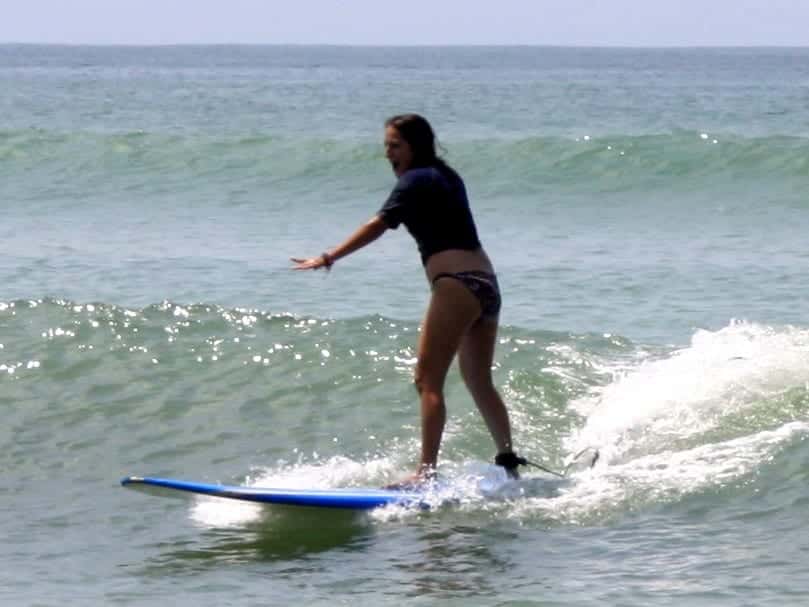
Learn to surf. If you’ve ever dreamed of hanging ten, Mexico’s west coast is a great place to learn. I took a lesson in Punta de Mita and you might enjoy Sayulita, Puerto Escondido, or Cerritos.

Have a world-class meal for a low price. Pujol in Mexico City is regularly ranked one of the top ten restaurants on the planet and while the tasting menu is pricey, you will pay far less than you would for a restaurant of that caliber in New York, Paris or Tokyo. Last I heard, the six-course lunch tasting menu was $128 in 2018.

Catch a Lucha Libre match. This tradition, Mexican pro wrestling, is a fun and wacky night out! It’s all fake but it’s got so much drama. And the masks are fun.

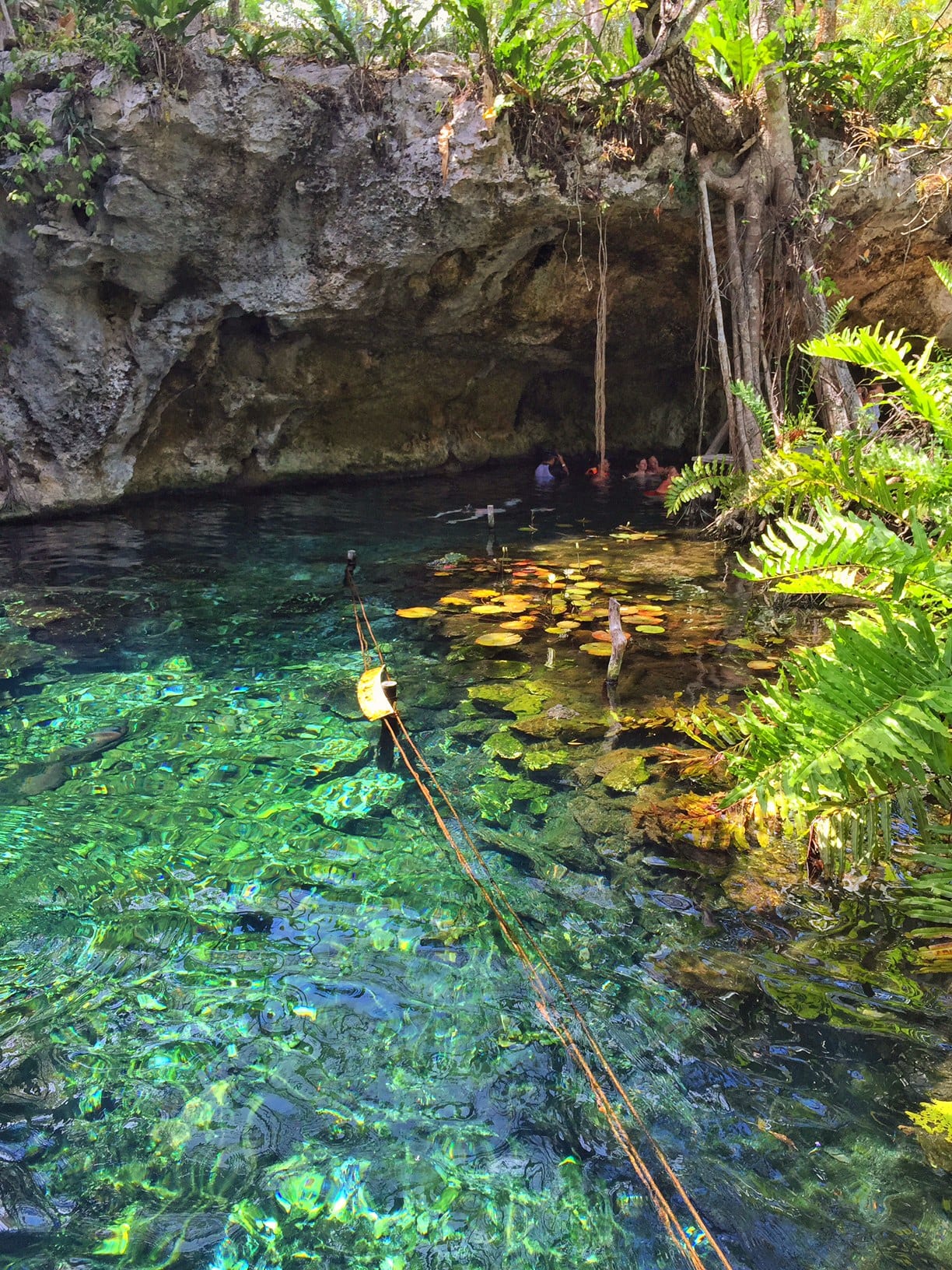
Swim in cenotes. The Yucatán peninsula is full of cenotes — natural sinkholes created by collapsed limestone, revealing the fresh groundwater underneath. They’re amazing places for a cool swim.

Shop in markets. From tiny markets in small towns to behemoths in major cities, Mexican markets are an adventure. Here you can find some of the best cheap dishes in town, as well as cheap clothing, fresh fruit, electronics, and all kinds of souvenirs.

Get into Mexican nightlife. I love partying in Latin America more than any other region in the world, and Mexico is no exception — the music is joyful, the dancing is contagious, and the people are so welcoming. There is none of that pretentious club atmosphere you often get in the US.

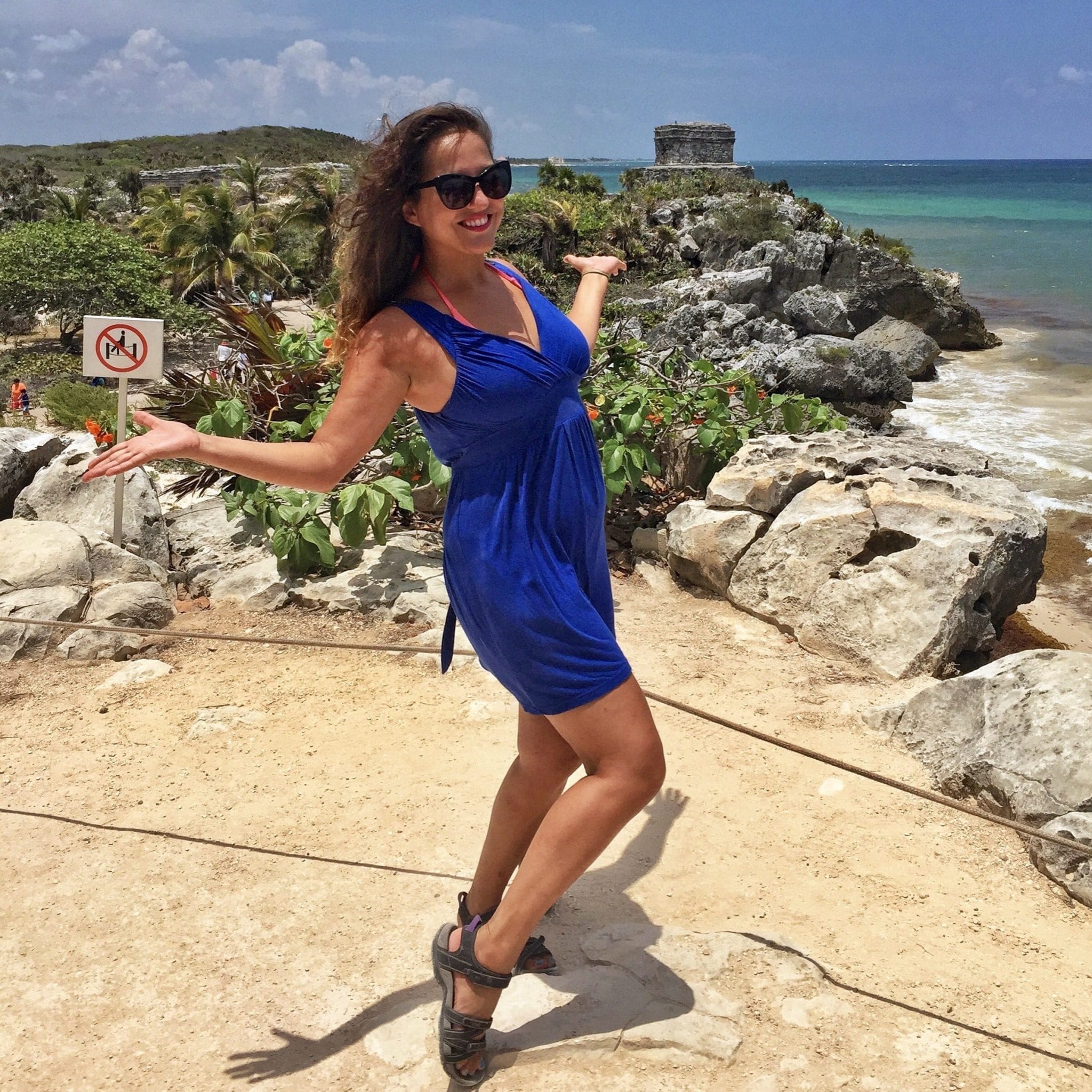
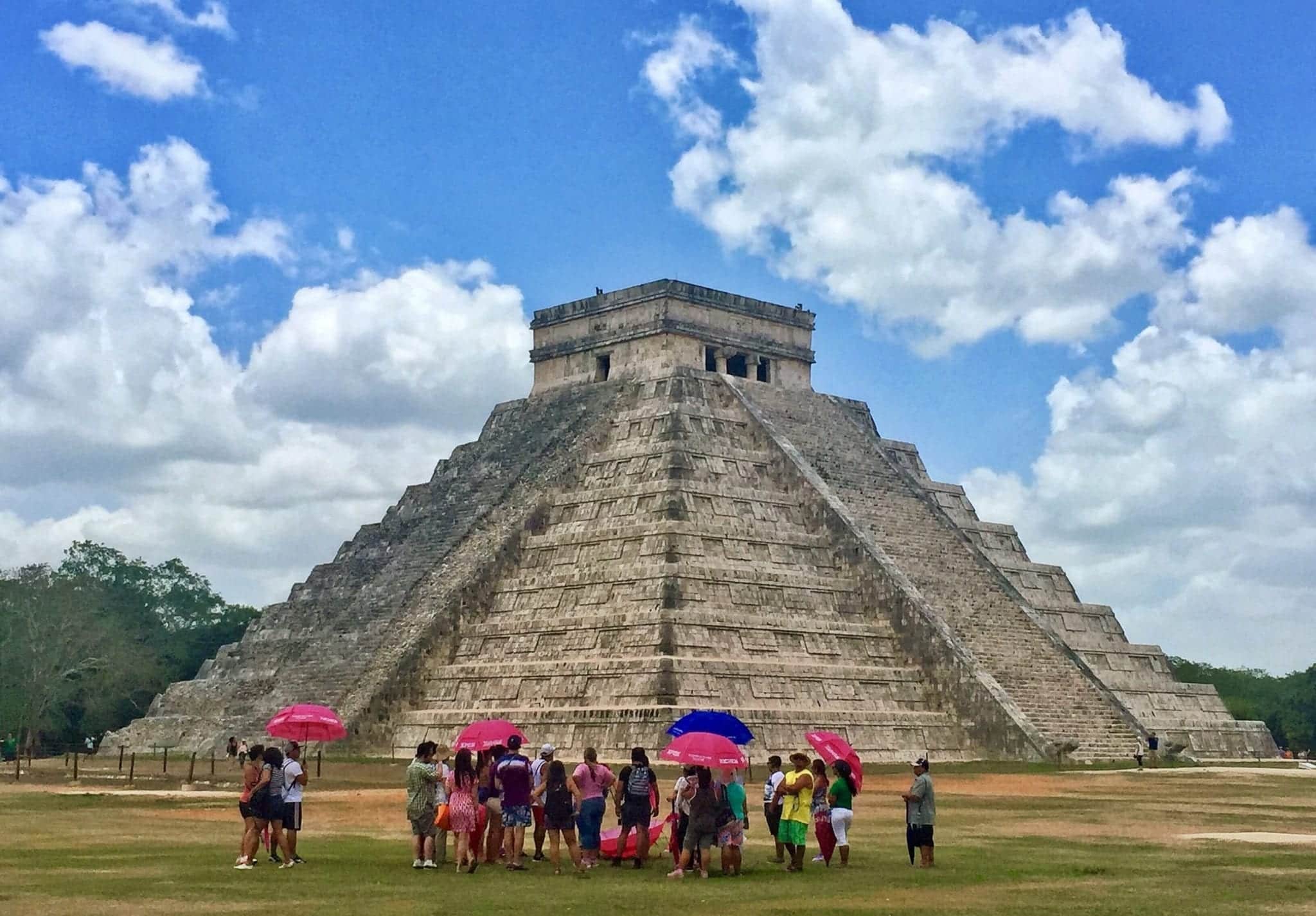
Experience Mayan Ruins. Mexico is home to some of the best Mayan pyramids in the world. If you’re in the Yucatán, check out the Chichen Itza, pictured above. If you’re going to Mexico City, save an afternoon for Tehotihuacan. And if you’re traveling between San Cristobal de las Casas and the Yucatán, be sure to check out Palenque.

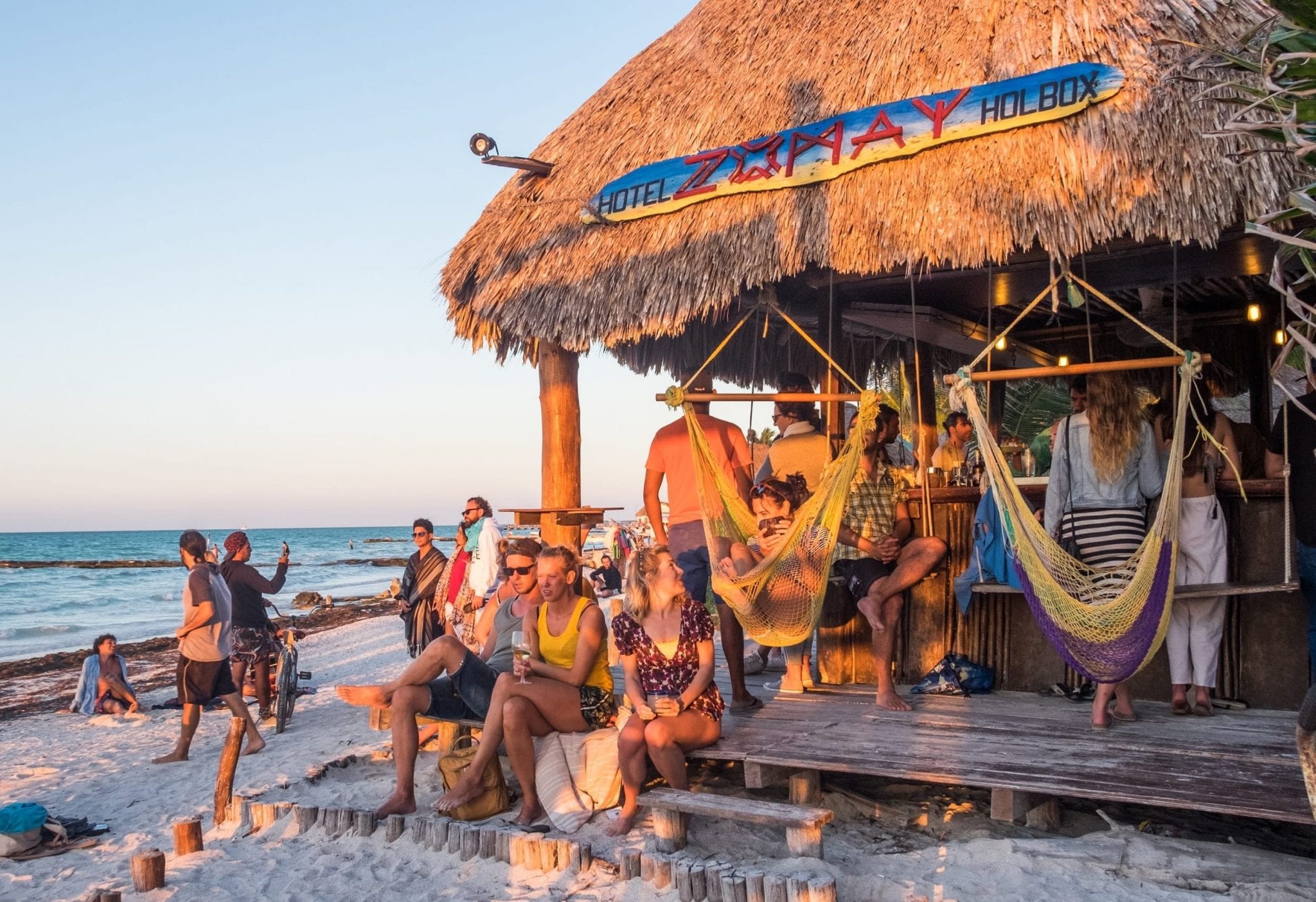
Get up close and personal with whales. Baja California is renowned for its whale watching, but on the island of Holbox, you can go swimming with tiger sharks!

Celebrate the Day of the Dead. From October 31 to November 2, Mexicans honor their departed relatives by spending the days with them at cemeteries, creating offerings for them. While the holiday is celebrated throughout the country, the best place to celebrate is the city of Oaxaca. The cities put on public celebrations, but keep in mind many Mexicans celebrate quietly and privately.

Get dive certified, or snorkel like crazy. Cozumel is the best diving destination in Mexico, and it’s covered with gorgeous reefs. I really enjoyed snorkeling with sea turtles in Akumal. If you’re diving or snorkeling near reefs, be sure to wear reef-safe sunscreen.

Learn to love mariachi. Mariachi bands are too often painted as a punchline in the States, but it is a gorgeous musical tradition. One of my favorite experiences in Mexico was randomly wandering into a karaoke bar and listening to everyone perform traditional Mexican songs.

Read Mexican literature while on your trip. I recently read Laia Jufresa’s Umami while in Mexico, which takes place in Mexico City, and it is nothing short of sensational. A beautiful book, a gentle book, an easy-to-read book, and a book so gorgeously translated that you’ll be floored it was originally written in Spanish.

Where to Go in Mexico

Ah, here’s my favorite part of the post to write. There are so many amazing places to travel in Mexico! I keep adding more and more to my list!

If you love beaches, Mexico is chock full of beauties. Many people head to Cancún and the surrounding beach towns of the Quintana Roo region — think Playa del Carmen, Tulum, the Riviera Maya. My favorite is the island of Holbox. Other great destinations are Baja California (think Los Cabos), the Riviera Nayarit (Sayulita and Puerto Vallarta are great), and the Oaxaca coast (check out Zipolite and Puerto Escondido).

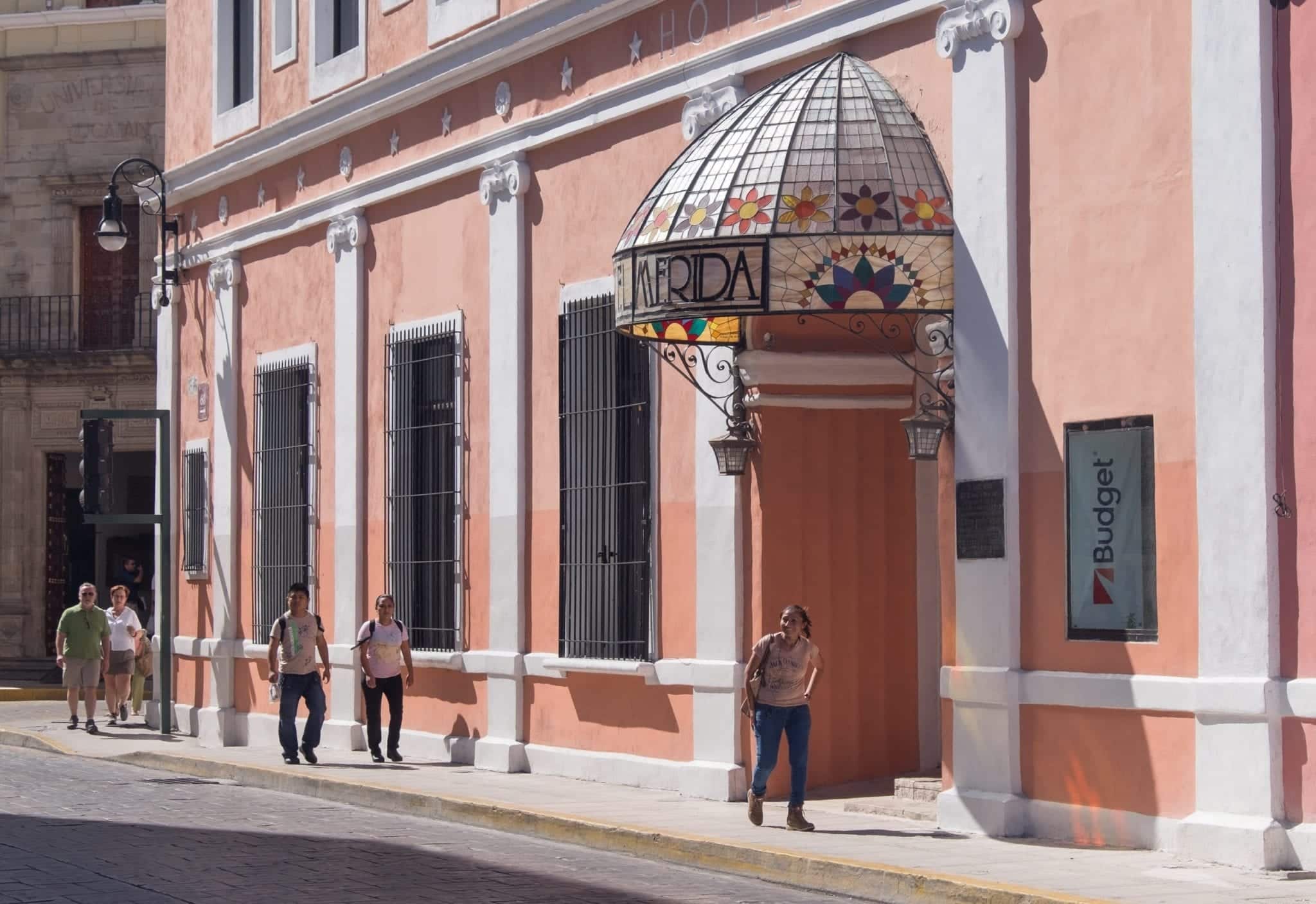
If you love cities, Mexico City is nothing short of spectacular. It’s filled with art, culture, an amazing culinary scene, and hip neighborhoods, all for a very reasonable cost. One of Mexico’s most visually stunning cities is Guanajuato, a few hours from Mexico City. And I really love the smaller, low-key city of Mérida, the safest city in Mexico, home to unique Yucatecan cuisine. Oaxaca is a terrific city for both culture and cuisine.

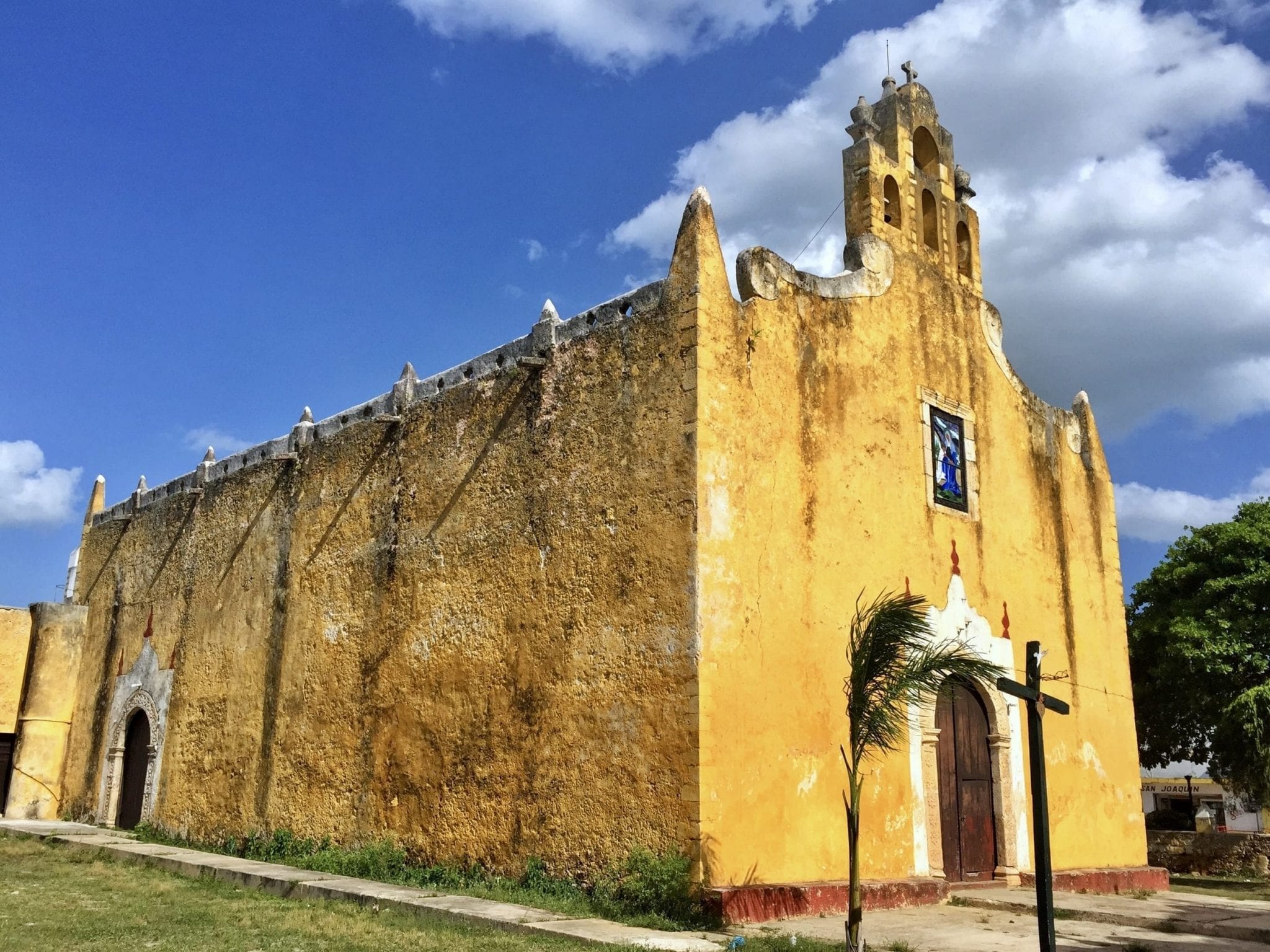
If you love road trips, Mexico has so much to offer. For first-time road-trippers, I’d recommend the Yucatán Peninsula. Fly into Cancún, rent a car, and explore the beaches, ruins, lagoons, and small cities along the way. Hit up the yellow city of Izamal, the pink lakes of Las Coloradas, and the turquoise waters at Sian Ka’an Biosphere. Beyond that, set off on a trip connecting a few different cities.

If you want to get off the beaten path in Mexico, you can definitely do that. One exciting trip further north is to Copper Canyon, where you can ride the train through some of the country’s most spectacular scenery. If you’re looking for an emerging city, check out Guadalajara and its excellent restaurants, bars, and breweries. The tequila fields of Tequila are a short drive away, too! And Bacalar, a lagoon in the Yucatán, is popular with Mexican tourists — but it’s just starting to become popular among the backpacker set.

Travel Insurance for Mexico

Travel insurance is vital for trips to Mexico — or any other country. If you get sick or injured on your trip, or even have to be flown home, travel insurance will help you in your time of need and protect you from financial ruin.

And it’s not just about injury. If you get robbed, travel insurance can refund you for what was stolen from you. If your flights are cancelled due to weather, travel insurance can refund you. And if you have an emergency and need to get home immediately, travel insurance will help you get home fast. I use and recommend World Nomads travel insurance for trips to Mexico.

Don’t be afraid — Mexico is waiting for you!

I have had so many wonderful experiences in Mexico, and I want you to have those experiences, too! And trust me — once you’ve gotten into Mexico, it’s hard to tear yourself away. Even though I’ve been so many times, I keep planning trip after trip.

I know you’ve got people in your life who think you’re crazy for wanting to travel Mexico alone — but you’re going to do great. Consider this your blessing. Read up on travel safety, go to Mexico, and have the time of your life.

Then come back and tell me all about it.

Have you traveled solo to Mexico? Have any travel tips? Share away!

The post Solo Female Travel in Mexico — Is it Safe? appeared first on Adventurous Kate.


from Adventurous Kate https://www.adventurouskate.com/solo-female-travel-in-mexico-is-it-safe/

Solo Female Travel: How to Get Over Your Fears

a woman standing at the end of a dock overlooking an alpine lake
Posted: 2/7/2019 | Febuary 7th, 2019

Kristin Addis from Be My Travel Muse writes our regular column on solo female travel. It’s an important topic I can’t adequately cover, so I brought in an expert to share her advice for other women travelers to help cover the topics important and specific to them! In this month’s article, she shows us how other solo female travelers get over their fears!

Over the years, a lot of women have admitted to me that they made travel plans — only to cancel the trip before they went.

Fear and anxiety got in the way.

There’s a little something about solo traveling that almost nobody talks about.

It’s more common than you think – especially for first time female travelers.

After all, there’s a lot we have to worry about when we go out.

For a lot of us, these worries can be crippling.

When the usual worries about loneliness, safety, and boredom creep in, I remind myself that getting to have this experience abroad will be worth it. I visualize success by picturing myself on the beach, laughing with new friends, and having a fantastic trip. Those good vibes are often enough to make it all come true.

Then I wondered, how do other women kick fear to the curb and live out their solo travel dreams?

So I posed the question to the women in my Facebook group. This is what they said:

“Realize that time with yourself is a luxury” – Alex, 29, Florida

Alex at a beach posing
I started traveling solo when I was about 20 years old. I booked my first solo trip because I became tired of waiting around for friends to join me. At the time, I was going to grad school in Barcelona, and I wanted to take the opportunity to travel as much as possible while I lived in Europe. I realized that if I didn’t go by myself, I wouldn’t get to go at all, and I’d miss a huge opportunity to see this part of the world simply out of fear. I weighed all the possible bad things that could happen and decided to face my fear and book my tickets.

I set off on a three-week trip to Austria, Hungary, and the Czech Republic. It ended up being such an incredible trip, and I met so many people that ever since, I’ve become a solo traveler almost exclusively.

I’ve learned how to really enjoy time with myself and not be afraid of being alone. I have the freedom to meet new people and hang with them, but also the freedom to take time to myself when I need it. Through solo travel, I’ve become more confident and more aware of all the great qualities that I have. I’ve learned that I’m not as afraid as I thought and that I can be incredibly resourceful.

The more you research, the better prepared you’ll feel (Yana, 32, Boston, Massachusetts, of Beard and Curly)

Yana in front of a thermal pool
I always wanted to travel but found it really hard to get others to commit to go with me. After a friend bailed on me last-minute, I realized that I shouldn’t depend on anyone to go experience the world. At first, it was scary to be on my own. My most debilitating fear was being lonely. Was I always going to be alone? Would it be weird to eat at a restaurant on my own? Also, would I be able to depend on myself for everything, from getting to my hostel safely to navigating a city?

To conquer my fears, I did a lot of research to familiarize myself with the places I was visiting. I also asked other travelers on forums and social media platforms about their experience. Their words encouraged me. Taking the time to research and plan made me feel more comfortable about traveling alone. I have now visited over 120 countries, mostly on my own.

If I can survive at home, why should it be different elsewhere? (Sarah, 52, from the UK, living in Italy)

Sarah sitting near some ancient ruins
I started solo traveling only after I was widowed. I realized that it was a case of go alone or stay at home, and never going anywhere was a lot scarier than going by myself!

I built my confidence by starting slowly, adding on days in new places to trips to see family and friends. The first time, it was a stopover in Sydney on my way home from Christchurch. The next time, I did a few days in Auckland before catching up with family in Australia. My next trip will be two weeks completely solo in Thailand next month.

I research my destinations thoroughly so that I know what to expect and what I want to see and do. I book hotels and transport in advance, and sometimes tours too, which are a good way of meeting other people on the road. I use the street-view function on Google Maps to check the location of hotels or hostels and have a virtual “walk” around the area. This allows me to avoid booking anywhere too isolated, at the end of dark alleys, or just in neighborhoods I wouldn’t feel safe in alone. My sense of direction is terrible, so getting an idea of where everything is in advance makes me feel a lot more confident. I also always try to make sure that my flights arrive during daytime and find out how to get from the airport to my accommodation in advance, so that I know exactly where I’m going upon arrival, when I’m likely to be tired.

I realized that people are mostly good (Isabella, 25, from Chicago, Illinois)

Isabella in front of a calm lake
I think I got over that initial fear of traveling alone by realizing how exciting that level of independence was — I had some money and some time, and I could do absolutely anything that I wanted with it. Plus, my fears are always assuaged by the fact that everywhere I’ve been, there have been kind people there who are willing to help and teach me.

In Japan, a local offered help when I was lost, and instead of just directing me to my train stop/transfer, he came with me and walked me the whole way. In Myanmar, a group of locals rushed over to help me when I fell off my scooter; they didn’t speak a word of English but their action made me realize that kindness itself is a universal language. This helped me overcome my fears and become braver.

Do one small thing everyday (Michelle, 45, from Alaska, of Pursuing Seven)

Michelle at Uluru, Australia
I’m currently a couple months into a three-continent mission to complete my goal of visiting all seven continents. At the time of writing this, I am sitting in Christchurch, New Zealand, waiting for weather to clear in Antarctica so my flight can get there, where I will be working for four months. I wasn’t always this fearless and adventurous, but I am definitely proud of who I have become.

Setting realistic expectations — which probably means lowering them — helped me overcome my fear of solo traveling. It sounds counterintuitive at first, but being realistic truly ends up being a gift to myself (and my mental sanity). Not every day is going to be epic, and as a solo traveler you’ll be the making all the decisions and solving all the travel problems you encounter, which takes a lot of energy some days. Especially at the beginning, while you’re finding your solo-travel groove, cut yourself some slack; do one small thing every day that makes you happy, and when you have an epic day, soak it all in!

Utilize tours and apps to gain confidence (Peggy, 45, from San Francisco, California)

Peggy ona guided tour
My first solo trip was the typical post-college European trip, and my friend had to leave early. It was only one week of solo travel, but I learned and gained self-confidence that I could do this and survive. 🙂 Decades later, I decided to follow my passion of seeing the world. I’ve been traveling for over two years, the majority of it solo.

I typically start a new city with a free or nominally priced walking tour. They provide a great overview of the place and its history and culture, plus local tips. I have met people on these walking tours that range from going to sightseeing together the rest of the day to friends that I still stay in touch with to this day.

I also check the Couchsurfing and Meetup apps for local events. Through these, I have great memories of going to the Notte Bianca festival in Malta, hiking to small towns outside of Frankfurt, and attending a weekly coffee meetup in Brno and social events in Budapest, Istanbul, and Bishkek. When traveling solo, I’m not in a bubble with my friends. I become more aware of my surroundings and find myself more open to local interaction, which has led to countless examples of people being incredibly kind and helpful.

Start from your own city (Kathleen, 33, from Boston, of Lonesome Roads)

Kathleen with a statue on a rock
Once I realized I wanted to try traveling solo, I decided I needed to practice first. I started in my home city of Boston: going to a museum on my own, then a movie solo. After that, lunch alone at a nice place, and then dinner out by myself (I think eating alone can be the biggest thing to get used to!). Finally, I spent two days all by myself in Portland, where I had lived for a year, so it was familiar enough to be comfortable, but I was fully on my own. And I had a wonderful time! I chatted with people in bars, I had a romantic dinner alone while doing some top-notch people-watching, and walked everywhere.

I then fully set off: solo trips to Miami and LA, then a stopover in Iceland for two days by myself when coming back from a trip with a friend, and then six days alone in Copenhagen. I loved it so much that right now, I’m two months into a yearlong solo trip in Europe and Southeast Asia!

I’ve learned that politeness and a few words of the local language will get you everywhere. That people are overwhelmingly kind and generous. And that traveling solo gives my curiosity free rein in a way that’s incredibly freeing, whether it’s exploring operas in Paris or befriending an Icelandic girl in line for a bar bathroom. If I’m brave enough, you’re brave enough too. You just might need a little practice.

Take the risk (Caitlyn, 27 from Brisbane, Australia, of Girl Seeking Purpose)

Caitlyn hiking in the mountains
Before departing on my six-month solo adventure through South America, I was plagued with doubt and fear about all of the possible outcomes of traveling alone. I was concerned about whether it was safe as a solo female to travel in developing countries and if I would be able to reach all of my intended destinations without confirmed travel partners ahead of time. Most of all, I was concerned that I might not meet anyone on the road to travel and share my experiences with. I was absolutely terrified by the idea of being alone.

After reading countless blog posts and forums, I began to realize that all of the fears I had about solo travel were the same fears we all have before we take that leap into anything new and unknown. It then became clear that if I lived my entire life afraid of all of the possible things that could go wrong in any given situation, then I would never leave my comfort zone, let alone my house or my country. That just didn’t sound like the life I wanted for myself.

Realizing this, I made the decision to face all of these fears head on by acknowledging their existence. I decided that I was going to push on to make my dreams a reality with or without them in the back of my mind. Identifying that it was normal to have these concerns and to realize it was possible to overcome them gave me the strength and confidence I needed to get on the plane.

During the final days before my flight, I reassured myself that once I arrived it would all just fall into place and work itself out. And that is exactly what happened. It was one of the most incredible, life-changing, and defining moments of my life, and I am so glad I didn’t let the fears stop me from taking that leap.

Start small and familiar (Shae, 41, from Melbourne, Australia, of The Bright Eyed Explorer)

Shae in a mountain landscape
I’d always traveled with other people, but at age 36, I just couldn’t rely on the comfort and security that traveling with friends brings if I wanted to fulfill my dreams of traveling the world. I am a relatively shy and somewhat introverted person, especially around strangers, so the thought of being in an unfamiliar country and having to talk to people I didn’t know and perhaps not understand made my stomach churn!

For me, starting my solo travels small scale and in a place that I was very familiar with helped ease those fears I had of traveling alone. I’d been to Bali five times prior to my first solo trip, so I was confident and comfortable with my surroundings, the people, and the lifestyle. This comfort then enabled me to push myself a little further — talking to strangers, asking for help when I needed it — but also learn to appreciate the time I had to myself in restaurants and bars.

I have since traveled solo extensively through Europe and Australia (which is home), but there are still times that I still get a little nervous and anxious about my upcoming trip. Generally, if this happens, I give myself a bit of a pep talk and remind myself that I am strong and brave. This will generally give me a little confidence boost, which gets then builds up my excitement levels and then I am so ready to travel.

***

I hope these stories help to show that there is no special gene, life experience, background, or age that makes someone a good solo traveler. It doesn’t even require bravery to travel alone — lots of us built that up along the way instead.

So please don’t let all of the things that could go wrong hold you back from your dreams. Most of what we worry about — not just related to travel but to life in general — never comes to pass anyway. Focus on the adventures, the good times, the sunsets with new friends, and the learning experiences. The biggest step is just to make the decision and stick with it. After that, the rest falls into place.

Conquering Mountains: The Guide to Solo Female Travel

conquering mountains: solo female travel by kristin addisFor a complete A-to-Z guide on solo female travel, check out Kristin’s new book, Conquering Mountains. Besides discussing many of the practical tips of preparing and planning your trip, the book addresses the fears, safety, and emotional concerns women have about traveling alone. It features over 20 interviews with other female travel writers and travelers. Click here to learn more about the book and start reading it today!

Kristin Addis is a solo female travel expert who inspires women to travel the world in an authentic and adventurous way. A former investment banker who sold all of her belongings and left California in 2012, Kristin has solo traveled the world for over four years, covering every continent (except for Antarctica, but it’s on her list). There’s almost nothing she won’t try and almost nowhere she won’t explore. You can find more of her musings at Be My Travel Muse or on Instagram and Facebook.

Book Your Trip: Logistical Tips and Tricks

Book Your Flight
Find a cheap flight by using Skyscanner or Momondo. They are my two favorite search engines because they search websites and airlines around the globe so you always know no stone is left unturned.

Book Your Accommodation
You can book your hostel with Hostelworld as they have the largest inventory. If you want to stay somewher eother than a hotel, use Booking.com as they consistently return the cheapest rates for guesthouses and cheap hotels. I use them all the time.

Don’t Forget Travel Insurance
Travel insurance will protect you against illness, injury, theft, and cancellations. It’s comprehensive protection in case anything goes wrong. I never go on a trip without it as I’ve had to use it many times in the past. I’ve been using World Nomads for ten years. My favorite companies that offer the best service and value are:

Looking for the best companies to save money with?
Check out my resource page for the best companies to use when you travel! I list all the ones I use to save money when I travel – and I think will help you too!

The post Solo Female Travel: How to Get Over Your Fears appeared first on Nomadic Matt's Travel Site.


from Nomadic Matt's Travel Site https://www.nomadicmatt.com/travel-blogs/getting-over-travel-fears/
Monday, 4 February 2019

Photography Life 2019 and 2020 Workshop Announcements

UAE by Tareq Hadi #5

I am very excited to announce Photography Life’s 2019 and 2020 Workshops! We will kick off this year with our upcoming Dubai and Jordan Workshop in mid-March (please see detailed information below), followed by our Fall Colors Workshop in Colorado at the end of September and wrapping up the year with the first Death Valley Workshop in late November. The 2020 schedule will start with a Death Valley Workshop in mid-January, followed by another Dubai and Jordan Workshop in March. Please note that most of our workshops fill within 24 hours of the announcement, so if you would like to reserve your spot, we recommend that you do it as soon as possible!


from Photography Life https://photographylife.com/news/photography-life-2019-and-2020-workshop-announcements