Saturday, 9 June 2018

A Weekend at the Wylder Hotel in Tilghman Island, Maryland

“You have to get out of the city once per month.”

Since I moved to New York more than two years ago, this has been advice I’ve always taken, yet rarely put into action. This is a city where people are driven to work work work, do more, make more money, and as individualistic as the people are here, the drive to succeed tends to seep into everything you do. 

Then Antarctica happened and blew my mind open. After 12 days offline in brutal nature, I returned with a clear mind, bursting at the seams with creativity. That settled it. While I can’t head off to Antarctica at the drop of the hat, I can and should get offline and into nature whenever I can. 

Then I got an interesting email: an offer to come to Maryland’s Eastern Shore for the weekend and enjoy a stay at the brand new Wylder Hotel on Tilghman Island. It was a doable weekend trip from New York, they pointed out.

And I was intrigued — because I had never considered this destination before. 

Most of the hotel invites I receive are from places I have no plans to visit and I respond with, “Thank you so much! I’ll keep your offer in mind if I plan a trip to Bali/northern Alabama/Novosibirsk, Siberia.” (Bali is pretty much the least likely of those three.)

This one was different. The hotel looked beautiful, it was close by but offbeat, it was located in nature, and I’ve never seen a single travel blog post about this region. Why not say yes? I accepted, we worked out dates, I got strep, we worked out new dates, and in early May I made my trip down to Tilghman Island. 

When you think of weekend getaways from New York, most New Yorkers think of small towns upstate like Hudson, or somewhere on the Jersey Shore, or any of the myriad getaways in New England. Maybe Montreal or DC if you wanted to go further afield. There’s no reason why Maryland couldn’t be on that list as well.

In my mind, it would look just like Wedding Crashers. (“Crabcakes and football — that’s what Maryland does!”) 

Tilghman Island and the Eastern Shore

Slowly the city disappeared around me. A heinous traffic jam in lower Manhattan gave way to the highways of New Jersey, the suburban towns of Delaware and Maryland, and suddenly I was cruising down a rural road, few other signs of civilization around. 

Even though few Marylanders would consider themselves to be Southerners, I noticed the hints of Southern-ness around you. Accents that have the slightest lilt to them, but not a full-on Southern drawl. The presence of grits on menus. And most significantly, people who welcome you warmly and have full-on conversations.

At one point, I accidentally went down a private way and drove into someone’s driveway. I turned around quickly and saw a man in gardening gear approaching. Uh-oh, I thought to myself. I hope he doesn’t yell at me to get off his property.

I rolled my window down to talk to the man. His opener? “Hello, there! Welcome to Tilghman!” We spent a few minutes chatting about Tilghman, the local attractions, and the Wylder Hotel. By the time we said our goodbyes, I felt like I made a new friend.

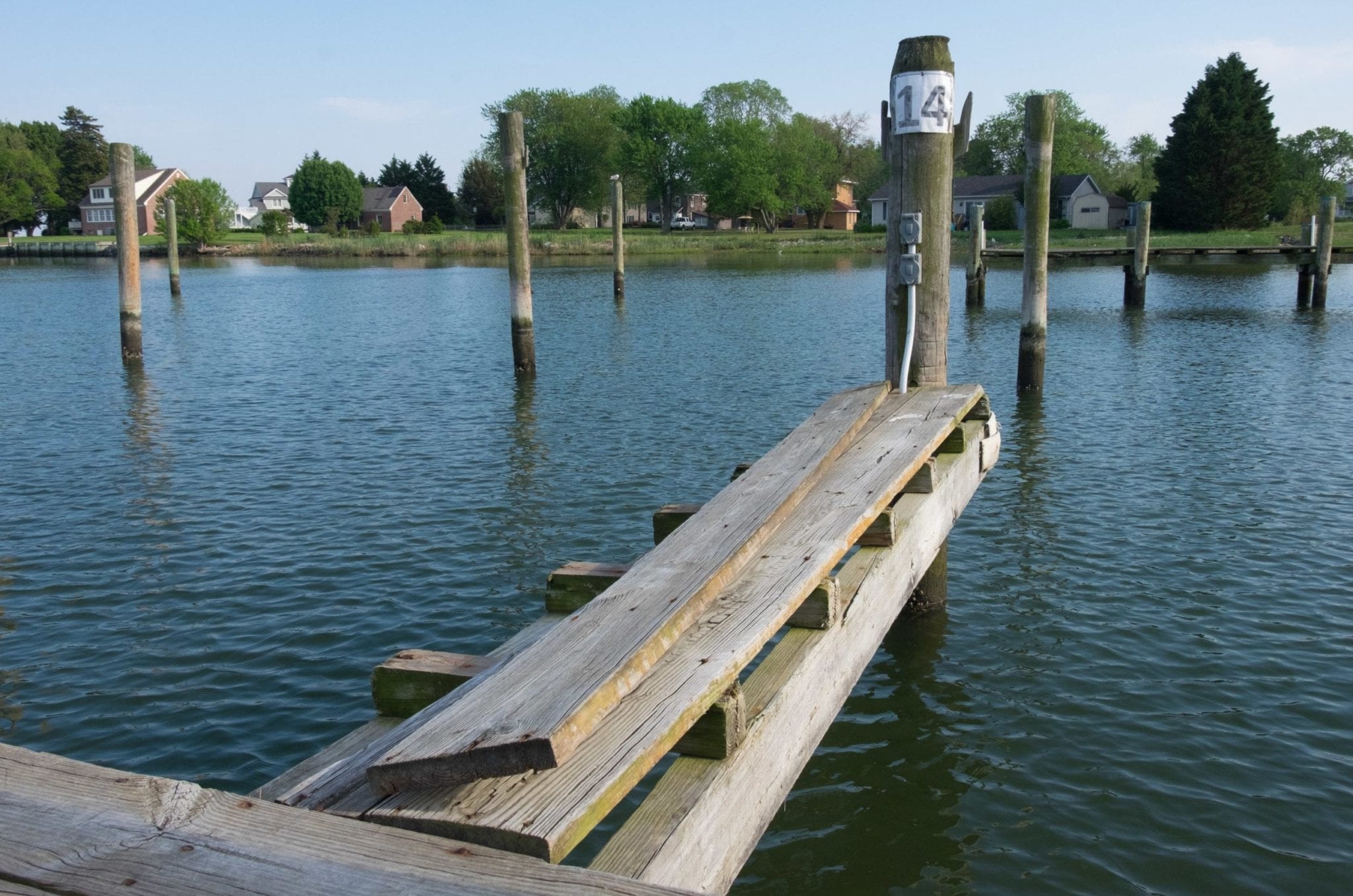
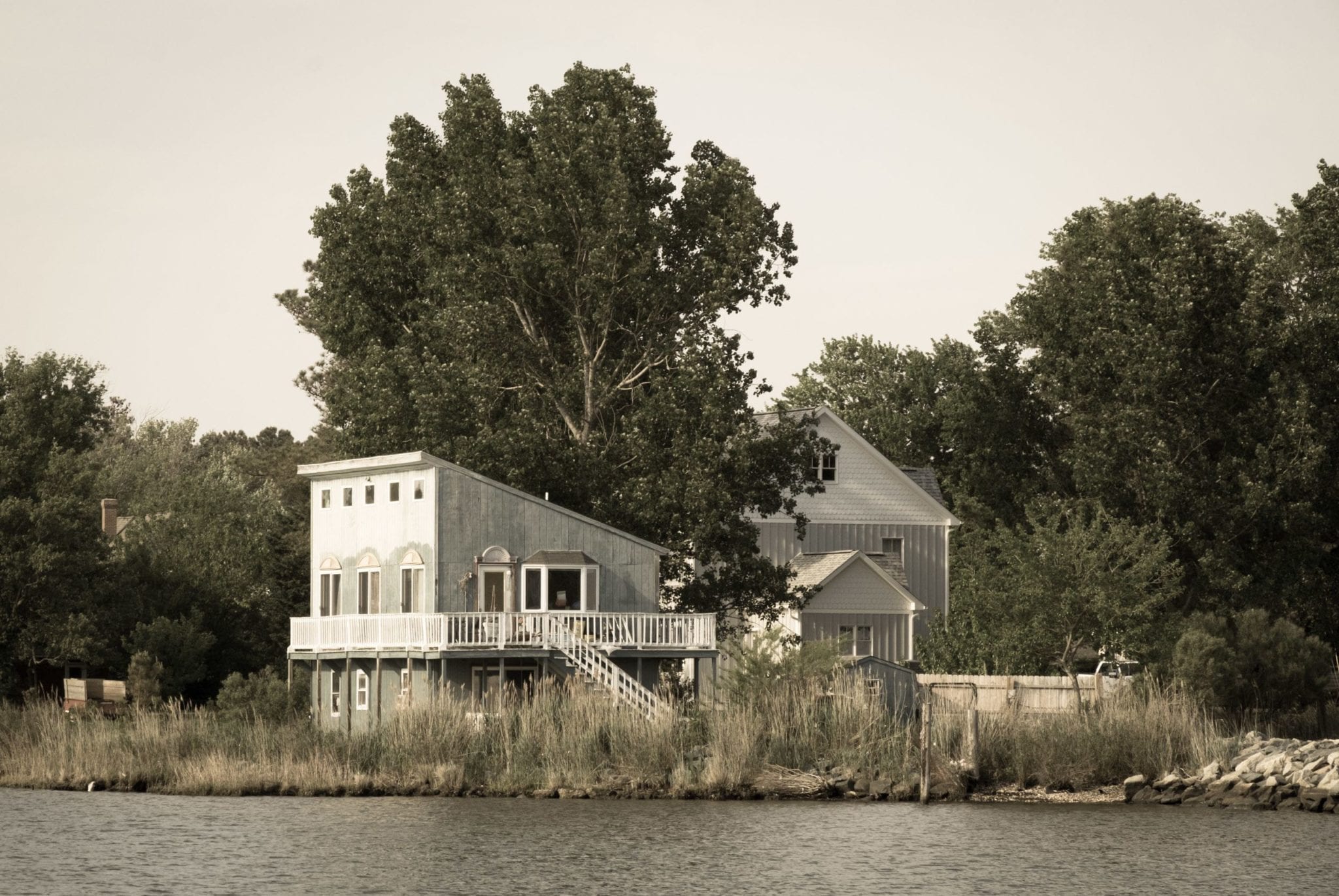
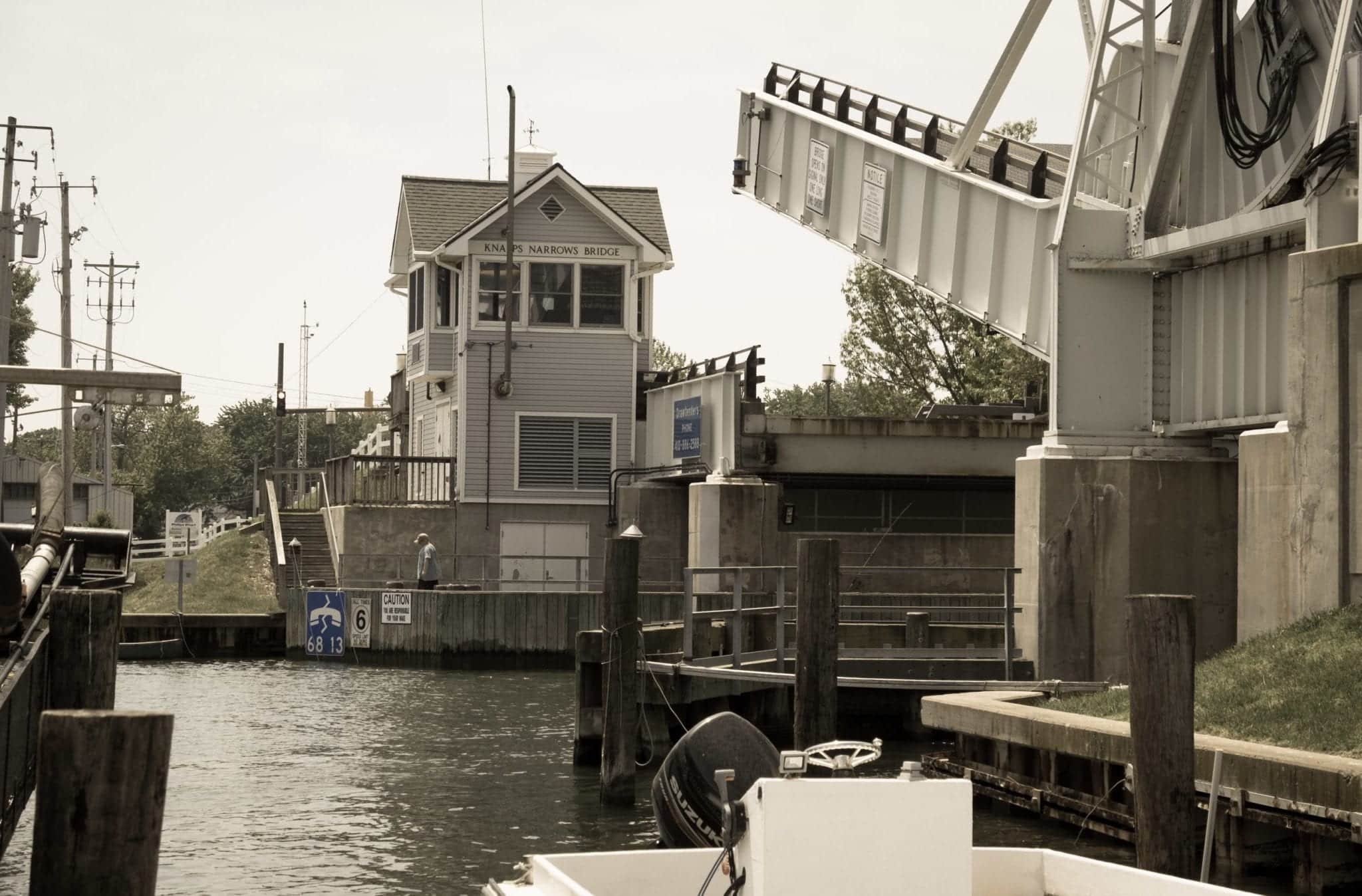
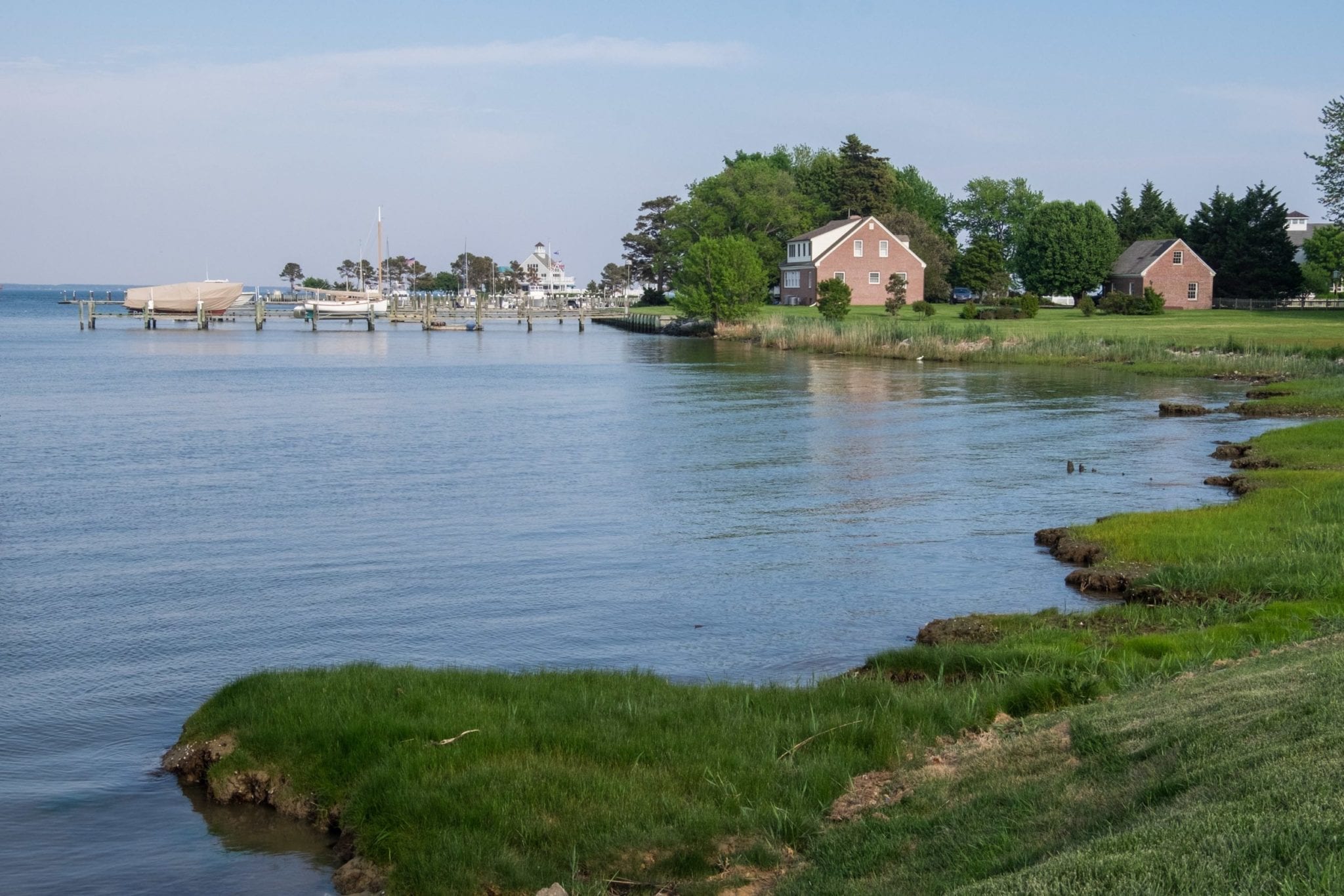
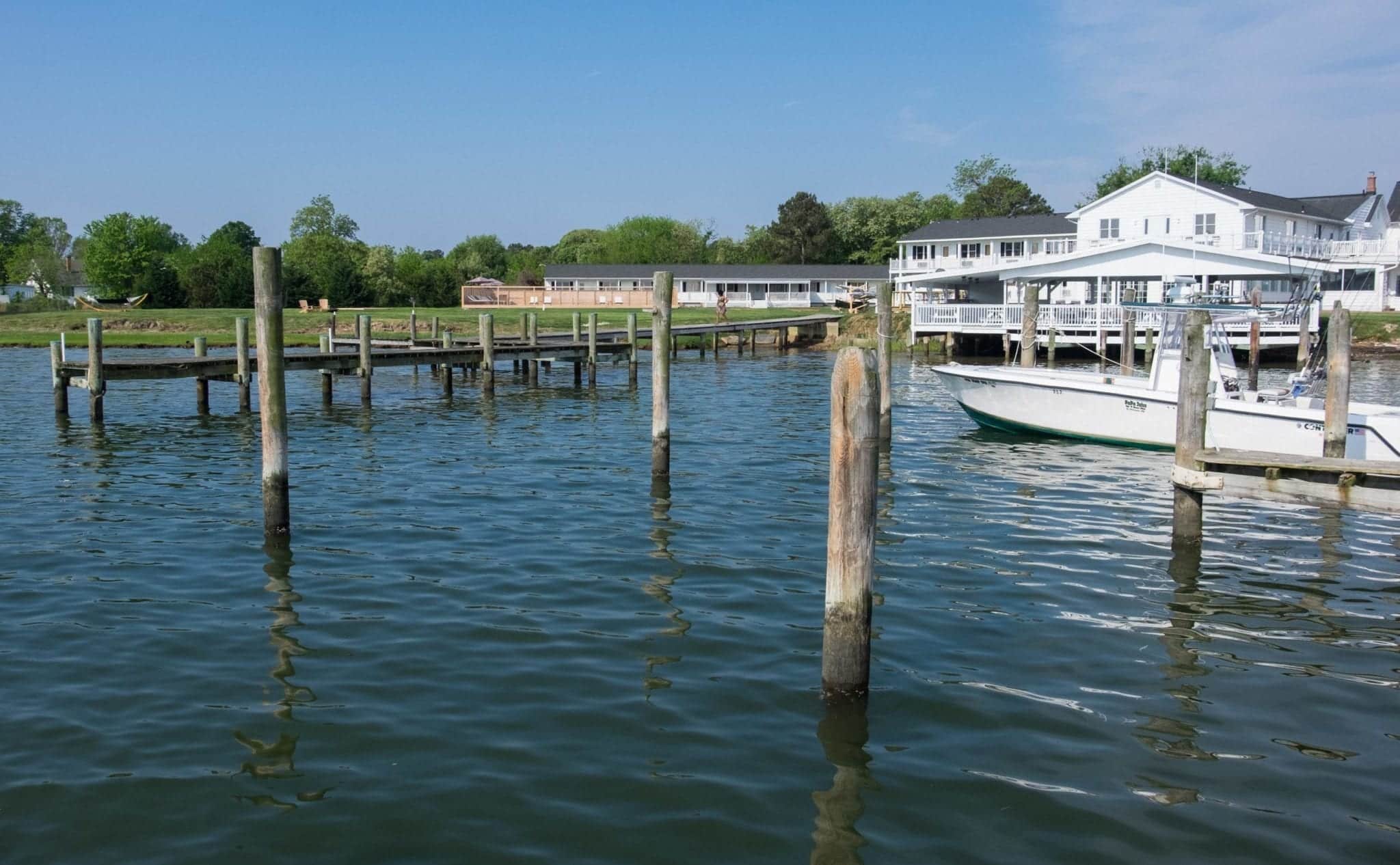
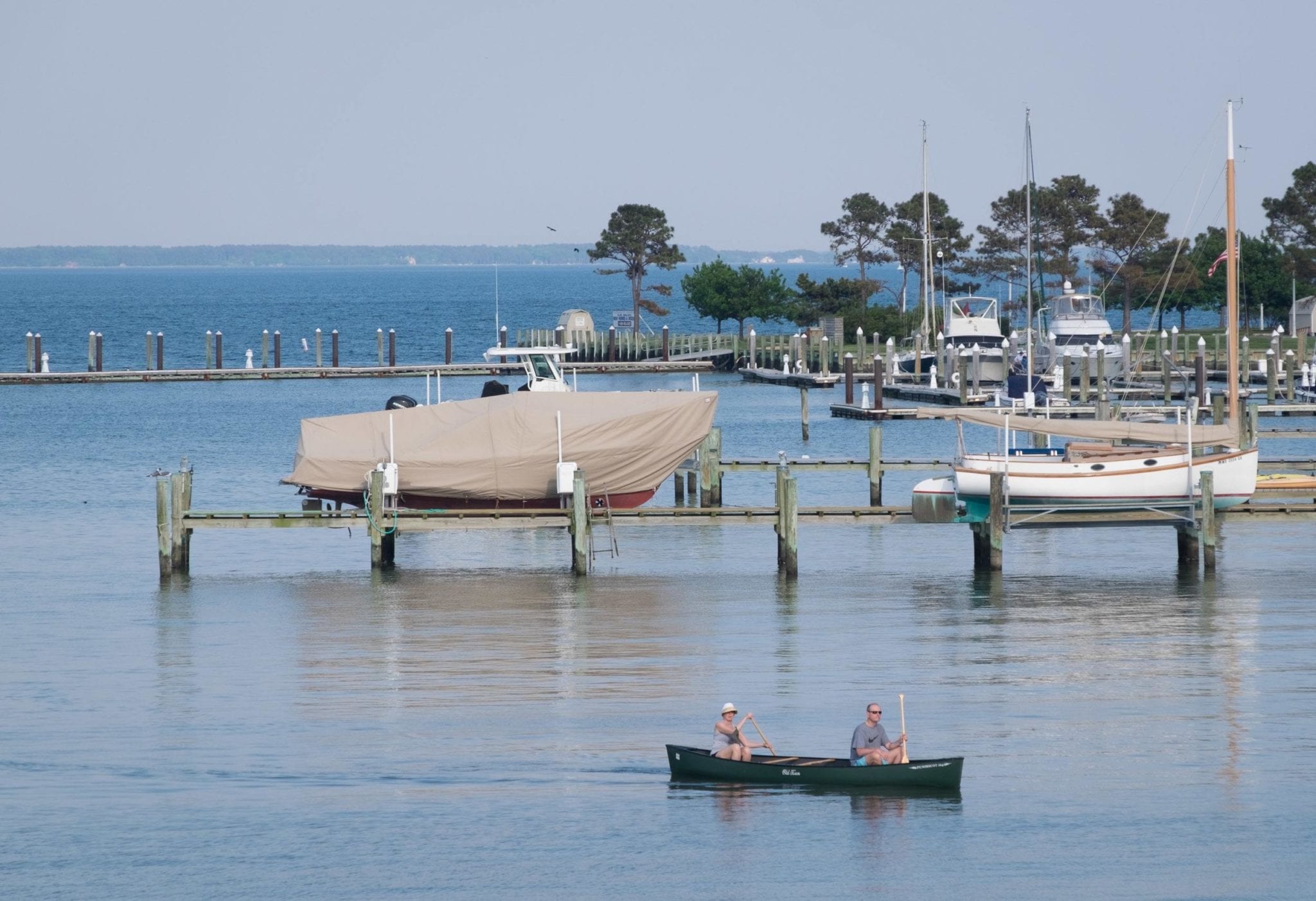
Tilghman Island is known for its boating culture; it seems like everyone here lives for getting out on the water. If you like to boat — or fish — you’ll be very happy with the opportunities here. But at the same time, it has a lovely throwback look to it — as if it hasn’t changed in decades.

In fact, with the right Instagram filter, it looks like you could be visiting in the sixties or seventies.

The Wylder Hotel

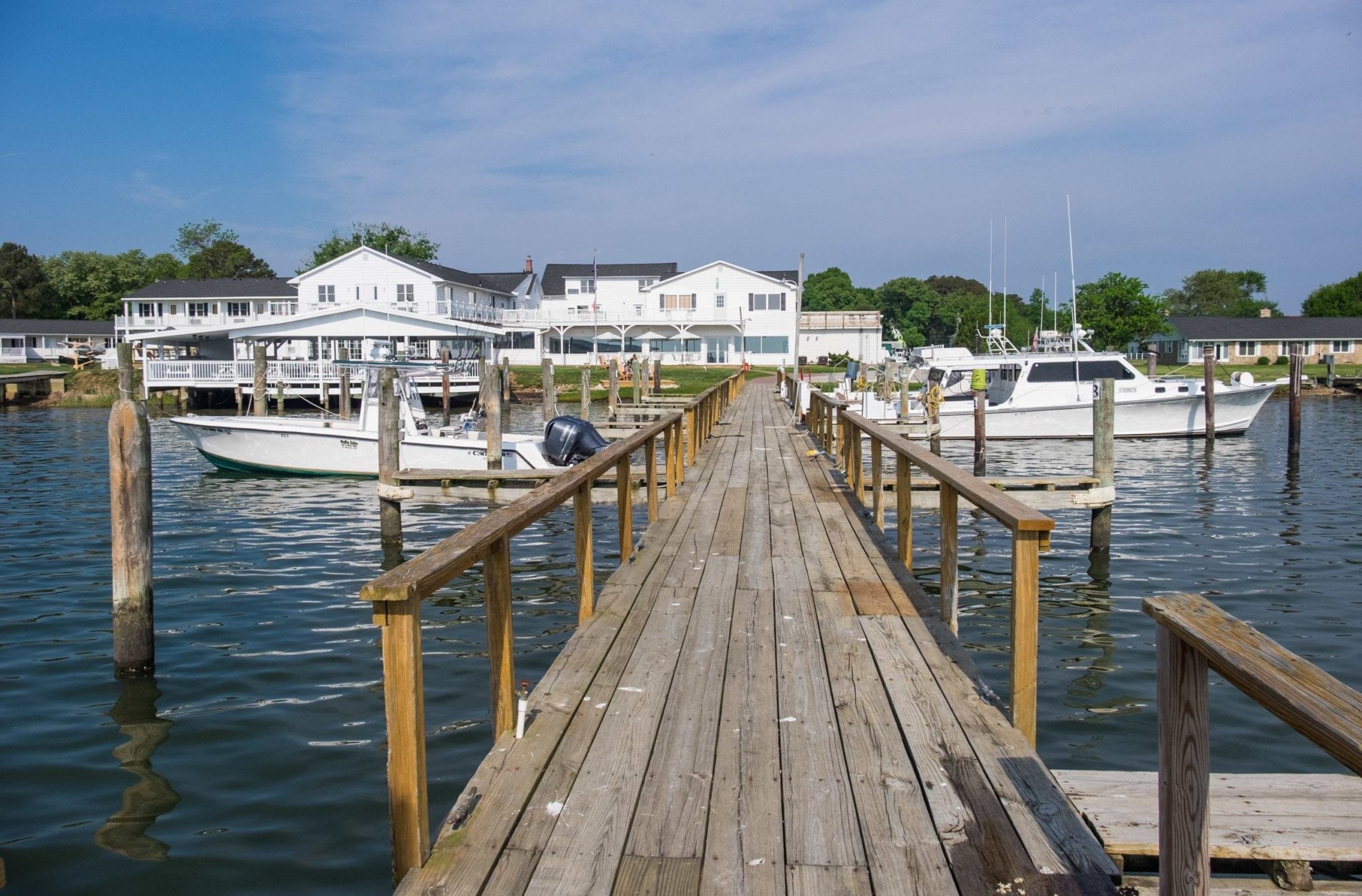
My main goal for this weekend was to relax — and it couldn’t have been easier. The Wylder Hotel, a family-owned property, just opened this past spring. With only 54 rooms on an expansive nine acres, it feels like a bed and breakfast.

This is not the kind of place you stay for a million activities and excursions at a breakneck pace. This is where you come to chill out.

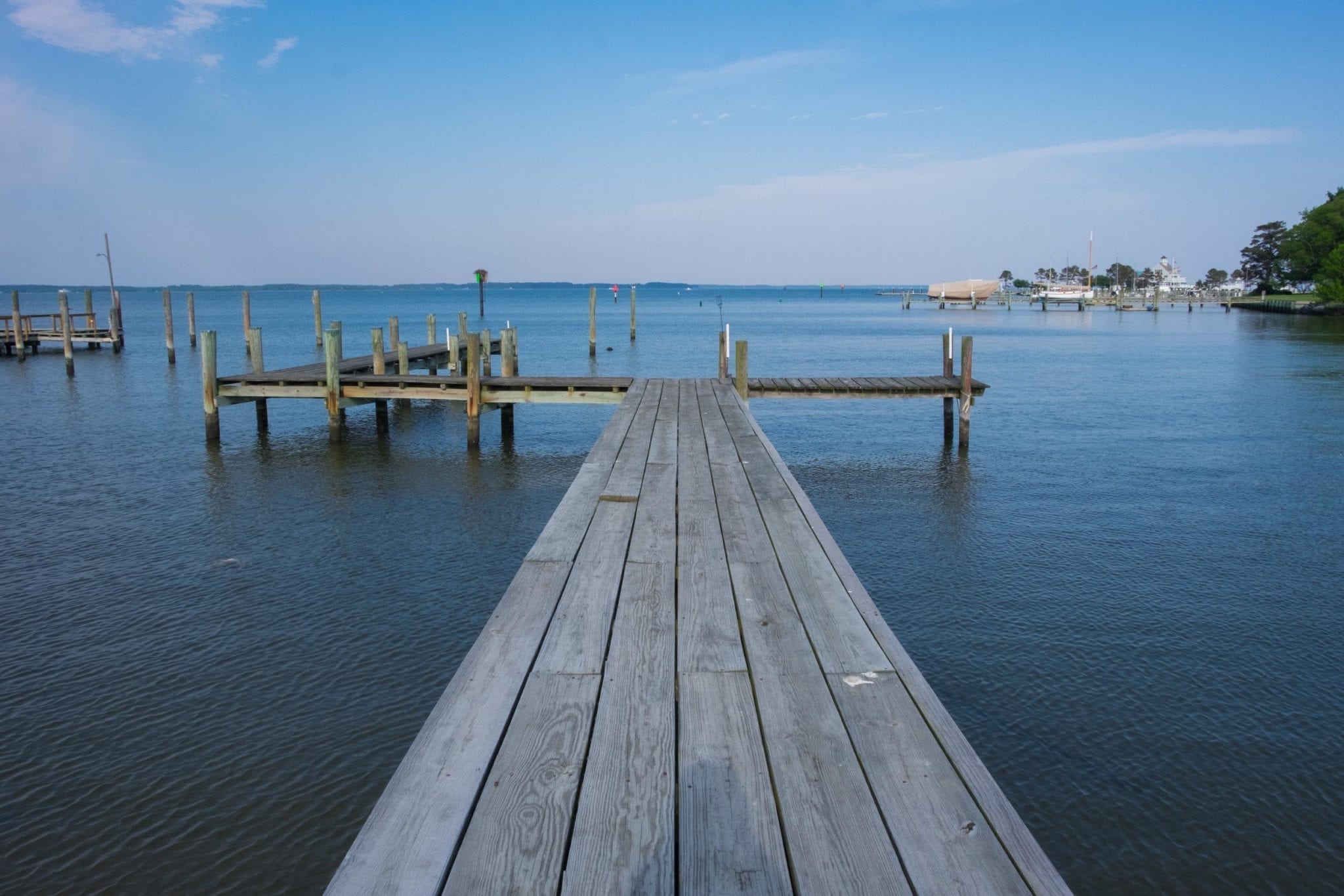
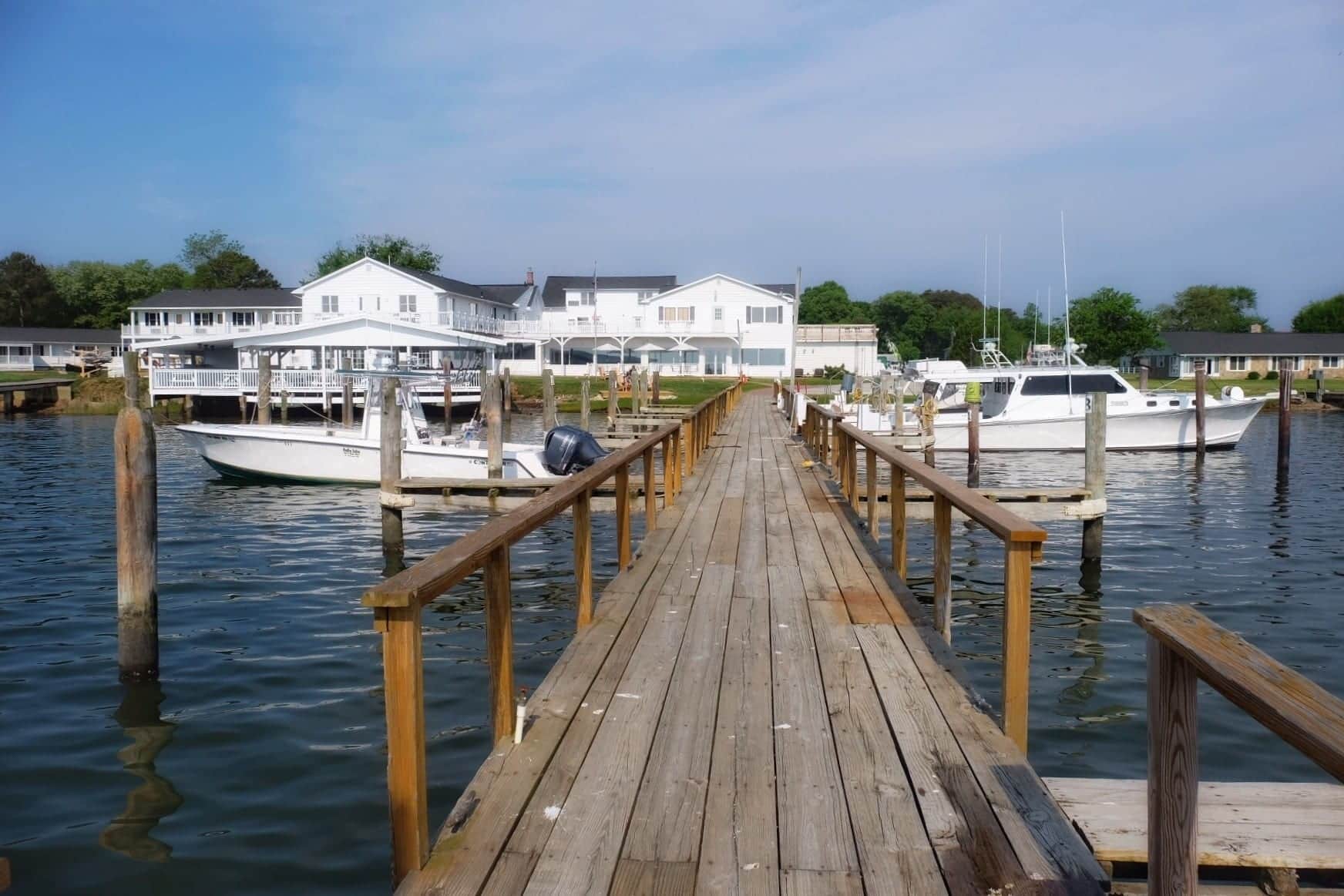
Just look at these grounds.

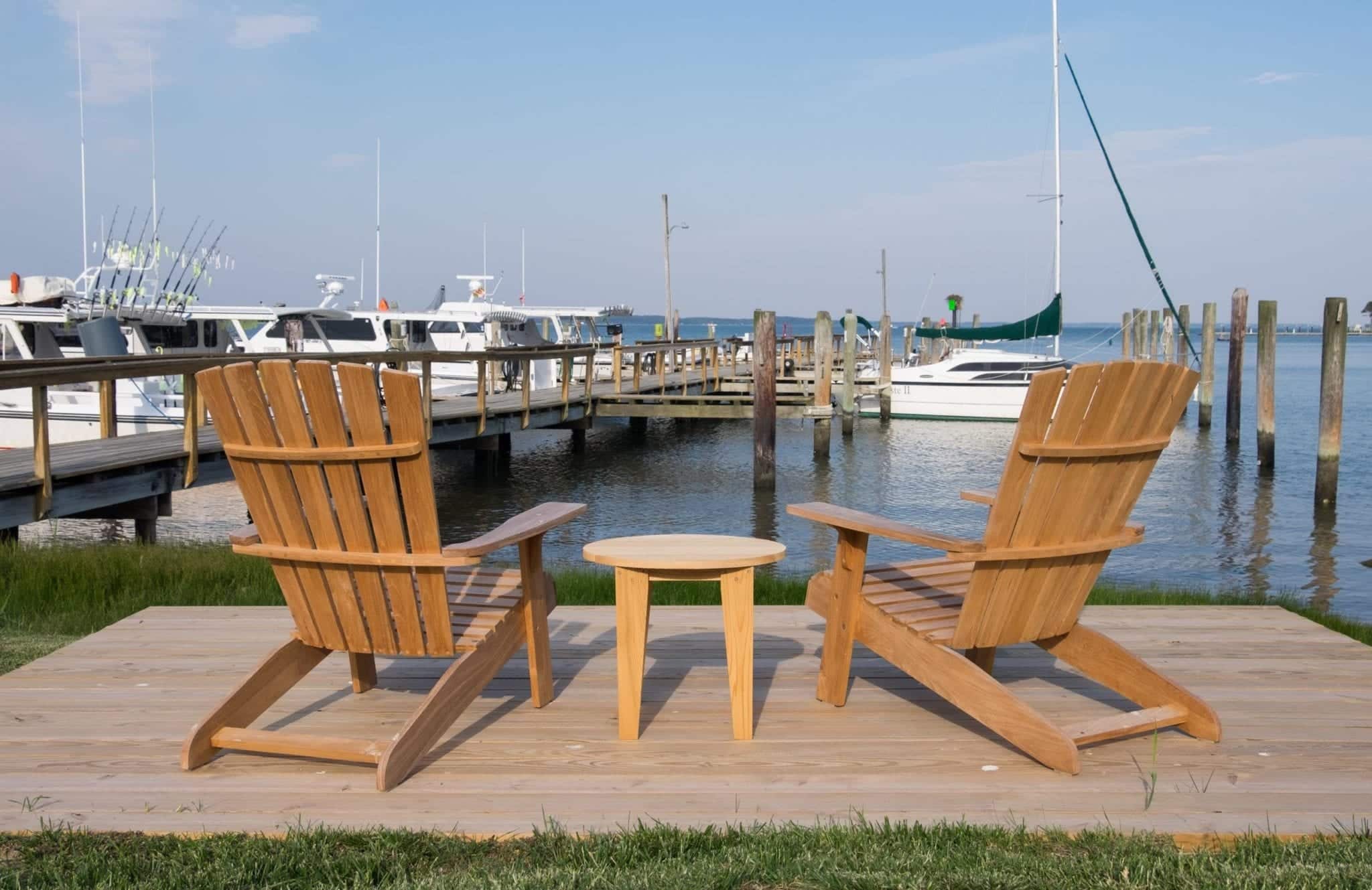
Five minutes in that hammock and my mind was wiped nearly to Antarctica levels. Seriously. I don’t know what it is about Tilghman, but it has a way of removing all the stresses that impact your life.

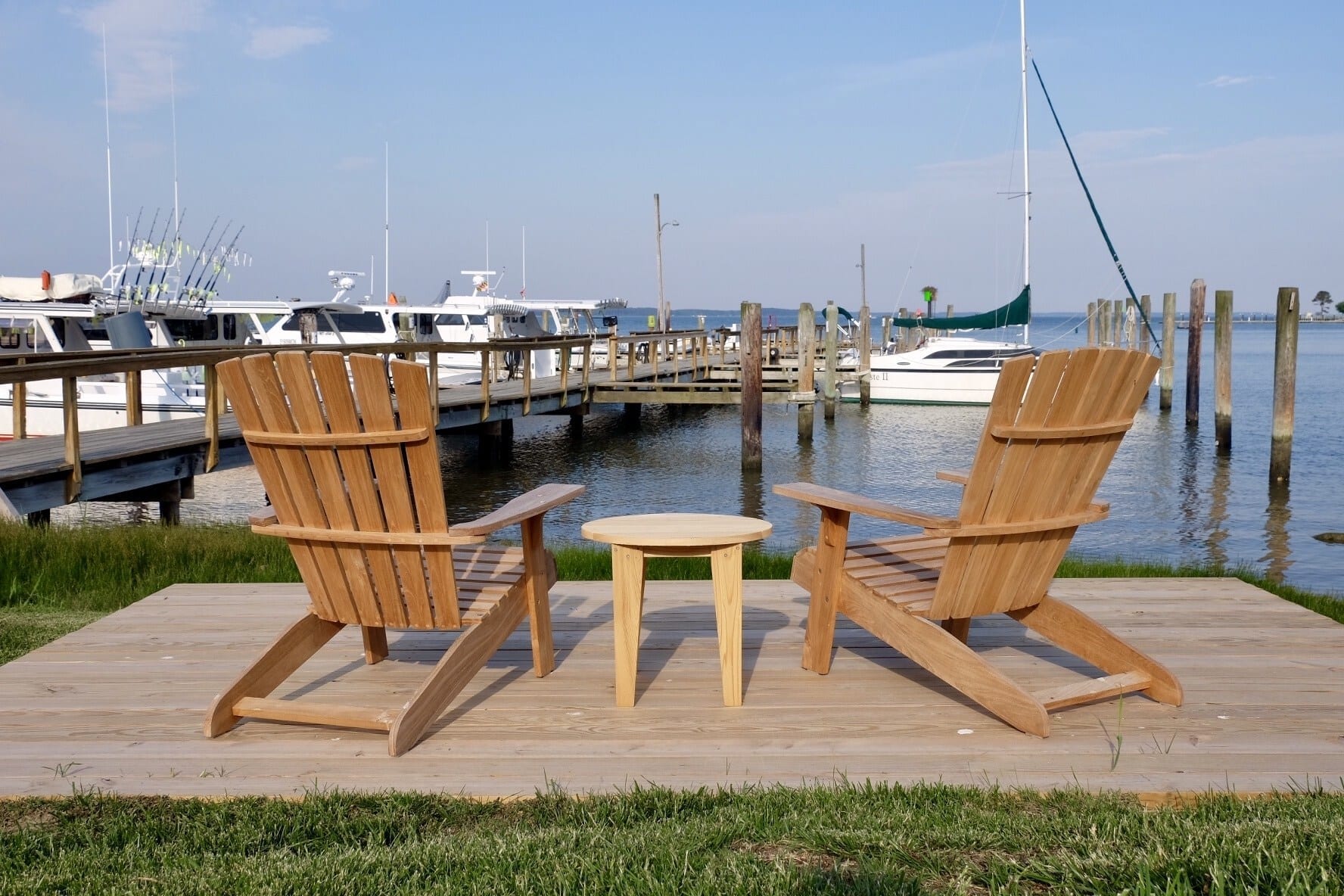
On the grounds you have outdoor decks, a hammock, an outdoor fireplace, a bocce court, lawn games, and a saltwater pool. And of course, since this is Tilghman, there’s a marina where you can bring your boat. There’s also a canoe, a paddle board and a kayak available to take out on the bay.

Everything fits into a nautical theme. It’s all brand new and you can feel the love that went into its design.

There are two restaurants in the property: Bar Mundo and Tickler’s Crab Shack.

Breakfast, in the bar, included a fluffy omelet, yogurt parfait, and delicious pastries…

Dinner, also in the bar, had so many delicious dishes on the menu. Two major standouts? The burrata with tomato jam, slathered all over crostini. And that rockfish entree was serious — it’s a fish that eats like meat.

But the absolute best dishes were reserved for brunch the next day. It was Mother’s Day during my visit and they had a special menu for the event. First out came a variety of appetizers — fresh oysters, hush puppies, asparagus, and the most absolutely delicious deviled eggs stuffed with crab.

I would eat those crab deviled eggs every day if I could. They were THAT good.

The main dish? Shrimp and grits. Rich and hearty in all the right ways.

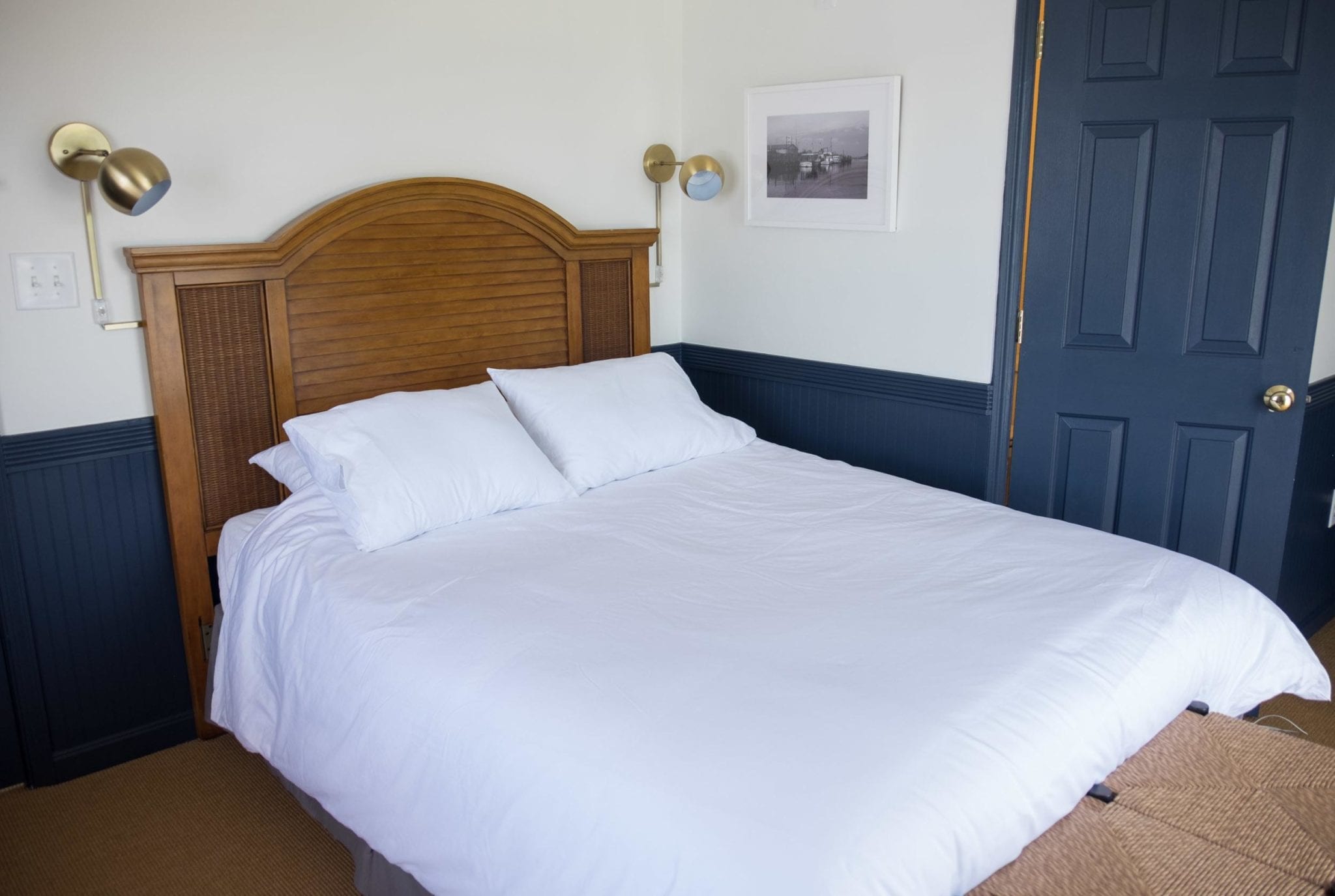
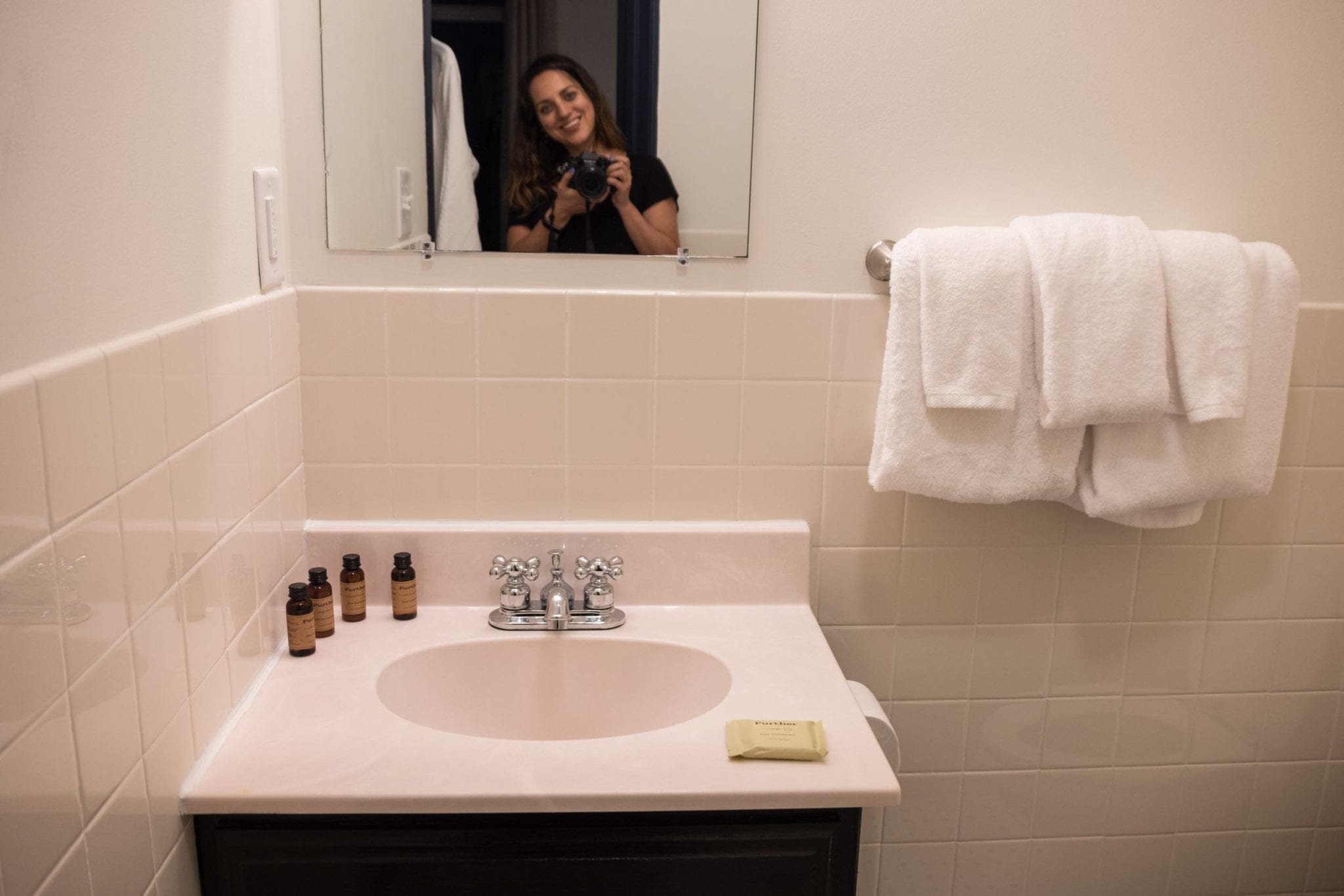
The rooms are simply and elegant. They’re on the small side, but they have everything you need.

Any caveats? Small ones. It would have been nice to have some kind of side table next to the bed — even a simple shelf would have been a help. My bathroom door didn’t fully close; I told John and he said he’d fix it right away.

St. Michaels

A 25-minute drive from Tilghman Island is St. Michaels, an absolutely beautiful village and one of the highlights of my weekend. It’s full of pretty cottages with beautifully manicured yards, shops, boutiques, and restaurants.

I’ve been to little touristy villages all over the United States. They’re filled with gift shops selling novelty items — signs that read “Flip Flops Only,” dish towels that say, “The answer is wine. What was the question?” and the like.

Not St. Michaels. Somehow the shops here are infinitely classier. There are plenty of gift shops hawking wares for your fantasy vacation home, but these stores are actually filled with items I would legitimately put in my house. Beautiful furniture, accessories, and objets d’art. And while there’s obviously a strong nautical theme, it’s far from the only theme in town.

After browsing the shops and galleries, I stop at the Carpenter Street Saloon for lunch. Here in Maryland I’m trying to eat as much crab as humanly possible, and immediately order the “crab balls,” along with an order of shrimp. (Seriously. If something on the menu is called “crab balls,” I’m ordering it.)

“Here, try some Old Bay,” the waitress offers. She shakes out the iconic Maryland seafood seasoning into my hand and encourages me to lick it up. (I giggle to myself. This would not happen in New York.) The shrimp comes with its shells on, drenched in Old Bay, and I’m wondering the etiquette — do I lick it off and discard the shells? Do I put the whole thing in my mouth, shells and all? The world may never know.

And I’m Back

Two nights isn’t enough — but it’s time to go home. 

I can feel dueling spirits fill my body on the drive home. Half of me is infinitely relaxed; the other half is getting tenser by the minute as more gray buildings dot the landscape. Soon I’m craving a frappuccino to stay alert. Little by little, that stress settles in; traffic in New Jersey around the Lincoln Tunnel doesn’t help.

I drop off the car at a garage in Flatiron and hop on the 1 train back to Harlem. An older man sits down next to me on the uncrowded train and says, “Thank you,” into the air for no discernible reason. Then he turns to me and leans in. “Thank you,” he repeats. The hair stands up on the back of my neck. He leans in further. “I appreciate it,” he says. This, as any woman will recognize, has nothing to do with thanking me or appreciating me. This man’s goal is to intimidate me, to tell me that I don’t belong in his space. My body is rigid until he gets off at 42nd St.; at that point, I deflate.

I choose to live in a hard place because the pros outweigh the cons. But I wouldn’t be able to deal with the stress or urban life without making regular visits to the softer places, too. Places like Tilghman. The places where you can sit on a dock and feel your mind go beautifully blank, where waitresses have you lick Old Bay up from your hand, where local homeowners welcome inadvertent trespassers with a smile.


READ NEXT: Hudson, NY: The Coolest Small Town in America


Essential Info: The Wylder Hotel on Tilghman Island, Maryland, is accessible by car only. High-season rates start at $248 per night.

Tilghman Island is about a four-hour drive from northern New Jersey without traffic; I recommend that you rent your car from Newark Airport or one of the nearby towns like Fort Lee or Teaneck. If you’re leaving from Manhattan, beware the traffic of rush hour. It’s about a two-hour drive from Baltimore or Washington DC, and about a three-hour drive from Philadelphia.

Do note that phone signal around Tilghman Island and the hotel is limited, but the hotel has excellent wifi.

I use travel insurance for all of my trips to protect myself (and my finances) from ruin. For this trip and all my US trips, I used World Nomads, which I highly recommend.

Have you been to Maryland? What was your favorite place? Share away!

The post A Weekend at the Wylder Hotel in Tilghman Island, Maryland appeared first on Adventurous Kate.


from Adventurous Kate https://www.adventurouskate.com/wylder-hotel-tilghman-island-maryland/

Thursday, 7 June 2018

How to Spend 24 Hours in an Airplane

Inside Singapore Airlines' new 787-10 Dreamliner series
I’m an aviation geek, which means I love all things related to planes (even if I’m terrified of flying). Planes fascinate me. They have like 8,000 parts and weigh multiple tons but still manage to stay up in the sky without falling apart! I mean have you ever seen one of those bolts holding up a wing? It boggles my mind how such a tiny thing can hold so much weight. Thank you, aerodynamics, engineering, and the workers at Airbus and Boeing!

In March, I was invited to the Boeing plant in South Carolina for the delivery of Singapore Airlines’ new 787-10, the first 10-series Dreamliner plane. As part of the invited media crew (including some other AV geeks, like Brian Kelly, Ben Mutzabaugh , Zach Honing, and Kendis Gibson), we spent a few days at the plant (in my next post, I’ll take ya behind the scenes at the Boeing plant and in the flight simulator) and then flew the delivery flight from Charleston to Singapore.

It was truly one of the coolest experiences I’ve ever done. For those other guys, it’s par for the course. They go on these all the time. But, for me, this was brand new! I mean getting invited to the factory and then to fly on the first flight? Woah! So cool.

But South Carolina to Singapore is a long flight. The total flight time is 22 hours. The total time on the plane for us? 24.5 hours, as we weren’t allowed to leave the airplane during our refueling stop in Osaka.

That’s right. I spent a little more than an entire day inside an airplane.

And how does one spend a full day on a plane? Here’s how:

Hour 1
We board the plane (Boeing has their own gateway at their plant), where we are greeted by the crew and Singapore Airline executives. I sit down in my business-class seat, get my pre-flight champagne, and marvel at the new in-flight entertainment (IFE) system. It was the best I’ve seen. The screen is huge and super sharp, and the system saves all your information and preferences so you can get back to your movies quickly. It also minimizes the back-and-forth between menus by keeping options open at the bottom of the screen while you scroll and loads them without having to toggle. Compared to the crappy IFEs we have in the states, it was like magic.

Hour 2
After takeoff, I start to watch Justice League. It’s terrible, so I move to the galley to get drunk…I mean sample the wine selection. OK, we got drunk. There’s no other way to put it. Those flight attendants pour heavy glasses.

Hour 3
Continue to drink in the galley.

Hour 4
Inside Singapore Airlines' new 787-10 Dreamliner series
After getting sufficiently toasted, I bid everyone good night and go back to my seat. While the other AV geeks pick apart the seat for length, angles, cubby access, and everything in between, I am just happy to be able to sleep in such a wonderful seat. The seat is 26 inches wide, which is plenty long enough for a guy like me. The padded interior muffles noise and is set back enough so that you can create a little cocoon hidden from the rest of the cabin.

Hour 5
Keep sleeping.

Hour 6
More sleeping.

Hour 7
Counting sheep.

Hour 8
Dreaming of Batman. Wait? Am I Batman?

Hour 9
Still out like a light.

Hour 10
Eventually, I come to and pound some water to get rid of my hangover. I feel pretty good for someone who got just six hours of sleep. I wander the cabin quietly as most of the other passengers on the plane are still asleep. I have the dinner I missed and begrudgingly finish Justice League (seriously, it’s terrible).

Hour 11
I spend an hour writing blog posts and working on my upcoming memoir about my decade as a nomad. (More on that in the future!)

Hour 12
Now, I’m going stir crazy because I’ve been in this plane for 12 hours and still have another 12 more to go! I drink another glass of wine and keep on writing. It’s pretty unexciting. I’m at the point where the novelty has worn off and start to fidget around.

Hour 13
Work some more while watching Geostorm (another terrible movie). I’m not sure what is with me and terrible movies but I seem to gravitate towards them on planes. I think it’s because it’s good time to just get lost and not think. I just want to see cheesy plots and stuff blow up.

Hour 14
Time for another nap!

Hour 15
Inside Singapore Airlines' new 787-10 Dreamliner series
I wake up and notice everyone is also getting up so I go chat with people. It was really interesting being on a plane with journalists. Here I am under no deadline (I mean this article is for something happened two months ago), and these guys are furiously filing stories for when we land so they can all be the first to report on the plane. Here are some of the articles they wrote:

Singapore Airlines New 787-10 in Photos (Flight Global)
Boeing Delivers the World’s First 787-10 Dreamliner to Singapore Airlines (The Points Guy)
The New Singapore Airlines Boeing 787-10 (Sam Chui)
That New Airplane Smell (USA Today)

Hour 16
The cabin lights finally come on and we get ready to land. There’s a light snack, I write some more, and then get to reading a book.

Hour 17
After 16 hours, we’re in Osaka. By now, you’re probably wondering how the plane made it so far? I mean this plane is only supposed to be able to go fly around 8,055 miles and Osaka is 7,255 miles away. Simple: without a fully loaded cabin of people and luggage, the plane was extra light and can make it very far on a very full tank of gas!

Hour 18
While on the ground, they refuel the plane, switch out the crew, and bring in some new food (catered by Singapore Airlines this time and not Boeing). I watch all journalists make videos and do interviews then chat with the CEO of Singapore Airlines, who gives me some sushi recommendations in Singapore (I never got to eat at them but he recommended Kuiiya and Chobei). The most I did was take some photos.

Hour 19
Takeoff time again.

Hour 20
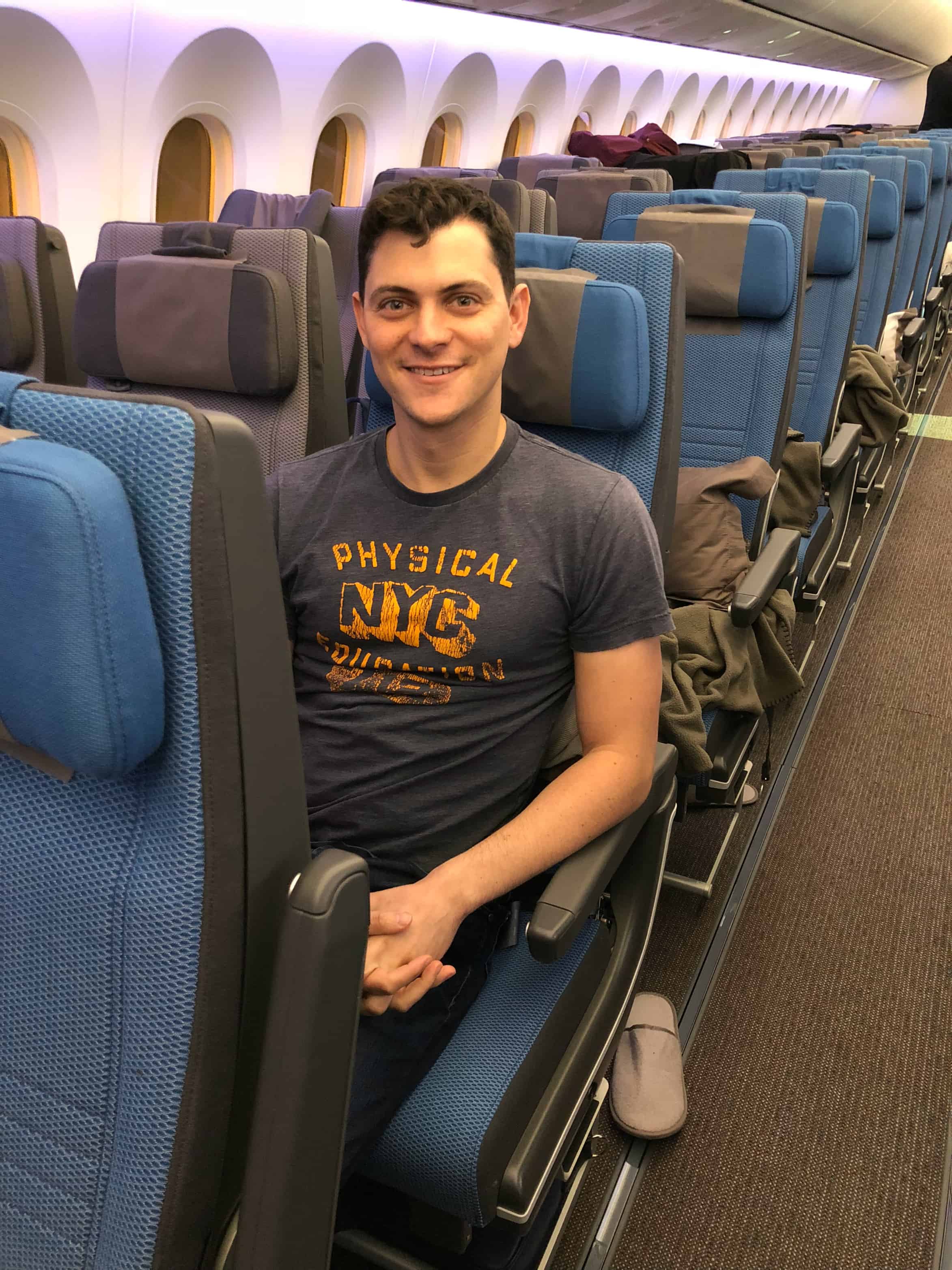
Matt Kepnes sitting in economy class on Singapore Airlines' new DreamlinerAfter another breakfast (delicious eggs with spinach and seaweed), I move to economy class to see what it’s like back there while trying not to wake up all the Singapore Airlines employees trying to sleep. There’s a lot of legroom and the seat has a steep recline (which is good when you recline but bad when the person in front of you reclines since it cuts off a lot of your space). The seats are also really comfy and with a soft padding. After Qatar’s A350 economy, they might be my favorite economy seats.

Hour 21
I take advantage of having my own row in economy to go for another nap.

Hour 22
Dreamland.

Hour 23
breakfast onboard the Dreamliner
I wake up and go back business class for breakfast. The sun is coming up and we’re getting ready to land. I’ve given up on movies and just started writing. Before we land, I take some photos, chat to some folks, and see who wants to get dinner. (We ended up a terrible place. It’s best not spoken of but let’s just say this person got their recommendation off TripAdvisor and it further cemented my view that TripAdvisor sucks!)

Hour 24
cargo ships in Singapore
Time to land in Singapore. I’m always awed by the fleet of cargo ships off the coast of Singapore. As far as the eye can see, the denizens of global trade go to and fro as we land and pull into the gate, we are welcomed with water cannons and a celebratory event.

***

Spending 24 hours in a plane was an experience I’ll (probably) never have again, but surprisingly, it wasn’t as bad as I had thought it would be. The Dreamliner is pressured at only 6,000 feet compared to other planes which are pressured at altitudes around 8,000 feet. feet. So, walking off the plane, I felt pretty refreshed and less fatigued. I never really noticed it before but after spending 24 hours in a tube, that science Boeing was talking about does really hold up to snuff.

I didn’t feel as jetlagged or that normal gross feeling I have after a long international flight. (Who else loves to shower right away after a long flight? Anyone? Makes me feel refreshed!)

This new Singapore 787-10 will be a regional craft so, at most, you’ll be in this plane for only about six hours. They are only going to fly it around Asia and Australia to start. I would say this will be one of the nicest six hours you’ll have on a plane, no matter what class you are in.

I have a new favorite plane to fly around Asia, which, thanks to Singapore’s partnerships with Chase, American Express, SPG, and Citi, as well their partnership with United means I can use points to do it for free! I already was a huge fan of Singapore Airlines and this plane just makes me love them even more!

But, the next time I get on this plane, I’ll be happy it won’t be for another 24 hours. That’s a little too long for me.

Note: I was part of the press core for the launch of this plane. Singapore Airlines covered my hotel, flight, and any meals I had during official events. I was not compensated monetarily for this.

The post How to Spend 24 Hours in an Airplane appeared first on Nomadic Matt's Travel Site.


from Nomadic Matt's Travel Site https://www.nomadicmatt.com/travel-blogs/24-hours-in-an-airplane/

How to Calibrate Dell Wide Gamut Monitors

DUCCS Calibration Setup

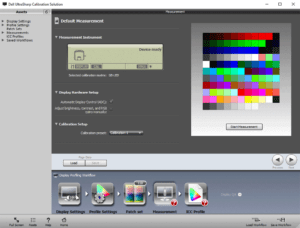
In the past, hardware calibration feature was limited to premium wide-gamut models from companies like NEC or Eizo. Those models offer wide gamut, great uniformity and advanced calibration features…but at a fairly high price. Affordable wide gamut solutions with hardware calibration started in 2013 with Dell and after that other companies like LG, BenQ and Samsung begun to offer “similar” products with more or less success. It is important to point out that LG and Samsung wide gamut models cannot be properly calibrated internally with the i1Display Pro colorimeter using their software and the same applies to some BenQ models like SW2700PT and its Palette Master Elements software. The main issue with those models is that they bundle an outdated X-Rite SDK (Software Development Kit) in their software without GB-LED support, which is the current main* (see the footnote at the end of the article below) LED wide gamut backlight technology. Hence, their software won’t get accurate readings, which in turn leads to inaccurate calibration. The BenQ PG2401PT and its Palette Master software, on the other hand, come with proper GB-LED support.


from Photography Life https://photographylife.com/how-to-calibrate-dell-wide-gamut-monitors#utm_source=rss&utm_medium=rss&utm_campaign=how-to-calibrate-dell-wide-gamut-monitors

Tuesday, 5 June 2018

How to (Legally) Stay in Europe for More Than 90 Days

staying in europe for more than 90 days
When I planned my move to Sweden a few years ago, I tried to figure out how to get past the 90-day limit placed on tourist visas in the Schengen Area. This is a problem encountered by thousands of travelers every year and a question that regularly (especially this time of year) pops up in my inbox.

“How can I stay in Europe for more than 90 days?” I’m always asked.

It’s a great question with a very complicated answer. I always knew it was difficult, but until I started researching how to stay there longer, I never knew just how difficult. But in the process of this research, I came to learn there are a few ways to stay in Europe longer than 90 days; they just aren’t well known.

This post will teach you the options for staying in Europe over 90 days. But first a few things:

It’s important to note that Europe isn’t just one place — there are varying visa rules throughout the continent. When people talk about the “90-day limit,” they’re talking about restrictions on the Schengen Area, which is the visa policy that governs 26 countries in Europe. It includes all of the European Union — except Ireland and the United Kingdom — as well as a few non-EU countries. (Note: While I call it the “Schengen Visa”, it’s not an actual visa you apply for. It’s simply what I refer to the 90 day limit as.)

What is the Schengen visa?
The Schengen visa is a 90-day tourist visa for Schengen Area countries, which are:

Austria Belgium Czech Republic Denmark Estonia
Finland France Germany Greece Hungary
Iceland Italy Latvia Lithuania Liechtenstein
Luxembourg Malta Netherlands Norway Poland
Portugal Slovakia Slovenia Spain Sweden
Switzerland

These Schengen countries have a border-free visa agreement that lets residents move throughout the Area without needing to show their passport every time they cross a border. Essentially, it’s as if they’re one country, and you can move as freely as you want. (Residents of the UK and Ireland are allowed limitless entry.)

Citizens of most countries are allowed to enter the Schengen Area without having to get a visa beforehand. Your passport simply gets stamped upon your arrival and departure from Europe. You’re allowed to enter and leave from any country you want — they don’t have to be the same. I fly in and out of different countries all the time. Your first entry in the 180-day period is when your 90-day counter starts. These days don’t need to be consecutive — the total is cumulative. Once day 181 hits, the count resets itself.

For example, if I come to the Area in January and stay for 60 days and then come back in June for 10 days, that counts as 70 days in 180 days. Only days you are in the zone during the period count. If you go on January 1st and stay 90 straight days, you have to leave and technically can’t come back until July 1st.

However, not all travelers are allowed such freedom. Citizens from many countries need to apply for a Schengen visa ahead of time. You’ll be required to fill out paperwork beforehand and fly in and out of the country for which your visa is issued. (Even then, you still might not be granted a visa. Spoiler alert: citizens from African and Asian countries get screwed.)

You can find the specific rules regarding your country at the European Commission website or from the country that is your first point of entry.

So, with that being said, how DO you stay in Europe (i.e. the Schengen Zone) longer? How do you get around that rule? Let me break it down for you.

Part 1: Staying in Europe — The Easy Way

With so many visa rules, it’s easy to stay in Europe beyond 90 days as a tourist — you just need to mix up the countries you visit. The United Kingdom has its own rules that allow you to stay 180 days in a calendar year. Most non-Schengen countries such as Ukraine, Moldova, Croatia, Ireland, and some Balkan countries allow you to stay for up to 60 or 90 days. So all you need to do is spend 90 days in the Schengen Area, visit the UK, go to the Balkans, hang out in Ukraine, drink wine in Moldova, and have a pint in Ireland. If you align your schedule right, you can easily be out of the Schengen Area for 90 days and then head back into the Schengen Area.

I spent three months in Bulgaria, Romania, Ukraine, and England as I waited for my clock to reset and then headed back into Germany for Oktoberfest.

So if you want to travel the continent for a long time without having to go through the various visa processes described below, vary your travel by visiting non-Schengen countries. There’s plenty to see elsewhere while you wait to wait for your Schengen Visa clock to reset.

—-> Need more tips for Europe? Visit my destination guide and get in-depth information on what to see and do and how to save money.

Part 2: Staying in the Schengen Past 90 Days

staying in europe for more than 90 days
But what if you do want to stay longer in the Schengen Area? Then what? What if the six months you want to be in Europe is all in the Schengen Area? What if you want to live and work in Europe?

After all, it covers 26 countries, and visiting so many destinations in 90 days can be a little rushed (you would have an average of 3.4 days per country).

If you want to stay longer to travel, live, learn a language, or fall in love, then the “move around” option suggested above isn’t going to work for you. You need something else. Luckily, there are a few ways to do this — and I can’t stress enough the importance of the word “few.”

Staying more than 90 days in the Schengen Area isn’t easy.

First, let’s understand the rule…

The Schengen law states that you can’t stay in the Area more than 90 days. If you do, you’re subject to a fine and deportation. How that rule is enforced, though, varies greatly from one country to another. If you overstay by a few days or even a week, you’ll probably be OK. If you overstay longer, you might have problems.

Some countries do not mess around with visitors overstaying. For example, Germany, the Netherlands, Poland, Switzerland, and Scandinavian countries are all very strict about entry and exit. If you overstay your tourist visit by longer than a week, there’s a good chance they’ll pull you aside. Two Australians I know were detained leaving Switzerland due to overstaying their visa by two weeks. They were allowed to go with just a warning, but they missed their flights and had to book new flights.

I know of someone who overstayed by six months, tried to leave from Amsterdam, and now has an “illegal immigrant” stamp on her passport. In order to enter Europe again, she must apply for a visa at an embassy and be preapproved: “I made the mistake of attempting to leave from the Netherlands after overstaying a Schengen visa and was caught. I overstayed by about a month, and they hand-drew some sort of insignia in my passport to note my overstay. They told me I’d have to contact the IND and find out if I would be able to enter the Schengen states again.”

(And another blogger I met just told me this happened to them too…so don’t overstay!)

Yet if you leave from Greece, France, Italy, or Spain — the southern European countries — you won’t have any problems, provided you (a) haven’t stayed over too long and (b) didn’t catch the immigration officer on a bad day. When I left Greece, no one even looked at my passport. One of my friends met a guy in France, fell in love, and decided not to leave. A year later, when she finally did, the French officials didn’t even look twice. Another friend flew into France and didn’t even get an entry stamp. Spain is notorious for not caring, and Americans who decide to overstay for months mention that as the easiest country to exit from.

That being said, I don’t think it’s wise to overstay. No matter where you are, you can get away with a few days. Maybe a week, especially if you’re heading home. But a few weeks? A few months? The risk is too great. I love going to Europe enough where I wouldn’t want to be banned.

Can you extend your Schengen visa/stamp?
The Lonely Planet Thorn Tree forums, while a mess of random posts, are good for one thing: stuff like this. I came across one great quote: “This topic has been discussed ad nauseam here on the boards for years. If someone found a way to extend a Schengen, we would have heard of it by now.”

He’s right. Simply put, you cannot extend your tourist visa or entry stamp. There’s a 90-day limit, and that’s that.
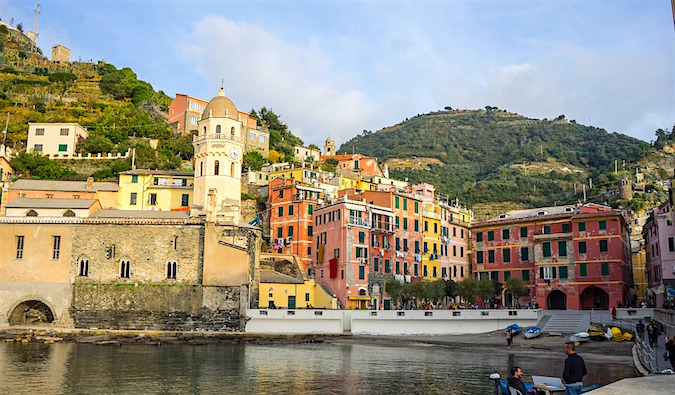
staying in europe for more than 90 days

OK, so what’s a tourist to do?

1. Get a working holiday visa

Working holiday visas are easy to get and the best way to extend your stay — even if you don’t want to work. Citizens of Australia, Canada, and New Zealand (and often South Korea and Japan) are eligible for one- to two-year working holiday visas from most of the Schengen countries. Applicants must apply for this visa from a specific country and be younger than 30 (though, in some cases, like for Canadians working in Switzerland, you can be as old as 35).

Additionally, know you can get multiple working holiday visas. An Australian reader of mine got a two-year Dutch working holiday visa and then got one from Norway to stay two more years. While she and her boyfriend (who also got one) did odd jobs in Holland for a bit, they mostly used it as a way to travel around the continent. Note: This type of visa won’t allow you to work in any other country than the one that issued it.

To find out more, visit the embassy of the country you want the visa from in order to apply. Individual countries give these out.

For Americans, there is no working holiday visa in the Schengen Zone. However, American citizens who are in school or within a year of graduation can get a working holiday visa for Ireland. That will allow you to live and work in Ireland – and thus travel around Europe!

2. Get a long-term-stay visa

Unfortunately, the majority of the countries do not allow long-term-stay visas for visitors. In my pursuit of a long-term visa for Sweden, I found that there’s no universal long-term tourist visa for the Schengen Area. Schengen allows for a C- or D-class visa (the letter varies on the country), which is a semi-permanent residence visa for up to one year. But the specific visa and requirements vary from country to country. Some countries are harder, some are easier, and others are nearly impossible despite being in the same visa treaty zone. (I don’t understand the variance either. Same zone, different rules — it makes no sense. You’d think if they were to all have the same rules they would abide by the same visa.)

But there are a few countries that do offer long-term visas and they aren’t too hard to get:

France

Amazing view of the Eiffel Tower in Paris, France in the summer
France offers a long-term visitor visa for a period of up to one year. The application process takes up to one month. According to the French Embassy, “The ‘visitor’ visa (or visa ‘D’) allows you to enter France and stay for more than three months. Long-stay visa holders will be allowed to reside in France for up to 12 months according to the validity of their visa and purpose of stay.”

To get this visa, you must set up an appointment at the French consulate near you. You can’t walk in — you must make an appointment.

At this appointment, bring the following documents:

  • One application form filled out completely and signed
  • One ID picture glued onto the application form
  • Your original passport, which must have been issued less than 10 years ago, be valid for three months after your return, and have at least two blank pages left
  • A letter certified by a notary public that promises you won’t engage in work
  • A letter of employment stating current occupation and earnings
  • Proof of income (you’ll need bank statements or copies of your investment portfolio)
  • Proof of medical insurance that includes evacuation insurance
  • Proof of accommodation in France. (The French consulate never returned my emails, so I was unsure how you could have this before you even get to France. One could use a friend’s address or, lacking that, “rent” a place (one where you can get a refund) for the purposes of the interview. It’s a little fuzzy.)

Note: You can’t apply for this visa more than three months before your arrival date.

You can visit the French Embassy website for links to local embassies and consulates for more information.

Sweden

A river view of the city of Stockholm, Sweden
Sweden also offers a long-term stay tourist visa for a maximum period of one year. The process is easy but long — up to eight months! It’s not something to do at the last minute (though if you already in the country, the process only takes a couple of weeks). You’ll need two copies of the following documents when applying for the visa:

  • Residence permit for visitor’s application form
  • Notarized copies of the pages of your passport that show your identity and the validity of your passport, as well as copies of all the other visas/stamps you have
  • A bank statement showing your means of supporting yourself for the duration of your stay
  • A return airplane ticket
  • A letter from your insurance company stating you’re covered overseas

Applications can be delivered in person during visiting hours (no appointment needed) or mailed to a Swedish consulate.

After your documents are received, you’ll be required to have an interview with one of the immigration officers. Most people who apply for this visa have family in Sweden. If you don’t, you’ll need to have clear reasons as to why you need to stay longer and show ample proof that you can support yourself (i.e., “I want to meet Swedish guys/girls” won’t cut it!). If you’re applying in Sweden, you’ll need to put a local’s address on your application form, and that person will have to accompany you to your interview!

Italy
The colorful buildings and skyline of Florence, Italy
Like the other countries, Italy will let you in if you can afford it and promise not to work. You’ll need the following documents to apply:

  • A long-term visa application filled in and signed at the consulate. You must appear in person.
  • One passport-style photo
  • Your passport, which has to be valid three months over the planned stay in Italy. The passport will be kept during the application process.
  • Documented and detailed guarantee of steady income, as well as proof of financial means, such as letters from the bank indicating the status of your account, including the amount of money in the account.
  • Proof of lodging in Italy
  • A letter specifying the reason for your stay in Italy, length of stay, and where you plan to reside
  • A notarized background check

This visa is issued solely to those who are planning to move to Italy and not work.

Greece, Spain, and Portugal also offer long-term-stay visas, but they’re geared to people who are retired or plan to work in the country and have a lot of assets. They aren’t meant for people passing through, but you can always try and apply anyway. They have a lot more requirements and are really meant for people who will live there.

Additional notes:

  • The rules are not universal. In some cases (depending on your country of citizenship), additional documents may be required. You’ll want to check with your local embassy for specifics, but you aren’t restricted from applying for these visas from your home country.
  • All of these visas will require you to show proof that you either have income, have a lot of savings or both. This is about proving you don’t need to work. They’re adamant about not letting these visas be someone’s back-door way of getting into the EU and finding a job. While most didn’t give an exact number, I would say that if you don’t have at least $25,000 USD in your bank account when you apply, you shouldn’t apply. It’s hard to say for sure how much you’re required to have, as the embassy websites aren’t specific. It’s most likely at the discretion of the immigration officer, but the more money you can show, the better. For citizens coming from developing countries, this number might be higher, and you may even need someone to vouch for you.

Because of Europe’s open-border policies, while you need to enter and exit from the country that issued you the visa, but you can be anywhere in Europe during the length of your visa. Once a country has issued you one of these short-term-stay residence visas, you’re a “resident,” allowing you access to anywhere in Europe. 

EVEN MORE ADDITIONAL NOTES:

For U.S. citizens, France has a bilateral agreement that allows the US citizens to stay an additional 90 days beyond the Schengen limit – without a visa!! Seriously. You can spend another 90 days in France. You can enter from any Schengen country, stay 90 days in France, and then fly home. But you have to go home. You can’t go elsewhere. You have to leave Europe so you can’t use your time in France as a sneaky way to reset your Schengen clock.

Additionally, Denmark and Poland also have bilateral agreements with the United States that let citizens stay an additional 90 days in each country separate from the regular Schengen Zone visa. The Denmark rule applies the same way as the French one. You must travel directly from another Schengen country to Denmark. After your stay in Denmark, you cannot transit through other Schengen countries to get back to the US, you will have to fly directly or transit through non-Schengen zones. The Denmark additional 90-day stay is applicable for citizens of Australia, Canada, Chile, Israel, Japan, Malaysia, New Zealand, Singapore, South Korea and the US.

If you want to visit Poland, you must enter and leave Poland via a non-Schengen country where you will be stamped again (i.e. direct flight from NYC). So you could do 90 days in the Schengen, fly to the UK, and then fly to Poland.

Now, in theory, one could say thanks to borderless travel you could get your “extra 90 days in Denmark” and then just travel around, fly out of Denmark, and no one would be the wiser. One could say that. But I’ve noticed a lot more intra-Europe passport checks in the last year in the wake of the refugee crisis and rise of right-wing governments across the continent. I got yelled at in France for not having my passport with me while on a train to see a chateau. I wouldn’t recommend it but, in theory, I guess it could be done.

3. Get a “student” visa

All Schengen Area countries offer student visas that are easy to obtain so long as you’re enrolled in a recognized university program. This would require you to pay for the course, but it will virtually guarantee you a visa.

The best country to do this in is Spain (Portugal also offers a student visa that is easier to get than other countries), where a whole industry has sprung up to help “students” study Spanish. There are tons of schools that will allow you to enroll and write letters stating you’re a student there. (You’ll also need to apply in your home country!) This blog post details the process in great depth.

One thing to note is that this process is expensive since you have to pay for the class, visa fees, and required background checks, but if you really want to stay a full year, it might be worth the cost.

4. Get a freelancer visa

There are a few countries that offer freelancer visas for the modern day digital nomad (or wannabe digital nomad). This process is a little more complicated and not for the casual tourist. These visas are meant for people who actually want to live in Europe. For the casual tourist, you’d probably get denied. While your freelancer visa is being processed, it would extend your Schengen as countries give you extra time while they process the paperwork. So, in theory, you could apply knowing you’ll get denied to buy yourself some more time but that would be a lot of effort for nothing so probably don’t want to do that.

Germany offers the best freelancer visa and is the country most used by people who want to reside in Europe. If you’re a freelancer, artist, or have some form of income, this is the visa to get (and it’s quite easy to get). It’s perfect and will give you one to two years in the EU. This isn’t a business visa where you move your company to Germany, but a visa for contract workers, artists, web folks, and other freelance-type jobs.

You need to apply for this visa when in Germany. The process usually takes about a week. You simply need the following documents at your visa appointment:

  • A completed application form
  • Two passport photos
  • Bank statements — like the other visas, they want to know you have money just in case you don’t find work. As before, the more money, the better.
  • A copy of your résumé.
  • Proof of residency — You’ll either need to be on a rental contract or be on someone’s rental agreement. You need to bring an official copy of the rental agreement to the immigration office. Adam of Travels of Adam, says, “All I’ve ever had are short sublets. You still have to register at a local city office, but all I’ve done is show up with a printed-out lease from the Internet and submitted that. Once you do that, you get the official form from the local office and that’s all the visa people want to see.”
  • Health insurance — you need to have German insurance that’s valid for at least one year. It’s easy to get once you’re in Germany, and you don’t need to be a German citizen to get it.

Bring a German speaker with you just in case there’s a need for translation. The process is pretty straightforward. You might get lucky and get the visa that day. Or they might review it over the course of a couple of weeks. But if they do that and your 90-day Schengen visa is close to expiring, they’ll give you a temporary three-month visa extension while they process your request. In theory, one could apply for the visa knowing they won’t meet all the requirements simply to get the three-month temporary visa.

It’s very rare someone is denied this visa if they can show they have a job, income, or money in the bank. How they determine an “artist” is actually pretty loose too. I have tons of friends who have gotten this visa.

Additionally, the Czech Republic also has freelancer visa. It’s just as complex to get and you’ll need at least $6,000 USD in your bank account as proof you aren’t going to leech off their services. The lovely folks at Wandertooth, who did this process last year, walk you through the steps.

In recent years, Spain has also created freelancer visa called the “autonomo” that also follows a similar process. You can read more on this website, Spainguru.

These three countries are your best bet for this type of visa. While other countries offer them, they require lots of proof of income, taxes, and that you actually plan to live and operate your business in the country.

5. Get married

Fall in love with a European (or at least a friend) and apply for a marriage visa! You’ll get to stay there while the application process goes through.

********

The best, easiest, and most effective way to stay in Europe long-term is to increase the number of countries you visit so you’re in the Schengen Area for only 90 days. As I said, there are a lot of countries not in the Area, so this is easy to do.

If you’re like me and want to stay longer than 90 days, be prepared to work the system.

If you do want to stay in the Schengen Area beyond the 90-day limit, you need to apply for one of the visas listed above. When you go to the interview, make it crystal clear that you have enough money to support yourself, you’re not looking for a job, and give good reasons why you need to stay longer. “I want to spend more time drinking in Greece” will get you nowhere.

In the end, it’s not impossible to stay longer in the Schengen Area. By working the system a bit and using the few loopholes that do exist, one can legally stay past 90 days and enjoy all Europe has to offer without worrying about being barred for life.

Want more advice? These articles will help you plan an extended trip to Europe:
—> How to Live and Work in Spain
—> What to See and Do in Europe
—> Cheap Ways to Travel Across Europe
—> How a Eurail Pass Can Save You Money

Updated June 2018 with the latest information and resources.

The post How to (Legally) Stay in Europe for More Than 90 Days appeared first on Nomadic Matt's Travel Site.


from Nomadic Matt's Travel Site https://www.nomadicmatt.com/travel-blogs/how-to-legally-stay-in-europe-for-more-than-90-days/

Monday, 4 June 2018

AK Monthly Recap: May 2018

What a wild month! Three trips, three countries, one conference, one talk and one panel. I’m typing this from Starbucks in Nicosia, Cyprus, and I’m exhausted.

For the past two years or so, I’ve been very good about balancing work and travel (for instance, I’ve kept my travel down to about 25% of the time, and I do very limited work while traveling), but I think this month may have pushed things a little too far.

The Maryland trip was originally supposed to happen in April, but I had to push it to May due to strep. Having an super-fun but energy-depleting conference in Rotterdam and an over-scheduled research-oriented trip to Lebanon back-to-back was a bit much, and I think I need a day spent doing nothing before I jump back into the madness again. A huge thunderstorm just hit Cyprus out of nowhere, so I don’t feel as bad about not exploring today.

On we go — here’s the best of the month!

Destinations Visited

New York, New York

Tilghman Island and St. Michaels, Maryland

(Brief technically-I-did-something-there stops: Teaneck, New Jersey, and Newark, Delaware)

New Orleans, Louisiana

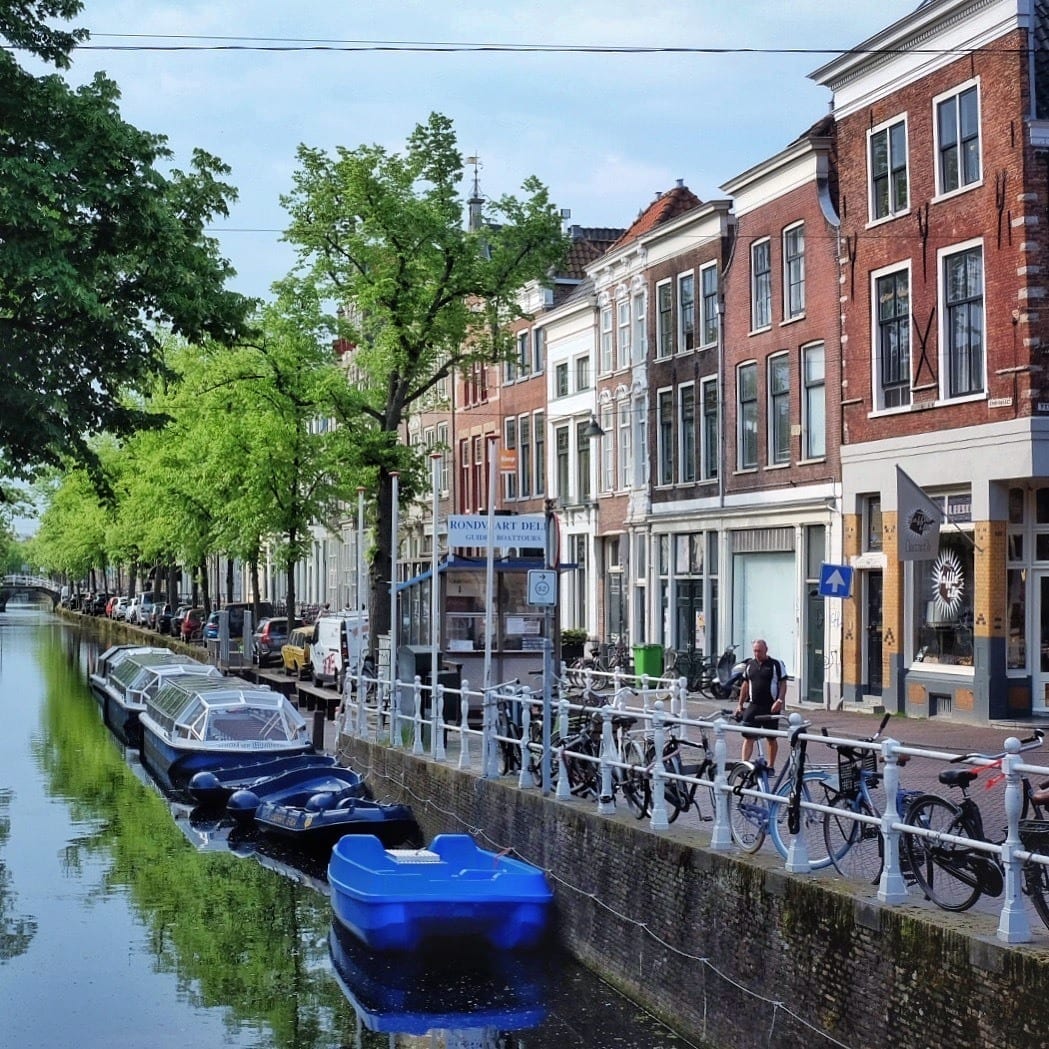
Rotterdam and Delft, Netherlands

Beirut, Bcharré, Cedars Forest, Kozhaya, Jeita Grotto and Byblos, Lebanon

Favorite Destination

Rotterdam surprised the hell out of me on my second visit — it’s such an effortlessly cool city!

Highlights

Hanging out with my friend’s adorable baby boy. I love that kid so much, and it’s amazing and humbling to watch him grow. He does something new every day. He even sucked his thumb for the first time ever while I was holding him!

Also, until this month, I was under the impression that babies wore one outfit per day, maybe two if they messed the first one up. HAHAHAHA. I was DEAD WRONG. Babies are messy creatures! And I learned that when a certain kiddo went through four outfits in about fifteen minutes. So that’s why babies have so many onesies…

A new baby arrived this month. Another of my friends welcomed a beautiful baby girl! And she’s pretty much a cousin to the aforementioned baby boy. I haven’t met her yet, but she is adorable and I can’t wait to go see her once I get home.

My first finished crochet project. I made a little rainbow hat for the baby boy, and I’m working on a matching hat for the baby girl! Baby hats are super easy to crochet. Now on to booties and animals…

Meeting Cecile Richards, one of my feminist heroes. The CEO of Planned Parenthood did a speaking engagement with Jessica Williams at 92Y on the Upper East Side, and my friend Amy and I went to hear them talk about Richards’s new memoir. I’m proud of the fact that we were the first ones in line to get our books signed! I didn’t have as much time to chat with her as I did with Gloria Steinem and Lindy West, but it was nice to thank her for her work and assure her that I’m working on her causes as well.

I got my Ancestry DNA results back. And there is a lot to unpack. Yes, there were some surprises on there, like the sheer amount of Scandinavian blood, and I have the feeling that Ancestry isn’t categorizing some ethnic groups correctly (the Acadians are an ethnically French community, but were categorized as Irish/Scottish/Welsh). I plan to write more about my results at a later date.

An utterly relaxing weekend in Maryland. Believe it or not, Maryland’s Eastern Shore is actually a doable weekend trip from New York! It’s just a four-hour drive from northern New Jersey (definitely rent a car from there, not JFK or LaGuardia). Tilghman Island may be one of the most supremely stress-free destinations I’ve visited in recent memory, and the brand-new Wylder Hotel invited me to enjoy their beautiful property. The adorable town of St. Michaels is a lot of fun, too.

If the Eastern Shore isn’t on your radar, it should be. I had a wonderful time (and ate a ton of crab!)

A fun solo trip to New Orleans. I adore this city, and I had a great time exploring it on my own, especially enjoying all the food! New Orleans gets me. I also enjoyed getting to see the local side of New Orleans at the Bayou Boogaloo music festival.

Watching the Royal Wedding! I was in New Orleans at the time, and hell yes I woke up at 5:00 AM to watch it live! I loved it even more than I thought I would — the dress, the veil, how happy they both looked, and especially that it was an unapologetic and proud celebration of black excellence (and that the Royal Family looked thoroughly uncomfortable — ha!).

Speaking at the Traverse conference. This was my first time at Traverse and I loved it — the sessions were so damn practical, which a lot of conferences miss, and a lot of them were blow-my-brains-out advanced. I spoke on being a personality blogger and I even got chosen to be on the hilarious closing panel. If you’re thinking of attending in the future, I highly recommend it! I hope to be at the next one.

Beyond that, Rotterdam was about hanging out with my beloved European blogger friends that I don’t see as often as I used to, as well as exploring the city. Rotterdam is amazing, you guys. It’s so alternative and fun and clean with wacky architecture and amazing transit. Kind of like a baby Berlin. How did I not realize this on my first visit in 2013? I think because it poured that whole weekend. This trip was sunny and glorious.

And then there was Lebanon. I know you’re dying to hear about this trip in particular! All in good time. All I will say is that I had a wonderful time, and it’s a very interesting country. So many different cultures and religions and lifestyles all together in one place. And it’s much safer than you think, even for a solo female traveler.

I loved hanging out in Beirut, where I based; I also enjoyed the incredible mountain scenery up north, the stunning caves at Jeita Grotto, and the Mediterranean wonderland of Byblos.

Good times in New York. First-time visits to the New York Transit Museum and New York Historical Society. Meetups with visiting friends and newly arrived transplants (welcome, Adam!). Lots of walks through Central Park and admiring the cherry blossoms. Helping my sister move into a new apartment (thankfully she’s still a short walk from my place).

I drove in Manhattan for the first time ever and survived!!!!

And on the food front, I’ve discovered my favorite Neapolitan-style pizza in New York: San Matteo on the Upper East Side. Trust me, it’s mind-bendingly delicious.

Challenges

With a lot of travel comes a lot of mishaps! Nothing debilitating, but quite a few incidents happened this month:

Getting stuck in the middle of a New Orleans rainstorm. And my Lyft driver was pretty much incompetent. There was about six inches of water on the street, and he didn’t want to drive through that, but he kept missing the other turn-offs and kept mixing up one-way streets, so I told him to just let me out, took off my shoes, and ran home five blocks in the pouring rain with no umbrella, barefoot in ankle-deep water on the streets of New Orleans, in a mostly white dress with no bra. THAT WAS FUN.

A rental car mishap for the ages. Ugh. Let’s just say…I don’t rent cars very often, and I had no idea of some of the rules. Like that only people with a currently active license can use their credit card to rent a car. And most places in the New York area won’t let you rent a car with a debit card, even if you have thousands of dollars immediately at hand, unless you have a round-trip air ticket to New York (seriously?!). And some places require your license to be from the tri-state area. And if it’s not an airport rental, cars at smaller places are pretty much booked up for a Friday with no other options. So, um, I learned a lot of things. I’m not leaving my credit cards at home ever again. I eventually got a car, but it was more expensive, set me back several hours, and resulted in…

Getting stuck in the worst traffic I’ve ever experienced. It took me 90 minutes to go about ten blocks in the Village and TriBeCa on the way to the Holland Tunnel due to the earlier delay that day. Stay away from driving in Manhattan on Friday afternoons, kids.

I left my insanely powerful portable charger in the airplane seat pocket on the way to Amsterdam. At least it wasn’t my passport! I picked up a new portable charger in Delft. Smaller and not as mighty, but it’s doing the job just fine.

It took me a long time to physically recover from my strep. I had no idea what a toll last month’s strep took on my body until I went to the gym — I missed a week of workouts, then I could barely even lift light weights for the next two weeks, and cardio knocked me out solid. I’m hoping I don’t see my next bout of strep for a long time.

Most Popular Post

Best Day Trips from Florence, Italy — You could literally stay in Florence your whole trip and have a varied Italy experience, visiting dozens of different interesting towns.

Other Posts

Solo Female Travel in New Orleans — How to Stay Safe and Have Fun! — New Orleans doesn’t get a lot of press as a solo female travel destination, but it should.

On Travel, Lost in Translation, and the Park Hyatt Tokyo — I finally got to stay at my dream hotel from my favorite movie.

How to Plan a Day Trip from London to Paris — Yes, it can absolutely be done in a day, and here are my tips to make it a great day.

Quote of the Month

Friend: “H&M.”

Me: “What?”

Friend: “…did you ask me where I got his onesie?”

Me: “I literally didn’t say anything.”

Friend: “Oh. Wow. Mommy Brain is real.”

Most Popular Photo on Instagram

A classic shot of a French Quarter balcony in New Orleans. Laissez les bons temps rouler! For more live updates from my travels, follow me on Instagram at @adventurouskate.

What I Watched This Month

This is America. Don’t catch you slippin’ up.

You’ve probably heard of Childish Gambino’s powerful, chilling video by now. If you haven’t, you should watch it, then read the many think pieces on it (this one in The Atlantic is good):

In this, Glover certainly isn’t the first artist to suggest that black popular entertainment can simultaneously work as minstrelsy, appeasing a racist system, and as a gas valve of joy for people crunched by that system. Nor is he the first to describe the psychic tax of this state of affairs, seen both when Glover’s character wearily lights a joint and when, in some other space that may well signify his subconscious, he runs in terror from a white mob. But Murai’s eye and staging and Glover’s performance are together so stylish and surreal that the message is made newly raw.

It’s one of the most powerful pieces of art I’ve seen in recent memory.

What I Read This Month

I’ve got to be honest, you guys — I’m not enjoying my 2018 challenge of reading 25 books from new countries. I haven’t truly loved any of them, and it’s starting to feel like a chore. Does that mean I should scale back? Or choose better books? I’ll read some poetry next month to switch things up. This month I added the first books I’ve read by authors from Vietnam and Mexico. As usual, I’m including a few of my subscription books from Book of the Month.

You Are a Badass at Making Money: Master the Mindset of Wealth by Jen Sincero (2017) — Sincero’s first book, You Are a Badass, was about removing the obstacles that hold you back from being the best you can be. This second volume is about removing the psychological blocks that prevent you from making as much money as you should be.

I loved this book. Some people might characterize it as being a bit worshipful of money, but seriously, just reframing your mindset is a powerful thing. I also appreciated how it went into the psychological blocks about money that many people, and women in particular, don’t realize that they have. For Sincero, having a father who showed his affection by treating her to things, she was afraid that he wouldn’t know how to love her if she had a lot of money of her own. For me, it’s fear of failing on a large, public scale. And learning that about myself is helping me to move forward while acknowledging that fear, but not allowing it to dominate my life the way it always has.

Other People’s Houses by Abbi Waxman (2018) — Frances is the carpool mom in her tight-knit neighborhood in suburban Los Angeles. But everything falls apart when Frances discovers one of the other moms mid-coitus with a man who is definitely not her husband. The gossip spreads throughout the town and everyone gets drawn into it.

And we have an early candidate for the worst book of the year! My God! I knew this book was going to be a disaster when Waxman’s author bio said she loved dogs and chocolate. That’s like saying you enjoy breathing and not being on fire. As a result, this book was a collection of characters with no personality. Pretty much a bunch of upper-middle-class white people doing upper-middle-class white things. Oh, and there’s also a lesbian couple — for diversity! — who lesbianly lesbian all the lesbian day, oh and did Waxman remind you that they’re gay as hell?

But two things bothered me greatly: after a woman is caught cheating on her husband, her husband does everything to alienate his children from their mother, telling them she’s a horrible person — and that is completely glossed over and accepted as normal. The second is that children throughout the town gossip about this affair like adults, sharing information about who’s sleeping with whom, when they’re in fact children. This book is equally reprehensible and boring. It’s the fictional equivalent of the country of Brunei.

Then She Was Gone by Lisa Jewell (2018) — Ten years ago, Laurel Mack’s fifteen-year-old daughter Ellie disappeared. In the years since, Laurel’s marriage and family fell apart. After Ellie’s remains are finally found, Laurel decides to make an effort to live again, and meets a charming, handsome man in a cafe. This man seems perfect — but strangely, his young daughter Poppy reminds her so much of Ellie. Seeing Poppy inspires Laurel to take another look at Ellie’s still-unsolved murder.

This is one of the most extremely far-fetched thrillers I’ve ever read. You’ll need to suspend disbelief over and over again. That said, I very much enjoyed reading it. I always enjoy London-based thrillers; I think the chilliness and dark skies of the city add to the atmosphere. I grew to genuinely care for some of the characters, too. If you’re looking for a lighter summer read, this is a great choice.

The Sympathizer by Viet Thanh Nguyen (2015) — In this Pulitzer Prize-winning novel, a communist spy in South Vietnam escapes to the United States at the end of the Vietnam War. He attempts to build a new life in Los Angeles, a land where Vietnamese refugees will never be accepted as Americans, while secretly reporting to his superiors back in Vietnam. The book is as much a commentary on racism in America as well as the hells of war, and what it’s like to be a divided person, in ethnicity as well as loyalty, unable to fit in anywhere.

I appreciated this book so much. The writing is absolutely exquisite, and I kept highlighting passages that I loved. (“Americans on the average do not trust intellectuals, but they are cowed by power and stunned by celebrity.“) Part of that is because Nguyen immigrated to the US at a young age and the book was written in English. That said…I didn’t enjoy reading it; despite its literary beauty, I couldn’t bring myself to care about any of the characters or what would happen. Finishing it was a chore. Also, I had “The Heat Is On in Saigon” stuck in my head the whole time I read it. Even so — it might be more your thing than mine. I encourage you to give it a read if it sounds appealing to you.

Before by Carmen Boullusa (1989) — In this bildungsroman of a novella, Boullusa tells the story of a young girl growing up and the fears that held her captive from a young age. This book won two of Mexico’s most prestigious literary prizes and is regarded as one of the iconic pieces of literature in the country today.

There were things I liked and things I didn’t. Boullusa writes so brilliantly about what it’s like to be a child — the things that seem inconsequential to adults are given so much importance, and it feels like the world is ending when something bad happens to you. This might be unpopular, but I’d love to read a Latin American novel without any magic realism for once. It’s good when done well…but it can be a bit much. I think I can file this one under, “Good for you, not my thing.”

Make Trouble: Standing Up, Speaking Out, and Finding the Courage to Lead by Cecile Richards with Lauren Peterson (2018) — What most people know about Cecile Richards is that she’s the president of Planned Parenthood and the daughter of the late Ann Richards, former governor of Texas. What most people don’t know is that she is a lifelong activist and has spent her entire career as an organizer, doing everything from helping service workers across the US form unions to creating organizations to promote progressive issues and combat the religious right. This memoir is a primer on how to become more of an activist.

Just reading about Richards’s life exhausts me — I have no idea how someone can work so tirelessly for so long (and to be frank, for so little money, until she took the job with Planned Parenthood). I admire her greatly and wish I had one tenth of her energy. What I most took away from this book is that there is so much more that all of us can be doing, and if something doesn’t exist yet, you can totally create it.

Coming Up in June 2018

I spent a few more days in Lebanon, then went to Cyprus! I had planned an ambitious four days of driving all over the island, but Lebanon exhausted me so much that I think I’m mainly going to take it easy and chill.

After that, I’m heading home to New York, and I don’t plan on going anywhere else for the rest of the month. (In part because I’m down to two pages in my passport — time to renew!) In fact, I doubt I’ll be traveling much this summer, other than day trips and a few short getaways.

There are a few reasons for that. I’ve got a lot of work to do, the industry is pretty quiet in summer, and it’s an expensive and crowded time to travel. Plus, I want to enjoy the best of summer in New York, odors and all. But rest assured, I am so excited to create a lot of awesome content for you to enjoy!

What did you get up to this past May? Share away!

The post AK Monthly Recap: May 2018 appeared first on Adventurous Kate.


from Adventurous Kate https://www.adventurouskate.com/ak-monthly-recap-may-2018/

Sony Xperia XZ2 Camera Review

Sony Xperia XZ2

Without a doubt, the photography industry has been shaken by the rise of smartphone photography. The highly competitive market of smartphones has also been overrun by many options from a variety of different manufacturers. The Android platform dominates smartphone sales, having a whopping 87% market share – an impressive number when compared to the 12% that iOS represents. With Android being an open platform compared to iOS, it attracts many manufacturers from all over the world, including Sony. While Sony has recently become a popular choice among photographers, thanks to its appealing mirrorless cameras, the company has been making smartphones for much longer, with its Xperia line dating all the way back to 2008. And considering that the company also holds a large market share in digital camera sensor manufacturing (most smartphones today use Sony-made sensors), it is understandable why it wants to continue playing its part in the smartphone industry. After-all, the smartphone is what the majority of people around the world use today to capture their day-to-day moments. I recently had a chance to test the Sony Xperia XZ2 and wanted to share my impressions about this smartphone’s camera capabilities with our readers.


from Photography Life https://photographylife.com/reviews/sony-xperia-xz2#utm_source=rss&utm_medium=rss&utm_campaign=sony-xperia-xz2