Monday, 19 June 2017

30+ Essential Resources for the Modern LGBT Traveler

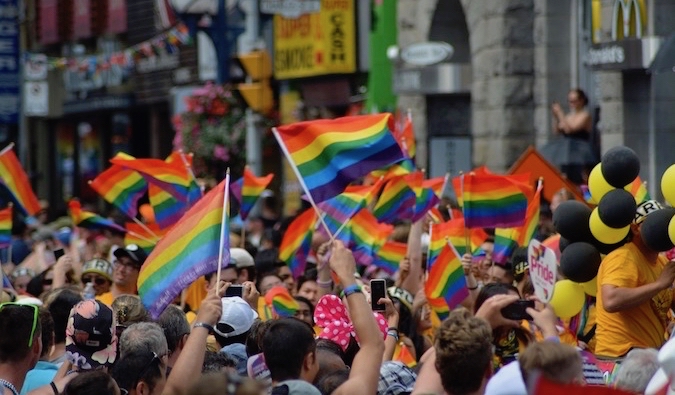
An large LGBT Pride celebration
I’ve added an LGBT column for the website to make the site more inclusive and talk about issues that affect some members of our community. In this column, we will hear from voices in the LGBT community about their experiences on the road, safety tips, events, and overall advice for other LGBT travelers to get the most out of their time on the road! Back again this month is our column leader Adam from travelsofadam.com who is talking about the best websites, apps, and blogs for LGBT travelers. 

Today, modern lesbian, gay, bi, and trans travelers no longer need a print guidebook to find underground, gay-friendly places. We don’t have to walk around with colored bandanas to send secret signals when cruising. Why? Because now — more often than not — we’re out in the open.

The basic LGBT trip  now starts like any other planned holiday. Where do we go? What do we want to do and see? How do we save money? Thanks to increased acceptance over the years, we’re far more out in the open and, with that comes a lot more options – both online and off – to plan your trip and find LGBT friendly attractions, businesses, tours, and ways to meet people. While we don’t have to let our sexuality define our travels, if you’re looking for activities and people who share a similar lifestyle, these are the best tools on the web:

Where to Find LGBT Travel Inspiration & Things to Do
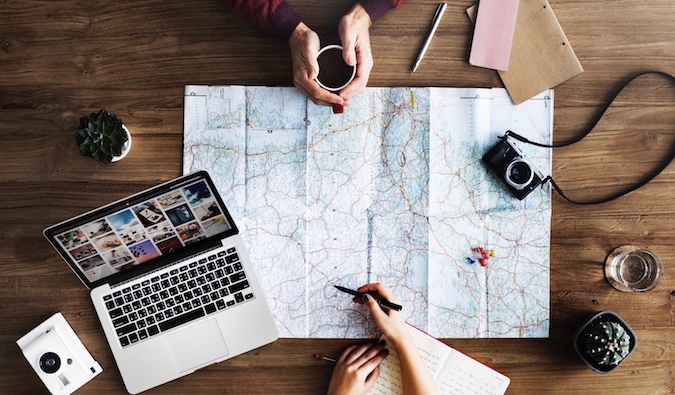
A couple planning a trip together
Travel blogs & vlogs – In this new era for the travel media industry, independent bloggers and YouTubers have been at the forefront. Increasingly, we base our travel decisions (where to go, what to do) on not just our friends’ Instagrams but those  who’ve already been there, done that. The most popular gay and lesbian travel bloggers (myself included) generally publish destination guides — it’s just a matter of finding the one that fits your own personal travel style. Here are some of my favorites (starting with my own):

(For more blogs, check out my list here: http://travelsofadam.com/gay-travel/)

Websites – There are a handful of dedicated LGBT travel websites that publish detailed and up to date guides. My favorite are:

  • Out Traveler – once a print magazine, still publishes and maintains up-to-date LGBT city guides on its website.
  • AfterEllen – Regularly publishes lesbian travel guides.
  • TravelGayEurope and TravelGayAsia – These websites provide comprehensive city guides.

Travel guidebooks – The Damron series started out in 1964 for men but has also published a separate guidebook for lesbians for nearly 20 years. And Spartacus Publishing (out of Germany) has printed a comprehensive guidebook to all gay-oriented hospitality businesses since 1970. Moreover, these days, even the most mainstream publications are likely to include some LGBT-specific recommendations in their listings. For the past several summers, many major travel brands (such as Trip.com, Lonely Planet, Expedia, and even Hostelworld) have gone so far as to print LGBT Pride travel guides.

Local magazines, newspapers, and guides – There are countless independent, LGBT-oriented city magazines and newspapers around the world. It doesn’t matter if you’re in Adelaide, Australia, or London, England — you’re going to find a local LGBT print publication or guide. Some will include weekly listings of clubs, parties, and events; others might feature personal ads.

Unfortunately most of these indie publications have poor websites, so your best LGBT travel research is going to have to happen on the ground. One of the best ways to find them in a new city is to simply go to the queer neighborhood and then look for them in a bookstore or bar — anyone who’s ever been inside a gay bar or club is probably familiar with the stack of magazines, brochures, or flyers in the doorway or by the bathrooms. (And make sure to support those businesses that carry these publications!) Also check out the pamphlets, flyers, and advertisements on the corkboard in the local LGBT center.

Some examples:

  • Siegessäule, Berlin’s free gay magazine, likes to claim one of the highest readerships and circulations of any print media in Germany.
  • HISKIND, a free lifestyle magazine in London with thought-provoking essays and local artist and drag queen interviews.
  • Windy City Times still prints an LGBT newspaper for Chicago.
  • Washington Blade operates in DC.
  • Seattle Gay News covers Seattle.

Company blogs – Even the biggest gay apps have started to push out content through their channels. Grindr launched a digital magazine, Into, with a travel section earlier this year, and Hornet acquired the one-time popular gossip blog Unicorn Booty several years ago and now publishes gay men’s travel guides for assorted cities (even if they’re slightly basic). Each of the other hookup apps, including the more niche ones, like Surge, Blued, and Planet Romeo, maintain regularly published blogs, sometimes featuring travel tips and local insider guides. Scruff probably has gone the furthest in incorporating travel tips into its app with the feature Scruff Venture, which allows users to search a destination for other visitors, local ambassadors, and events.

IGLTA – The International Gay and Lesbian Travel Association is the leader when it comes to LGBT tourism. Its members include hundreds of airlines, hotels, destination tourism offices, and independent tour operators, both LGBT-owned and mainstream. On its website, you’ll find a useful “Plan Your Trip” feature that searches through its members (just be mindful that these are members who have paid for their placement). It’s a great place to find LGBT-specific things to do on your trip.

Related: An In-Depth Guide to Planning a Lesbian-Friendly Trip

LGBT-friendly accommodation – Often the most challenging part of gay travel can be finding an LGBT-friendly hotel or accommodation. Some of the biggest hotel chains and brands have actively supported the LGBT community by participating in Pride events around the world, by training all their staff (from the front desk to the reservations center) in diversity and inclusiveness issues, and by running LGBT-inclusive campaigns. Even Airbnb launched a #HostWithPride campaign last year after updating its terms of service to protect and safeguard LGBT travelers and hosts.

There are gay-specific accommodation websites such as Rainbow World Hotels, Purple Roofs, and MisterBNB, but you’ll almost always find the same listings on mainstream sites for far cheaper prices. You’re paying a premium when trying to book through a gay-specific website, and in most instances, the mainstream sites and listings are increasingly safe and comfortable for LGBT travelers.

How to Meet Other LGBT Travelers
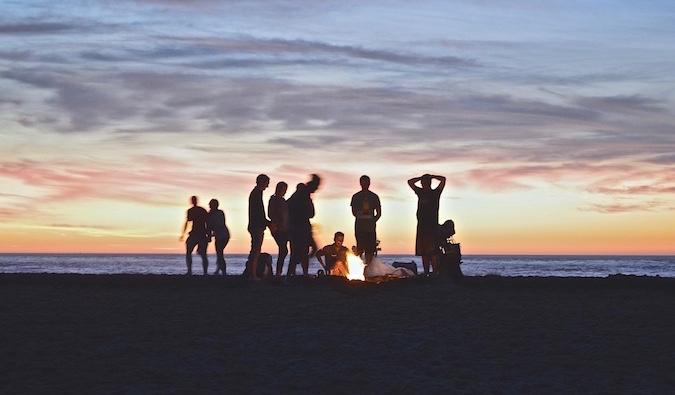
Travelers hanging out on a beach together
Gay travelers today are much luckier to have apps like Grindr in their pockets. I never would’ve discovered a gay bar in Amman without the Grindr app and a local’s helpful directions, nor would I have met that handsome tourist from Austria during Prague Gay Pride. Meeting strangers is one of the joys of traveling, and there’s nothing better than having an LGBT local to show you around. It will certainly make a trip more interesting, much more memorable. Here’s where to find them:

The hookup apps – If there’s one thing that’s revolutionized our little gay world, it’s Grindr, the location-based hookup app for gay men. For better or worse (you either love it or hate it), Grindr has changed the way we find sex, love, or even friends and it’s also quite simply enabled a lot more connections. Grindr makes it easier to meet locals when you’re abroad, whether it’s for a romp in the bushes behind Berghain or an innocent coffee date. While sex does happen often enough through these apps, it doesn’t have to be the end goal or even your main objective to still find value in them. Here are the main useful apps:

Networking groups – For a long time, Couchsurfing was one of the best places to meet other LGBT travelers and locals. With a strong community, the bed-sharing and hosting network made it easy to connect with other travelers — and the “Queer Couchsurfers” group was one of the site’s most active and welcoming. There were plenty of times I used Couchsurfing not just for a place to sleep but also to attend local get-togethers.

On Meetup.com you’ll find most major destinations have LGBT/queer-themed groups and meetups, and these are often a great and safe way to meet other LGBT travelers in nonsexual encounters. Sometimes you’ll find them for very specific interests, whether it’s a group of gay science fiction fans in Berlin or LGBT professional networking in London.

StartOut, a nonprofit for professional business and entrepreneurship networking events in various American cities, is also worth checking out. Facebook, with its thousands of public groups, can also provide a great meeting point online — and then offline — through local city or regional networking groups. It’s just a matter of doing some research beforehand to find the right networking group for your trip.

A Note on Safety

A Pride flag waving at a celebration in America

As I’ve written before in this LGBT travel column, safety and comfort is an important part of any gaycation. Thankfully, there are more than enough resources online to help you decide what or where might be safer to travel. For a more independent look at the LGBT rights and safety situation, Equaldex is my favorite. Unlike media and blogs, this is a crowd-sourced platform where users can post and share country-specific news articles related to LGBT rights. This can be especially helpful for those less-familiar places and to get a general comparison of LGBT inclusiveness around the world.

****

Over the years and thanks to new technologies and new formats for our media, the way we travel now has changed for the better. And for LGBT travelers specifically, these advancements have made it not just easier but also safer and friendlier. Using these tools and resources, so much more of the world is open to us.

Adam Groffman is a former graphic designer who left a publishing job in Boston to travel around the world before settling in Berlin, Germany. He’s a gay travel expert, writer, and blogger and publishes a series of LGBT-friendly Hipster City Guides from around the world on his gay travel blog, Travels of Adam. When he’s not out exploring the coolest bars and clubs, he’s usually enjoying the local arts and culture scene. Find more of his travel tips (and embarrassing stories) on Twitter @travelsofadam.

P.S. – Starting next, I’ll be doing the next round of Nomadic Network meet-ups around the U.S. (and in Canada!). If you want to meet up, come check out the dates and sign up!

P.P.S. – I’m doing a BBQ in Austin on Friday. Come hang out!

Photo Credit: 4

The post 30+ Essential Resources for the Modern LGBT Traveler appeared first on Nomadic Matt's Travel Site.


from Nomadic Matt's Travel Site https://www.nomadicmatt.com/travel-blogs/lgbt-travel-resources/

Friday, 16 June 2017

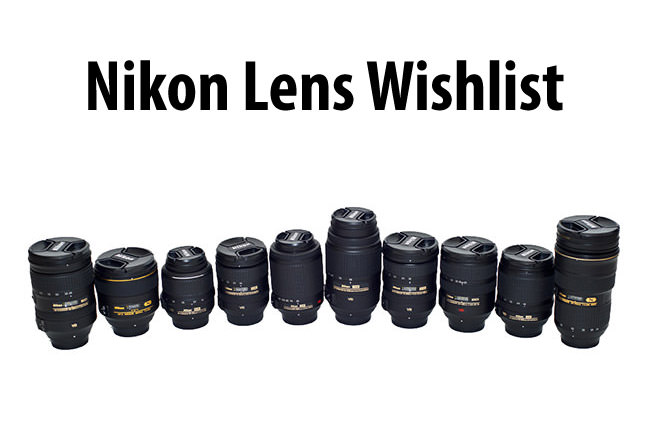
The Most Desired Future Nikon Lenses

One topic that many of us Nikon shooters often discuss between each other in local groups, online forums and various photography clubs, is lenses that we wish Nikon had. Sometimes a desired lens comes from our experience from using a lens from another brand, sometimes it is something that does not exist, but we wish existed to make our photography easier, more fun, etc. While Nikon has been doing a great job filling in the holes during the last several years, there are still plenty of lenses that Nikon should update or have in its arsenal. In this article, I will go over the most desired future Nikon lenses, the ones that have not been released yet, but I really wish to see come to life soon. I guess you can also call the below a “wishlist” of unannounced Nikon lenses.

Nikon Lens Wishlist

1) DX / APS-C Lenses

I will first start out with DX / APS-C lenses. I am not sure if Nikon is planning to keep its DX line in the future or not, since it has clearly failed to make a solid line-up of attractive DX lenses and has instead chosen to concentrate on bigger and heavier FX glass. If we look at what Fuji has done with its X-series lenses, it is clear that Nikon has been missing a lot of opportunities to make DX an attractive platform, especially for those who do not want to move up to FX in the future. Because of this, I have been rather pessimistic about Nikon’s DX future. Still, Nikon continues to release and sell DX cameras and there are still far more people buying DX than FX today. So if Nikon wants to keep its DX line alive and keep its DX shooters from switching to mirrorless, it should work on releasing more attractive glass that is designed specifically for the smaller sensor.

It is a known fact that the current DX lens lineup is weak. Aside from a couple of solid zoom choices like the Nikon 16-80mm f/2.8-4E DX VR and a few outdated primes, there is really nothing else to be proud of. The 17-55mm f/2.8G was excellent back in its days, but it desperately needs an update. Without a doubt, DX users need more great primes and better zooms!

  • Ultra-Wide Angle DX Primes: Aside from the Fisheye 10.5mm f/2.8G, Nikon has no ultra-wide angle lenses for DX shooters. Why not release something like 10mm f/2.8 DX, 12mm f/2.8 DX and 14mm f/2.8 DX? Make them cheap, make them good optically and people will buy them. Since it does not look like Nikon is going to add in-body image stabilization to its DX cameras, VR would be a bonus.
  • Wide-Angle DX Primes: Add 16mm f/2.8 DX and 18mm f/2 DX to the list of affordable primes.
  • Nikon 23mm f/1.4E DX VR: A small, pro-grade 23mm f/1.4 DX lens would be great. 35mm is a focal length of choice for many photographers, so this lens would fit the bill perfectly, especially if its made to be small and reasonably light. Fuji has made an excellent 23mm f/1.4 lens, so hopefully Nikon can design something similar.
  • Nikon 23mm f/2E DX VR: A budget-friendly version of the above lens. A 23mm f/2.8 pancake would be sweet as well.
  • Nikon 35mm f/1.4E DX VR: We already have a budget-friendly 35mm f/1.8G DX, so why not make a pro-grade version of it specifically designed for DX?
  • Nikon 50mm f/1.4E DX VR: Whether it is a 50mm f/1.4 DX or a 56mm f/1.4 DX does not matter, as long as it is light and has great bokeh for portraits. If Nikon can make an f/1.2 lens like Fuji has done with its 56mm f/1.2, it would be even better, but it will probably be too expensive. A budget-friendly f/1.8E version would be a good idea as well.
  • Super Telephoto DX Primes: The Nikon D500 is a very popular camera, so why not make super telephoto lenses specifically for those who want to shoot wildlife with DX and want to stay light? I would love to see 300mm f/2.8, 400mm f/4 and 500mm f/4 DX primes that are inexpensive. Imagine a D500 + 500mm f/4 VR DX kit that gives a 750mm equivalent field of view. Slap on a 1.4x TC and you have an ultimate super telephoto setup.
  • The DX Trinity: Ultimately, it would be great if Nikon could develop equivalents of Nikon 14-24mm, 24-70mm and 70-200mm lenses for the DX sensor. So a new “DX Trinity” with a Nikon 10-16mm f/2.8E DX VR, 16-50mm f/2.8E DX VR and 50-150mm f/2.8E VR DX would be ideal. These obviously won’t be cheap lenses to make, but Nikon should not price them higher than $900-$1,200.

If Nikon ever decides to go mirrorless, it might start off by making cameras with APS-C sensors first, like Canon has done with its EOS M line. And if that’s the case, then I really hope the company will start with a solid line-up of prime and zoom lenses optimized specifically for APS-C sensors.

2) FX Lenses

Nikon has a number of FX lenses that need to be updated as soon as possible. There are also many lenses that would be nice to add – from wide angle lenses, to super telephoto.

  • Nikon 14mm f/2.8E: Time to update the classic. It should be small like its predecessor, relatively lightweight and very sharp on high-resolution cameras. Slap on Nano Crystal Coat, fluorine coating and a weather-resistant design and it will be a very attractive lens for many.
  • Nikon 14-24mm f/2.8E VR: The Nikon 24-70mm f/2.8E VR and 70-200mm f/2.8E VR are already out, so it is time to update the classic with an electronic diaphragm and all the latest coating technologies.
  • Nikon 16-35mm f/2.8E VR: This can be either a 16-35mm or a 17-35mm lens for pros that need the quality and durability of a pro-grade lens. It will be heavy and it will be superb optically. Nano coated glass, fluorine coating, aspherical elements, rear focus with a protective rear element that is easy to clean. Unlike the 14-24mm, it should be able to take filters. Landscape photographers will drool over this lens.
  • Nikon 24mm f/2.8 PC-E: Yes, the new 19mm f/4E PC is excellent, but the old 24mm f/3.5 desperately needs an update. It is too soft on modern high-resolution cameras and Nikon needs to design it the same way as the 19mm f/4E PC, so that it has the same rotating capabilities.
  • Nikon 40mm f/2.8 Pancake: Canon has had its 40mm pancake for a while now, so why not make a cheap equivalent?
  • Nikon 50mm f/1.4E VR: The current 50mm f/1.4G is too weak optically, especially on the modern high resolution cameras. It is time for Nikon to bring 50mm back to life, with a pro-grade 50mm f/1.4 lens that performs well wide open. Yes, it will be heavy, sharp and expensive, and its bokeh will be beautiful. Add VR to it and it will hit the spot.
  • Nikon 24-70mm f/4E VR: Canon has had its EF 24-70mm f/4L IS model for a while and it is time for Nikon to respond. We need a cheaper version of the 24-70mm f/2.8E VR, which will have excellent sharpness wide open, with the latest generation VR on top. Or perhaps Nikon can find a way to make the 24-120mm f/4 sharper, especially towards the telephoto range. If we have to lose some focal length, so be it. How about a Nikon 20-100mm f/4E VR instead? That would be my ultimate landscape lens.
  • Nikon 85mm f/1.4E VR: The classic 85mm f/1.4G is excellent, but Nikon can do better. Add VR and all the latest coating technologies and make the new one optically superior, so that it can be sharp wide open on high-resolution sensors.
  • Nikon 135mm f/1.8E VR: The new Nikon 105mm f/1.4E is absolutely insane. Why not update the classic 135mm f/2D with an f/1.8 version so that it can compete with the new Sigma 135mm f/1.8 Art?
  • Nikon 200mm f/2E FL VR: Nikon has not updated its bokeh king, the 200mm f/2 for a long time now. It is time to push an update with fluorite glass, latest-generation VR and new coatings.
  • Nikon 200mm f/2.8E VR: Speaking of the 200mm f/2E, why not make a smaller f/2.8 version that does not cost an arm and a leg? It would be twice lighter and insanely sharp, reasonably priced.
  • Nikon 200mm f/4E VR Macro: This would be a macro lens that is insanely sharp, with VR for those of us that like to get close without having to physically get close.
  • Nikon 200-400mm f/4E FL VR + 1.4x TC: Time to update the 200-400mm and make it lighter, so that it looks as good as all the new FL versions. To compete with Canon’s 200-400mm, it would be a good idea to include a built-in teleconverter that is optimized for the lens.
  • Nikon 400mm f/5.6E PF VR: Now that the Nikon 300mm f/4E PF VR is out, why not make a 400mm PF version? If it is going to be close to the 300mm f/4E PF’s size, it will be an amazing lens for birding, especially once a 1.4x TC is attached! Hopefully Nikon does not price it above $2,000.

What lenses do you wish Nikon made or updated in the next few years? What is your most desired lens from the above? Please let me know in the comments section below!

The post The Most Desired Future Nikon Lenses appeared first on Photography Life.


from Photography Life https://photographylife.com/the-most-desired-future-nikon-lenses/

Thursday, 15 June 2017

Is 10 Gbit Ethernet Viable for Photography Needs?

7 Common Myths About Traveling Africa – And Why They Are Wrong

travel in africa
Kristin Addis from Be My Travel Muse writes our regular column on solo female travel. It’s an important topic I can’t adequately cover, so I brought in an expert to share her advice for other women travelers to help cover the topics important and specific to them! She’s also amazingly knowledgable about traveling around Africa. This month, Kristin breaks down some of the most persistent myths when it comes to traveling Africa.

When I told my friends about my first solo trip to Africa, they thought I was crazy.

“What about Ebola?”

“You can’t travel to Africa alone! It’s too dangerous!”

“You’re going to get eaten by a lion or something!”

This is a common reaction from those who have not been to the continent and are used to seeing it portrayed in a very negative light in the news and popular culture. We often hear only about the bad side: corruption, war, disease, crime, and poverty. With little else to go on, most people naturally have a negative impression of Africa.

The reality is that Africa is a continent with incredibly varied cultures, landscapes, and activities that you can only experience there. Safaris are certainly a big draw, but there’s so much more to Africa than that. Africa is where I saw my first whale shark, where I spent more time staying in the homes of people I’d just met than paying for hostels, and where I safely hitchhiked from beautiful beach town to beautiful beach town. It’s a continent filled with people on the move, a thriving film industry, growing tech centers, and lots of development projects. I am still continuously humbled by the hospitality and uniqueness I find there on every visit.

Yet each time I go back, I hear the same concerns, worries, and misperceptions. Today, let’s address them. Here are seven common myths about traveling in Africa — and why they’re wrong:

“Africa is just one big place.”

travel in africa
Africa is often thought of as a single place in the media and pop culture, like when Australia’s shadow foreign affairs spokeswoman Tanya Plibersek referred to Africa as a country. But the continent contains 54 countries, thousands of cultures, an estimated 2,000 languages, and widely divergent landscapes. Africa is home to the largest desert on earth (the Sahara) and the highest free-standing mountain in the world (Kilimanjaro). More than 600 new species have been discovered in Madagascar in just the last decade.

I’m constantly blown away by how much variety there is in Africa. I’ve sandboarded down giant orange dunes in Namibia, walked along white sand beaches in Tanzania, trekked with gorillas in Uganda, and eaten at BBQ joints in the South African townships (and fancy restaurants just a few miles away).

Talking about it like one big place is kind of like saying that Europe or Asia is one big place. With Africa, you can’t generalize.

“Africa is dangerous.”

travel
Recent terrorist attacks in Kenya by the extremist group Al-Shabab, the ongoing conflict with Boko Haram in Nigeria, the difficulty establishing a solid government in Somalia, civil war in South Sudan, and the whole Kony 2012 movement hasn’t helped Africa’s image. Combined with our cultural memory of “blood diamonds,” the Rwandan genocide, and Black Hawk Down, most people’s mental image of Africa is that of a place teeming with conflict and danger at every corner.

It’s true that some — but certainly not all — of Africa is very dangerous to travel through at the moment. But this is another instance where you can’t generalize. There are many, many safe parts. According to the Institute for Economics and Peace (which bases its rankings on such factors as violent crime, terrorism, and internal and external conflicts), Botswana, Namibia, Zambia, Madagascar, Ghana, Sierra Leone, Tanzania, and Malawi (just to name a few on the list) are all safer than the United States.

“Traveling in Africa is only for voluntourism or safaris.”

travel
I remember sitting in a restaurant in Namibia with some locals when one of them asked cheekily, “So what are you here to save?” After all, Africa sees a large number of voluntourists who come to save something and try to do good (though often do the opposite). 47% of Peace Corps volunteers serve in Africa and, in 2014, South Africa alone welcomed 2.2 million volunteers!

As for tourism, most people think that in order to see Africa, you have to go on a safari and have everything planned out for you. Very few imagine “backpacking” through Africa as feasible and safe, but just like Asia or South America, Africa has a backpacker’s trail as well, and it’s full of people who are neither volunteers nor safari seekers.

There’s so much else to do and see in Africa, like touring the Pyramids of Giza in Egypt, lazing away on the famous beaches of Zanzibar, climbing Kilimanjaro in Tanzania, exploring the ancient cities of Marrakech and Timbuktu, scuba diving in Mozambique, exploring the townships in South Africa, and bungee-jumping at Victoria Falls in Zambia, one of the natural wonders of the world.

“You need a lot of money to travel through Africa.”

travel
Since most people assume they have to go on a safari, they think it’s expensive to travel in Africa. But Africa doesn’t have to be the land of safaris that cost several thousand dollars per day and beach hotels with private butlers.

The opposite is actually true. I was surprised that I could drive myself through Kruger National Park in South Africa or Etosha National Park in Namibia, without paying top dollar for a tour. Between those two parks, you can easily spot “the big five” (the lion, elephant, buffalo, rhinoceros, and leopard) on your own.

I was impressed by the great value for accommodations as well. In Mozambique, I was able to rent a beach hut for only $15 per night, and you can find budget accommodations ranging from $10 for a dorm room to $20 for a private bungalow (in South Africa, Namibia, and Morocco, as well). I couldn’t believe how unique and funky the accommodations in South Africa were, from campsites to self-contained vacation rentals. In Tanzania, the campsites were usually in beautiful locations, with hot showers and cooking areas and sometimes even swimming pools!

Transportation doesn’t have to be expensive either. For example, there are budget safari options as low as $80 per day including food, accommodation, and activities (or take yourself on a self-driving safari); Baz Bus (aimed at backpackers in South Africa) offers $10 short rides or a three-week pass for around $325; and car rentals in Namibia and South Africa run around $25 per day for a basic vehicle.

Africa doesn’t have to be super luxury to be enjoyable!

“Africa is dirty and underdeveloped.”
travel
As I drove into Rwanda, I couldn’t believe how clean everything was, with almost zero trash on the side of the road. I was equally amazed by the sprawling mansions I saw upon entering the capital, Kigali. Since the mid-’90s, Rwanda has pulled over one million people out of poverty and maintained peace, as well as involving more women in politics (64% of people in parliament are women) than any other country in the world.

This is just one of many countries that are doing well in Africa, including Botswana, which quickly outgrew its ranking as one of the poorest countries after independence from Britain in 1977; it has had one of the highest average economic growth rates in the world (averaging about 9% per year from 1966 to 1999 and 5% since then). The Ivory Coast is also experiencing heavy growth, with a GDP growth of 8.5% in 2016 compared to 1.6% for the United States.

Cell phone ownership is skyrocketing in Africa. I couldn’t believe that in Tanzania, in the Serengeti of all places, I still had full 3G service. My coverage was way better out there than I often get in the United States!

I was similarly blown away by how good the roads were in most of southern Africa and parts of east Africa, including Tanzania and Zambia, for example. There are certainly plenty of roads riddled with potholes or simply made of dirt, but that wasn’t the majority of my experience on the roads there.

While there are many (very many) development problems that need to be solved, the notion that the majority of the countries in Africa are barely developed, poor backwaters is just very far from the currently reality.

“Africa is full of diseases.”
travel
The Ebola scare a couple of years ago prompted my friends to worry that heading to South Africa might put me in danger. The reality was that Europe, where I was living at the time, was actually closer geographically to the epidemic than South Africa. (Again, people are geographically challenged when it comes to this continent.)

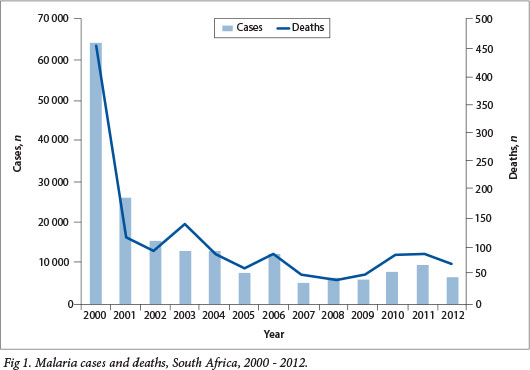
Malaria is another big concern; however, there are major initiatives in place to eradicate it. While asking your doctor about preventative measures like malarone or doxycycline is still absolutely advisable, between 2000 and 2015, cases of malaria on the continent have dropped an estimated 88% thanks to an increase of insecticide and mosquito nets. There’s been a 60% drop in mortality! Here’s a chart:

travel

HIV and AIDS is also a major problem, especially in South Africa and Botswana, where over 19-25% of the population are infected. That said, the rate of infection in the region has fallen by 14% from 2010 to 2015. Elsewhere in Africa, such as in Madagascar, Morocco, and Tunisia, among others, the infection rate is below 0.5% of the population.

“Traveling alone there, especially as a woman, is a terrible idea.”

travel in africa
Tell anyone that you plan to travel alone to Africa and you might be met with horrified reactions, due to all of the perceptions listed above. I was admittedly a little bit afraid to travel solo in Mozambique, mostly because I couldn’t find much information about it that was positive, but I went anyway and came out of the experience with tons of new friends and wonderful memories.

I have found that solo female travel in Africa is just like anywhere else — you definitely have to be careful not to walk alone (especially at night), should not get too intoxicated, must remain aware, and need to trust your intuition, but it’s not a big disadvantage to be solo there. The locals often took me under their wing more, and per usual, I was surprised to find that there were plenty of other solo travelers around, too.

****

While the media’s portrayal hasn’t been the best for Africa, it is, in reality, a wonderful place to travel through, with experiences you can’t have anywhere else. There are still cultures in Africa that maintain their roots, animal encounters that don’t exist in other parts of the world, and some of the most beautiful beaches I’ve ever seen.

Africa is has so much to offer, it has quickly become my favorite continent to travel through, thanks to the friendliness, the warmth, and the adventures. But don’t take my word for it, go and see for yourself and try not to fall in love.

Kristin Addis is a solo female travel expert who inspires women to travel the world in an authentic and adventurous way. A former investment banker who sold all of her belongings and left California in 2012, Kristin has solo traveled the world for over four years, covering every continent (except for Antarctica, but it’s on her list). There’s almost nothing she won’t try and almost nowhere she won’t explore. You can find more of her musings at Be My Travel Muse or on Instagram and Facebook.

P.S. Want to meet other travelers? I’m hosting a series of meet-ups around the US and Canada this summer! If you’re looking to step up your travel game AND meet other like-minded travelers be sure to check out the announcement and register for an event near you!

The post 7 Common Myths About Traveling Africa – And Why They Are Wrong appeared first on Nomadic Matt's Travel Site.


from Nomadic Matt's Travel Site https://www.nomadicmatt.com/travel-blogs/africa-travel-myths/

Tuesday, 13 June 2017

Six Ways to Travel More Sustainably

The following branded content post is brought to you by AIG Travel Guard. When I was asked to co-host AIG’s solo and sustainable Twitter chat and write about sustainable travel here, I was all too glad to participate. I hope to see you at the chat on Friday!

We could all stand to do better when it comes to traveling sustainably. There’s more to it than choosing a green hotel and turning off the water when you brush your teeth.

Sustainability, at its core, is about making as positive an impact in your travels as possible. That means making compassionate decisions about where to spend your money, how to protect the environment, and how to interact with locals in order to leave the destination just as good or better condition than how we found it.

How can we make the most positive impact as a traveler? Here are some tips.

Support small businesses whenever you can.

On almost every occasion, you can eschew chains in favor of choosing a small local business. When you do this, you’re ensuing that the money goes into the pockets of local entrepreneurs, not CEOs who really don’t need a fifth vacation home.

Additionally, take time to support as many small businesses as possible, particularly when it comes to dining and shopping. You might find the most amazing textile shop on your travels and want to buy something for everyone in your family — and while that’s wonderful for the people who work in the textile shop, it’s less than ideal when you could be buying things from several different shops.

Educate yourself on local sustainability issues before your trip.

If you do any amount of research before your trip, don’t just look up the cool restaurants and hipster neighborhoods — also read about local issues and how they might affect your trip.

You might not be aware that there’s a drought in your destination, for example, and that water needs to be conserved even more closely than usual. If there’s significant unemployment, that might add to an increased amount of homelessness.

One of the biggest examples of this is elephant riding in various Asian countries. Elephant rides, no matter where they are done or what kind of place it is, are a form of animal cruelty. There is no way to train an elephant to give rides without abusing them, and no place that offers elephant rides should be financially supported.

One of the best things travel bloggers have ever done is create mass awareness about the cruelty of elephant rides. Because of their efforts, hundreds if not thousands of travelers have avoided elephant rides since.

Travel sustainably when possible.

In an ideal world, nobody would fly, ever. But if that were the case, few people would travel, ever. While flying is often unavoidable, there are ways to reduce your environmental impact.

Consider taking direct flights rather than indirect flights when you can. Consider contributing to a carbon offset program, of which new ones seems to spring up on a regular basis.

And once you arrive in your destination, stick to public transportation, rent a bike, take shared taxis, or walk whenever you can. If you’re driving, choose a hybrid vehicle if possible.

Eat locally and within the seasons.

It’s funny how things change over time. Having the finest tuna flown in from Japan used to be the hallmark of fine dining — nowadays, people are more interested in the basil that grows in the restaurant’s rooftop garden.

Local and seasonal dining used to be the only way to dine — and it’s nice that this year many restaurants are taking seasonality seriously even when you can get any food at any time of year. Focus on eating things like asparagus in the spring, tomatoes in the summer, squash in the fall, and root vegetables in the winter.

Another great way? Visit a farmer’s market! This way you’ll be eating locally, staying within the seasons, and supporting local farmers.


Plan to donate a set amount of money to a local charity.

Before you arrive, consider making a donation to a local charity. You may want to donate to a local food bank, school, animal shelter, or a local NGO. Chances are you’ll come across one in your travels or hear about one from someone you meet.

If you can’t find anything during your trip, local charities are easy to find online afterward.

Donating an amount of money you can afford is a kind way to ensure that your visit has a positive impact on the local community.

Talk to people — but also listen.

The easiest way to create cross-cultural understanding is to talk to locals whenever you can. Don’t use them as window dressing or Instagram props — make conversation.

Learn a few words of the local language — “hello,” “thank you,” and “delicious” are three good words to start with. And if there’s no language barrier and it turns into a longer conversation, continue the exchange — talk about your own life as well. Don’t seek to interrogate; seek to exchange and understand.

Join me in a Solo and Sustainable Twitter Chat on Friday, June 16 at 2:00 PM EDT!

I will be co-hosting a Twitter chat on solo and sustainable travel with AIG Travel Guard and Cassie De Pecol, who recently broke the Guinness Book of World Records for the fastest person and fastest female to travel to all 196 sovereign nations.

Join us for fun travel conversation — and the chance to win prizes, including a $100 gift card and a basket of travel gear curated by Cassie.

Date: Friday, June 16

Time: 2:00-3:00 PM EDT

Hashtag: #WhereNext on Twitter

Prizes: $100 gift card (three winners) or basket of travel gear curated by Cassie (Grand Prize)

RSVP: Please RSVP here in order to be eligible to win.

You can see the full list of rules here.

Note: you must RSVP to the chat in order to be able to win! RSVP here.

See you there on Friday, June 16, at 2:00-3:00 PM ET!

What steps do you take to be sustainable while traveling?


from Adventurous Kate http://www.adventurouskate.com/six-ways-to-travel-more-sustainably/