Tuesday, 6 June 2017

Bucharest is Fabulous and Fun

There are a number of countries where it’s recommended to arrive in the capital city and then get out as soon as possible.

The Philippines? Yeah, I’d get on board with that. I find Manila vile, but the rest of the country is lovely.

Nicaragua? Agreed. Managua has nothing to offer — you’re best off skipping town and heading to nearby Granada.

But what about Romania? Well, lots of travelers treat Bucharest, Romania’s capital, the same way, only passing through briefly before heading to the towns of Transylvania. But they really shouldn’t do that.

And this is where I raise my hand and admit that I’m guilty, too. Back in 2013, I found cheap flights from Istanbul to Skopje and, two weeks later, from Bucharest to Dubai, so I planned a big Macedonia-Kosovo-Bulgaria trip and only planned to arrive in Bucharest the night before my flight.

So what did I do on that first trip to Bucharest? I arrived off the train ride from hell, took a shower, got some pizza, slept in a dorm, and shared a taxi to the airport the next day. Not exactly hardcore tourism.

For years, I hated the fact that I counted Romania as a visited country but hadn’t done anything of value in Bucharest. But then I got a perfect opportunity to make up for that.

#ExperienceBucharest: A New Kind of Travel Influencer Campaign

Earlier this spring, my friend Monica told me about a new campaign taking place in May: #ExperienceBucharest. Several bloggers would be invited to a conference and event to show off the city.

Now, this was different than other blog trips. Most of the time, a PR agency rakes in the big bucks while the bloggers, the people who create the actual content, are undercompensated. In this circumstance, however, #ExperienceBucharest was put together by a team of volunteers who work in the travel industry in Bucharest.

This major campaign was put together by volunteers. They worked their asses off and made no money doing it — they just wanted to share Bucharest with the world and get more people to travel here.

They did it for love of their city.

When I heard that, I knew I wanted to be part of this campaign. And not only because it would give me a chance to visit some new Eastern European countries. I really enjoy trying to find the nicer places in less-appreciated cities like Colombo and Johannesburg.

So did this trip pay off? Did it ever.

Bucharest is an awesome city.

Bucharest is like Berlin. Alternative and gritty with epic nightlife.

Bucharest is like Paris. Grand and elegant and pulsating with style.

Bucharest is like Budapest. Weathered and proud and cultured.

And on top of that, Bucharest is a very affordable European city, it’s well-connected in terms of flights, the food is delicious, and the people are absolutely lovely.

I found the defining aspect of Bucharest to be its look — so many beautiful and elegant buildings, only they were interspersed with ugly communist architecture and covered in graffiti. At one point, I turned to my friend and said, “Bucharest feels like Paris if they neglected themselves.”

I don’t mean that as an insult — just an observation. I saw pictures of Bucharest from the late 19th century and it looked just like Paris. Maybe they didn’t prioritize their beauty; maybe it was simply bad luck and having to prioritize safety over beauty in times of upheaval.

But that look isn’t everything.

Bucharest has alleys that turn into elegant arcades.

Bucharest has traditional restaurants with stained glass.

Bucharest knows how to peekaboo.

Bucharest has murals all over the place.

Bucharest hides cheese in its tomato soup.

Bucharest is very gray.

But Bucharest can be gold, too.

Cafe Culture

Like elsewhere in Central Europe, Bucharest is all about the cafes. You go in the morning or afternoon for coffee, and by nightfall, people have switched to beer and wine.

One that I loved in particular is a little place called Artichoke Coffee Shop. It’s got plants perched on spiral staircases, water served in gin bottles, chunky chocolate chip cookies, and smooth flat whites that transport you straight to Australia. In other words, it’s Instagrammable as hell but with the delicious goods to back it up.

Greenery Everywhere

Bucharest is covered with parks — something that I didn’t expect in an Eastern European city. But Bucharest is actually one of the greenest cities in Europe.

I went to see Mogosoaia Palace on the outskirts of the city. It’s actually a pretty small palace, so don’t devote a whole day to it, but it’s a really nice place to stroll around and experience the greenery of the city.

May happened to be an excellent time to visit — I’ve never seen so many irises in bloom in my life!

Rooftop Bars

If you feel like drinking on a rooftop in Bucharest, you’re in luck: Pura Vida Sky Bar has excellent views in the heart of the Old Town. The cocktails are fabulous, too.

Yeah, you’ll have to walk up five flights of stairs, but trust me, it’s worth it.

The nightlife in Bucharest is pretty insane — Romanians like to party hard. Do yourself a favor and stay away from the bars catering to British stag dos and instead head up to Pura Vida for an Aperol spritz or some blue wine.

Want something crazier? Head to the Player Club to dance all night long with Romanians dressed to the nines.

Seeing Bucharest Through the Eyes of the Homeless

One activity in Bucharest that interested me the most was the Outcast Bucharest Tour from Urban Adventures, which is led by a guide who was once homeless in Bucharest.

Our guide Sergiu, dark and thin and in his late twenties, lived on the streets of Bucharest for years. He was an addict. He lost many loved ones to drugs. He did everything he could to survive. And eventually an NGO helped him climb out of homelessness and build a life for himself. Today he lives in an apartment and has a job.

A lot of poverty-focused tours, like slum tours and visits to impoverished villages, can venture into exploitative territory, but this one does everything the right way. It treats the homeless with dignity and respect, it’s not remotely voyeuristic, it creates jobs for the formerly homeless, and all net proceeds go to the Parada Foundation, a local NGO that gets children off the streets.

Sergiu’s story moved me deeply, and I’m so grateful that he’s getting his life together.

If you want to have an unforgettable experience in Bucharest, please go on this tour. You’ll never forget it.

The World’s Largest Collection of Irons

I love a few quirks in a city, and the best one I found in Bucharest was at the Museum of Romanian Records. They are home to the world’s largest collection of irons.

Yes. Irons.

I love crazy things like this — the weirder, the better. There are more irons there than you have ever seen in your life (well, I guess by being the world’s largest collection, that’s kind of obvious) — just when you think you’ve seen them all, they keep on going!


Get your mind out of the gutter. Those torpedo-shaped irons are for shaping collars and hats.

The Loveliest Chill-Out Spot in Town

On my final night in Bucharest, we had a going-away party at Podstel/Ceainaria 5, a combination hostel, tea house, and community meeting space. I had the most wonderful time here, and if you’re visiting Bucharest, you need to drop by.

I spent my time getting to know the owners and not only are they awesome people, but they were so smart in creating a hostel that ticks all the boxes. Not only did they optimize the (beautiful and modern) hostel itself, it was also important to them to have community.

So they have donation-based group dinners once a week. They have board game nights. Local musicians perform. There are yoga classes and all kinds of workshops. If you’re looking to meet people while traveling in Bucharest, I can’t imagine a better place to come than here.

In an age where hostels have gone from social gathering spots to places where people sit with their faces in their phones, it’s nice that Podstel is trying to bring back the community part of backpacking.

I think Podstel was my favorite place I discovered in Bucharest. So if you want to stay at a hostel, I encourage you to stay there. If you’re not into hostels, at least drop by for some tea (they have dozens of varieties) and a chance to hang out in that comfy outdoor room. Tell the guys that I say hi!

The Takeaway

I had such a nice time in Bucharest — an even better time than I was expecting.

I also feel like I didn’t see a fraction of what the city had to offer. Several of my friends arrived earlier and stayed later and got to take in a lot more — racecar driving, architecture photo hunts, communism tours, dance parties, dinners where a whole lamb was roasted on a spit.

A lot of people skip Bucharest in favor of other Romanian destinations, but now that I’ve experienced it, I hope that more people get the chance to explore Bucharest. If the rumblings are true, perhaps some of us will be back for an #ExperienceRomania trip next!

Essential Info: In Bucharest I stayed at the Radisson Blu. I absolutely loved this hotel, its design its luxurious touches, and the business areas. It’s also in a central location near the Old Town. If you’re looking for something on the luxury end but still surprisingly affordable, this is a great choice. Rates from 89 EUR ($100 USD). Just know that they put a hold of 89 EUR per night on your card until you check out — that’s the most I’ve ever had held by a hotel and it gave me a brief heart attack when I saw nearly $500 withdrawn on my bank statement!

You can find more hotels in Bucharest here.

Rates at Podstel start at 12 EUR ($14) per night. Thanks to Podstel for letting me use their photos of their property in this post.

The Outcast Bucharest Tour from Urban Adventures costs $47.38 per person.

Don’t visit Bucharest without travel insurance. Whether you get appendicitis and need to be hospitalized, or your phone gets stolen, or an injury means you need to cancel all or part of your trip, travel insurance will help you out. I use and recommend World Nomads as travel insurance for trips to Romania.

Many thanks to the #ExperienceBucharest team for hosting me in Bucharest. They covered my flights to Bucharest, accommodation, tours, and most meals and drinks. All opinions, as always, are my own.

Have you been to Bucharest? What did you think?


from Adventurous Kate http://www.adventurouskate.com/bucharest-is-fabulous-and-fun/

Monday, 5 June 2017

Camera and Lens Instant Rebates (Nikon, Fuji, Sony, Sigma)

Most camera manufacturers are currently offering a number of deals and rebates this summer to promote their products. Nikon has already been promoting its DSLRs with instant rebates and free camera grips and now new lens-only rebates are added to the list. Fuji has also extended a number of instant rebates for its APS-C cameras like Fuji X-T2 with a free grip option, in addition to other cash rebates. Other manufacturers like Sony and Sigma are also offering great rebates for their camera gear. To sweeten up the deals, B&H is also pitching in their part by giving 2% back in rewards. Below you will find the best deals we could find for our readers from these manufacturers.

BH Camera and Lens Rebates

Nikon Camera Rebates

Nikon Lens-Only Rebates

Fuji Camera Rebates

Sony Camera Rebates

Sigma Lens Rebates

All Sigma lens rebates can be found via this link.

The post Camera and Lens Instant Rebates (Nikon, Fuji, Sony, Sigma) appeared first on Photography Life.


from Photography Life https://photographylife.com/camera-lens-instant-rebates/

Friday, 2 June 2017

How to Deal with the Electronics Carry-On Ban

AK Monthly Recap: May 2017

This month I returned to my roots — I took a nice juicy solo trip to some countries I hadn’t visited before. Man, that always feels great. I took long walks. I photographed everything in sight. I drank lots of coffees in lots of cool cafes. Absolute bliss.

Since settling down in New York last year, I’ve been surprised at how much I’ve struggled with my identity. When you earn your salary based on your personality and then you make a major shift in lifestyle, on top of going from a moderate cost of living to a high cost of living, it can be quite disorienting. But after a year and a few months, I’m finding myself more relaxed.

Now, I think I’m getting pretty close to where I want to be — one week away per month, or two weeks away every two months, plus an occasional weekend trip thrown in. And the rest of the time I get to hang out in fabulous New York City. That feels right to me now.

Destinations Visited

New York, NY

Bucharest, Romania

Chisinau, Moldova

Odessa, Kiev, Chernobyl, and Pripyat, Ukraine

Favorite Destination

Odessa. Far and away. I’ve been dreaming of visiting Odessa for so long, and it didn’t disappoint me in the slightest.

Highlights

Bucharest was a lot of fun. I visited for the #ExperienceBucharest campaign, designed by volunteer tourism professionals to promote Bucharest to an international audience. Everyone was so passionate about sharing their hometown with us!

And I discovered a fabulous city. It felt a lot like Berlin in that the strangest little cafes and restaurants were hiding behind innocuous looking doors, but it also had a grandeur reminiscent of Paris. I loved getting to know the people of Bucharest, from formerly homeless tour guides to artists and entrepreneurs to the expats who had made Bucharest their home. It’s a special city. And while many Romania tourists skip Bucharest, you really shouldn’t.

At the conference portion of the event, I spoke on a panel about visual storytelling and didn’t mince words: “I am so sick of travel bloggers posting a million acro-yoga photos.” (Seriously, bloggers…no offense to my friends who are really into acro, but I hate looking at tons of photos of you balanced on the hairy legs of some random dude in short-shorts. Plus, doesn’t taking tons of photos of yourself doing yoga kind of defeat the mental benefits of doing yoga in the first place?)

Ukraine was awesome. Man, did I love that country! I had plans to visit Odessa, Kiev, and Chernobyl, and I partnered last-minute with JayWay Travel, a boutique Central and Eastern European travel company, for a custom itinerary they built for me with hotels, transfers, and tours throughout the country.

There is so much beauty and pride in Ukraine — a sharp contrast from Moldova. And it is by far the cheapest European country I’ve visited. Much cheaper than Albania and Macedonia! Think 95-cent lattes in fancy cafes and two-course meals with both wine and water for $8.

Odessa was my favorite spot, with its elegant streets and pastel colors, but I also really liked Kiev (especially the parts without Soviet architecture).

Chernobyl was unforgettable. It’s so hard to find the words to describe visiting the location of the Chernobyl nuclear disaster of 1986. (Yes, it’s safe to visit today. It’s the equivalent of staying in Kiev plus eating two and a half bananas. There’s radiation in everything.) It’s a site of great tragedy, but it’s also moving to see a town left frozen in time, as well as the effect of nature reclaiming a whole settlement.

Learning Cyrillic. I did learn a bit when I traveled to Macedonia and Bulgaria back in 2013, but I had forgotten most of it. This time in Ukraine, I jumped in and worked hard — and it paid off. There’s nothing more rewarding than sounding out a word and recognizing it. Once, I yelled out, “Oh! Sushi Bar!”

Some strange and lovely New York adventures. Like finally making it to Punderdrome, a monthly pun competition in Brooklyn. About a dozen people, some of them professional comedians, get up on stage and out-pun each other until there’s only one winner remaining. I loved it!

And, um, I ventured to HUMP!, Dan Savage’s independent sex-positive pornographic short film festival. If you ever feel like you’ve seen everything…that festival will assure you that nope, you haven’t.

I also made an appearance at Smorgasburg, a weekend food festival in Brooklyn, for the first time in forever. If you visit New York on a weekend, you should try to attend — they have tons of delicious and unique food offerings. It’s not a cheap outing, but it’s lots of fun!

Making lots of new friends — and connecting with two people in particular. I usually keep to myself when traveling solo, so that’s a bit of a novelty for me. And on this trip I met two different people — one in Bucharest, one in Kiev — with whom I connected in a deep, unfiltered way. The kind of connection you can only have with a stranger. It’s crazy to feel like someone can hold your soul in their hand for a few minutes.

Challenges

Moldova was a bit of a bust. After a few hours of walking around Chisinau, I felt like I had made a huge mistake choosing to spend three nights there. Over time, I found a few cool businesses and developed a bit of affection for the city, but I feel no need to return to Moldova and wouldn’t recommend Chisinau to the vast majority of travelers.

I wanted to see more of Moldova — Cricova Winery and Orhei Vechei — but Cricova wasn’t doing wine tastings (and what’s the point of visiting a winery without tastings? The visit is the boring part!) and the minibuses ran on a schedule that would have left me in the middle of nowhere for hours. I would have hired a driver, but I couldn’t find a professional and as a solo woman, I would only hire a professional, not some random dude wanting to make a few bucks.

By that time, I was just exhausted and didn’t even feel like venturing to Transnistria.

Illness in Bucharest. Conferences are a hotbed of germs to begin with, particularly when you combine it with party nights and lack of sleep. I usually get sick a few days after a conference, but this time it hit me earlier. Probably because everyone was sick. When it’s that bad, you know it’s a matter of time before you get sick, too.

Yet another far-longer-than-necessary journey home. It wasn’t quite as bad as my 48-hour Broome-Perth-overnight-Singapore-London-long layover-Boston journey last fall (which I am NEVER REPEATING), but my Kiev-Bucharest-overnight-Amsterdam-New York journey was 24 hours long. It pained me when I realized that I could have flown nonstop from Kiev to New York in just 10 hours, but alas, circumstances brought me elsewhere.

The older I get, the less I can tolerate those long journeys. I need to keep that in mind.

The Raindrop Cake is a lie! New York’s Raindrop Cake, a clear gelatinous half-sphere became an Instagram star a few months ago, and when I saw it at Smorgasburg, I wanted to give it a try. Well, it wasn’t anything great. It didn’t look THAT good, and it tasted like plain sugar-flavored gelatin.

Honestly, this was the most “the emperor has no clothes” trend I’ve found since moving to New York. And the fact that it cost $8 added insult to injury. Skip this one and walk to Ample Hills for ice cream instead.

And I dealt with a stye. I don’t get styes very often, but if you’ve had one, you know how unpleasant they are. They hurt, your face looks like you’re having a stroke, and you may need to throw your eye makeup away. A few days of tea bag compresses and baby shampoo washings got rid of it. Though several people told me that the best cure for a stye is URINE!

Most Popular Post

25 Things I Learned the Hard Way While Traveling — 25 mistakes I’ve made in 25 countries, some to hilarious effect, while on the road!

Other Posts

The First Step to Quitting Your Job to Travel — The best resource toward starting to work online, The Paradise Pack, is only available one week per year and that week is NOW. Check it out — ASAP.

TBEX Zimbabwe: An Unethical and Irresponsible Choice — TBEX, the largest travel blogging conference, is taking money from Robert Mugabe’s murderous regime in Zimbabwe in exchange for promoting the country.

Things to Do in Stellenbosch: A Guide to South Africa’s Wine Region — The absolute best way to wind down a busy trip to South Africa is to spend a few days lounging and wine-tasting in Stellenbosch.

Scenes from Košice, Slovakia — I loved this little Slovakian town and got some colorful pictures!

The Art of the Chilled Out Trip to Paris — Paris is so much better without a solid itinerary.

Most Popular Instagram Photo

Want likes? Post the Eiffel Tower. Pretty simple. I actually posted this photo to celebrate the election of Emmanuel Macron in France.

For more live updates in real time, you can follow me on Instagram (@adventurouskate) and Snapchat (also @adventurouskate).

Fitness Update

I’m officially in the worst fitness rut I’ve been in since the beginning of the year. I’ve just gotten lazy and I need to pick things up again.

I was so determined to work out throughout my Eastern Europe trip, but it didn’t happen. As a result, when I had my first zumba/training combo day after my trip, I was PAINFULLY sore for the next three days.

The good news? My trainer asked if I could keep my weight steady while away, and I actually kept it exactly the same, despite consuming tons of dumplings and wine. That’s something.

This month I also took the “Dance!” class at Equinox. The description said it could be from any genre of dance and I hoped it would be hip-hop…no. It was jazz. A jazz routine. I felt like I was back in high school drama class. Yeah, that one I won’t be repeating. I didn’t even break a sweat!

I’ll get back in there. I need to.

I’m also thinking about expanding to a global Equinox membership. It doesn’t make the most sense, since I live in Harlem and all the gyms are south of me, but it might be worth it to take classes with my favorite instructors on a more regular basis…

What I Read This Month

I’m up to 28 books read so far this year — I’m now officially more than halfway through the 52-book 2017 PopSugar Book Challenge! I had actually hoped to have read six to eight books this month rather than just five, but I’m working on a few others and will get there.

Also, I keep meaning to read literature from the country I’m visiting, but of course I spent two weeks in Eastern Europe and only read books set in Oklahoma, Florida, and Kansas. Go figure.

Losing My Virginity: How I Survived, Had Fun, and Made a Fortune Doing Business My Way by Richard Branson (updated 2011 edition) — I knew “a book that’s mentioned in another book” would be a challenging category — somehow, I could only think of the books that were mentioned throughout the Baby-Sitters Club series (Little Women and Baby Island?). But when I read You Are a Badass by Jen Sincero earlier this year, she had a list of recommended books and said that while you should always read books by people you admire, Richard Branson’s memoir was her absolute favorite. I was sold!

And what a thrilling ride this book was! It’s an in-depth account of Branson’s wild journey as an entrepreneur, as well as his adventures through love, life, and record-breaking. And I found it fascinating to see how he sees the world and makes decisions. He is just so optimistic and willing to jump into anything that seems fun, without even putting that much thought into it. I was also surprised to hear that Virgin had very little cash on hand until the mid-1990s, when they won a huge settlement from British Airways. (Consequently, I never want to fly BA again. They spied on Richard Branson and his family!!)

The best memoirs are ones that either show a major transformation or bare the soul of the writer. This book falls more into the latter category, and it’s absolutely worth it. Category: a book that’s mentioned in another book.

Nyssa Glass and the House of Mirrors by H.L. Burke (2016) — You know, I’ve made an effort to read a good book in every category, even the ones that aren’t really my thing, but when it came time to read a steampunk novel, I just wanted to get through one quickly. So I found the Nyssa Glass series: a set of mysteries about a teenage girl who solves mysteries in Victorian times while aided by cutting-edge steam technology. Steampunk has always made me roll my eyes a bit, but I’m sure it can be done well in the hands of a skilled author.

And this book? Just a quickie Young Adult book that wasn’t that compelling. I think younger readers might get more out of it. Category: a steampunk novel.

Killers of the Flower Moon: The Osage Murders and the Birth of the FBI by David Grann (2017) — I chose this book from Book of the Month because it’s one of the hottest nonfiction releases of the year and it tells a fascinating story forgotten by history. In the 1920s, the Osage Indians of Oklahoma were the richest people per capita in the world because there was oil on their land and the rights couldn’t be sold, only inherited through family. Then dozens of Osage began dying unexpectedly — some from illness, some from gunshots. Eventually the newly formed FBI discovered a mass conspiracy to murder as many Osage as possible.

In addition to learning about this heartbreaking and forgotten chapter of history, I found it fascinating to see how Native Americans were treated by white people and how it differed from other races. It was common for Native Americans and white people to marry, and rather than being segregated, the attitude was more, “They need to assimilate and start doing things our way.” Like other forms of racism, it never ended — it just changed form. Also, I was very interested in the FBI parts and think I might want to read a biography of J. Edgar Hoover next. Category: a book recommended by a librarian. (PS — Library Reads is a great resource to find books recommended by librarians.)

Their Eyes Were Watching God by Zora Neale Hurston (1937) — I had been meaning to read this book forever, along with more Harlem Renaissance authors, and when I saw it in a used bookstore near my gym, I snapped it up. In this novel, taking place in Florida not too long after Emancipation, a teenage girl named Janie yearns to fall in love — but she feels nothing for her first husband and runs off with a second, controlling husband. Then finally, as a 40-year-old widow, she meets a handsome 25-year-old and falls in love for the first time.

I love a good romance, and this delivered. But more than that, this book was about Florida, its stickiness and humidity, and its fledgling all-black communities created in the years post-slavery. And the only thing I love more than a good romance is a good ending — not necessarily a happy or sad ending, but an ending you’ll never forget. This falls into that category. Category: a book you got at a used bookstore.

In Cold Blood by Truman Capote (1965) — This was my book club’s pick for the month, and I was glad to read a book that I’ve always heard about. Truman Capote invented the nonfiction novel! It’s because of him that one of my favorite books, Midnight in the Garden of Good and Evil, exists today! At the time of publication, it was unheard of for a nonfiction book to be written in the literary style of fiction.

In 1959, four members of a family were murdered on their farm in Kansas. There were no clues and no motive — but eventually an unlikely source led to the case cracking open. Capote tells the story of the murder from the points of view of the victims, the perpetrators, and the local community.

The writing is captivating but something felt wrong to me — it felt so voyeuristic. These people died, and there was no reason for their deaths. (It’s the same reason why I don’t listen to murder podcasts, despite their popularity — it feels cruel to me to geek out over the deaths of people.) But I appreciated it as a piece of literature. I also enjoyed that my hometown of Reading, Massachusetts, made a most unexpected appearance near the end of the book. Category: a book with an eccentric character.

What I Watched This Month

Master of None, Season Two. This show means so much to me and I’m glad it’s finally back after a year and a half. Not only is it the show I relate to the most, it somehow hits me straight in the feels and brings me nearly to tears, even when it’s not that sad. HOW DOES IT DO THAT? Do they have a blueprint of my brain?!

And then it was like Season Two was even more precisely tailored to me:

–They had a performance by my favorite singer, John Legend.

–They cast my favorite celebrity crush, Bobby Cannavale (yeah, I say it’s The Rock, but it’s really Bobby Cannavale) playing an Anthony Bourdain-like role and it’s the hottest he’s ever looked onscreen.

–They filmed in two of my favorite small towns in Italy: Modena in Emilia-Romagna and Pienza in Tuscany.

–They had a discussion about the Italian word allora that was pretty much lifted from my time living in Italy — I had no idea what it meant, but somehow I always knew when to say it!

–There was an homage to my favorite American quirk: giant pharmacies. Which is one thing I talk about all the time — I always LOVE returning to giant American pharmacies when I come home from my travels! They have everything you could possibly need!

At any rate, it was such a lovely season and I highly recommend you watch. It’s tough, though — Netflix hit us hard this month with new seasons of House of Cards, Unbreakable Kimmy Schmidt, and Bloodline simultaneously…

Image: Jon Roberts

Coming Up in June 2017

After having a big trip in May, I’m taking it easier in June with only two short trips scheduled. First, I’m heading home to Massachusetts for my dad’s (milestone!) birthday at the beginning of the month.

And later in the month, I’m visiting Asheville, North Carolina, for the first time ever! I’ve wanted to visit this mountainside city for so long, but I was hesitant to visit North Carolina while HB2 (a.k.a. the bathroom law) was in place. The law has since been repealed by the new Democratic governor, so I feel comfortable going now. (Many LGBT advocates think that the repeal doesn’t go far enough. I agree with them. But I also know that political progress is most effective when it’s incremental and the repeal is a necessary step in gaining full equality for LGBT citizens in North Carolina.)

North Carolina is actually a new state for me — my final state to visit on the East Coast! And I’ve been working with Asheville to create a responsible and ethical itinerary that’s heavy on outdoorsy pursuits and features small local businesses. I’m really excited about it.

Any suggestions for Asheville? Let me know!


from Adventurous Kate http://www.adventurouskate.com/ak-monthly-recap-may-2017/

Thursday, 1 June 2017

Camera Market Stabilizing – April 2017 Update

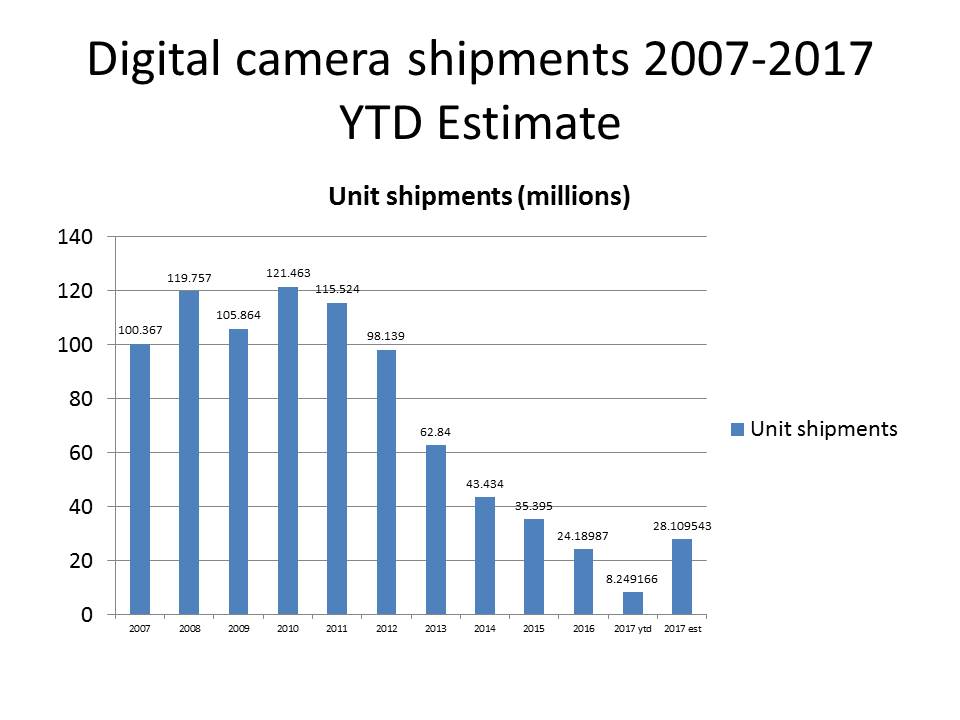
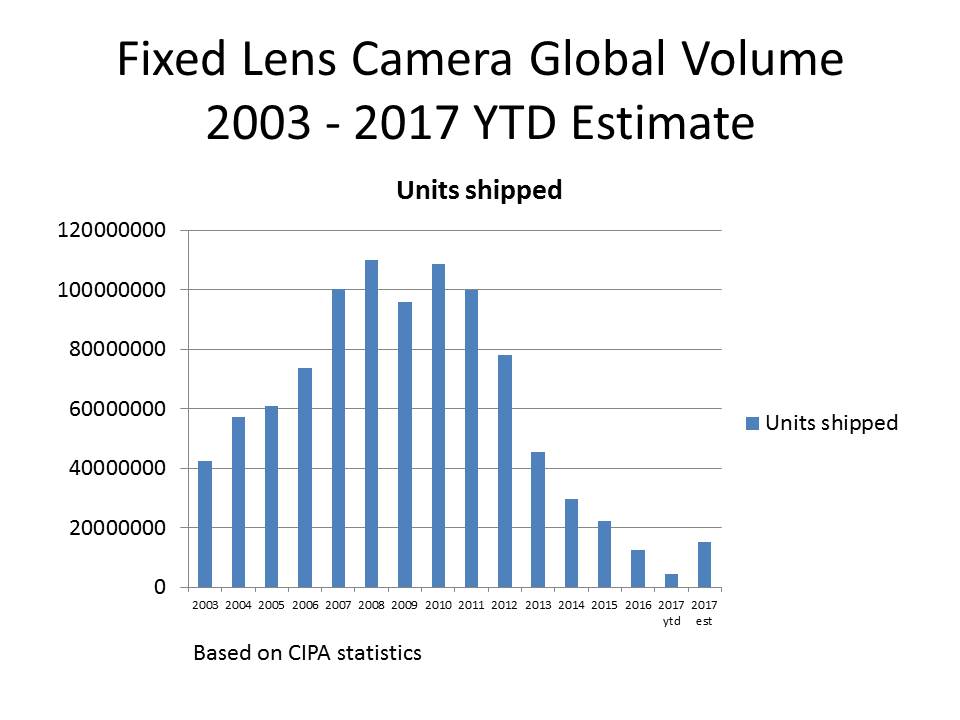
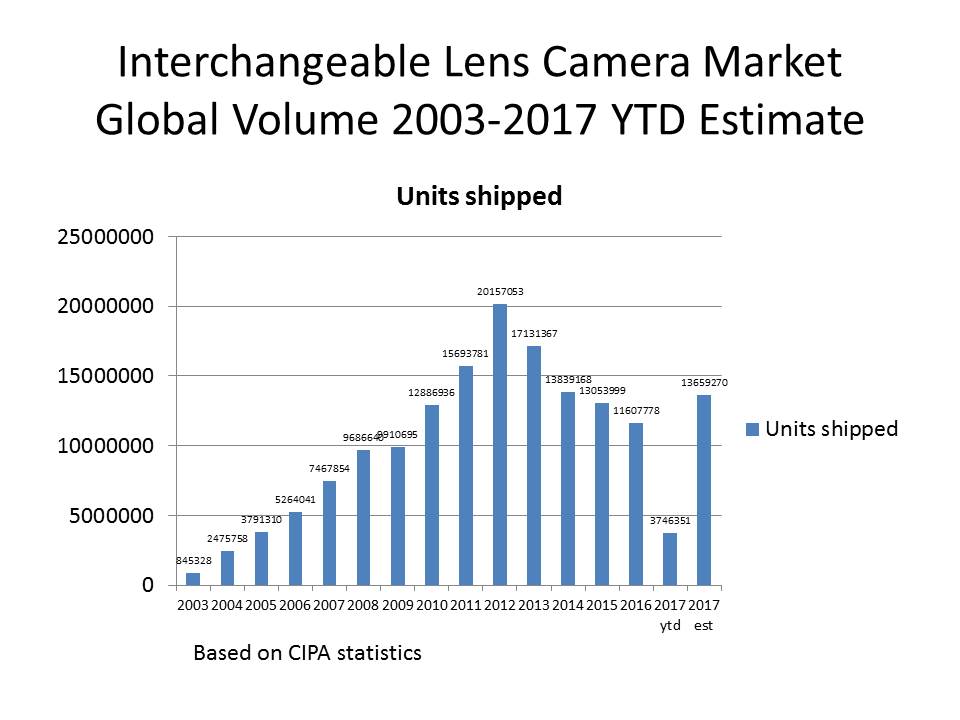
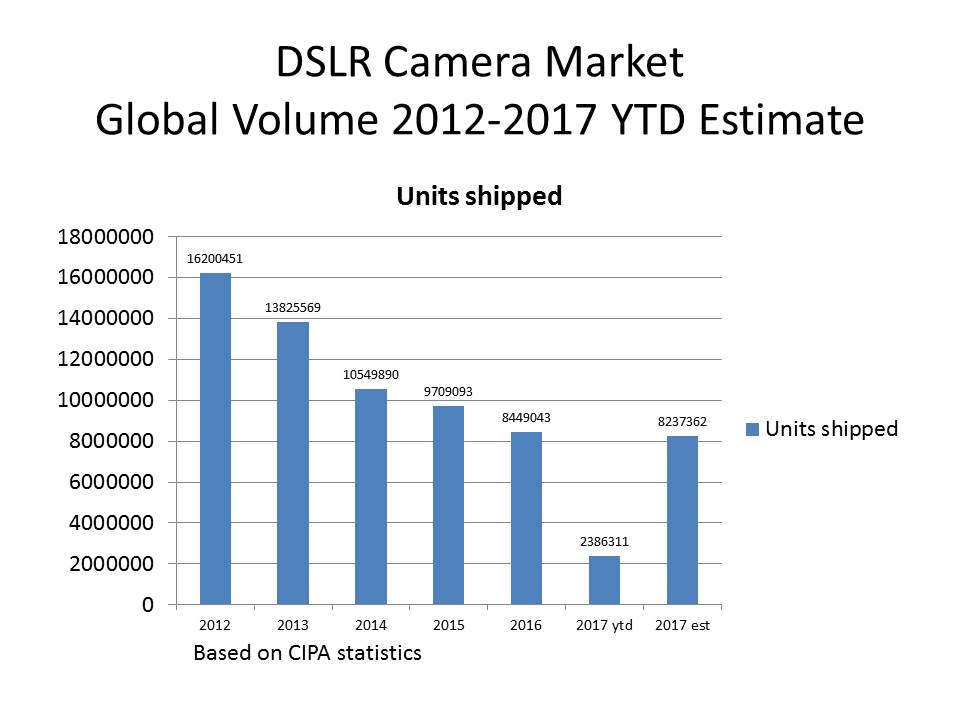
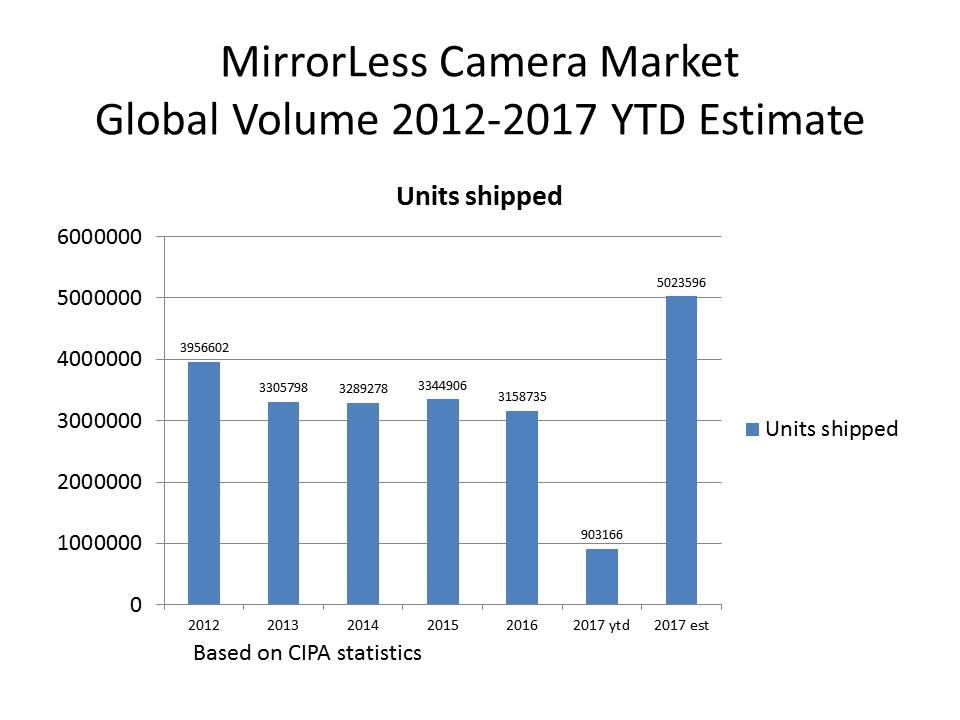
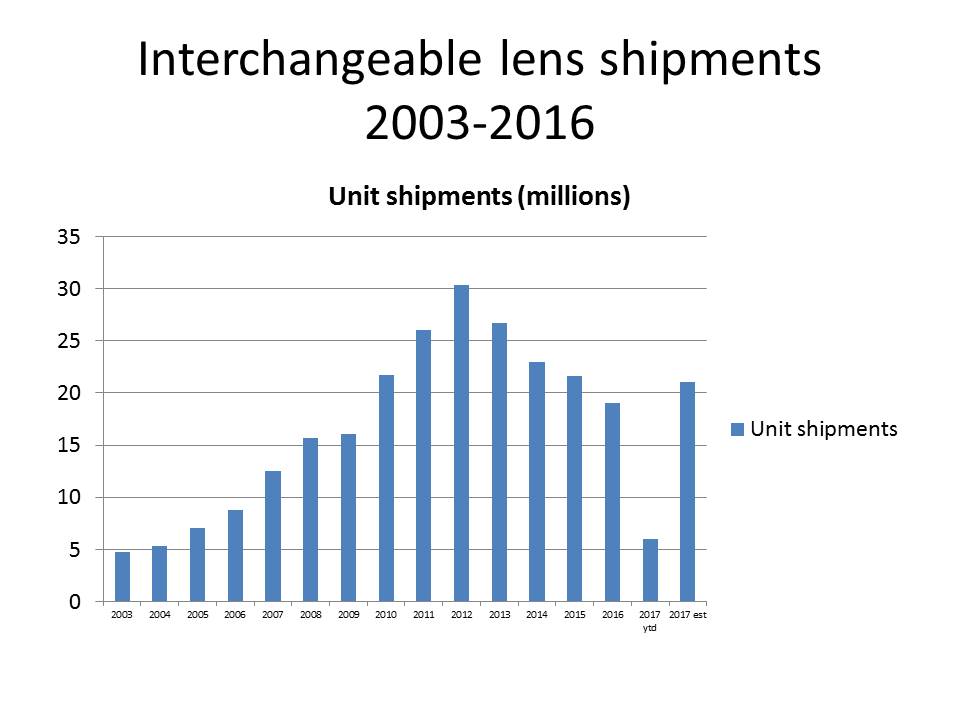
While I wait until quarterly data is available from CIPA to do full camera market updates on my photography blog, I thought Photography Life readers may like to have a quick look at how 2017 is shaping up for the digital camera market. The charts in this short article are based on April YTD 2017 CIPA statistics. I’ve included YTD actuals for 2017 as well as my market estimates for 2017. These estimates were calculated after examining some basic trends that the camera market has been demonstrating for the past decade.

CIPA stats 1965-2017 april updated 1

Thus far in 2017 the overall trend for the digital camera market is reasonably positive. If things continue as they have for the past four months it would appear that the overall size of the digital camera market may show a modest volume increase when compared to 2016, but still below 2015 levels. Perhaps this is an early sign that the camera market is stabilizing.

CIPA stats 1965-2017 april updated 2

This fixed lens camera market, which has been in a precipitous decline for many years may actually show a modest increase in volume in 2017 if the current trend holds.

CIPA stats 1965-2017 april updated 3

The current trend with the interchangeable lens camera market is even more positive with YTD 2017 indicating that this market may also show a volume increase, resulting in potentially higher shipment levels than experienced in both 2016 and 2015.

CIPA stats 1965-2017 april updated 4

Shipments of DSLRs also appear to be stabilizing, but still may register slightly below the 2016 level, should the current trend continue.

CIPA stats 1965-2017 april updated 5

The brightest spot in the camera market in 2017 appears to be with mirrorless cameras, which are off to a strong start this year. If the trend continues the overall volume of mirrorless shipments could post significant gains. This could put some additional pressure on manufacturers like Nikon to potentially develop APS-C and/or full frame mirrorless cameras.

CIPA stats 1965-2017 april updated 6

Shipments of interchangeable lenses are also showing potential volume growth for 2017, if the current trend continues. It is too early to predict any major resurgence of the camera market, but perhaps these YTD April 2017 statistics are at least pointing to a camera market that is stabilizing. If this is the case it will help the various manufacturers adjust their strategies accordingly. I’ll leave it to the readers at Photography Life to further interpret and debate what these recent CIPA statistics may mean for their favorite gear manufacturer.

Article and graphics are Copyright 2017 Thomas Stirr. All rights reserved. No use, adaptation or reproduction of any kind is allowed without written permission. Photography Life is the only approved user of this article. If you see it reproduced anywhere else it is an unauthorized and illegal use.


The post Camera Market Stabilizing – April 2017 Update appeared first on Photography Life.


from Photography Life https://photographylife.com/camera-market-stabilizing-april-2017-update/

How Amanda Educates Her Kids From the Road

a traveling family
Ever wanted to travel the world with your family? Not sure how to do it on a budget? Not sure what to do about their education? Well, even though I don’t have children, I’m always curious about how families manage to do these things. Maybe one day I’ll have kids and this will become important! So, today, I’m sitting down with Amanda, a community member and writer of children’s books from Idaho. In this interview, Amanda explains how she takes months off to travel with her kids, does it on a budget, and how she continues their education from the road!

Tell us about yourself!
My name is Amanda (but I write as AK Turner). I’m a 40-year-old mother of two from Maryland now based in Idaho. I write full-time, my husband owns a real estate brokerage, and we spend about four months of every year living in other countries.

Before writing full-time, I spent a solid decade in starving-artist mode. I waited tables and cleaned houses. When I became a mother, I was inundated with advice and shocked at how many people think there is only one way to parent (usually their way). I channeled that energy into writing. The result was my first book series, a fairly foul-mouthed, parenting-humor trilogy of This Little Piggy Went to the Liquor Store, Mommy Had a Little Flask, and Hair of the Corn Dog. The books did well and eventually made the New York Times best-seller lists.

As our travel increased, I began writing the Vagabonding with Kids series, travel humor books that chronicle our adventures and mishaps along the way.

How did you get into travel? 
Many years ago I first traveled to Russia when I was 15 for an exchange program. I spent four months in Schelkovo, a Moscow suburb, where I attended a Russian high school and lived with a host family. I’ve had the travel bug ever since. I went back four years later for a semester of college at Moscow State University, this time living in a dorm with a Korean roommate. She spoke no English and I spoke no Korean, so it really forced us to work on our Russian skills. She also fed me excellent kimchi.

What made you decide to travel with your kids so often?
After having children, it would have been easy to settle into a routine in one location, but that didn’t feel right as a way of life. It’s not just that I like to travel, but I also see a huge benefit for my children by exposing them to other countries and cultures. The value of that education can’t be quantified. They learn adaptability, gratitude, compassion, languages, and cultural appreciation. I think it’s also important for children to know that there are many different ways of life extending far beyond their suburb.

Another motivator is recognizing the importance of getting out of your comfort zone. Don’t get me wrong: I love comfort. Ordering takeout and bingeing on Netflix sounds fantastic! But I think staying in one place and repeating the same routine year after year breeds stagnation. For both me and my family, I see great value in a varied set of life experiences.

a traveling family

What’s been the biggest lesson so far?
The biggest lesson I’ve learned is that there is no one right way to go about exploring the world. We become hell-bent on proving that we are “travelers” and not “tourists,” as if one term means we are authentic and doing it right, while the other categorizes us as displaced, unadventurous failures. Shedding these falsehoods was freeing. I learned that it’s OK to take the tour and get off the beaten path. Our means and method of travel are whatever work for us at the time, and I’m not out to prove anything. Just because Anthony Bourdain ate goat brains in South Africa doesn’t mean I have to partake.

What advice do you have for people looking to travel with their children?
Children are often more adaptable than adults. We tend to forget that and assume everything will fall apart if they don’t have their daily schedule and routines. They might just surprise you.

I know many parents who fear long, international flights with children. In truth, international flights are far easier than domestic flights. On international flights, you are catered to more, and each seat comes with a screen and an endless library of movies. Our kids love long flights now, because they know they get to indulge in movie marathons. We’re not big on screens and devices, so it ends up being a treat for them.

I’ve met many parents who think they can’t travel with their kids during the school year. At present, we homeschool (whether we are in Idaho or abroad) but for a few years they attended the local public elementary school whenever we were in Boise. There were many times during parent-teacher conferences when I’d tell a teacher we’d be leaving for a few months. Not once did a teacher respond negatively. They were overwhelmingly supportive and often gave us materials to take with us. I think it’s important to know that not only can you buck convention and break the rules but you also might be commended for it and helped along the way.

a traveling family

Traveling with kids seems costly. How do you keep your expenses down? 
We use three different Alaska Airlines credit cards: one for my husband’s business, one for my business, and one for personal expenses. Regular bills, like telephone charges and monthly subscription services tied to the businesses, are automatically charged to one of these credit cards, so each month we accrue miles. In addition, our daughters each have their own mileage numbers, so they gain miles with every flight we take. The miles accumulate and we redeem them for travel, leaving us with only taxes and incidental fees to pay for out of pocket. We recently booked round-trip flights for our family of four from Boise to Madrid over a six-week span — and paid just over $300.

We use HomeExchange.com to trade homes with people around the globe. Leveraging our home in this manner allows us to eliminate the expense of hotels or long-term rentals. By having a house with a kitchen, as opposed to a hotel room, we save money by preparing our meals instead of eating out all the time.

If we’re unable to set up a home exchange, we’ll rent out our home on VRBO.com. The income from two weeks of renting out our home covers our mortgage payment, plus approximately $600. This overage can then be applied to accommodations in our destination country (in many cases a home or apartment booked through Airbnb — again so that we can have a kitchen, prepare meals, and reduce the costs of eating out).

We often trade vehicles as well as homes, which is an option that can be negotiated on HomeExchange.com. By negating the expenses of accommodations and in-country transportation, we’re able to travel for longer periods of time.

Of course, vehicle exchanges aren’t always an option. We had two stretches of time in Australia when we needed to rent a car. With a little online research, we discovered there are options other than the typical car rental agency. Through DriveMyCar.com.au, which matches up would-be renters with people who have spare wheels and the desire to earn a little extra cash, we were able to rent vehicles much more cheaply than what they would have cost otherwise. We ended up saving over $300 on a month-long car rental by using DriveMyCar.com.au versus what we would have paid to a rental agency.

We also treat long-term travel as life versus vacation. We travel to live in another culture, not vacation there. Meaning we’re looking for experiences, not souvenirs, fancy restaurants, and tourist traps. Our goal is to spend the same or less than we would while living at our home in Idaho. If that means peanut butter and jelly sandwiches so that we can travel the Australian coast in a camper van for a few weeks, bring on the peanut butter and jelly.

What’s been the biggest challenge traveling with your kids?
Adapting our children’s education to a more nomadic lifestyle can be a bit of a puzzle. We use an extensive mix of online education tools, including IXL (worth the $20 monthly subscription for access to K-12 lessons in math, social studies, science, and language arts — cheaper packages available with lesser access), Khan Academy (math tutorials, coding, adult education), YouTube channels (Señor Jordan for basic Spanish, Crash Course Kids for science lessons), Duolingo and Memrise for language learning (for faster, adult-paced language acquisition, I prefer Pimsleur — pricey but effective), Typing.com for keyboarding, and Magic Treehouse and Prodigy for game-based learning. E-readers come in handy, as our daughters read chapter books at such a pace that would prohibit carting along enough material to get them through a trip.

Given that laundry list, one might think our daughters are glued to screens when we travel, but just as much as we use computer-based learning, we also try to employ local culture. An educational assignment might include interviewing a local business owner about the three biggest challenges they face in their community, comparing flora and fauna to that in the US, or learning the meaning behind a country’s flag. Though figuring out how to educate our children on the road has been a challenge, it’s been an enjoyable one.

a traveling family

What other challenges are there to consider?
Children are challenging as it is. I don’t find it drastically more challenging by being in a different location. That said, navigating foreign hospitals and emergency rooms can be difficult if there’s a significant language barrier, so I’m always an advocate for having at least a rudimentary knowledge of the language of your host country (it’s also just the considerate and appropriate thing to do). Sign language and patience go a long way when your language proficiency is less than fluent.

The biggest challenge in my family of four is time. We cannot afford to stop working when we travel, so my husband and I have to figure out effective tag-team parenting that allows us the time we need to put into our respective businesses. The rough framework we use (but again, this is a malleable undertaking that changes as needed) is that my husband wakes early and begins work. I deal with the kids in the morning (breakfast, schoolwork). My husband takes over around lunchtime; by that time he’s put in a full workday. This gives me time to write and work on my business. By mid-afternoon, we’re ready to venture out and explore.

Do you meet a lot of other families on the road? Are there any good resources or websites out there for families to connect?
We’ve met many traveling families: in campgrounds, hostels, and simply when exploring a new city. On a remote beach in Mexico we met a family from Virginia with similar plans and children of similar ages to ours. We met up with them a few times, connected on Facebook to stay in touch, and fostered an ongoing pen-pal relationship between our daughters.

Worldschoolers and Multicultural Kid Blogs are both excellent for connecting with other traveling families and discovering new resources for education, travel, and parenting abroad.

Why do you think few families travel like this? More and more seem to do so, but compared to solo travelers, traveling families aren’t as common.
Many parents are afraid of the dangers their children might face in another culture or country. In reality, I think my children are safer when we travel, because I’m more alert and aware of my surroundings. I pay more attention so that I can effectively navigate in unfamiliar territory.

Money holds people back, often because they associate travel with expensive flights and hotel rooms, which doesn’t have to be the case. But by far the biggest thing holding families back is simple convention. Our society, until fairly recently, promoted a monochrome ideal of what family life should be, and this involved staying put during the school year, with a two-week family vacation during the summer. The information age has brought examples of alternatives to this routine to light, and as more positive stories of long-term family travel are heard, more families will take those first steps and take flight.

a traveling family

What have been some of your favorite experiences? 
Some of my favorite experiences have happened during the Christmas holidays. One year we were in a small town on the Tasman peninsula in Tasmania. We spent Christmas Eve visiting the Port Arthur convict settlement (I have a morbid fascination with facilities of incarceration). Then on Boxing Day [December 26] we visited a Tasmanian devil sanctuary, where they try to save the species from devil facial tumor disease, which has decimated the devil population. I don’t think I’ll ever forget watching a Tasmanian devil eat. Table manners are not their strong suit.

We spent another Christmas in the Amazon, hiking through the jungle and fishing for piranha. A few months later we took our daughters to an all-night Carnaval parade at the Sambadromo in São Paulo. These were great lessons in the adaptability of children. I wasn’t sure how our kids would fare with long jungle hikes, but they rallied.

What’s your number one piece of advice for new travelers?
There will never be a perfect time. It’s better to get out there and learn as you go. You’ll be glad you did.

I know so many people who say they’ll do it someday. And honestly, “someday” is one of the saddest words there is. There isn’t any guarantee of someday. Others have the intention of traveling but they constantly push it back, because they think they need everything planned and perfectly in place, but again, it always comes back to the fact that there is no such thing as the perfect time.

Travel can also be on whatever scale works for you. It doesn’t have to be selling everything you own and traveling around the world for two years. You can start with small, close-to-home trips to test the waters and make sure the world doesn’t end because you left town, then branch out from there. (Hint: the world will not end because you leave town.)

For more travel tips and tales, be sure to check out Amanda’s website. You can also follow her as she adventures around the world with her family on Facebook, Instagram, and Twitter.

P.S. – There are two spots left on my Austin tour for later this month, so if you’re interested, check out the announcement page for all the details!

The post How Amanda Educates Her Kids From the Road appeared first on Nomadic Matt's Travel Site.


from Nomadic Matt's Travel Site http://www.nomadicmatt.com/travel-blogs/family-budget-travel-education/