Wednesday, 5 April 2017

Tuesday, 4 April 2017
Monday, 3 April 2017
An In-Depth Guide to Planning a Lesbian Friendly Trip
I’ve added an LGBT column for the website to make the site more inclusive and talk about issues that affect some members of our travel community. In this column, we will hear from voices in the LGBT community about their experiences on the road, safety tips, events, and overall advice for other LGBT travelers to get the most out of their time on the road! This month, Dani from Globetrottergirls gives you the ultimate Lesbian friendly travel experience.

When I started planning my first trip to Latin America in 2010, I wondered what it would be like to travel with my girlfriend in strictly Catholic countries, many of them known for their culture of machismo. Would we be safe? Would we get the chance to connect with local lesbians or meet other lesbian travelers?
I had traveled extensively around Europe and I’d been to LGBT hot spots in the US but had no idea what to expect in other parts of the world. Back then, there wasn’t much information online, and social media wasn’t as ubiquitous as it is now. Today, planning a lesbian trip has gotten much easier since then. Still, if you are not traveling to a lesbian or Pride festival, planning an LGBT-friendly trip can be daunting and overwhelming. Where to start? How to go about finding queer-friendly destinations and meeting other gay travelers?
Like me, a lot of lesbians, especially first-time travelers, feel more comfortable traveling in an environment where they feel safe. With that in mind, I’ve compiled this ultimate resource for lesbian travelers, including websites you’ll want to bookmark for trip planning, LGBT-friendly booking sites, travel opportunities for same-sex couples or lesbian solo travelers, and how to meet like-minded people during your trip!
Table of Contents
- Trip-planning strategies
- How to find lesbian-friendly travel companies
- How to find lesbian-owned and lesbian-friendly accommodation
- The best lesbian tours and cruises
- How to meet other lesbians while traveling
- Stay safe traveling as a lesbian
1. Trip-Planning Strategies
Maybe you’ve already got a destination in mind, or maybe you’re completely open. If this is your first international trip, you might want to play it safe and visit a country with liberal views on same-sex relationships — and not one of the 77 countries that have legal LGBT discrimination.

The US Department of State is a good place to start to gather LGBTQI Travel Information, including some pointers on staying safe as a queer traveler. Both the International Lesbian, Gay, Bisexual, Trans and Intersex Association (ILGA), a nonprofit human rights group in Geneva, and the International Gay & Lesbian Travel Association (IGLTA) are excellent resources. The former has a detailed overview of sexual orientation laws around the world, and the latter has good trip-planning tools.
Damron publishes a complete travel guide by and for lesbians every year, including over 9,000 listings in North America, South America, Mexico, the Caribbean, and major cities in Europe and Asia. It also includes festivals, lesbian tours, and conferences, as well as information for vegetarians and multiracial couples and on wheelchair access, among much more.
Passport Magazine is the only gay and lesbian travel magazine still in publication in the United States. It covers LGBT travel, culture, adventure and style — the perfect go-to if you’re looking for some lesbian travel inspiration.
If this is your first trip abroad, and you don’t want to travel too far from the US, I recommend Costa Rica, which is very LGBT friendly. Manuel Antonio has plenty of gay-owned hotels, and Playa Samara, my favorite beach in Costa Rica, even has a lesbian-owned B&B right on the beach.
Mexico is one of the countries that surprised me most in terms of gay-friendliness: Not even in San Francisco did I see as many gay couples openly holding hands and making out in parks as I did in Mexico City! Moreover, Puerto Vallarta is the “gay capital” of Mexico, and along with the nearby beaches of the Riviera Nayarit, it makes for an easy getaway from the US — where you can be out without worrying about how you may be perceived.
2. How to Find Lesbian-Friendly Travel Companies
The IGLTA has a comprehensive list of all of its official partners, which include companies like Delta, Hilton, Hyatt, Marriott, United, Orbitz, Hotels.com, and Expedia.

Expedia has a separate section for queer travelers, featuring LGBT-welcoming hotels and guides to top gay hotspots.
3. How to find lesbian-owned and lesbian-friendly accommodation
The best place to look for lesbian-owned and lesbian-friendly accommodation is Purple Roofs, the world’s largest travel directory of LGBT-friendly accommodation. Over 4,800 bed & breakfasts, hotels, vacation rentals, and other properties are listed. Simply type in your destination and all available properties there will be listed. You’ll see right away if it’s lesbian or gay owned, the price per night, and a description of the property:

Another option is to look for TAG Approved® hotels, which are those that are not only LGBT friendly but also support the LGBT community in their employment policies and services. (TAG stands for Travel Advocacy Group.) There are around 2,000 such hotels, including several big chains, such as Hilton Hotels, Marriott, Sheraton, and The W. Similar to Purple Roofs, you can type in your destination and be shown a listing of all TAG Approved® hotels there.
While Purple Roofs focuses on small, independent businesses, TAG features mostly bigger hotel corporations. The advantage of TAG is that it features many hotels that are members of travel reward programs, so if you are into travel hacking and looking to use points in a lesbian-friendly hotel, the TAG website will be more useful for you.

Another option is GayTravelNet, which is operated by the ILGTA and also features a number of gay- and lesbian-friendly accommodation options around the world.
Not every lesbian cares if she is staying in explicitly LGBT-friendly accommodations. So if you’re not sure of the kind of place you’re checking in to, you may well run into this issue: having to decide if you are comfortable requesting a double bed when you are given two single beds. I don’t know how many times my partner and I were shown a room with two beds after explicitly booking a double bed. Most receptionists simply assume that two girls traveling together are friends or sisters; rarely do they assume that they are a couple. I do remember situations in which I wasn’t sure if it was appropriate to ask (in Malaysia, for example, where LGBT rights are largely unrecognized).
If you’re confident enough, you can ask for a room with one bed instead, which is what I started doing after I got tired of squeezing into a single bed with my girlfriend. But not everyone is comfortable doing this, so if you want to be 100% sure that you’re welcomed — especially when traveling as a couple — I recommend booking lesbian-friendly accommodation.
4. The best lesbian tours and cruises
There are several providers for lesbian tours, the biggest one being Olivia. Olivia offers all-lesbian vacations, ranging from resorts to cruises. Olivia always buys out a whole resort or charters the entire ship to make sure the trip is a safe space for women, so that they feel like they can be out without worrying about anything.
In addition to ships or resorts filled with lesbians, Olivia also offer the best lesbian entertainment on their vacations, including artists like Melissa Etheridge, the Indigo Girls, Wanda Sykes, and Lily Tomlin.
Olivia is a great option for couples, but also for solo travelers who can’t find anyone to travel with but aren’t ready to go on a trip by themselves. One of the things that make Olivia special is that women come together on their trips to meet new people and form friendships, and many women travel with Olivia over and over again.

Focus Diva is a UK-based lesbian tour operator that offers hosted lesbian group holidays around Europe, for example, the Women’s Festival in Lesvos, Greece; a golf-themed cruise; and river cruises around Europe. (These are not limited to lesbian travelers from the UK, by the way.)
R Family Vacations, founded by Rosie O’Donell, started out as “R Family Cruises” but has since grown into other kinds of LGBT family vacations. In addition to its popular family vacations for lesbian parents and their kids, the company has launched an “Adult Vacation” line, which offers kid-free vacations, not strictly for lesbian travelers but both gay men and women. In contrast to R’s family vacation line, the adult holidays aim to connect LGBT travelers without kids. The 2017 edition of the Adult Vacation is a transatlantic cruise from England to New York on the Queen Mary 2, including a West End theater performance prior to departure.
Another company that offers mixed cruises (for gay men as well as lesbians), is Aquafest Cruises, which specializes in discounted LGBT cruises to destinations such as Alaska, Canada, the Caribbean, Europe, Mexico, and Asia. Aquafest’s cruises are considerably cheaper than other gay and lesbian cruises (including the above mentioned R Adult Cruises), and it also offers themed cruises around celebrations like Mardi Gras and Halloween. Entertainment on board includes lesbian get-togethers, singles get-togethers, theme dance parties, gay Olympics, stand-up comedy, cabaret, and celebrity singers. (In 2017, Aquafest is expanding and offering its first non-cruise vacation: an African safari.)
OutOfOffice is a new travel start-up that arranges high-end holidays for lesbian, gay, bisexual, and transgender couples as well as gay-friendly flights, hotels, transfers, and excursions. It also offers several itineraries aimed at lesbian travelers (guaranteeing that the tour operators and hotels used in the itineraries are lesbian friendly), and group trips for LGBT travelers to destinations such as Vietnam, Cambodia, Japan, and China.
5. How to meet other lesbians while traveling
These days, the easiest way to meet other lesbians while traveling is through dating apps (even if you’re not looking for a hook-up). I’ve met other lesbian solo travelers this way while backpacking through South America, had a girl show me around Milan, and got a great introduction to Tel Aviv’s lesbian scene, all of which I wouldn’t have otherwise. I am still in touch with most of the girls and happy to return the favor when they’re visiting New York.

The dating best apps to connect with other lesbians are HER (the most popular lesbian one) and all-gender dating apps like Tinder, OkCupid or PlentyOfFish. HER also has a listing of lesbian parties, meetups, festivals, and more, so you can check what is going on in the place you’re visiting.
A great option to meet lesbians who travel is through Couchsurfing groups. You don’t need to stay on a stranger’s couch if you don’t want to — Couchsurfing also has thousands of groups for all sorts of interests, including lesbian and queer groups. Here are some lesbian groups I am a member of:

Simply post about an upcoming trip and see if any other lesbians happen to be traveling in the same area or live in the place you’re visiting.
There’s another use for Couchsurfing groups: you can see if there are any LGBT or lesbian groups in the city you’re planning to visit. For example, there’s a group for NYC lesbians, queer Berlin, and Buenos Aires Lesbians. Most big cities have queer groups and they have regular meetups.
Meetup.com is a similar option, but with groups broken up into more specific interests. New York City, for example, has groups for “Lesbians Who Brunch,” “Black Lesbians,” and gay twenty-somethings, to name just a few. Just scroll through the meetup groups in the place you’re traveling to and join a meetup that fits your interests.
Facebook is also becoming an increasingly popular way to connect with other lesbians, and you can search for lesbian groups, as well as events in the city you’re traveling to:

Join the groups you find interesting and RSVP to events you think you’ll enjoy. If you’re comfortable going out by yourself, check if there are any lesbian bars or parties while you’re visiting.
6. Stay safe traveling as a lesbian
As I mentioned above, you should be doing a fair amount of pre-trip research about your destination(s), especially if you are traveling abroad. What’s the country’s stand on same-sex relationships? Are there laws that allow discrimination against LGBT persons? Have there been any incidents involving queers?

It’s a controversial topic if gay and lesbian travelers should visit anti-LGBT countries, but I know a lot of lesbians who are willing to travel to such places. So if your dream is to climb Kilimanjaro, you’ll obviously tone down the PDAs there, considering that Tanzania is a country where same-sex sexual acts are crimes punishable by the state.
If you don’t want to risk being assaulted as an out-and-proud lesbian, then don’t travel to countries that are known to be severely homophobic, such as Jamaica; there are other Caribbean islands that are more welcoming to LGBT travelers. Choose your destination wisely and only travel to place you’re comfortable visiting, especially when on a solo trip. I, for example, can block out the catcalls and whistling that are common in Latin American countries, but I know other lesbians who can’t handle that kind of machismo.
If you are traveling as a couple, you will find yourself toning down PDAs a lot, as I have mentioned in my previous article: Lesbian Travel: 4 Things To Know.
When traveling alone, take the same precautions other solo female travelers take: be street-smart and vigilant, always listen to your gut feeling, be aware of your surroundings, and don’t flash your valuables.
As a lesbian, you may be more worried about your first trip overseas than your straight friends who don’t have to think about potential discrimination and anti-LGBT-laws, but as long as you do your research and thoroughly plan your trip, you don’t have to be afraid. On the contrary: you’ll probably be surprised to see how welcoming most places are of lesbian travelers.
If you want to be on the safe side, go with a lesbian tour company for your first trip, but after having traveled all over the world independently for years, I can honestly say that I have never felt threatened anywhere, simply because I took all the precautions necessary to stay safe as a lesbian traveler. Traveling has given me so many unforgettable experiences, connected me with other lesbians all over the world, and shown me some of the most beautiful spots on the planet — and I have no doubt that it will do the same for you.
Dani Heinrich is the vagabonding writer and photographer behind GlobetrotterGirls.com. Originally from Germany, she has been nomadic since April 2010, when she quit her corporate job in London and embarked on a round-the-world-trip that continues to this day. Dani has travelled through over 60 countries on four continents and has no plans to stop any time soon. Dani is always on the hunt for amazing street art, mouthwatering vegetarian food, secluded beaches, scenic running routes, off the beaten path gems and a hammock to work from. You can also follow her adventures on Instagram, Facebook and Twitter.
The post An In-Depth Guide to Planning a Lesbian Friendly Trip appeared first on Nomadic Matt's Travel Site.


from Nomadic Matt's Travel Site http://www.nomadicmatt.com/travel-blogs/lesbian-travel-tips-guide/
AK Monthly Recap: March 2017

You know what nobody talks about? That first gust of air when you come back from a tropical vacation in the middle of winter. I stepped off the plane and nearly wept. I knew it would be cold, how could it not be cold, but I didn’t expect it would be that bad.
Shivering like mad as I waited for my Lyft to arrive, I mentally prepared myself to leave the Caribbean behind and get ready for several more weeks of winter: all the gray, all the rain, and one final major blizzard in the middle of the month.
This is March. It goes in like a lion and stays relatively lion-esque well into April.

Destinations Visited
St. Kitts (sights around island)
Philipsburg and Maho, St. Maarten
Miami, Florida
New York, New York
Favorite Destination
St. Maarten was a really cool island! I’d love to go back.

Highlights
The second half of my cruise with Jeremy took place in March. Some of the highlights were finally discovering the sushi bar (and some amazing cruise staff from the Philippines and Thailand), smoking cigars in our Captain Awesome and First Mate shirts, having some odd conversations with shipmates (WHO NAMES THEIR KID NIXON?!), and getting a facial so good that I’ve been inspired to completely overhaul my skincare regimen. More on that in a future post.
Getting through a cruise sober — and loving it. Jeremy is off alcohol at the moment and I would have felt bad drinking when he couldn’t, so I gave up booze for the cruise as well. I had a great time, felt awesome, and I’m very grateful not to have experienced a hangover on a swaying ship.
Watching planes land over Maho Beach in St. Maarten. This beach is famous for being just meters from the airport runway, and it’s crazy watching the giant planes land right above you! But even better was getting blasted by the engine as the planes took off!

St. Kitts was my 68th country. We only had a few hours to explore the island, but we got to see some cool things. Brimstone Hill Fortress was my newest UNESCO World Heritage Site, while Timothy Hill was an incredible spot for sunset photography.
Hanging out in Wynwood, Miami. Wynwood is such a cool neighborhood! Amazing street art, cool markets, great music, and painfully attractive, ridiculously cool people in every direction. I’m really getting to love Miami, and Wynwood was a nice change from South Beach last month with Cailin. I insisted we return to CVI.CHE 105 in downtown Miami, and we weren’t disappointed in our velvety ceviche!

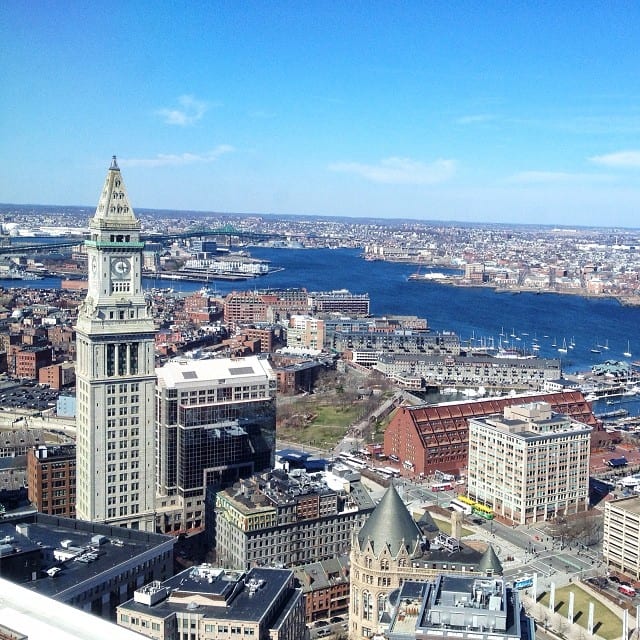
Getting to experience One World Observatory. This month’s New York Travel Massive meetup took place on top of the Freedom Tower, which I’ve wanted to visit for quite some time! It wasn’t an ideal event for photography, but I did get a few quickie sunset shots. It’s amazing up there; you should make an effort to go if you visit New York.
Lots of good times with friends in New York. I love having so many friends in this city!
I’m in this month’s issue of Psychology Today talking about the benefits of traveling alone. Pick up a copy! You can get it at Barnes & Noble or Whole Foods.

Challenges
We had an incident with our Airbnb in Miami. It was an adorable little apartment — the owner actually had Beyoncé and Frank Ocean on vinyl! — but something wasn’t right. The building didn’t smell great. I zonked out the moment I got inside (and I never nap) and found it hard to wake up. And the air seemed strange — I kept feeling the need to go over to the window and breathe in fresh air.
Jeremy has been dealing with lyme disease for awhile now. The good news is that he’s doing much better than he was a few months ago. But the lyme still brings up a lot of issues, including environmental sensitivity. He didn’t feel like he could stay there. Considering that I have no environmental sensitivity and felt weird too, we decided something was up. Possibly carbon monoxide or toxic mold.
Well, we got out and found another Airbnb available closer to Wynwood at the last minute. And as soon as we left the house, both of us felt totally normal and we had our energy back. We even went on a long midnight walk!
Jeremy called the building to report a possible gas leak; they didn’t find anything. He also talked to Airbnb. After researching and talking to friends, I think it was either mold (which is common in humid Miami) or possibly outdoor insecticides used inside.

Jeremy and I cut it close when getting back in time on St. Maarten. I’m the kind of person who always budgets a lot of extra time “just in case,” yet I frequently travel with people who say, “Don’t be silly, we’ve got plenty of time.” Jeremy is the latter type. Long story short, I decided to loosen up and not worry as much, and OF COURSE we ended up trapped in so much traffic in St. Maarten that we missed our call time back to the boat.
I tried to keep my freakout in check. I was about 80% successful.
The good news is that we did make it back. And from the sound of the announcements, it seemed like tons of people didn’t get back in time, either. Also, I got a message from a reader saying, “Hey, just so you know the Heineken regatta is happening today so there will be a lot of traffic!” Aha…
Just a word to the wise: if you’re doing St. Maarten independently while on a cruise, allow yourself a TON of extra time. There is essentially one major road around the island, so if any part of it gets traffic, it affects the whole island.
Our cab driver in St. Kitts was a bit of a jerk. And he harassed a woman from the car before we had even left the parking lot. (Smoke was practically coming out of my ears. Jeremy gripped my arm with a grin.)

Also…I did the Landmark Forum this month. And it did not work for me. It’s a personal development course that many of my friends have done and swear changed their lives for the better, and that’s why I went. I’m not going to go into detail now because I’m exhausted talking about it. In the interest of full disclosure, though, I think it’s important to me to clarify four things:
1) Many of the people who attended my Landmark Forum got SO much out of it, including some friends I made.
2) Many of the people who attended my Landmark Forum got NOTHING out of it, including myself and some friends I made.
3) On the third day, the instructor raised an issue that deeply disturbed me and I got up to the microphone and voiced my concerns. For the rest of the forum, attendees were coming up to me and thanking me for speaking up.
4) The next day, I got a call from Landmark telling me they refunded me due to the issue I spoke up about. I didn’t ask for a refund; they initiated it on their own and then called me to tell me.
It’s all very mysterious, I know. Maybe I’ll write more at a later date.

Most Popular Post
On Dating After Long-Term Travel — I’m really enjoying writing these, and you’re really enjoying reading them. Kind of weighing whether or not to write more of them.
Other Posts
The Worst Books I’ve Ever Read — Because I’ve dragged myself through some awful books, too!
Welcome to the Florida Keys — A guide to this quirky US destination.
Key West, You Are My New Favorite — Man, I had a LOT of fun in Key West.
How to Spend a Layover in Paris — If you’ve got a long layover at Charles de Gaulle airport, here’s how to get a taste of Paris!

Most Popular Instagram Photo
Easy — this shot of a giant KLM plane landing over Maho Beach in St. Maarten!
This is definitely a bucket list item. If you’re a fan of planes, photography, or just AWESOMENESS, get yourself to Maho Beach at one point in your life!
For more live updates, follow me at @adventurouskate on Instagram or Snapchat.

Fitness Update
This month, I had a few fitness breakthroughs. I OBLITERATED my calories burned record at spin class (translation: I’m now strong enough to have the resistance much higher and thus work harder). I also took a Zumba class that used to always leave me out of breath and dripping but this time I thought, “Hmmm, not much of a workout today.” Now I throw myself into Zumba much harder. I’ve been working hard on perfecting my deadlift form with my trainer and now I’m actually starting to deadlift some real weight.
And my body looks a bit different — my face is thinner, my boobs have shrunk significantly (pour one out for my homies) and my upper arms are looking much more muscular lately!
The only thing is that I’m losing weight much more slowly. I need to let go of my goal of losing 25 pounds by Memorial Day. But that’s FINE — a lot of people totally transform their bodies while staying roughly the same weight (here are nine women who did exactly that). Weight is not everything, changing your body composition is!
I also tried a few new classes: antigravity yoga at Studio Anya in Chelsea, pictured above (super fun, not much of a workout, and hanging upside down is neat but it hurts to swallow), as well as two new classes at Equinox: The Cut (a kickboxing class that I really enjoy) and Hatha Yoga (nice but very basic — I’ll try Vinyasa next time). I’ve decided to add yoga into my workout rotation; there are so many mental and physical benefits.
I’ve been reading a lot about intermittent fasting, which seems like the most efficient way to lose fat and add muscle simultaneously. I’m considering trying it next month.

What I Read This Month
I read seven books this month — wow! I’m continuing to chip away at the PopSugar 2017 Book Challenge (17/52 completed). I also got into Book of the Month, which I absolutely ADORE and highly recommend to my fellow American bookworms. I love choosing my new book each month and picking out two extras for just $10 each!
If you’re interested in joining Book of the Month, I have a 30% off code for new members. If you join, I’ll earn a free book.
Here’s what I read in March:
Tiny Beautiful Things: Advice on Love and Life from Dear Sugar by Cheryl Strayed (2012) — I want everyone I love to read this book. This is a collection of Dear Sugar columns from The Rumpus, which were written anonymously for a long time before Strayed’s identity was revealed. I can’t remember how I discovered those columns (maybe through Dan Savage?) but soon I became obsessed with them. In fact, I read this column over and over, day after day, while trying to get up the nerve to leave my abusive ex. It’s still saved on my phone today.
What makes this advice column phenomenal is that Strayed tells stories from her own life as allegories that illustrate her advice for the letter writers. Her life has been hard in many ways — she grew up in poverty, survived molestation, lost her beloved mother at a young age, married very young, lived through drugs and more poverty, worked with severely at-risk teens, eventually met the love of her life and went on to have two children and publish a bestseller you may have heard of called Wild. She also collected so many seemingly insignificant stories along the way that are actually profound.
This book is the very definition of grace. It makes me cry just thinking about it. Please read it. You won’t regret it. Category: a book of letters.

The Possessions by Sara Flannery Murphy (2017) — I chose this for my Book of the Month pick for February. I love the premise — in an unnamed American city, a business called the Elysian Society hires men and women to be “bodies” to channel the spirits of the deceased so their loved ones can talk to them. They swallow a pill while wearing the possessions of the dead and black out as the spirit takes over, leaving them unsure of what happened. Some of the customers come back every week.
This book is about Edie, a body who left a troubled past for a fresh start. After an unusually long five-year tenure with the Elysian Society, she becomes fascinated with Patrick, a customer who comes to channel his dead wife, Sylvia, who died under suspicious circumstances. As the book ramps up, Edie becomes more deeply entwined in Patrick and Sylvia’s lives until she’s not sure whose life she’s living.
As much as I loved the idea of this book (and it could so be a series) — I feel like it ran out of steam near the end and the characters weren’t developed enough. At times, I thought Edie’s blank-slate personality was a lazy choice, not unlike the main character in Twilight. That said, I did enjoy it, loved the idea of the Elysian Society, and I would read more of the author’s work. Category: a book with an unreliable narrator.
You Are A Badass: How to Stop Doubting Your Greatness and Start Living an Awesome Life by Jen Sincero (2013) — I picked this up in the Miami airport while waiting to board my flight home and I finished the last paragraph as my Lyft arrived at my apartment — talk about perfect timing! I check out self-help books every now and then, and there’s nothing in this book you haven’t read before. What makes it different is the voice and the delivery.
It’s motivational, yes. The tips are great and I learned some new things. I enjoyed reading it, too. But there’s one part that I didn’t like — Sincero implies that people with depression should just get over it and go do brilliant things. Yo, depression doesn’t work that way. I’m actually surprised her publisher allowed the book to go out like that. Category: a book you bought on a trip.
Postcards From the Edge by Carrie Fisher (1987) — This was my book club’s pick this month, in memory of an inspirational lady. Postcards from the Edge is the book that catapulted Carrie Fisher to literary success. A story told in diary entries, solid dialogue, and first- and third-person narratives, the book follows actress Suzanne Vale from rehab back into the Hollywood scene, the dating scene, parties and the gym and everything else.
It’s an entertaining book, a bit sloppy in its execution (why so many different formats?), but full of humor and humanity from a woman who does not care whatsoever what people think of her. Category: a book written by someone you admire.
The Stranger in the Woods: The Extraordinary Story of the Last True Hermit by Michael Finkel (2017) — I chose this as my Book of the Month pick for March. For decades, a vacation community in Maine was constantly burglarized — but strangely, never expensive things, only food, books, and clothing. And nobody was ever found. Was there a hermit living in the woods?
There was.
Christopher Knight went into the woods to live alone in 1986. He didn’t have so much as a conversation with another human until he was caught in 2013, 27 years later. Author Finkel spent a long time trying to earn Knight’s trust following his capture. This book was created from his interviews with Knight. It’s fascinating.
While this book is about nature and relationships and solitude, it raises a lot of questions about mental health and how neuro-atypical people can function in our modern world. Knight has some characteristics that many people with autism also have, but in some ways he’s completely the opposite. There’s no easy way to characterize him.
In Maine, people are given lots of space, and walking on someone else’s property is no big deal. Someone in the book mentioned briefly that this never could have happened in Texas. I agree! In Texas people are very territorial — and have lots of guns. Either way, this reminded me that I still need to plan a digital detox trip sometime this year. Category: A book that takes place in the wilderness.

How to Win Friends and Influence People by Dale Carnegie (1937) — I had this legendary book on my reading list for quite some time, and I’m glad I finally got around to it. It’s all about how to get people to like you — in life, in relationships, in business. The advice is basic — people like to hear their names! Be positive with people, not negative! Give people compliments and don’t criticize! — but basic advice is often the best advice of all. It’s a cheap book, and I recommend everyone get a copy for their shelf or Kindle.
I will say, though, that the latest edition is a bit odd. It’s obviously been updated since 1937, but the editing isn’t consistent. It’s strange to see phrases like “even if you’re only a housewife” followed by letters from 1936 followed by a reference to Stevie Wonder, who didn’t become famous until the 1960s. Bizarre what they kept in and what they added. Category: a book with career advice.
Born a Crime: Stories From a South African Childhood by Trevor Noah — I had to listen to an audiobook for the challenge, and I’ve seen so many people recommend the audiobook version. After listening to it, I concur — it’s fantastic as an audiobook. Noah is a polyglot and he speaks different languages, uses different accents, and imitates a wide cast of characters throughout the book.
The best memoirs are from people with extraordinary stories or who tell ordinary stories in an extraordinary way. Occasionally you’ll get someone who does both. And Noah’s life story is CRAZY. He was born to a black mother and a white father during Apartheid, so his existence was literally a crime. He had to hide in the shadows for much of his childhood. He didn’t fit in with the blacks, whites, or coloreds in South Africa (in South Africa, colored is a non-insulting term meaning mixed race), but he survived, thrived, created a million entrepreneurial ventures and eventually broke out as an entertainer.
This book is devastating at times. The police laughed off the beatings Noah’s mother received at the hands of her husband. At times they were so poor they had to eat caterpillars. But there’s so much love and humor in this book as well — I nearly cried laughing when Noah secretly pooped in the house as a kid and his family thought it was a demon! It’s a remarkable feat to write a book this serious and yet have it be filled with so much laughter. Category: an audiobook.
What I Listened To This Month
Missing Richard Simmons! Have you listened to this podcast yet? You must!
A few years ago, Richard Simmons abruptly withdrew to his home and became a recluse. He said goodbye to no one — he just disappeared. This podcast, created by one of his friends, tries to figure out why. Was he being held under duress by his maid? Was he transitioning to female? Or did he just want to be left in peace?
The strangest thing about Simmons’s disappearance is that he gave SO much of himself to his fans. He would call fans on a weekly basis and counsel them through their weight and depression issues. He would always be outside when the Hollywood tour buses went by his house so he could greet fans. He cried with them, he opened up with them, he was ON 24/7, and as a result, the line between his professional and personal life was deeply blurred.
I consider this podcast required listening for bloggers or any other kind of internet personalities. It made me realize I haven’t always set the right boundaries. Yes, I’ve gained some great friends who I met because they were my readers, but I need to stop thinking it’s my job to personally solve everyone’s problems. This piece on NPR goes into that more.
What I Watched This Month
THIS IS US!!! After seeing tons of my female friends cry over it weekly on Facebook, I decided to give the series a try. I got through all 18 episodes in five days, no joke.
Yes. This show is worth the hype. It’s filling the hole I’ve had in my heart since Friday Night Lights went off the air. And the Chris Darden-shaped hole I’ve had in my heart since The People vs. OJ Simpson went off the air.
It’s just so nice to have a show about interesting characters who are all good at heart, and thus you genuinely root for them. Yes, the tears will come. There was one episode where I more or less bawled from start to finish. I’m so glad it’s been renewed for two more seasons!

What I Cooked This Month
A few days ago I made an awesome paleo Mexican chocolate mousse where avocados are the main ingredient! And this was SO GOOD. I got the recipe from Cook Eat Paleo.
I do encourage making a few tweaks to the recipe: I used a bit less honey, and I recommend using only half the amount of cinnamon. I couldn’t find ancho chile powder so I used regular chili powder and a few red pepper flakes. If you like it spicy (and I do), add a ton more red pepper flakes. This is a basic recipe; you can tweak it to your personal taste!
The only thing is that I’m starting to be highly sensitive to sugar, and even though it’s only raw honey (technically paleo!), I could feel it sitting in my stomach for hours.
Coming Up in April 2017
No major travel plans this month — at least not yet, you never know! — but I will likely go home to Massachusetts for the first time since Christmas. I also think I should spend some time in Boston proper, since most of my trips have been only to the suburbs lately.
April is when the flowers start to bloom in New York, and I wish I had taken more photos last year when everything was in bloom. It’s such a fleeting time — I hope I’m able to get a few neighborhoods!
What are your plans for April? Share away!


from Adventurous Kate http://www.adventurouskate.com/ak-monthly-recap-march-2017/
Sunday, 2 April 2017
What is Auto ISO and How to Use It
Did you know that most modern digital cameras have the ability to set ISO automatically? Back in the film days, you would drop a roll of film into your camera and your ISO, or ASA as it was known back then, would be fixed for the entire roll. With digital, not only can you change your ISO on the fly, but you can also set your camera to adjust the ISO automatically. So what is Auto ISO and how do you use it with the shooting modes on your camera? In this article, I will answer those questions. As well, I will discuss scenarios where Auto ISO is advantageous and situations when setting ISO manually is more appropriate.
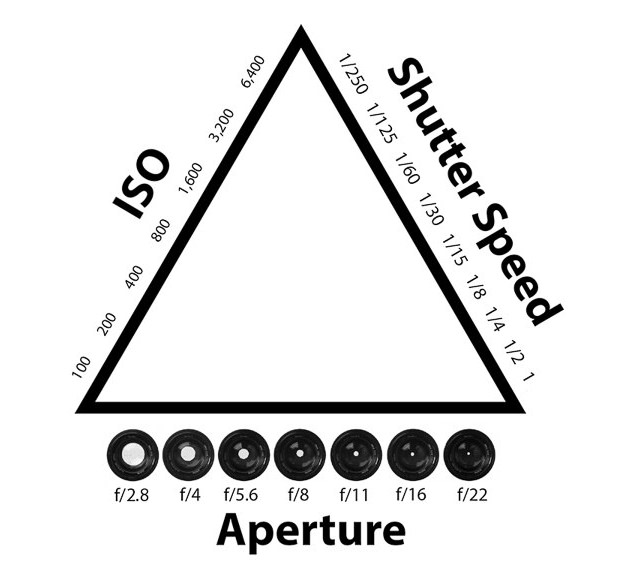
1. The Exposure TriangleBefore we talk about Auto ISO, let’s do a bit of review. The exposure triangle relates the three variables responsible for exposure: shutter speed, aperture, and ISO. Shutter speed is the length of time the sensor is exposed to light. Faster shutter speeds let less light in, and longer ones let in more. Aperture is the size of the opening in the lens. A big opening lets more light pass through to the sensor. And lastly, ISO can be thought of as the sensitivity of the sensor (though that is a bit of a simplification). The higher the ISO, the less light is needed by the sensor to create the exposure. If any one of these variables changes, the others (either one or both) have to adjust to balance out the exposure. |
 |
2. Shooting Modes
I’m sure you have heard of the four main shooting modes found on DSLR’s and mirrorless cameras. In Automatic Program Mode (P) the camera chooses both the aperture and the shutter speed. In Aperture Priority (A or Av for Canon shooters) you select an aperture, and the camera’s computer chooses the correct shutter speed. In Shutter Priority (S or Tv for Canon shooters) you pick a shutter speed, and the camera sets the proper aperture. In Manual Mode (M), you set both the aperture and the shutter speed. But wait, you said there were three variables! What happened to ISO?
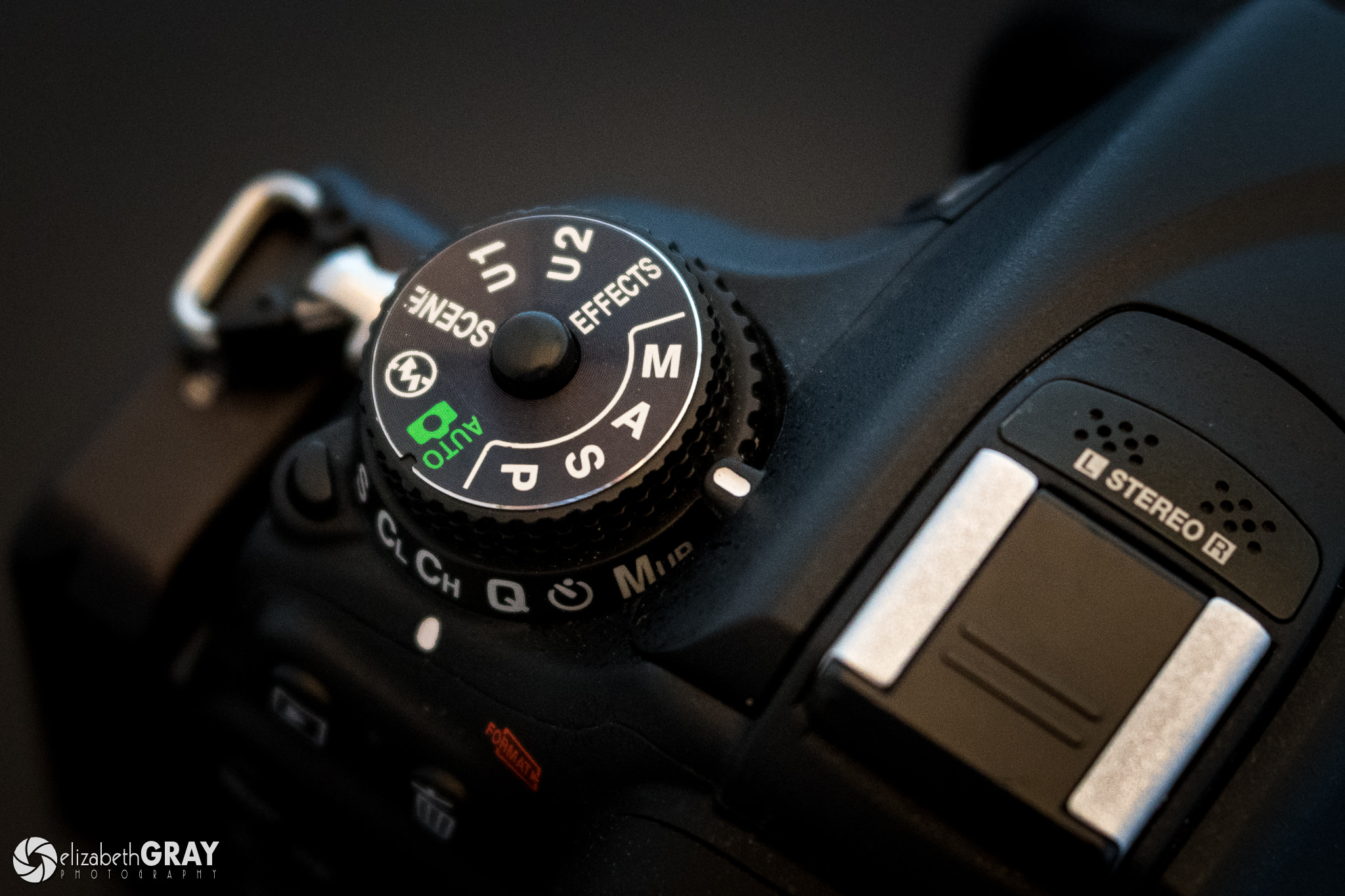
When you are not using Auto ISO, the shooting modes above assume that you have already selected an appropriate ISO for the lighting conditions. In other words, ISO is taken out of the equation because it has already been chosen and fixed by you. If the light is bright, you have probably set a low ISO somewhere around 100-200. To achieve faster shutter speeds or at lower light levels, you will most likely set your ISO between 400-1600. In some instances, you may even need to go higher. I am very comfortable using an ISO up to 6400 with my Fujifilm gear, and 3200 with my Nikon D500.
In summary, in Program Mode, the user only sets the ISO, the camera is responsible for selecting the other two. In Aperture and Shutter Priority, the user is responsible for setting two of the three exposure variables (aperture and ISO, or shutter speed and ISO), the camera sets the third. In Manual Mode, the user sets all three variables.
3. What Happens in Auto ISO?
When your camera is set to Auto ISO, you still shoot using one of the four modes that I mentioned above. However, rather than you preselecting an ISO value, the camera selects it for you. The camera does this based on several criteria that you choose when you configure Auto ISO.
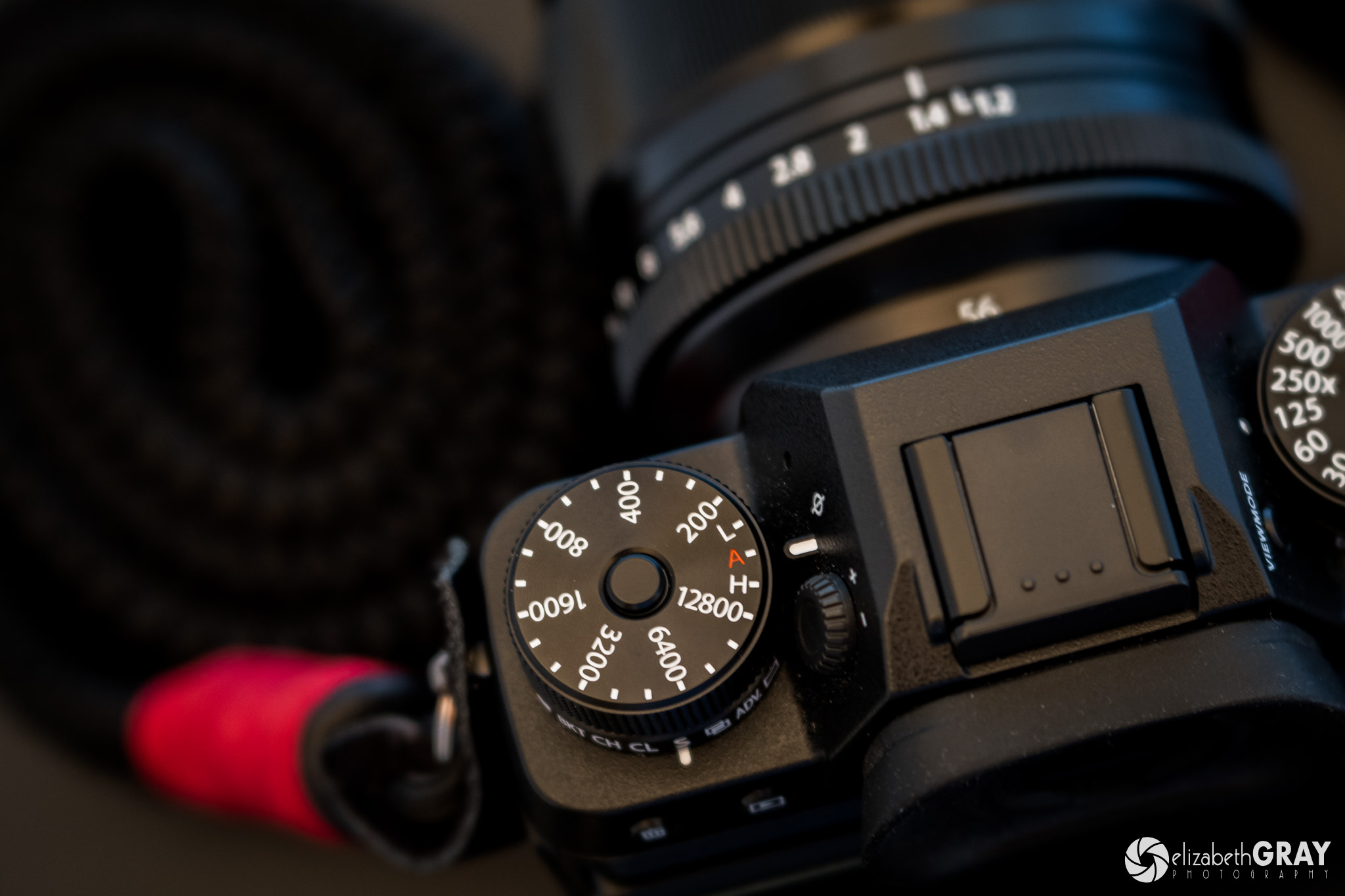
4. Setting Up Auto ISO
So let’s take a look at how to configure Auto ISO on your camera. Each camera manufacturer does things a bit differently, and even within the same brand, the features may differ slightly by camera model. Make sure you refer to your user manual for detailed instructions on where to find the Auto ISO configuration settings in your camera’s menu system.
To configure Auto ISO, you need to set three variables. Firstly, you will need to tell the camera what the maximum ISO is that you are willing to tolerate. Selecting the maximum ISO is highly subjective. What one person sees as OK, another may find unacceptable. Remember, higher ISO’s are not a miracle cure for achieving faster shutter speeds in low light. There are trade-offs, such as increased noise and reduced image quality. For an in-depth discussion of noise and ISO, see Spencer’s excellent article on ISO Invariance. In his article, he discusses what causes noise and how dynamic range is affected at higher ISO’s.
Secondly, you need to tell the camera what ISO it should use on the lower end. I always select the lowest native ISO available. On my Nikon camera that is ISO 100, and on my Fuji’s the base ISO is 200. On Canon and Fujifilm cameras, setting the maximum and minimum ISO is fairly straightforward. However on a Nikon, the minimum ISO is entered in the same field used for setting ISO manually. If you are a Nikon shooter and are using Auto ISO, make sure you set your ISO sensitivity back to 100. Otherwise, the camera will not take advantage of ISO’s below the level you set manually.
Lastly, you need to set the minimum shutter speed that you want the camera to stay above. For example, if you are shooting sports you might need to keep your shutter speed faster than 1/1000s to prevent motion blur of the athletes. On the other hand, if your subjects are moving slowly, maybe 1/125s is fast enough.

Some cameras allow you to set the minimum shutter speed automatically based on the focal length of your lens. The camera uses the reciprocal rule to do this. The reciprocal rule says that you should use a shutter speed faster than one over the focal length of your lens (based on the full frame equivalent focal length). If you are using a 100mm lens, then a minimum shutter speed of 1/100s is needed. The camera also adds a safety factor of somewhere in the neighborhood of 1.5 to 2, depending on camera brand. So if the camera recognizes that you are using a 100 mm lens, it would set the minimum shutter speed to 1/150s or 1/200s. This minimum speed is fine if you are only worried about motion blur due to handheld camera shake. However, for most camera brands, this feature does not take into account lenses that have image stabilization. Image stabilization allows you to shoot at slower shutter speeds than one over the focal length. Additionally, the camera can’t determine if you need to freeze subject movement, as opposed to just camera movement. If that is the case, the reciprocal rule won’t help you! For these reasons, I always set my minimum shutter speed based on what I am shooting, and I do not let the camera select it automatically.
5. Using Shooting Modes with Auto ISO
You’ve activated Auto ISO and are ready to take some pictures. Let’s look at how the various shooting modes are affected when Auto ISO is turned on. I’m not going to discuss the Automatic Program Mode (P) because I am hoping that you are taking some creative control over your images. Letting your camera have free range over aperture, shutter speed, and ISO gives you no say in how your images will look! Review my past article on Choosing a Creative Exposure – A Beginner’s Guide to see how to use aperture and shutter speed artistically.
To help illustrate how each shooting mode works in combination with Auto ISO, I’m going to use some sample exposure data. For each case I am going to make the following assumptions:
- The lens has apertures between f/2.8 and f/22.
- The Auto ISO range is set to 200 (min) and 3200(max).
- The camera has a native ISO range between 200 to 6400.
- The minimum shutter speed in Auto ISO has been set to 1/125s.
- The fastest possible shutter speed on the camera is 1/8000s.
5.1 Aperture Priority with Auto ISO
In Aperture Priority, you select an aperture based on how much depth of field you want in your image. The camera then selects the correct shutter speed. If the calculated shutter speed is slower than the minimum speed, then the camera will increase the ISO.
In this first example, let’s suppose that an aperture of f/8 gives a correct exposure at the minimum shutter speed of 1/125s and the lowest ISO of 200. We will use this as our starting point and assume the light does not change as we adjust the aperture.
If you want to set faster apertures (f/5.6, f/4 or f/2.8) the camera will increase the shutter speed and maintain the minimum ISO.
However, if you choose smaller apertures, such as f/11, f/16 or f/22, the camera will have to increase your ISO to keep the shutter speed above the minimum value.
| Aperture | Shutter Speed | ISO | Comments |
|---|---|---|---|
| 1Aperture Priority – User sets aperture based on the required depth of field. | |||
| 2.8 | 1/1000 | 200 | Shutter speed increases and min ISO is maintained. |
| 4 | 1/500 | 200 | Shutter speed increases and min ISO is maintained. |
| 5.6 | 1/250 | 200 | Shutter speed increases and min ISO is maintained. |
| 8 | 1/125 | 200 | Starting Point |
| 11 | 1/125 | 400 | To maintain min shutter speed ISO is increased. |
| 16 | 1/125 | 800 | To maintain min shutter speed ISO is increased. |
| 22 | 1/125 | 1600 | To maintain min shutter speed ISO is increased. |
Make sure you are paying careful attention to the display in your viewfinder. In most camera models, if the camera reaches the maximum ISO and still cannot achieve a correct exposure, it sacrifices your minimum shutter speed. In other words, the camera will not change your aperture (that is the definition of Aperture Priority), and it will never go above the maximum ISO you set in the configuration. Therefore, it must use a slower shutter speed to expose the image correctly.
You can see an example of when this happens here. This time the lighting is a bit darker. An aperture of f/4 , at 1/125s and ISO 200 produces a correct exposure (our starting point). Say you want to set an aperture of f/22 to achieve a large DOF. Since there is not enough light at the highest ISO, the camera drops the shutter speed a stop, to 1/60s.
| Aperture | Shutter Speed | ISO | Comments |
|---|---|---|---|
| 1Aperture Priority – User sets aperture based on the required depth of field. | |||
| 2.8 | 1/250 | 200 | Shutter speed increases and min ISO is maintained. |
| 4 | 1/125 | 200 | Starting Point. |
| 5.6 | 1/125 | 400 | To maintain min shutter speed ISO is increased. |
| 8 | 1/125 | 800 | To maintain min shutter speed ISO is increased. |
| 11 | 1/125 | 1600 | To maintain min shutter speed ISO is increased. |
| 16 | 1/125 | 3200 | To maintain min shutter speed ISO is increased. Now at max ISO. |
| 22 | 1/60 | 3200 | Sacrifices min shutter speed to achieve correct exposure and not exceed max ISO. |
It is highly unlikely that you will ever get an underexposed image using Aperture Priority and Auto ISO. This is because the camera will always override the minimum shutter speed (like in the last example). Most cameras can automatically expose up to 30s, which is usually more than ample time to collect enough light. However, this is not very practical! If you notice the camera is dropping below your set minimum shutter speed, you will need to open up your aperture.
It is possible to get an overexposed shot in this mode, though. Say for example you are using a fast lens and want to achieve a very shallow DOF, so you set your aperture to f/2.8. If the camera is already using the lowest ISO, and a faster shutter speed than is mechanically possible on your camera is needed, then your image will be overexposed. The only way around this is to close down your aperture.
5.2 Shutter Priority and Auto ISO
In Shutter Priority, you select a shutter speed based on how you want to record motion. Do you want to freeze action with a fast shutter speed, or create a sense of movement using a slow shutter speed? With Auto ISO activated, the camera then determines the aperture necessary for the correct exposure using the lowest ISO. Because you are setting the shutter speed, the camera ignores the minimum shutter speed set in the Auto ISO configuration. If the maximum aperture does not let in enough light, then the camera increases ISO.
Let’s say that you choose a shutter speed of 1/125s and the camera determines that an aperture of f/11 is required to capture the correct amount of light at the minimum ISO of 200, (our starting point). If you decide to slow your shutter speed down to blur the motion to 1/60s or 1/30s the camera stops down the aperture using ISO 200.
However, be careful not to overexpose your shot. If you decide that you need an even slower shutter speed for artistic reasons (1/15s or slower) the image will be overexposed. This is because the lens we chose cannot stop down smaller than f/22. Since the ISO is as low as it can get, the resulting image will be too bright.
On the other hand, if you decide to use a faster shutter speed, the camera will increase your aperture. At 1/2000s it determines that an aperture of f/2.8 is required. Any shutter speeds above 1/2000s will cause an increase in the ISO.
| Aperture | Shutter Speed | ISO | Comments |
|---|---|---|---|
| 1Shutter Priority – The user sets the shutter speed based on how motion is to be captured. | |||
| 2.8 | 1/4000 | 400 | Since the aperture is already wide open, ISO is increased. |
| 2.8 | 1/2000 | 200 | Aperture increase while min ISO is maintained. Now at the widest aperture. |
| 4 | 1/1000 | 200 | Aperture increase while min ISO is maintained. |
| 5.6 | 1/500 | 200 | Aperture increase while min ISO is maintained. |
| 8 | 1/250 | 200 | Aperture increase while min ISO is maintained. |
| 11 | 1/125 | 200 | Starting Point. |
| 16 | 1/60 | 200 | Aperture decreases while min ISO is maintained. |
| 22 | 1/30 | 200 | Aperture decreases while min ISO is maintained. Now at the narrowest aperture. |
| 22 | 1/15 | 200 | Overexposed since aperture is as small as possible and ISO as low as possible. |
Let’s look at one more example using Shutter Priority and Auto ISO. This time you decide to set a shutter speed of 1/125 of a second. The camera determines an aperture of f/2.8 is required at the minimum ISO. If you decide to increase your shutter speed, the camera will increase the ISO. At a shutter speed of 1/2000s, the camera has now reached the maximum ISO.
If you decide that you need an even faster shutter speed, say 1/4000s, the camera will underexpose your image. The camera has reached its maximum ISO and the aperture is wide open. Bottom line, unless you increase the maximum allowable ISO, you will not be able to capture enough light to expose the scene properly!
| Aperture | Shutter Speed | ISO | Comments |
|---|---|---|---|
| 1Shutter Priority – The user sets the shutter speed based on how motion is to be captured. | |||
| 2.8 | 1/4000 | 3200 | Underexposes image. |
| 2.8 | 1/2000 | 3200 | Increases ISO because the aperture is wide open. Maximum ISO reached. |
| 2.8 | 1/1000 | 1600 | Increases ISO because the aperture is wide open. |
| 2.8 | 1/500 | 800 | Increases ISO because the aperture is wide open. |
| 2.8 | 1/250 | 400 | Increases ISO because the aperture is wide open. |
| 2.8 | 1/125 | 200 | Starting Point. |
| 4 | 1/60 | 200 | Aperture decreases while min ISO is maintained. |
5.3 Manual Mode and Auto ISO
In Manual Mode, you have the most control. Once you select both the aperture and the shutter speed, the camera determines the ISO for a correct exposure. This mode allows you to fix your depth of field and shutter speed, putting you in complete creative command.
Manual Mode works particularly well in situations where the minimum shutter speed level varies. Say you are photographing your child’s soccer game. When the action is happening, you will want a fast minimum shutter speed so that you don’t end up with blurry soccer players. In this case, a higher ISO is acceptable. However, when the coach calls the team in for a pep talk, or you want to take shots of the bench or sidelines, a fast shutter speed is not needed. Why not drop your shutter speed to make use of lower ISO’s? In Manual Mode, you can do this quickly without having to go back into the menus to find the Auto ISO settings.
You do need to pay very close attention to your viewfinder display, though. It is easy to end up with overexposed and underexposed images.
Looking at one last example. Let us say that you are photographing birds. You decided to set a shutter speed of 1/1000s to try and freeze their flight and set an aperture of f/8 to make sure the bird is sharp from wingtip to wingtip. At these settings, the camera determines that an ISO of 1600 is required.
| Aperture | Shutter Speed | ISO | Comments |
|---|---|---|---|
| 1Manual Mode – The user sets both the shutter speed and aperture. | |||
| 4 | 1/250 | 200 | Overexposed. |
| 5.6 | 1/250 | 200 | ISO decreased by three stops. |
| 8 | 1/1000 | 1600 | Starting point. |
| 8 | 1/2000 | 3200 | Increases ISO. |
| 8 | 1/4000 | 3200 | Underexposed since the ISO is not high enough to capture the correct exposure. |
After taking a look at your images, you decide that your shutter speed just isn’t fast enough to freeze the bird’s movement, so you increase it to 1/2000s. You are happy with the aperture, so you keep it at f/8. The camera calculates an ISO of 3200.
These birds are moving very quickly and your images are still blurry! You increase the shutter speed to 1/4000s while maintaining an aperture of f/8. However, since a higher ISO is needed for the correct exposure, the image is now underexposed!
Now the birds have landed. You want to take advantage of the fact that you no longer need a fast shutter speed. Referring to your original settings of 1/1000s, f/8 and ISO 1600, you decide to drop your shutter speed to 1/250s. This change is an increase of two stops (1/1000s to 1/500s, then 1/500s to 1/250s). You also want to try and isolate the birds from the background, so you open up the aperture to f/5.6 (an additional one stop increase in the exposure relative to the original images taken at f/8). Since the camera must compensate for three stops, it drops the ISO down to 200 (1600 to 800, then 800 to 400, and then 400 to 200 is three stops).
At this point, you should be happy. But no! You want to make sure that you have a beautifully creamy bokeh in the background! You opt for an even wider depth of field using an aperture of f/4. However, this time the camera has reached the bottom end of its ISO capabilities and the image is over exposed!
So take heed. If you are not paying attention to the camera display, it is easy to overlook settings that will cause underexposed or overexposed images. On a mirrorless camera, you have the advantage of seeing what your exposure will look like in the viewfinder or on the LCD before you take the picture. So hopefully you will realize when you run into this situation and make the necessary changes to your aperture or shutter speed. However, on a DSLR the warnings are subtle. Your exposure compensation scale may say your exposure is wrong, or your ISO may be displayed in red or flash. It is important to know how your camera behaves so you don’t discover incorrectly exposed images when you get home.
6. A Few Words about Using Exposure Compensation with Auto ISO
On most newer cameras it is possible to use exposure compensation in Aperture Priority and Shutter Priority with Auto ISO configured. It is best to experiment with your camera to make sure you understand what the camera adjusts when compensation is applied.
There are a few camera models now that also allow you to use exposure compensation in Manual Mode. Remember that in Manual Mode, both the shutter speed and aperture are fixed by the user, so the camera can only vary the ISO to adjust for the compensation. However, the amount your ISO can change will be limited by the range you set in the Auto ISO configuration. There is only a six stop difference between ISO 100 and ISO 6400 (100 to 200, 200 to 400, 400 to 800, 800 to 1600, 1600 to 3200, 3200 to 6400). If your camera’s meter has set an ISO near the top or bottom of this range without any compensation, you will be limited in how much compensation you can add or subtract.
7. When to Use Auto ISO
If you find yourself in situations where the light is changing, and you need to shoot quickly to capture the action, then Auto ISO can save the day. Taking photos of wildlife, where your subject is moving between bright light and shadows or the clouds are rolling in and out, is a perfect opportunity to give Auto ISO a try. Shooting at a wedding, where the happy couple is moving from a dark church to the bright outdoors, is another example. Photographing a sports match at an outdoor stadium, where part of the field is in the shade and part is in the sun, is another situation where Auto ISO would be an advantage. These are all examples of when enabling Auto ISO can increase your chances of not missing a shot.
8. When to Avoid Auto ISO
Although Auto ISO is a great feature to have. There are situations when manually setting your ISO is a better option. When working from a tripod, shutter speed is not an issue. In this instance, set your aperture manually to the lowest native ISO. This will give you the best image quality. For studio shoots, where you are in control of the lighting, Auto ISO will be of no benefit.
Another consideration is whether or not you can adjust the exposure compensation when Auto ISO is turned on. If this is not a feature of your camera, you will not be able to adjust for backlighting or other lighting conditions that tend to fool the meter.
9. Conclusion
In situations when I decide to use Auto ISO, I prefer to use Manual Mode. I do not want to give up creative control to my camera. I select my aperture based on the depth of field I need. And I choose my shutter speed depending on how fast my subject is moving. I allow the camera to select the appropriate ISO. However, I keep careful track of the settings in the viewfinder to make sure I’m not overexposing or underexposing my images.
In Aperture and Shutter Priority with Auto ISO, the camera has control over two quantities, ISO and either the shutter speed or aperture. Since the camera is choosing two of the three variables, the exposure settings can sometimes seem unpredictable. This is another reason why I defer to Manual Mode with Auto ISO.
With advancements in camera technology and with high ISO performance improving in leaps and bounds, Auto ISO is a great feature to consider. If you have not given it a try, take some time to understand how it works. Try different shooting modes and see how the exposure settings change as the light changes. Play with the configuration settings to see how your minimum shutter speed and maximum ISO affect your exposure.
Hopefully you have a better understanding of what Auto ISO is now, and how to use it. If you have any questions, be sure to leave a comment below.
The post What is Auto ISO and How to Use It appeared first on Photography Life.
from Photography Life https://photographylife.com/what-is-auto-iso-and-how-to-use-it/